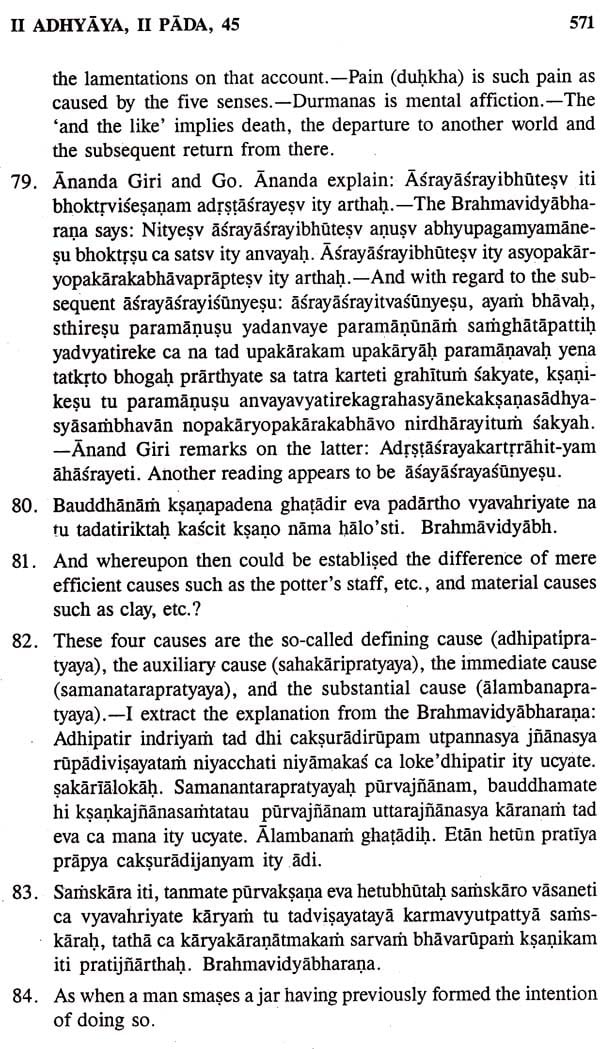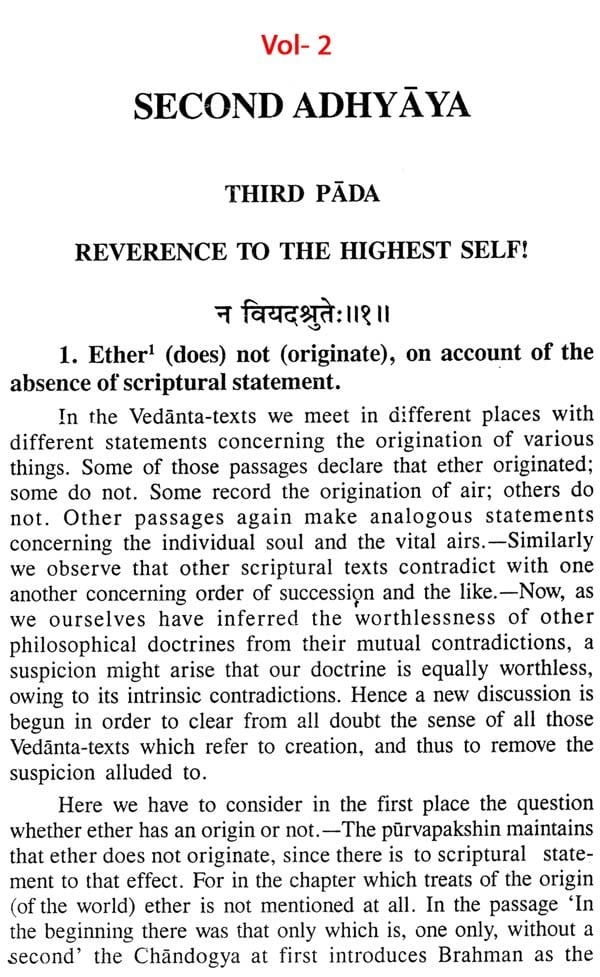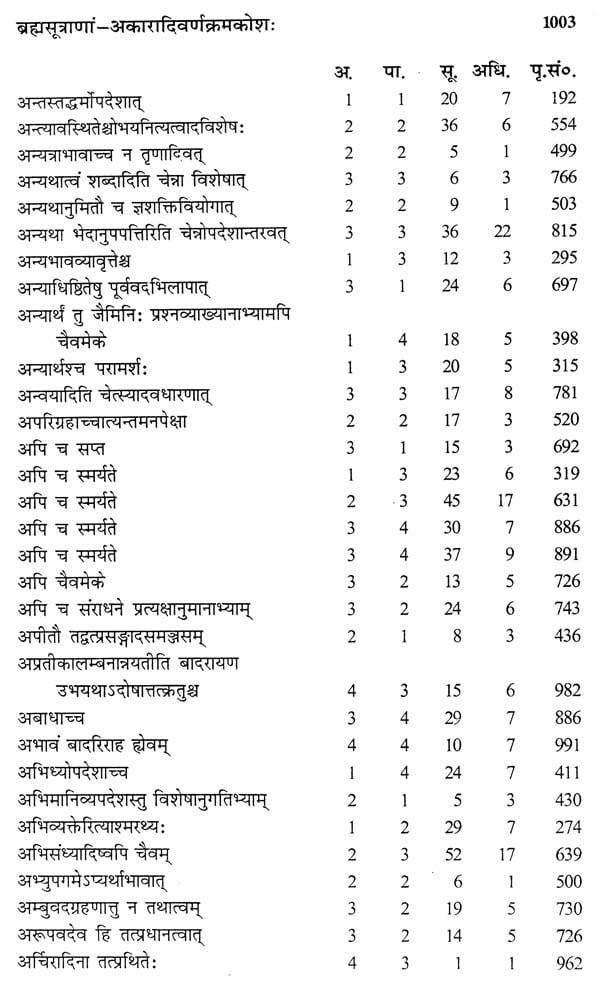


Brahma-Sutras- Sanskrit Text, English Translation, Commentary and Notes (Set of 2 Volumes)
Book Specification
| Item Code: | AZE721 |
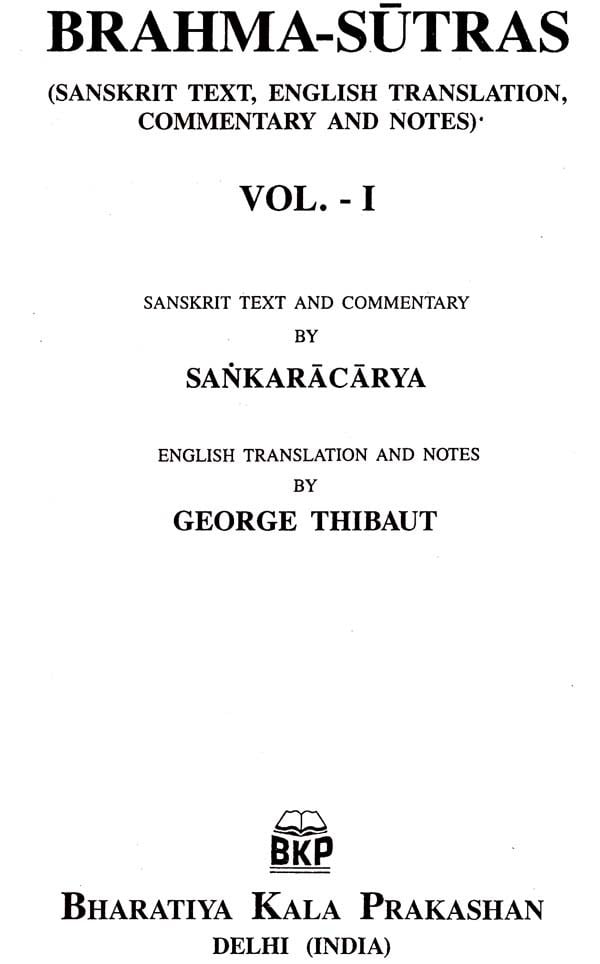
| Author: | Sankaracharya |
| Publisher: | BHARATIYA KALA PRAKASHAN |
| Language: | ENGLISH |
| Edition: | 2004 |
| ISBN: | 8180900401 |
| Pages: | 1024 |
| Cover: | HARDCOVER |
| Other Details | 9.00x6.00 |
| Weight | 1.53 kg |
Book Description
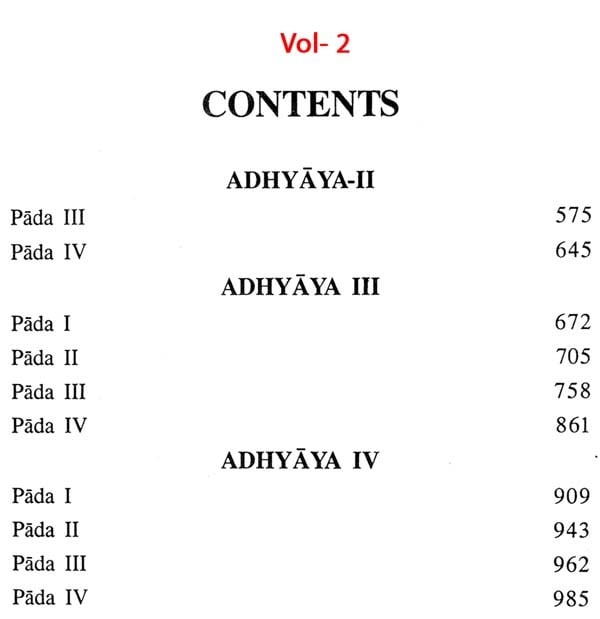
The Brahma-sütra of Badarayana has four chapters (adhyayas), and each of these adhyayas is divided into four padas. Each pada is divided into adhikaranas (sections) comprised of sütras, varying in number. The number of sütras in each adhikarana depends on the nature of the topic (-highly contro versial or not so complicated-) dealt with in that adhikarana. Each adhikarṇa, accor ding to the commentators, takes up for consideration a visaya-vakya (Vedic sentence serving as a source for the philosophical topic under consideration).
The commentary here selected for translation, together with Badarāyaṇa's Sutras (to which we shall henceforth confine our attention to the exclusion of Jaimini's Pūrva Mīmāmsă-sūtras), is the one compos ed by the celebrated theologian Sankara or, as he is commonly called, Śankarācārya. There are obvious reasons for this selection. In the first place, the Sankara-bhāṣya represents the so-called orthodox side of Brahmanical theology which strictly upholds the Brahman era self of the Upanisads as som fact immense such as Vish at from, and in the divine beings which, for many centuries, have the chief objects of popular worship in India.
The first chapter of the Brahma-sütra is known as Samanvayadhyaya inasmuch as it offers a coherent interpretation of the different texts of the Upanisads (which are liable to be interpreted differently) and drives at the conclusion that Brahman is the purport of the Upanisads and that words like Anandamaya, Akāśa, etc. if they are employed as referring to the ultimate cause of the world, can mean just Brahman, and so there is no inconsistency in the Upanisadic teachings. Even before the Sutra Period, different interpretations of the Upanisadic passages had cropped up and it was left to the Brahma-sutra to evolve a systematic account of the Upanisadic teach ing propounding Brahman as the Ultimate Reality and as the ultimate cause of the phenomenal world. The second chapter is known as Avirodhādhyāya as it shows that the above-mentioned conclusion is not in conflict with the writings of other sages who follow the Veda and base their teachings on it. There is an attempt to refute the views of rival schools of thought and also to show that there is no inner contradiction in the teachings of the Upanisads. The third chapter known as Sadhanadhyāya is devoted to the exposition of the means of the realization of Brahman or the attainment of emancipation. The fourth chapter known as Phala dhyāya deals with the effect of the attainmen of true knowledge on papa and punya, an the fruit of knowledge as such.
Of this Mimämsä two branches have to be distinguished, the so-called earlier (purva) Mimämsä, and the later (uttara) Mīmāmsă.
**Contents and Sample Pages**