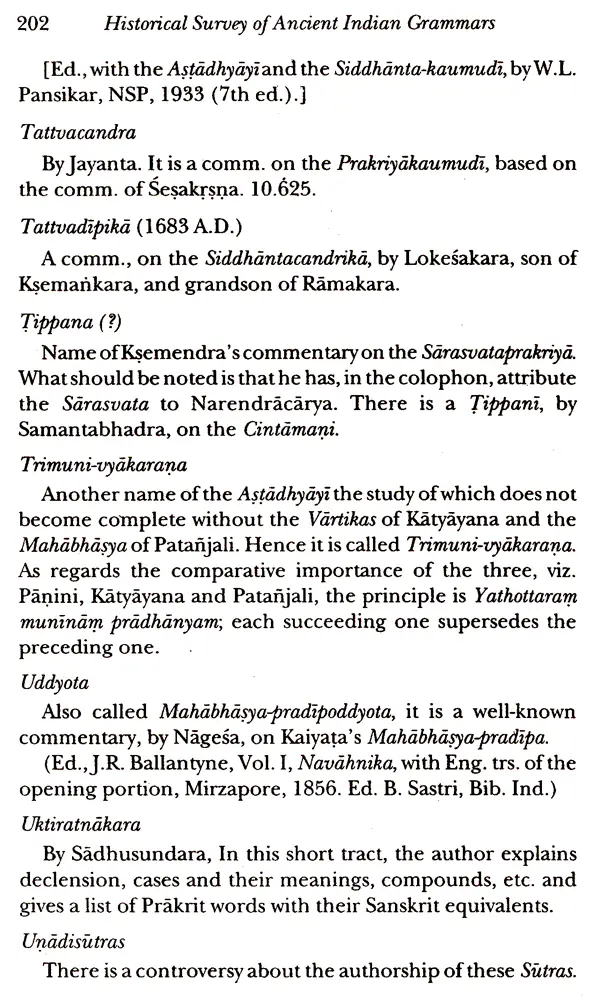


Historical Survey of Ancient Indian Grammars (Sanskrit, Pali and Prakrit)
Book Specification
| Item Code: | UAF770 |
| Author: | Sures Chandra Banerji |
| Publisher: | Sharada Publishing House, Delhi |
| Language: | English |
| Edition: | 1996 |
| ISBN: | 818561640X |
| Pages: | 220 |
| Cover: | HARDCOVER |
| Other Details | 9.00 X 6.00 inch |
| Weight | 380 gm |
Book Description
In Western tradition, 'Grammar' (from Greek grammatike) stands for that branch of knowl edge which deals with the inflectional forms, rules for their application, syntax, and some times, the phonetic system of the language, and its representation in writing. In India the term 'vyakarana' connotes much more than the term 'grammar' does. In Sanskrit the sci ence of language is called 'vyakaraṇa' which includes phonetics, etymology, accentuation, syntax, word formation by declension and conjugation, and semantics.
Grammatical thought, in India, is coeval with the Vedas. The preservation and understanding of the Vedic texts were regarded as a religious duty. The attempts to analyse the word for their better understanding are as old as the Taittiriya-samhita. We know from the Brāhmaṇas and the Upaniṣads that Vyakaraṇa was regarded as a vedänga, i.e. an auxiliary to the vedic studies since very old times.
To the oldest phase of Sanskrit grammatical literature belong the prātiśākhyas. Then follow the grammarians whose works have been lost but who have been referred to by Panini in his monumental work Aṣṭādhyayi. The oldest gram marian of India whose complete works have come down to us, is Pāṇini.
The author has been a zealous researcher on various aspects of indology for half a century. He served Government of West Bengal as a senior Professor of Sanskrit. His research on Bengal sociology earned him a Rabindra Memorial Prize, the highest academic award by the West Bengal Government. To his credit there are more than forty books including A Companion to Sanskrit Literature, A Brief History of Tantra Literature, Indian Society in the Mahabharata, Principles of Hindu Jurisprudence, Global Ra diation of Culture : India and the World (in press) etc.
The word "ancient", in the title, conveys a general idea of antiquity; it has not been used in the strict historical sense.
Ancient India produced a large number of grammars. Pāṇini has been extolled as the author of the most scientific grammar in the world. There is an erroneous impression among some people that Panini's work is the only grammar of ancient India. In fact, besides the school of Pāṇini, there were as many as nine schools of Sanskrit grammar. In addition, there are some grammars of particular sects, mainly Vaiṣṇava and Saiva. We should not forget that there were grammars for Pali and Prakṛt languages too.
Despite the bulk and variety of ancient Indian grammars, no proper history has as yet been written. When and how grammar originated, the varieties of grammar, accounts of the different schools-these questions arise in the minds of the students of ancient Indian languages and literatures in general, and particularly of those who specialise in ancient Indian grammars. Belvalkar's Systems of Sanskrit Grammar is professedly an Essay and not a History. Nevertheless, his work, perhaps for the first time, has given a systematic, though succinct, accounts of the different schools. It, however, con cerns itself with Sanskrit grammars alone. v
A Dictionary of Sanskrit Grammar by Abhyankar and Shukla is an excellent reference book, but not a history, nor does it take into account Pali and Prakṛt grammars. This remark applies also to Katre's Dictionary of Pāṇini.
A Glimpse of the History of Sanskrit Grammar by B.M. Jha appears to be the first attempt at writing a history of Sanskrit grammar. The author, however, has sometimes mixed up myth with history. Moreover, he does not appear to have consulted the New Catalogus Catalogorum (Madras) which contains considerable information about grammars. It has also left out Prakṛt and Pāli grammars.
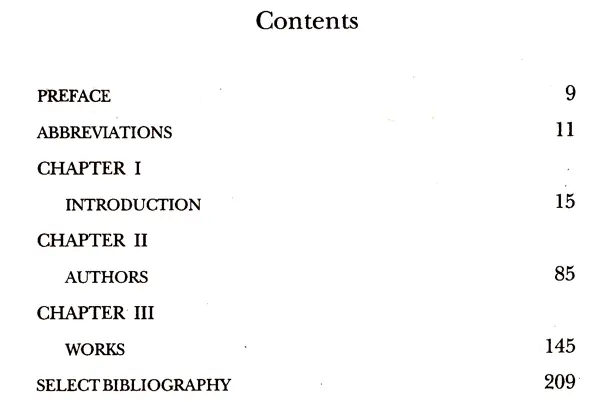
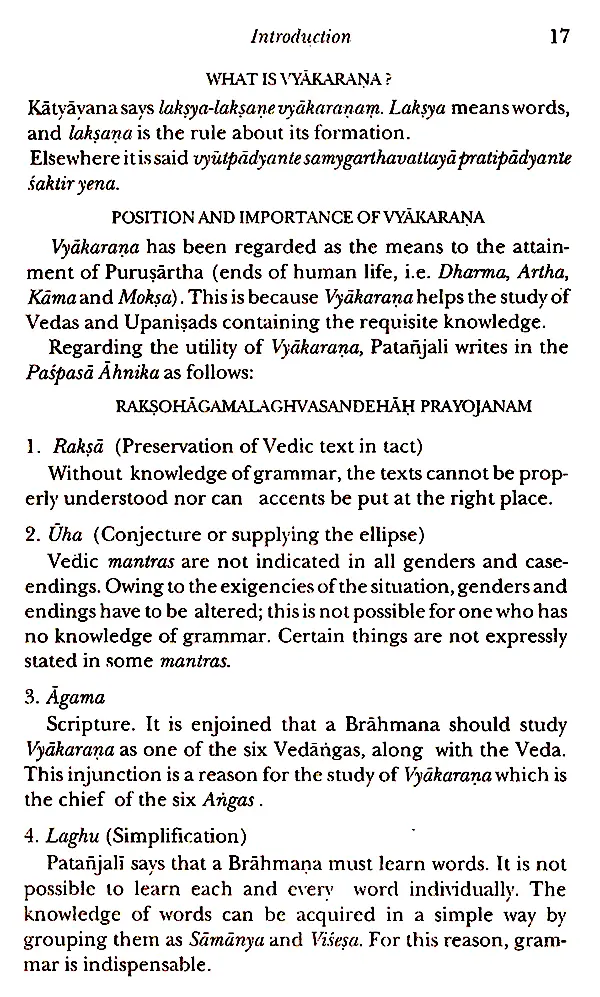
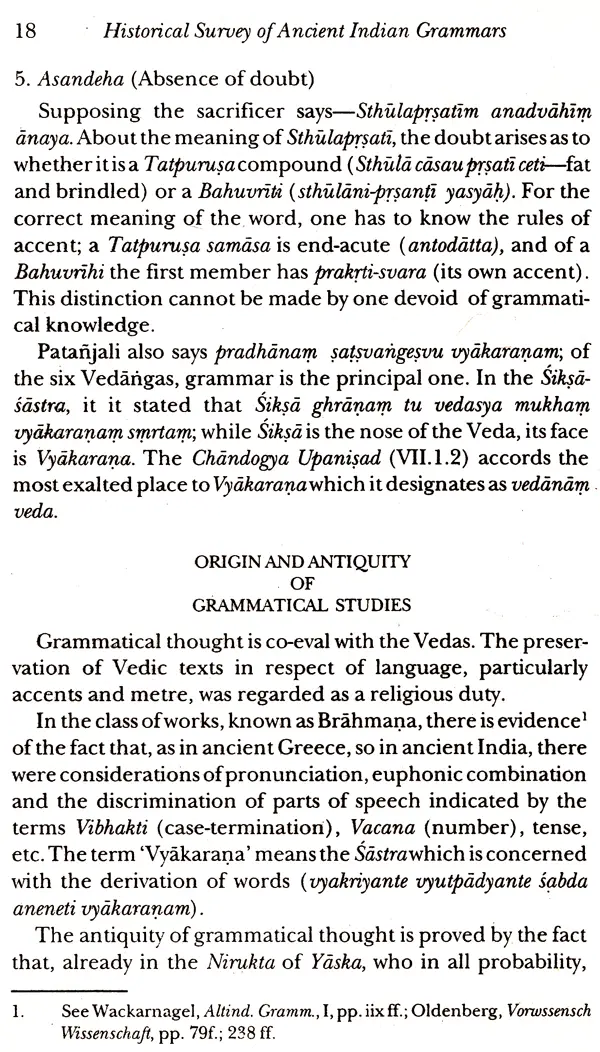
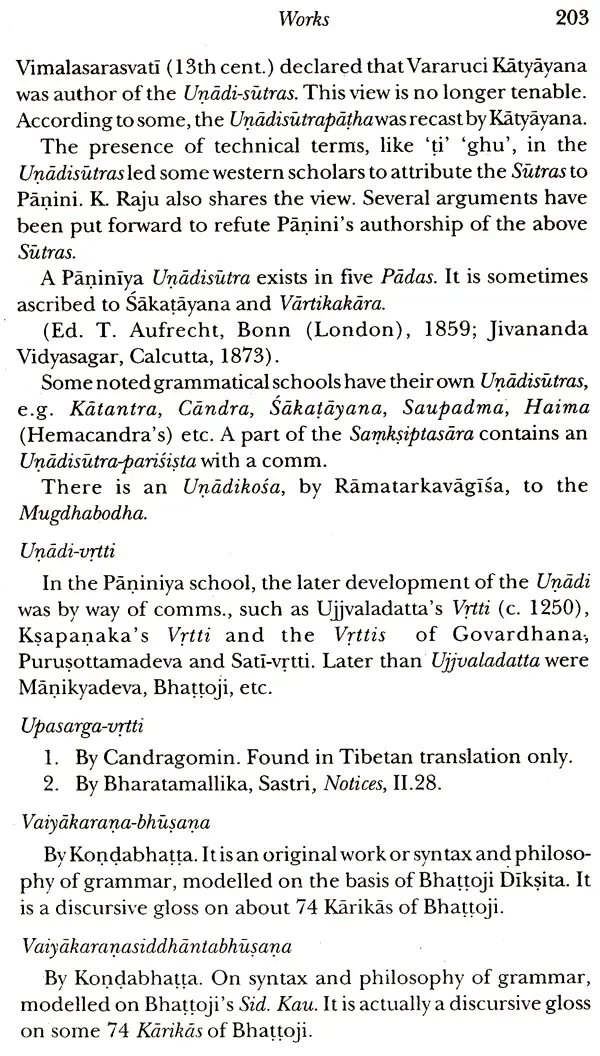
**Contents and Sample Pages**