Foreword There was a time when it was believed that it was not possible to decipher the spirit of Tagore without ascertaining the treasures of Sanskrit, because Tagore inherited the traditions of Oriental Learning and the richness of Culture expressed by the Creative Compositions of Vedic Seers and tin grand Valmiki and the great Vyasa. Subsequent researches in the field of Tagore Studies have indicated the fact that the thoughts of Tagore constitute a reassertion of the Philosophies of Upanisads and the ideals envisaged in the creative mind of Vyasa and Valmiki in the context of con-temporary situation in such a manner that it is not possible to catch the spirit and Philosophy of ancient India without getting a first-hand acquaintance of Tagore's thoughts and ideas. This explains the necessity of rendering translations of the works of Tagore into various languages, including Sanskrit, which constitutes the repository of Indian Culture. Modern Mind has realised the truth that the Philosophy of universal understanding, mutual love and global fraternity, as propounded by Tagore constitutes the remedy of all evils of the present day society, which is marked by strays and torn by small bickering of the craving soul The Clarion Call given to posterity by Tagore to implement the ideal of universal love by effecting expansion of ego-boundaries has now been accepted as the only way of fighting the evils of narrowness and the destructive forces that tend to keep the human being confined within the boundaries of earthly and small existence. This explains further the interest taken by modern man to dive deep into the ambassia of Tagore's writings and to experience the grandeur of his ever-shining Philosophy.
Preface In imaginative literature, words are a vehicle of sensations and associations and convey meanings beyond the literal/denotative meanings. This explains the difficulty in translation and it has been debated whether literature can be successfully translated into another language. It is true that the Bengali language has in the main its roots in Sanskrit, and the rendering of Bengali into Sanskrit is less difficult. However, the task assumes a special significance when the author is Rabindranath Tagore, who speaks in images and whose words are many-edged and the achievement of Dr Dhyanesh Narayan Chakrabarti is indeed commendable. He is scrupulously faithful to the original, but his Sanskrit has a happy felicity that gives his translation both lucidity and an incantatory rhythm. Dr Chakrabarti is well-known for his erudition, but he is a scholar with a difference: he is a teacher with a mission and has earned the gratitude of all Indians for whom the work of Tagore is a cherished heritage and who have some familiarity with Sanskrit that is aptly described as the language of the gods.
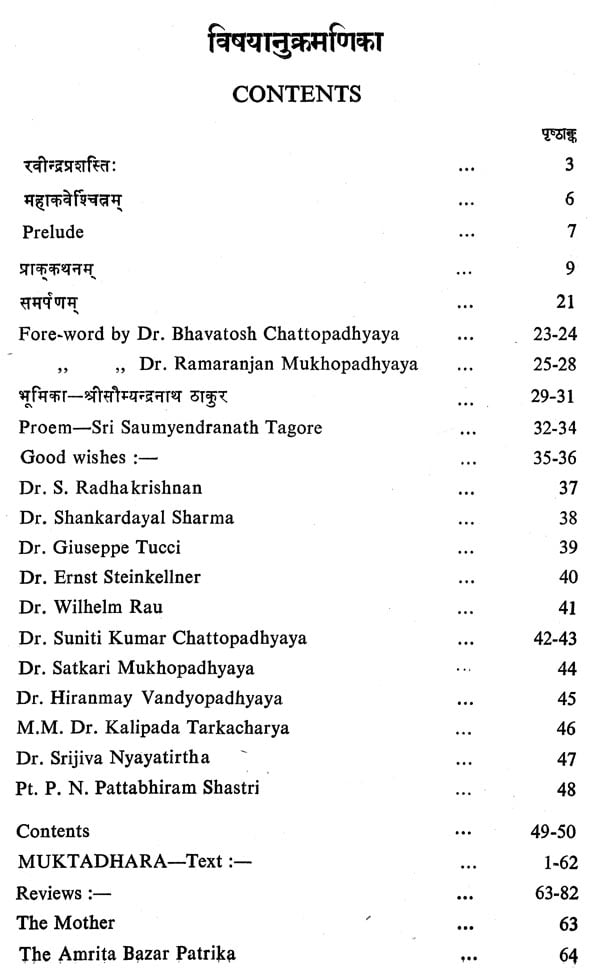
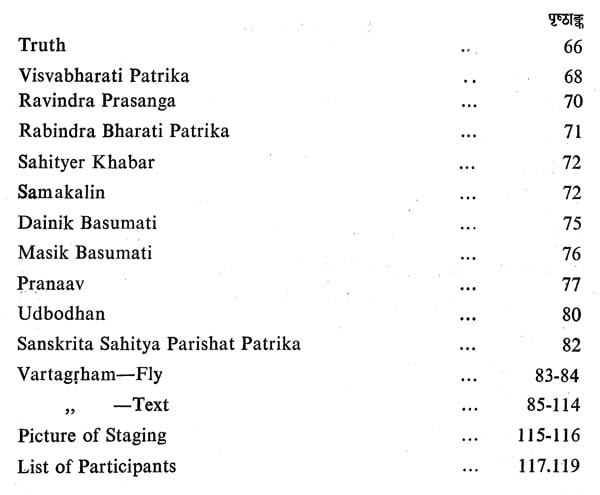
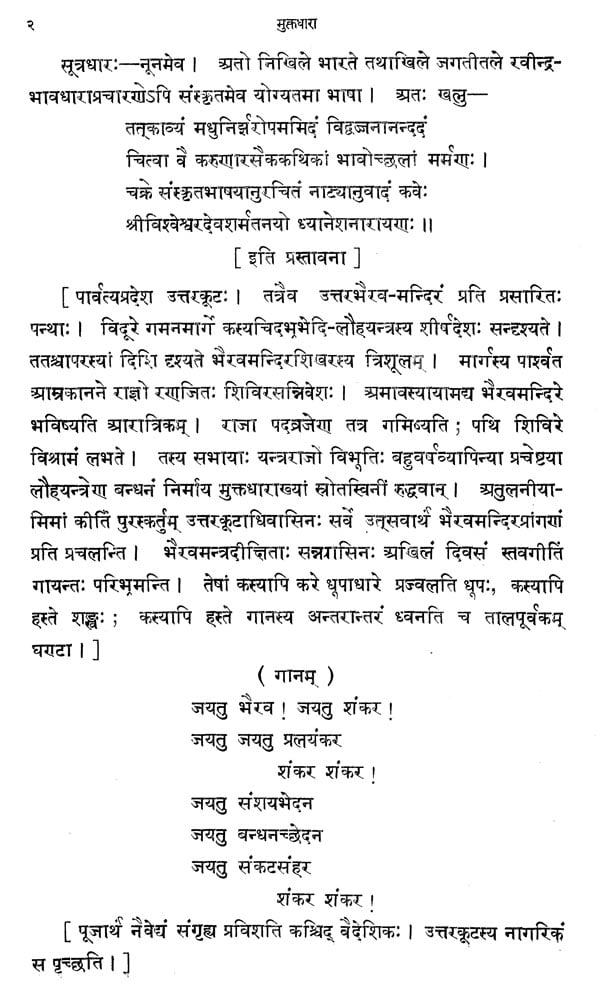
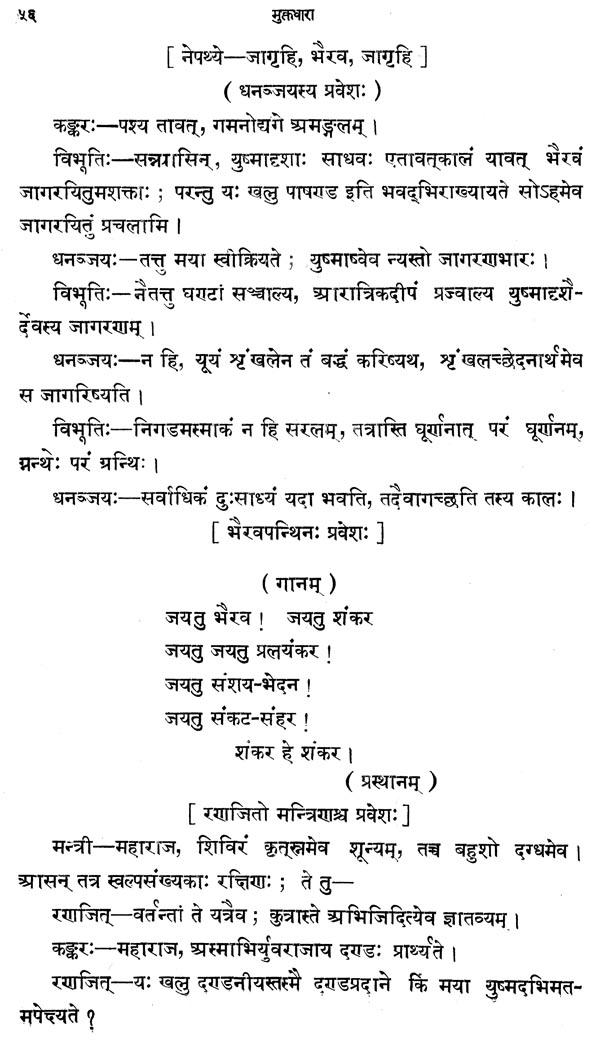
Book's Contents and Sample Pages