



Foreign Biographies of Shivaji
Book Specification
| Item Code: | UAF387 |
| Author: | Surendra Nath Sen |
| Publisher: | Varada Prakashan Pvt Ltd, Pune |
| Language: | English |
| Edition: | 2020 |
| ISBN: | 9788194816249 |
| Pages: | 492 |
| Cover: | PAPERBACK |
| Other Details | 8.50 X 5.50 inch |
| Weight | 460 gm |
Book Description
enter>Preface The first volume of this series was published in 1920 It was then intended to include an English translation of Marathi letters and historical documents of Shivaji's time in the next. I could not take up the work immediately in hand. Meanwhile the Govern-ment of Bombay decided to bring out a corn-. prehensive source book of Maratha history, and the task of editing and compiling it was entrusted to more competent scholars. I have, therefore, selected for translation and publication in this volume only such foreign works and contemporary documents as will not be included in the source book mentioned above. My attempt has been to place before the average University student the raw materials of Maratha history while avoiding unnecessary reduplication of work. Extracts from Fryer and Bernier and contemporary English account of the first and second sack of Surat have, therefore, been omitted, as I am informed by Principal H. G. Rawlinson that these will find a place in his volume. Introduction EUROPEAN BIOGRAPHERS OF SHIVAJI. Shivaji's fame reached Europe while he was yet alive. His heroic exploits, daring deeds and clever stratagems had found a fitting place in the accounts of contemporary English, French, Dutch, Portuguese and Italian writers long before the name of the Marathas became known to the world outside. In 1659, the year of Afzal Khan's death, the English Factors of Rajapur wrote to their superiors at Surat of "Sevagy, a great Rashpoote" ; Father Navarette, who visited India in 1670, thought that Shivaji was a Moghul, and the anonymous author of the Relation ou Journal d'un voyage fait aux Indes Orientates (Paris, 1677) asserted that Shivaji was descended from the ancient emperors of India and was a relatis e of the Great Moghul. Such inaccuracies were inevitable, but it was quite in the fitness of things that the dreaded plunderer of Surat should form a constant subject of enquiry and conversation among the European visitors of Western India. Some of them had recognised that Shivaji was more than a rebel chief; he was a great general and a greater statesman. 

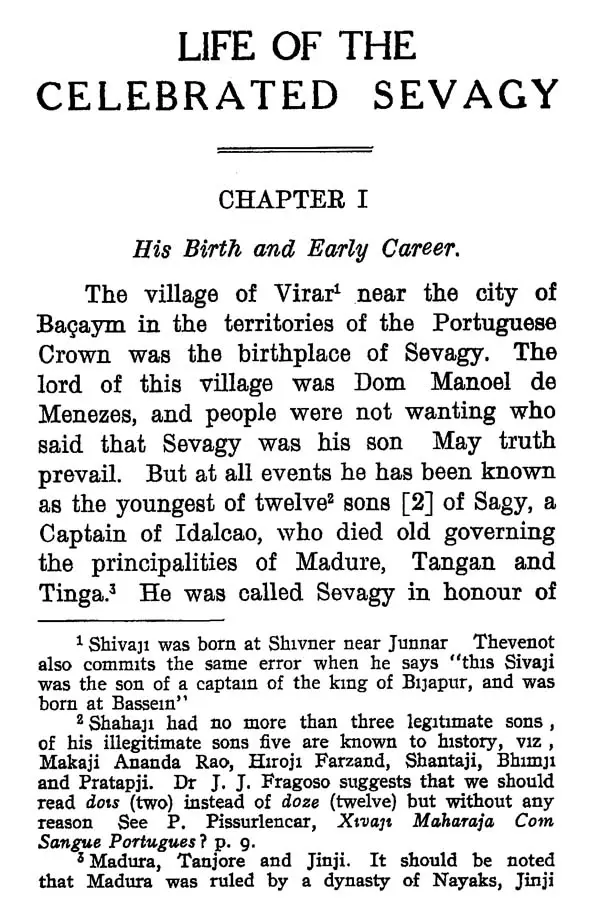
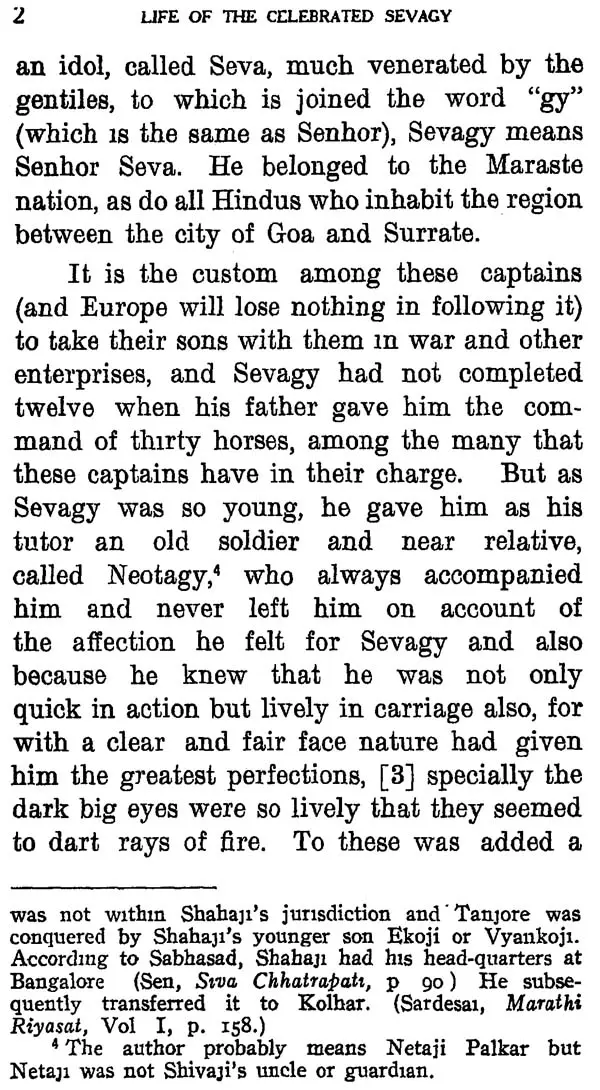
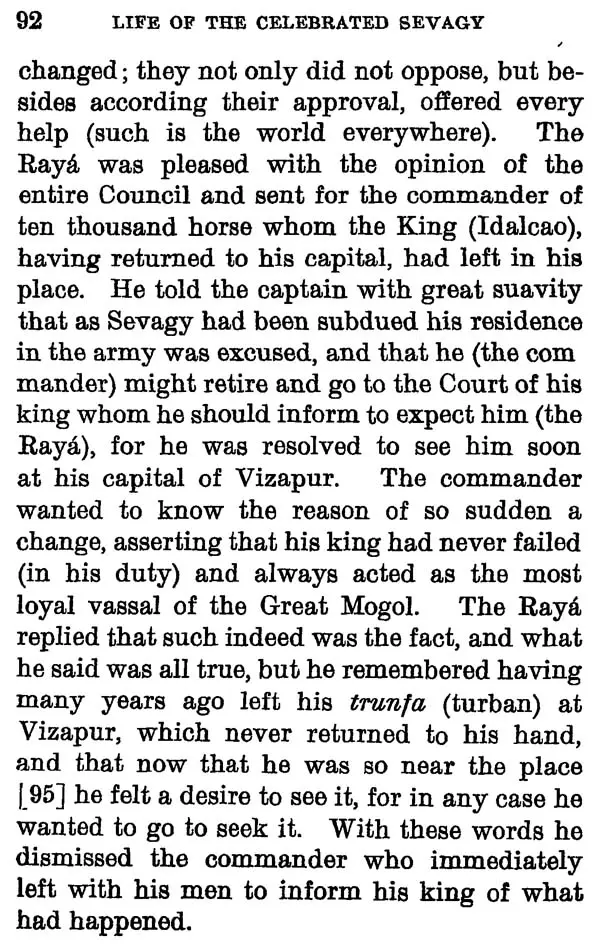
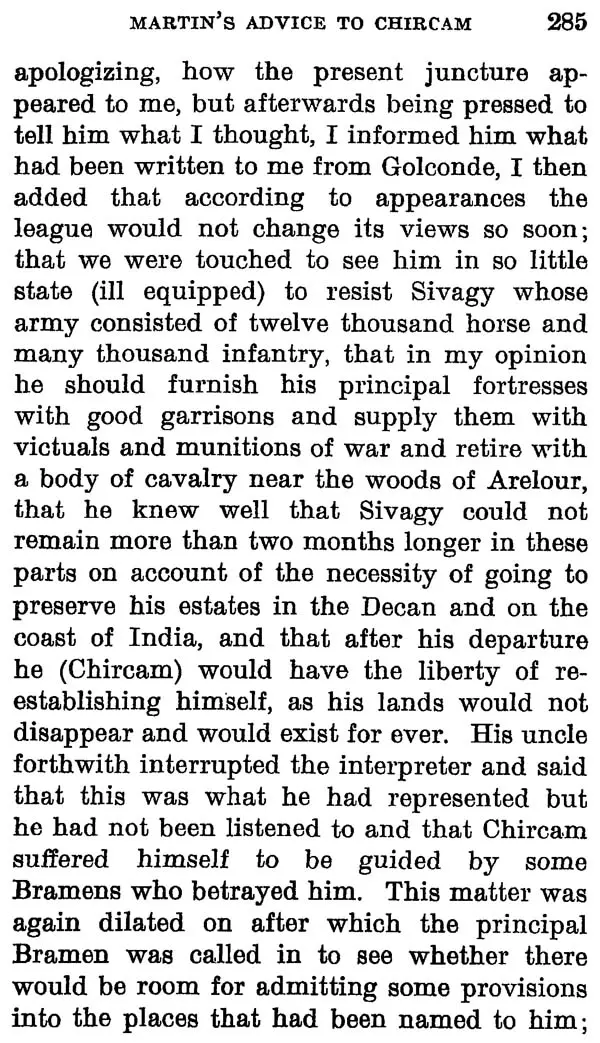
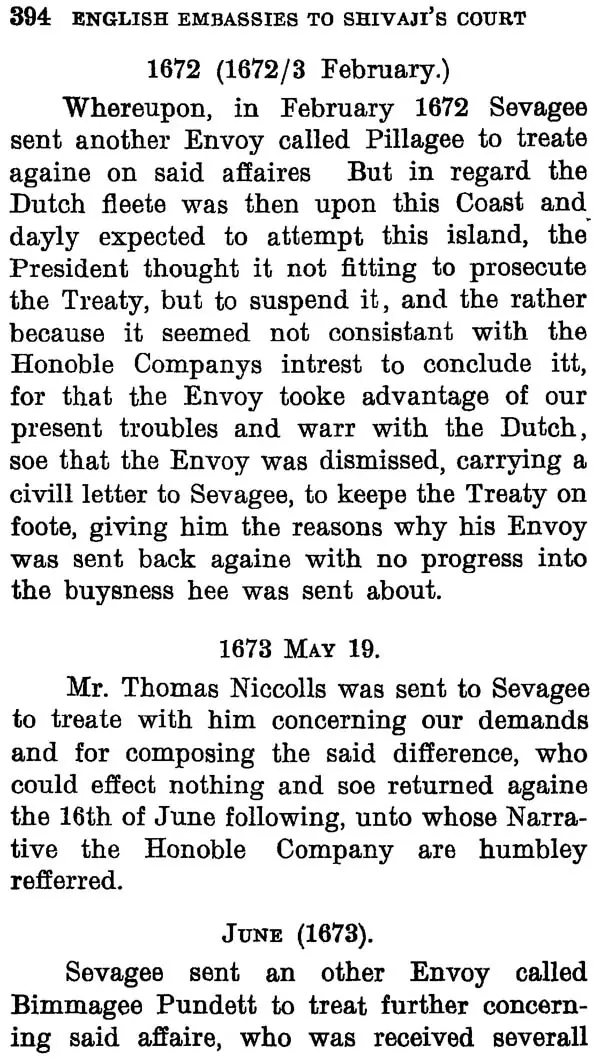

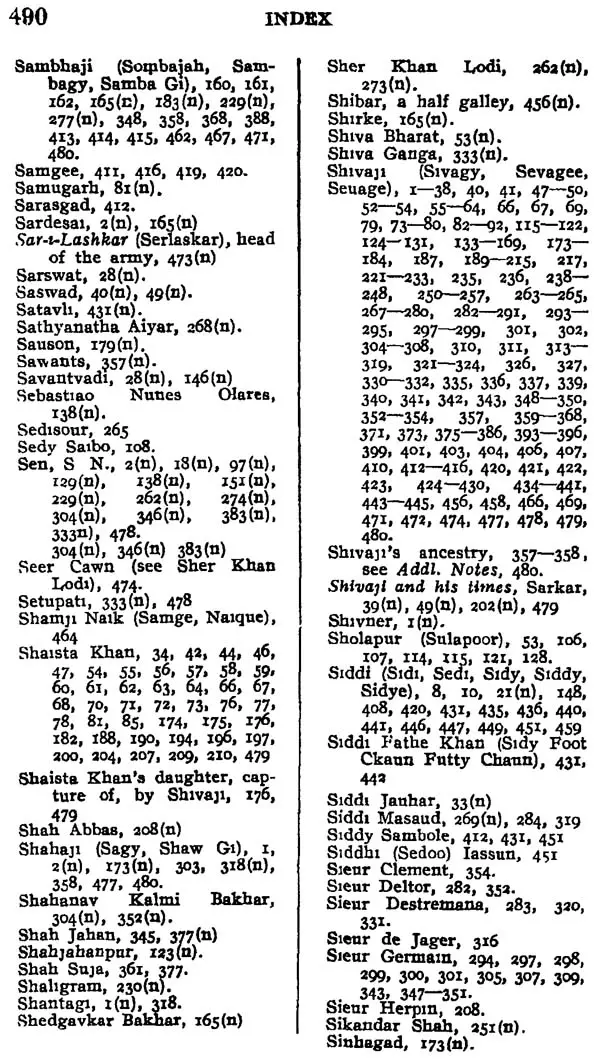


Cosme da Guarda's Vida e Amens do famoso e felicissimo Sevagy is for the first time translated here.
Book's Contents and Sample Pages


