

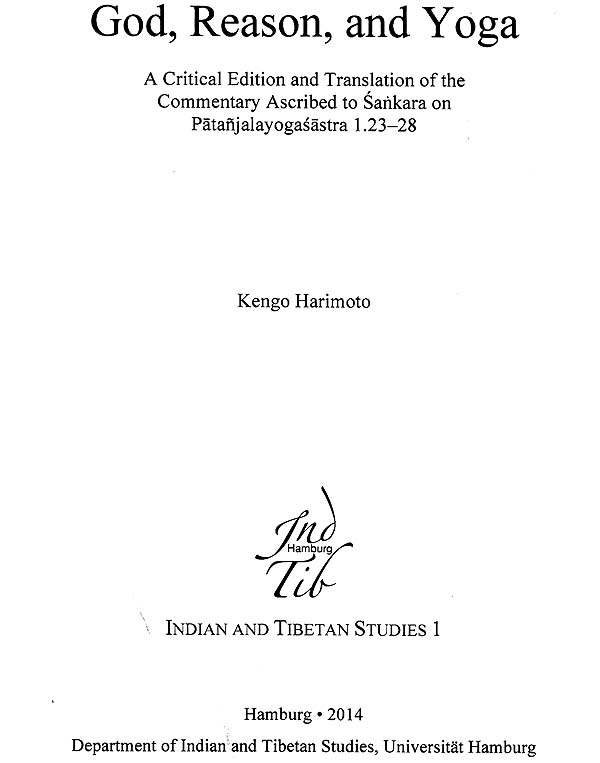
God, Reason, and Yoga (A Critical Edition and Translation of Commentary Ascribed to Sankara on Patanjalayogasastra)
Book Specification
| Item Code: | NAN106 |
| Author: | Kengo Harimoto |
| Publisher: | Department of Indian and Tibetan Studies at University of Hamburg |
| Language: | English |
| Edition: | 2014 |
| ISBN: | 9783945151006 |
| Pages: | 285 |
| Cover: | Hardcover |
| Other Details | 9.5 inch X 6.0 inch |
| Weight | 680 gm |
Book Description
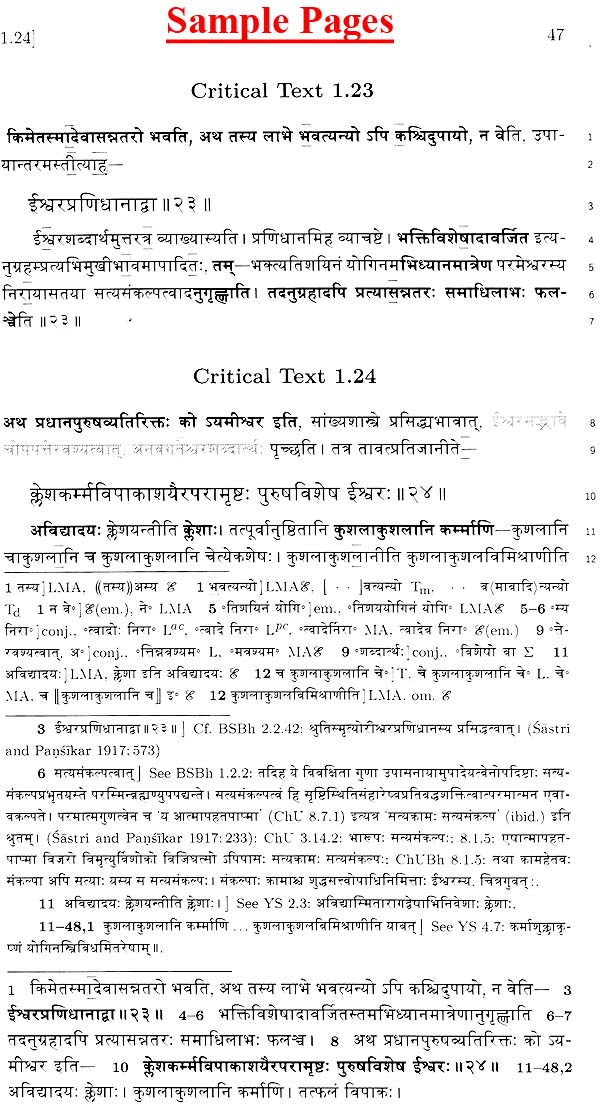
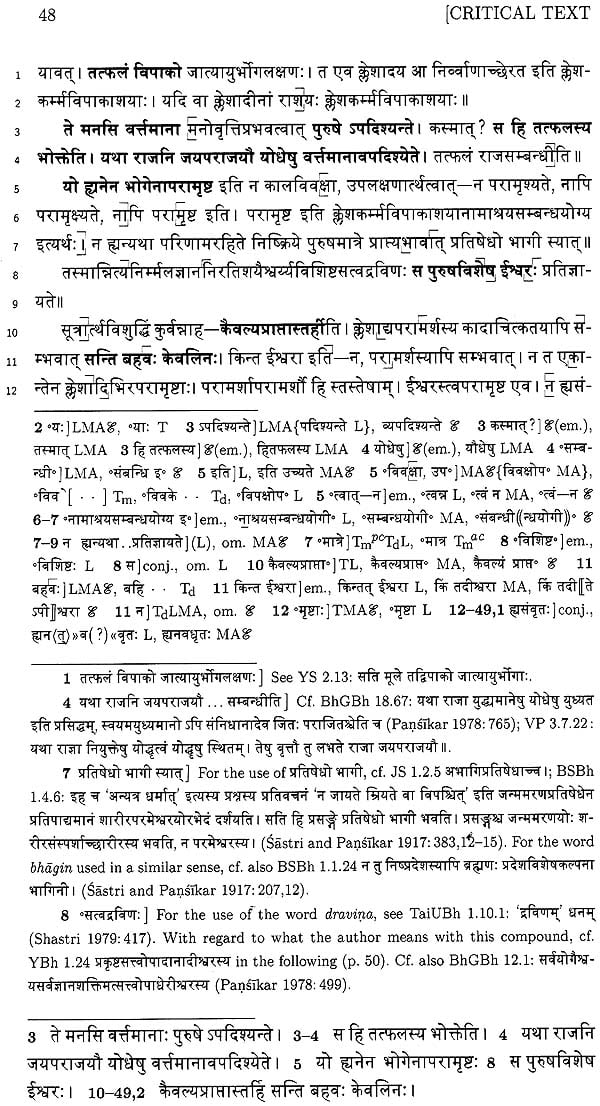
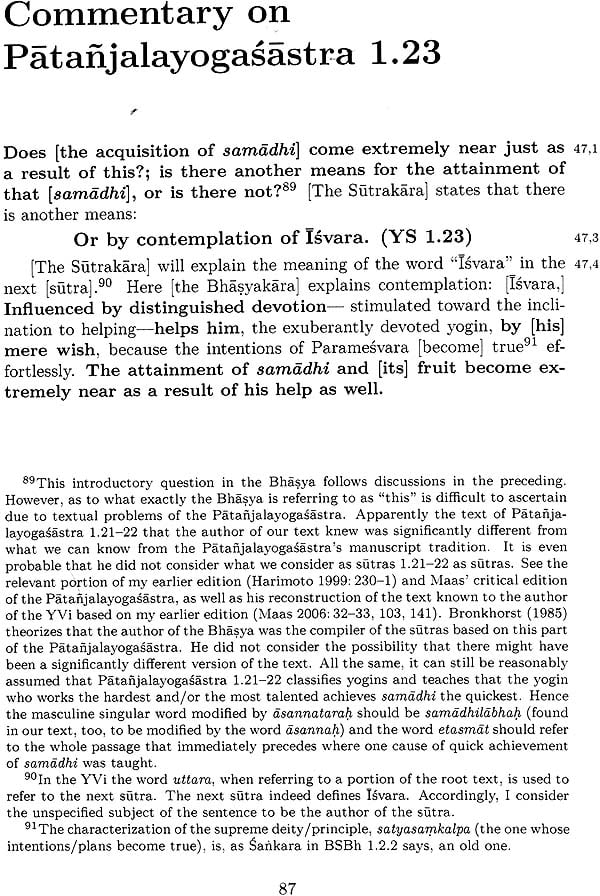
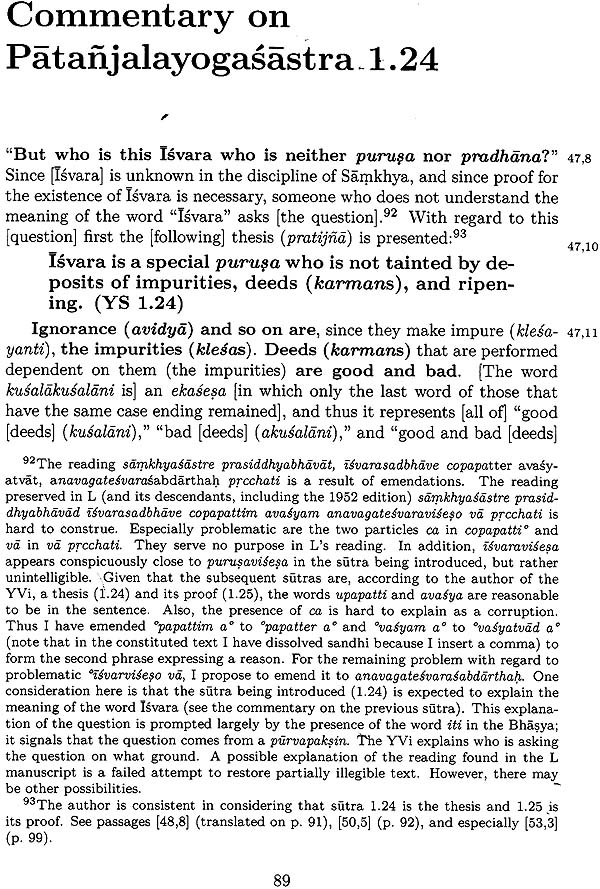
This book has been in the making for too long. The initial idea was to publish an improved version of my doctoral thesis submitted to the University of Pennsylvania in 1999. It was a critical edition of the first chapter (pada) of the Patanjalayogasastravivarana (i.e., the Yogasutra + its commentary, the Yogabhasya). When I was preparing the book in Hamburg in 2001, the hard drive of my computer crashed and took all the contents with it, including the source for the whole book. At that time, I had not been able to afford another hard drive for backup and I had trusted the mechanical device too much. What little backup I had was extremely old. In order to make a better use of the opportunity, I decided to re-do the whole thing. In the meantime, the software had been evolving and I decided to adopt to the new software situation. In 2005, while I was in Leiden as a Gonda Fellow, I was persuaded by Ado Griffiths and the late Professor Tilmann Vetter to provide a translation. It was a sensible thing to do. I am thankful to both of them. By looking at the text again thoroughly, producing a translation, I believe the critical text has improved much. Also, we decided to read the part on Isvara in the text since I thought that part might be interesting for Professor Vetter. By the end of the period as a Gonda Fellow, I made a decision to have only the part we read in Leiden as a book to accelerate the process. By 2006, the book was 90% ready, I thought. I cannot quite explain why it took so long till this book is finally out. I am the only person to be blamed for the delay.
I find it ironical that in the end, this books deals with in principle the same part of the Vivarana as my master's thesis did. It feels as if I am going back to my roots. I hope my scholarly experiences in the meantime gave me better understanding of that part.
There have already been two complete translations of the whole of the Vivarana, based on the Madras edition published in 1952. I trust, however, that there still is room for this book with an improved edition of the text itself and many notes accompanying the translation.
I do intend to publish an edition and translation of the rest of the first chapter of the Vivarana, The other parts also contain important discussions in terms of the history of Indian philosophy. This first instalment took too long. I hope the next one will not take that long. Also, I am considering to present my thoughts on the authorship problem of the Vivarana-whether it was written by the famous commentator on the Brahmasutra, Sankara-in the form of a separate volume. In this book, readers will find my observations on the issue in the form of footnotes or in the appendix. They probably will get an impression where I might stand. However, I have not formed a final opinion even after all these years. The issue needs a systematic treatment and I should make a clear statement regarding the issue. I would like to ask the readers to pray for an early completion of the book.
This book is typeset using the typesetting system. The document class is memoir and for the critical text, the ednotes suite is used. The book is typeset in Latin Modern family of fonts alongside the Devanagari font for the Devanagari text.

| Preface | iii |
| Acknowledgements | v |
| Abbreviations | 1 |
| Text and Edition | 1 |
| Sigla and Others | 3 |
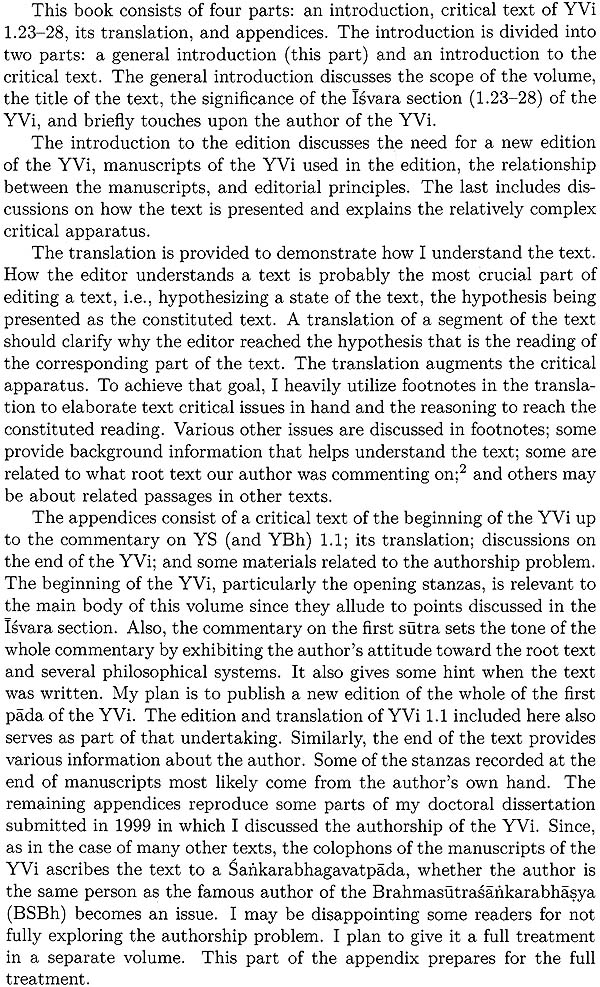
| Introduction | 5 |
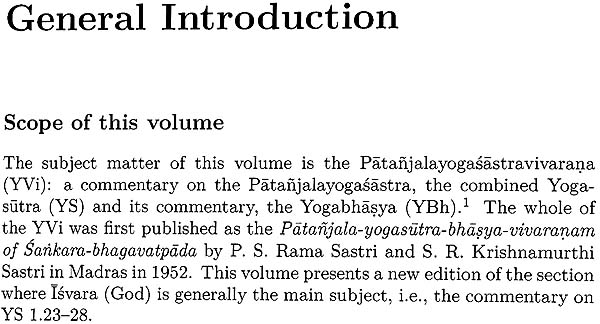
| General Introduction | 7 |
| Scope of this Volume | 7 |
| Title of the work | 9 |
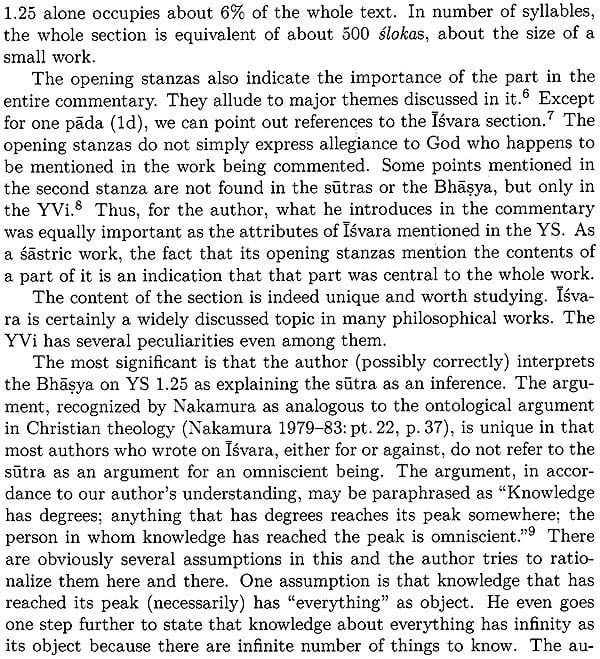
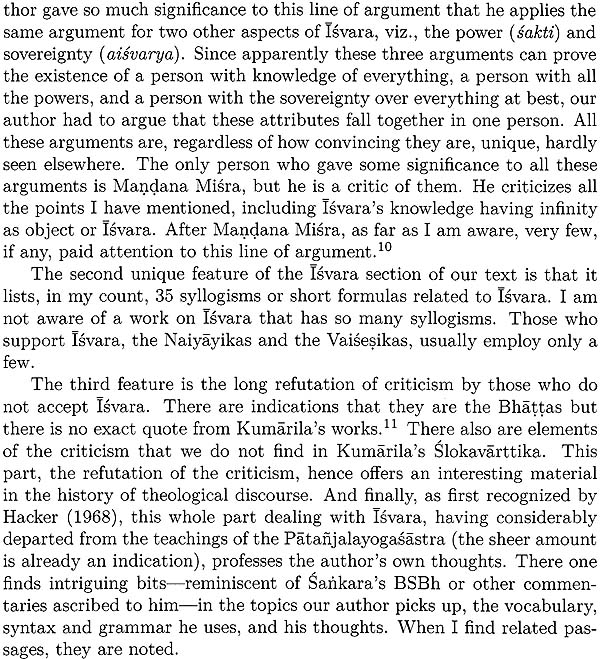
| Isvara section of the Yvi | 9 |
| The Author | 11 |
| Introduction to the Editon in this Volume | 15 |
| Call for a new edtion | 15 |
| Manuscripts | 16 |
| Relationship among manuscripts | 25 |
| Editorial Principles | 33 |
| Critical Text | 45 |
| Critical Text | 47 |
| Critical Text 1.24 | 47 |
| Critical Text 1.25 | 53 |
| Critical Text 1.26 | 77 |
| Critical Text 1.27 | 80 |
| Critical Text 1.28 | 83 |
| Translation | 85 |
| Commentary on Patanjalayogastra 1.23 | 87 |
| Commentary on Patanjalayogasastra 1.24 | 89 |
| Commentary on Patanjalayogasastra 1.25 | 99 |
| Commentary on Patanjalayogasastra 1.26 | 141 |
| Commentary on Patanjalayogasastra 1.27 | 151 |
| Commentary on Patanjalayogasastra 1.28 | 165 |
| Appendices | 169 |
| Critical Text 1.1 | 171 |
| Translation of the Commentary on Patanjalayogasastra 1.1 | 185 |
| Opening Stanzas | 185 |
| Commentary on Patanjalayogasastra 1.1 | 186 |
| The Ending of the Yvi | 207 |
| Transcripts | 207 |
| An edition of the Common part | 209 |
| An edition of Colophon Stanzas of Tm | 215 |
| An Edition of Colophon Stanzas of L | 219 |
| Notes on the 1952 Edition | 221 |
| Layers in the ending of the Yvi manuscripts | 222 |
| Materials for the Authorship Problem | 225 |
| Chronology of controversy | 225 |
| Criteria of Hacker and Mayeda | 242 |
| The Payyur Family | 247 |
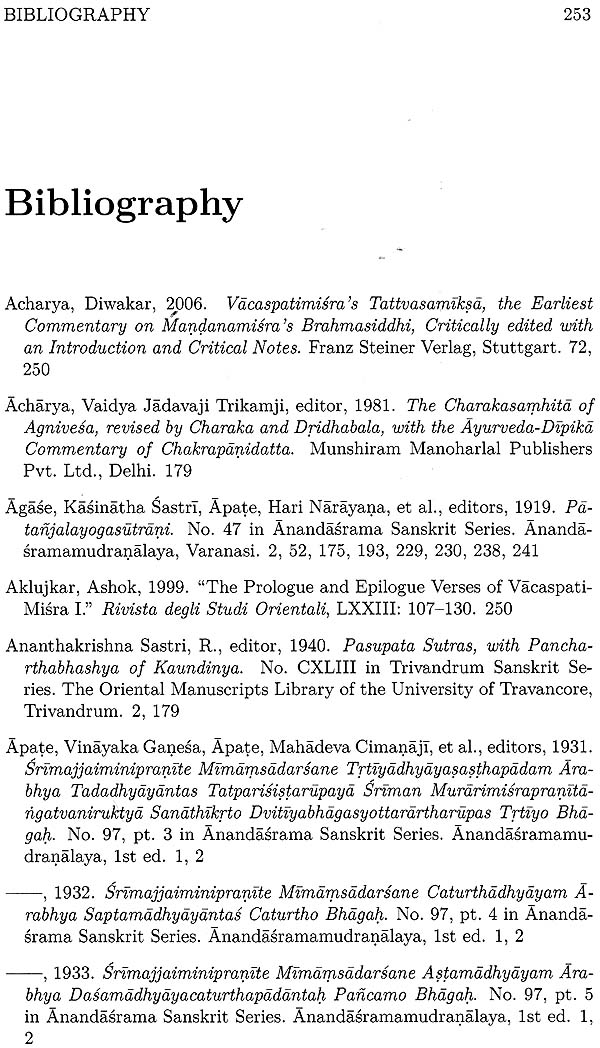
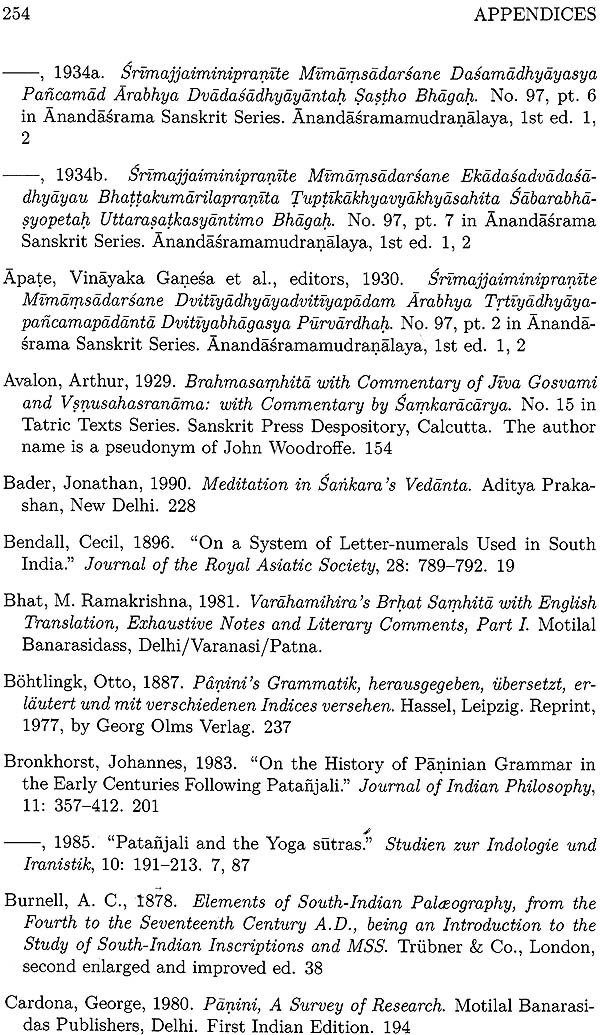
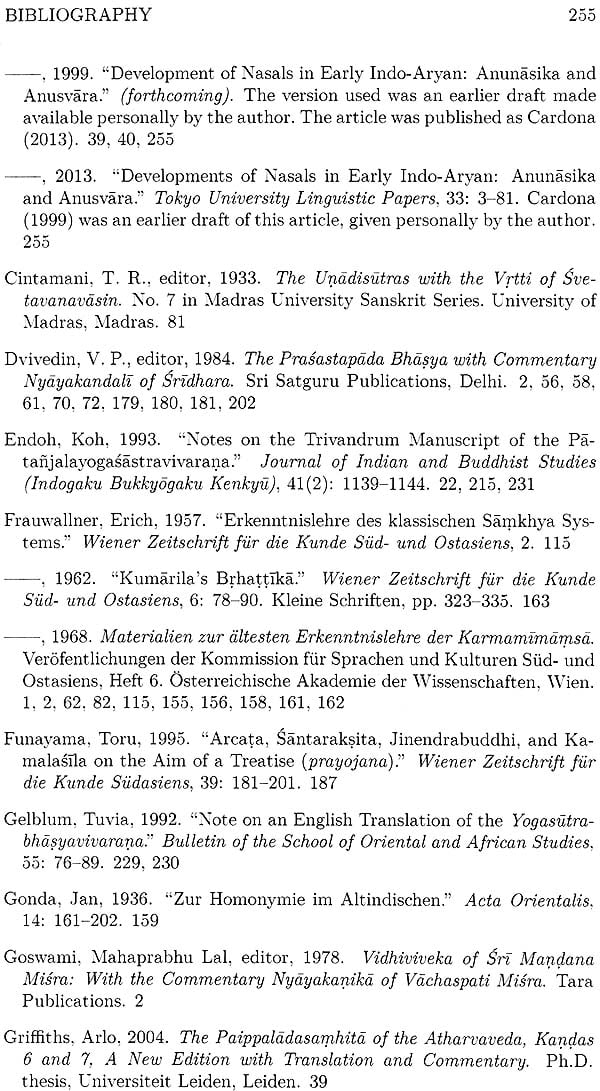
| Bibliography | 253 |
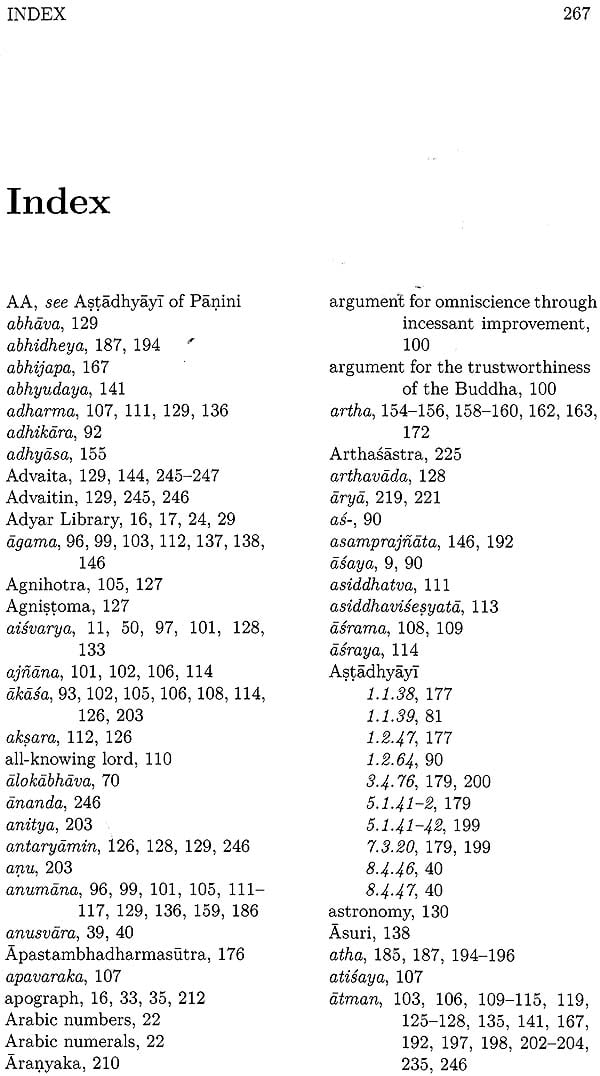
| Index | 267 |