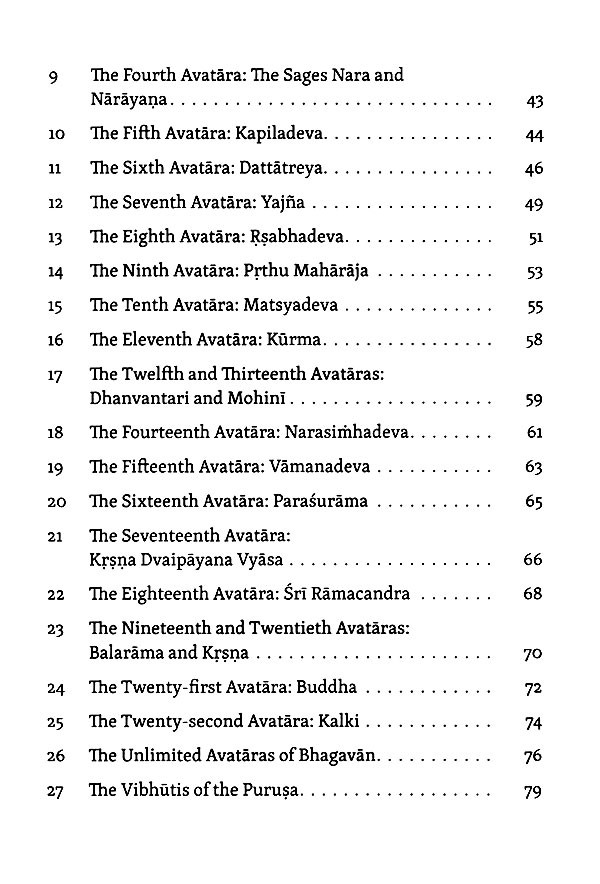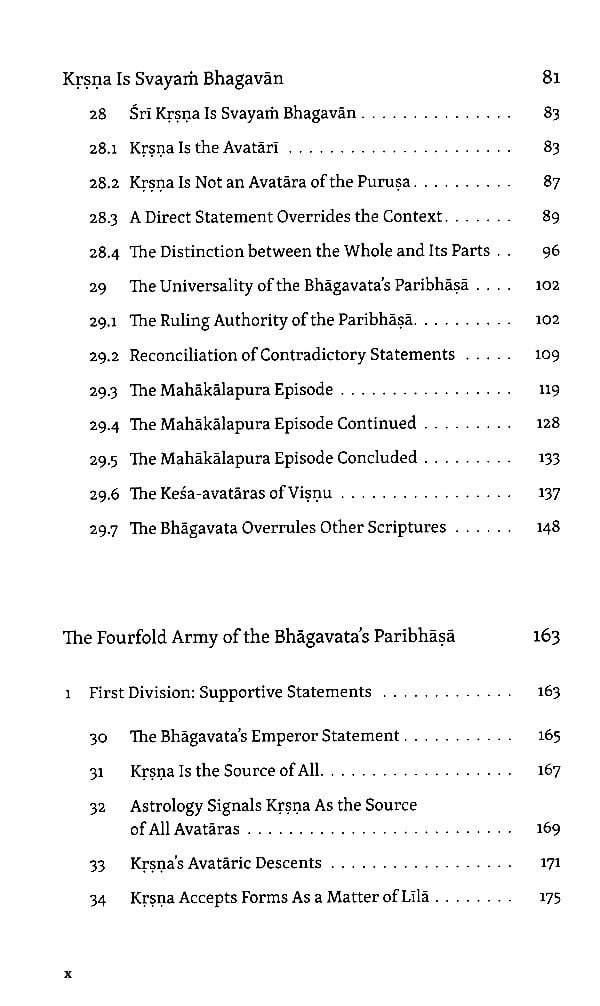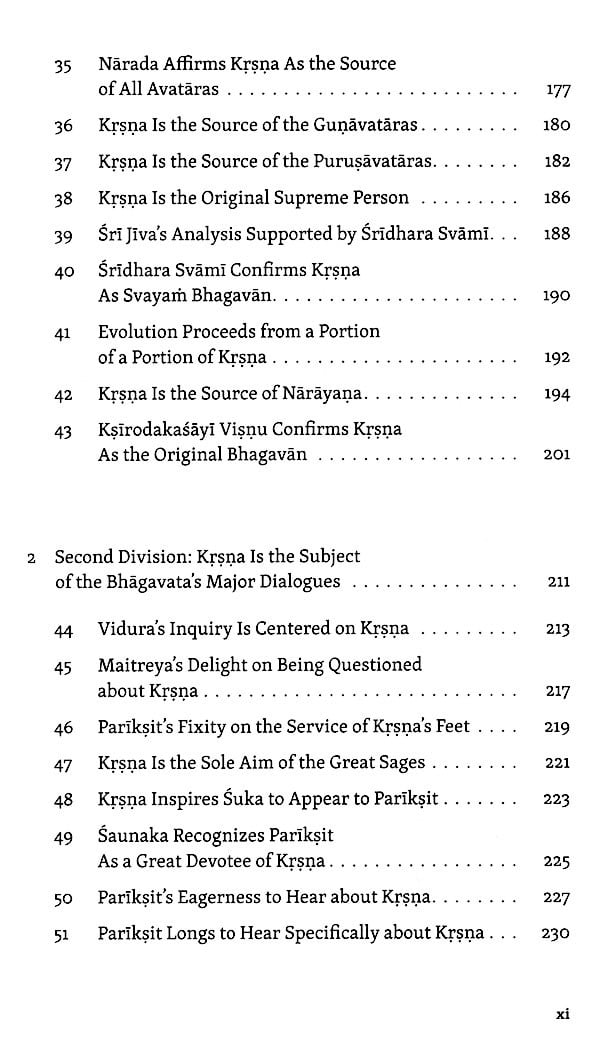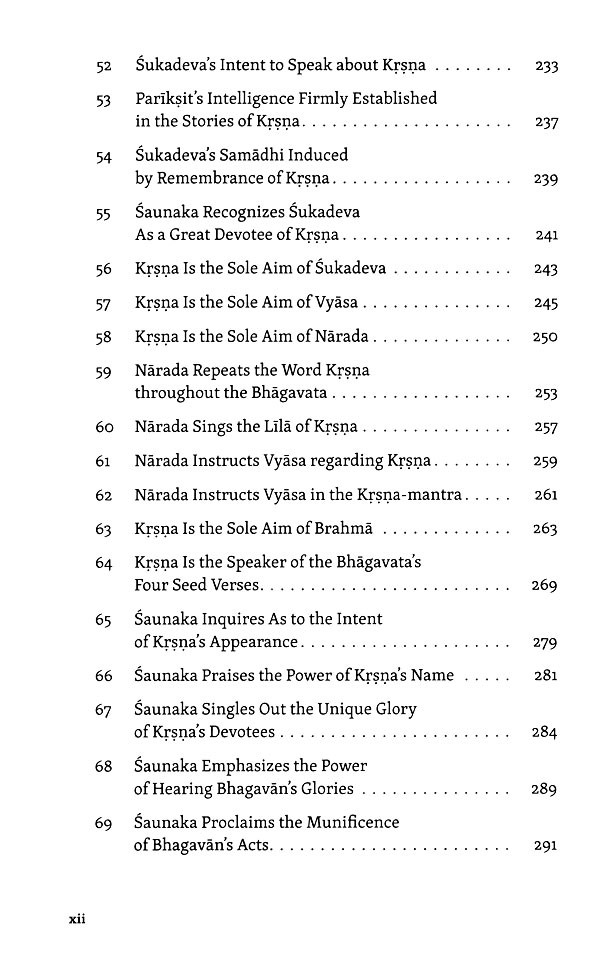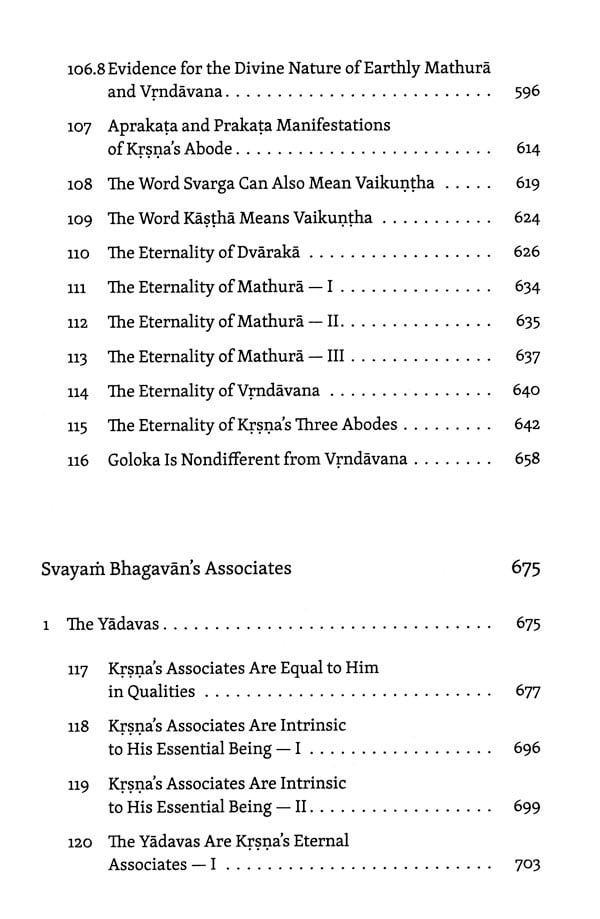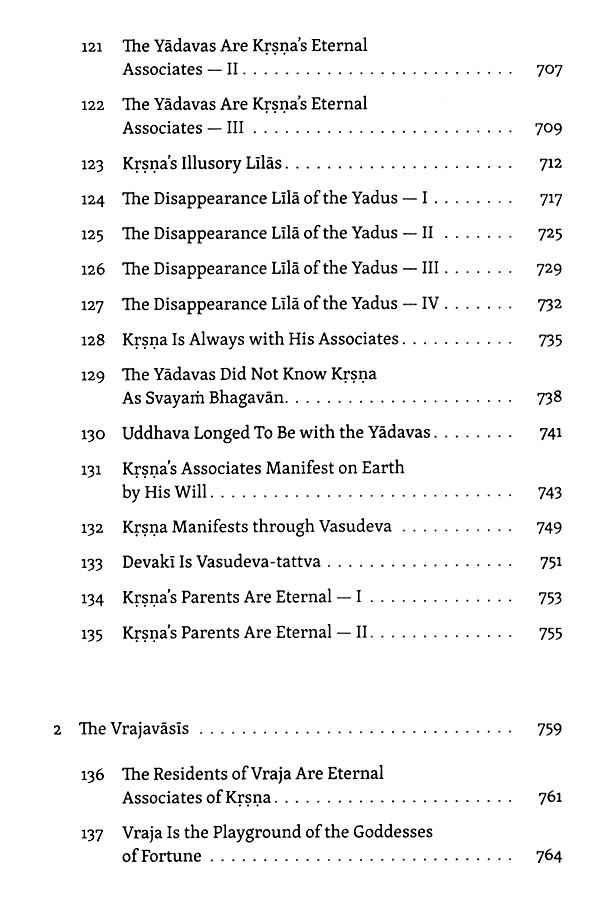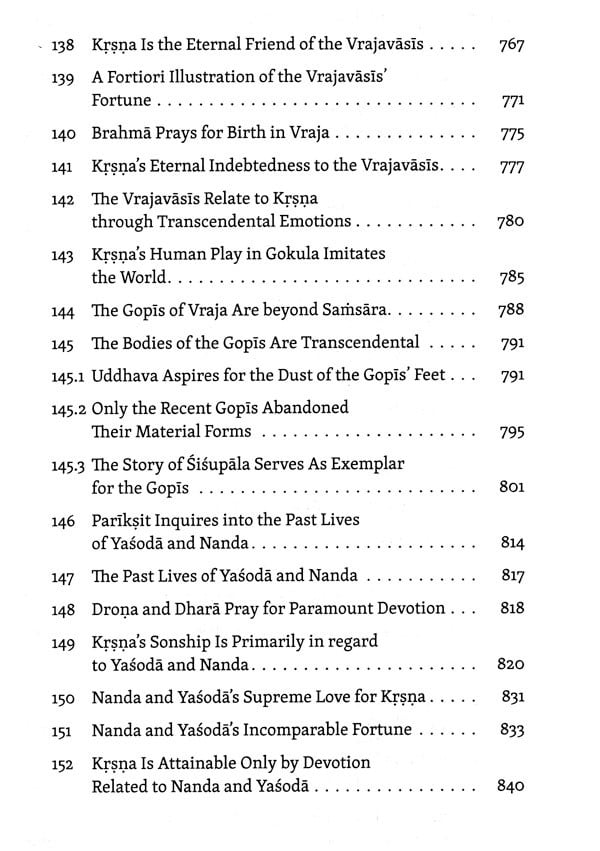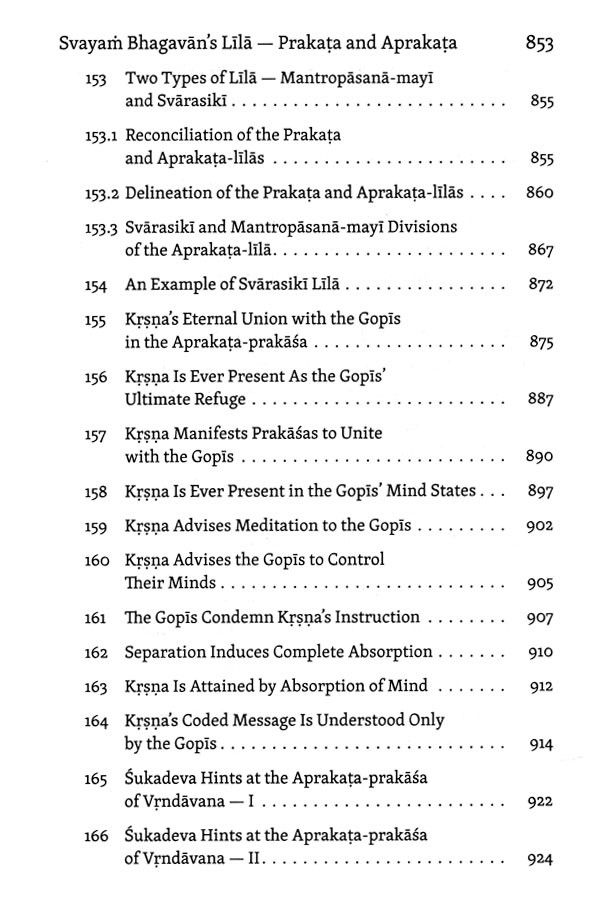


Sri Krsna Sandarbha (The Original Form of God)
Book Specification
| Item Code: | NBZ358 |
| Author: | Satyanarayana Dasa |
| Publisher: | Jiva Institute, Vrindavan |
| Language: | Sanskrit Text with English Translation |
| Edition: | 2018 |
| ISBN: | 9788187153962 |
| Pages: | 1458 |
| Cover: | HARDCOVER |
| Other Details | 8.80 X 5.80 inch |
| Weight | 1.48 kg |
Book Description
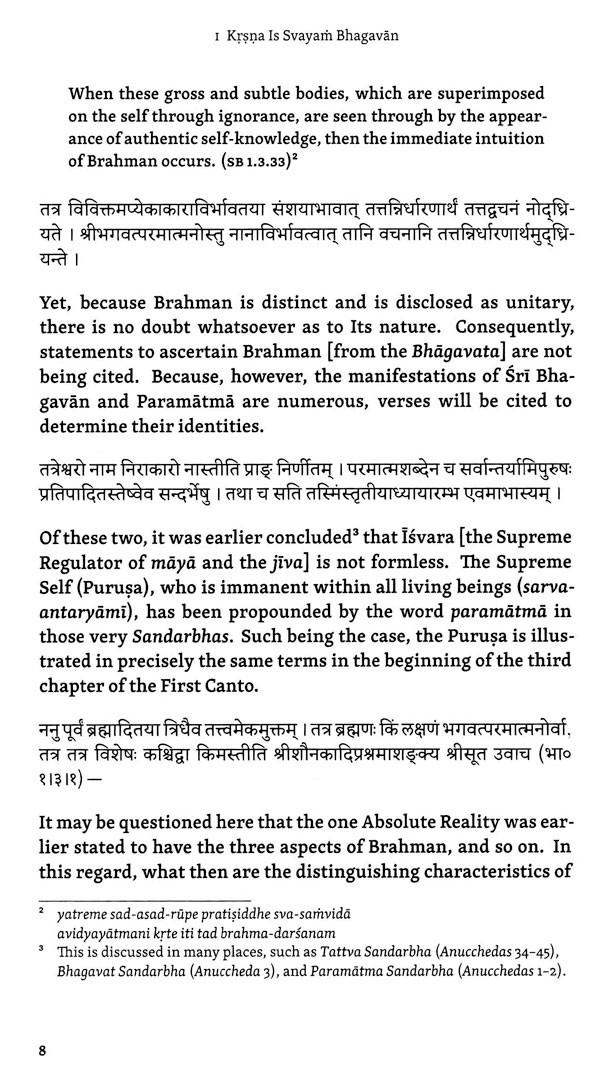
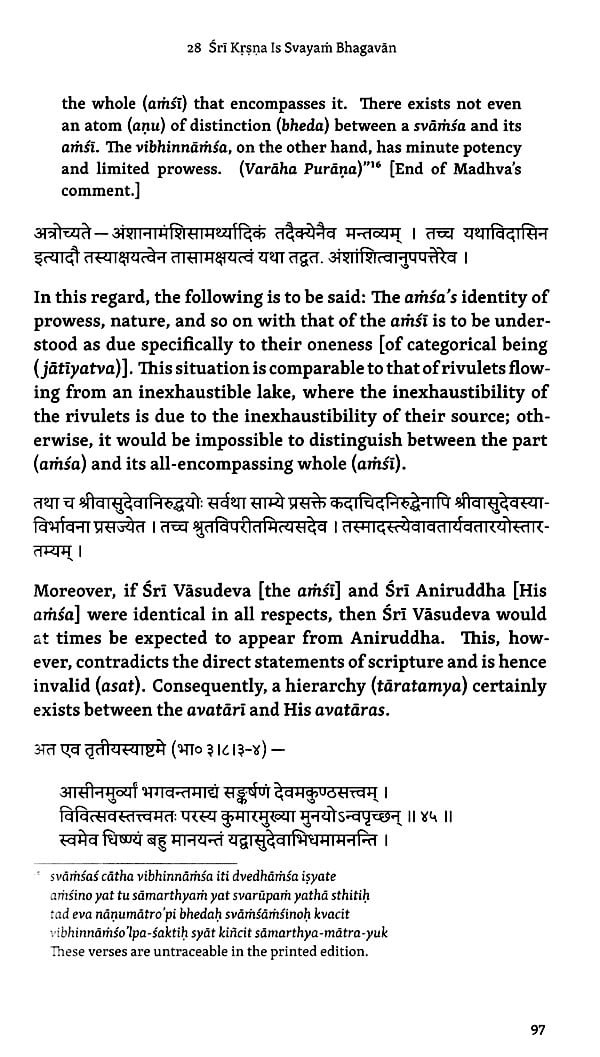
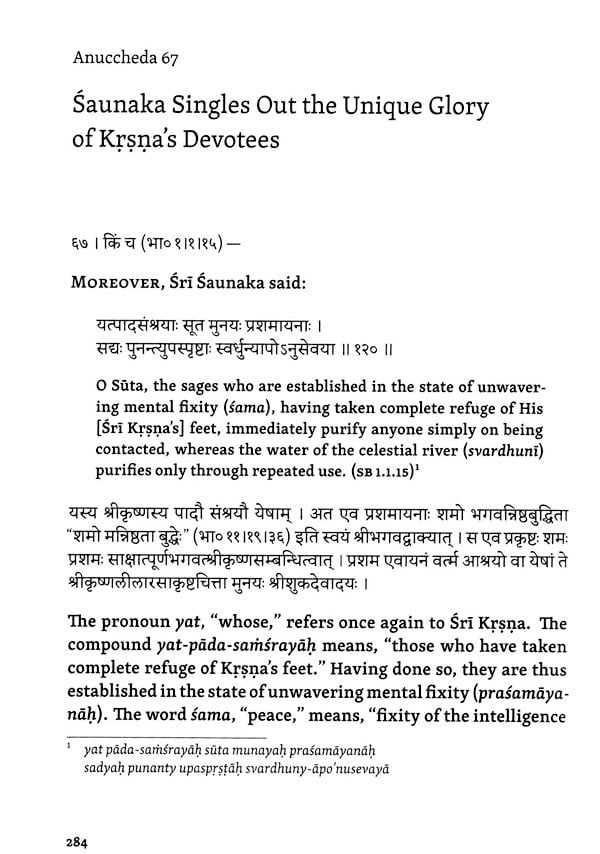
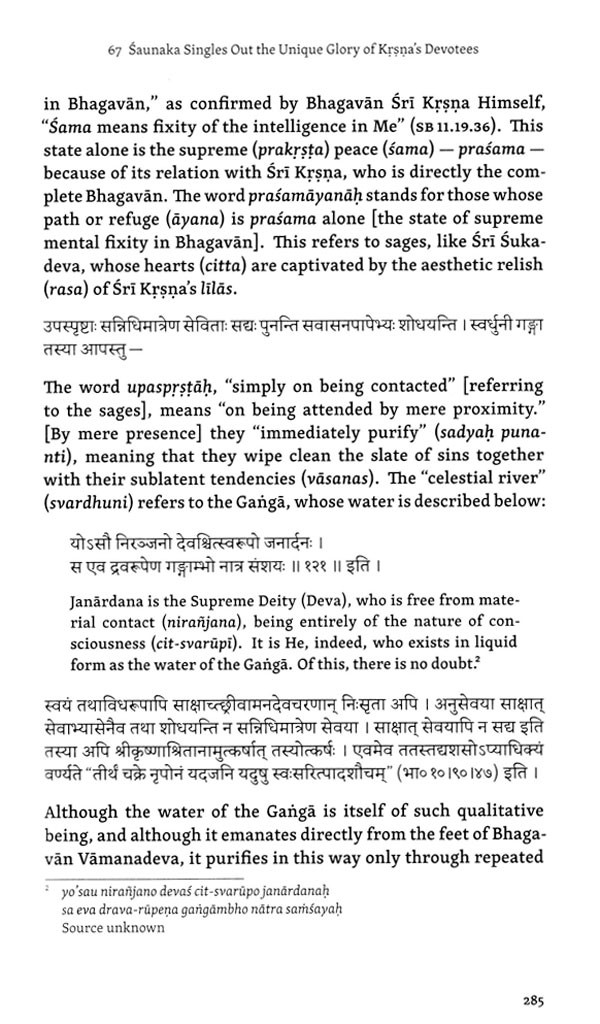
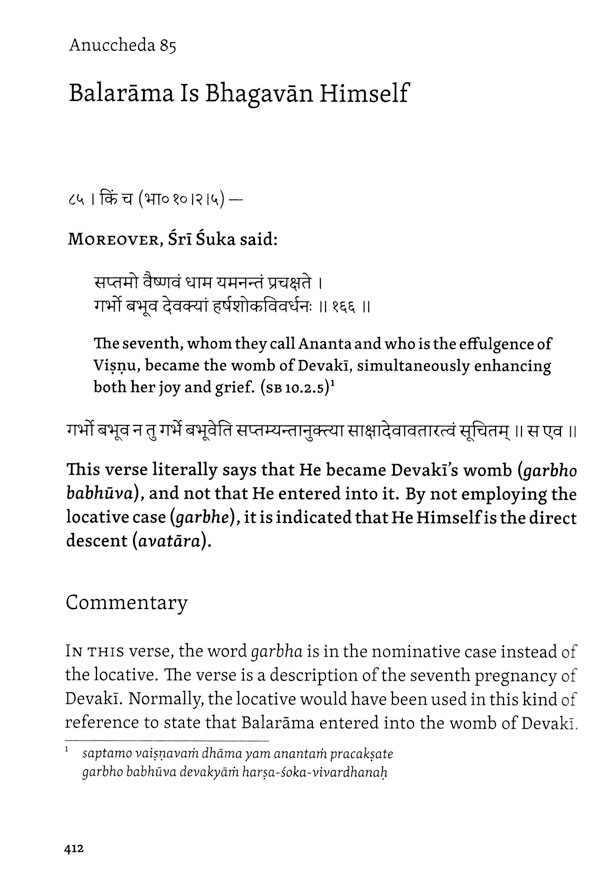
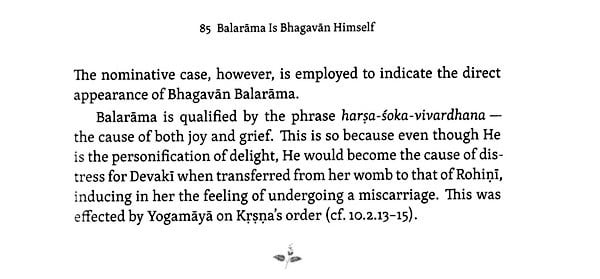
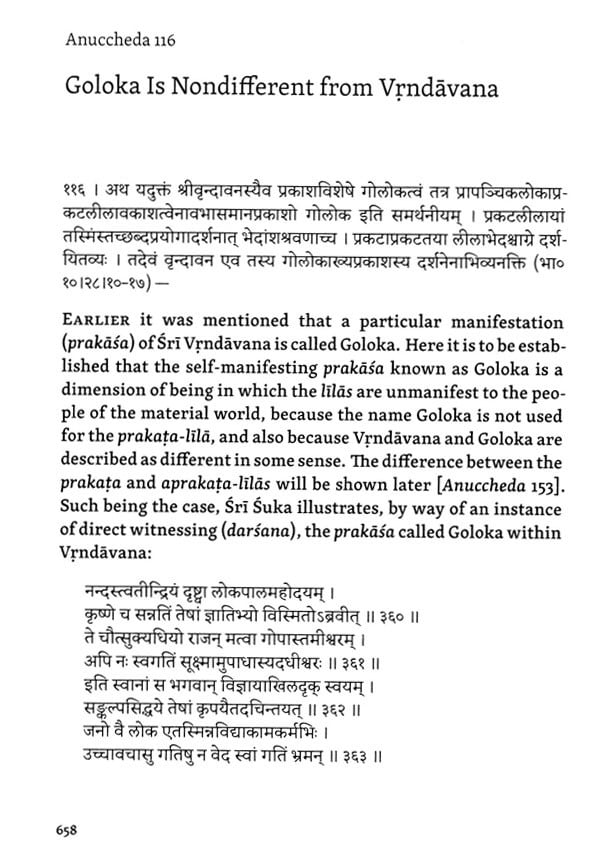
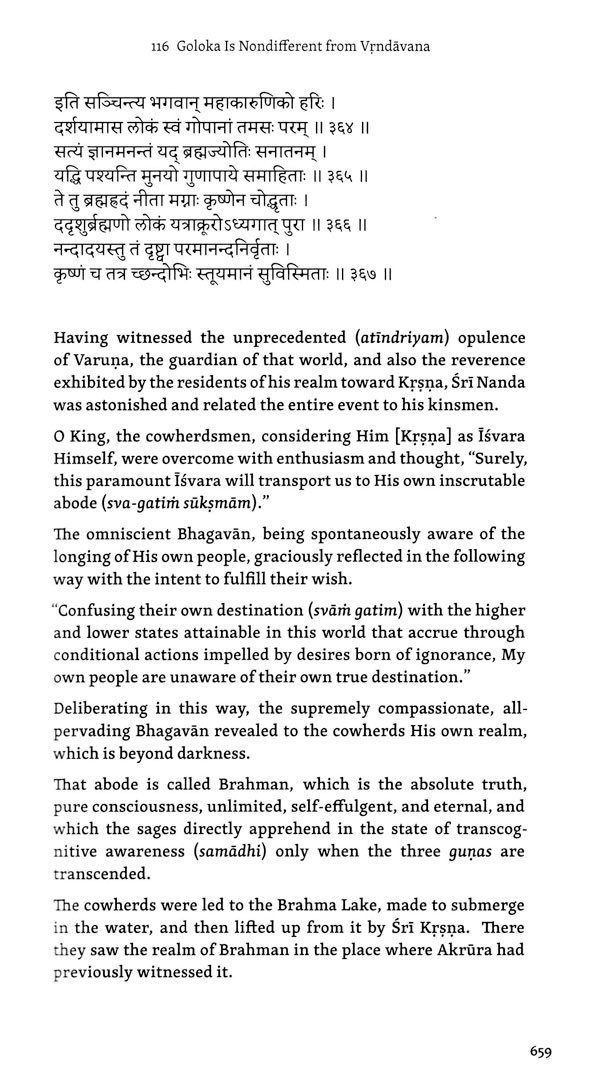
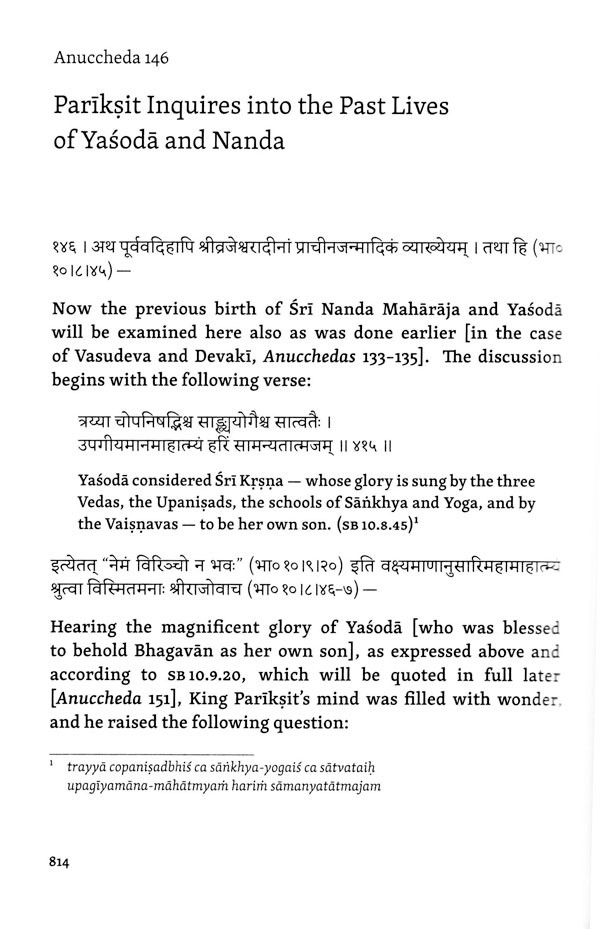
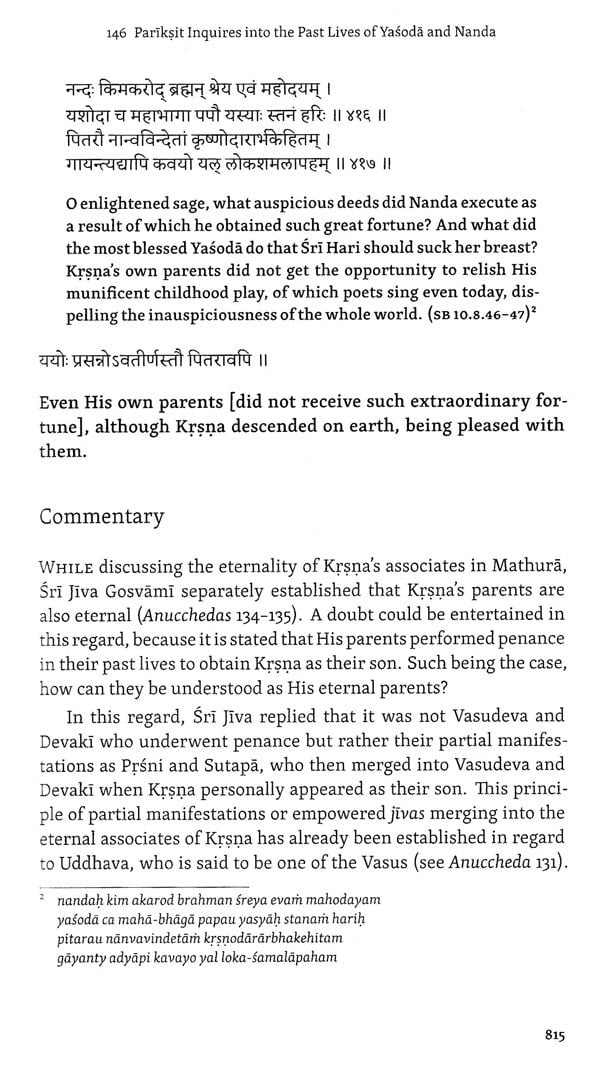
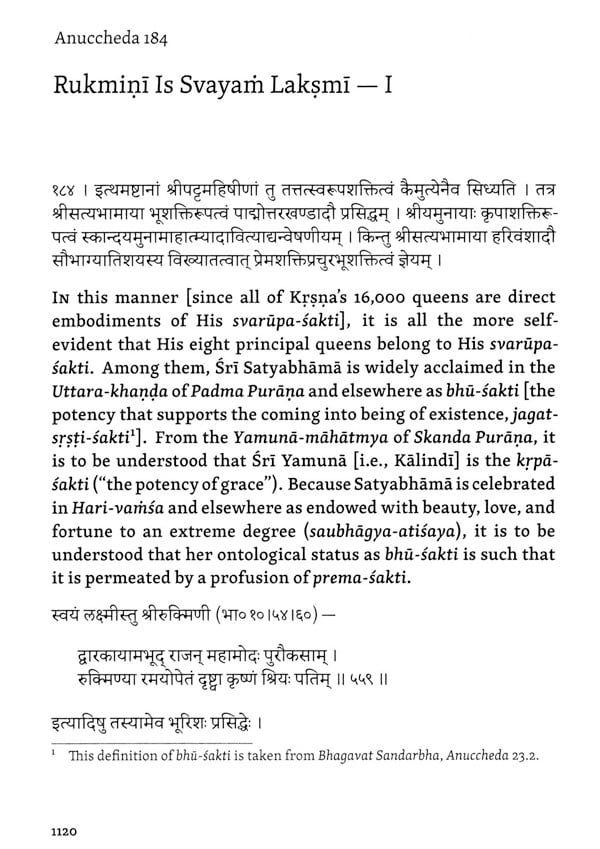
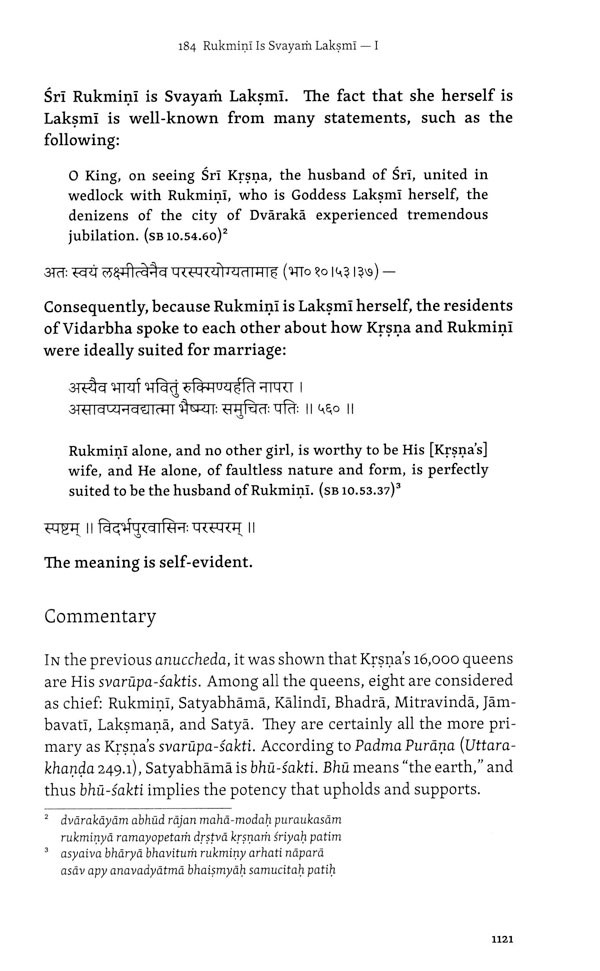
Krsna Sandarbha WITHIN the entire gamut of Vedic literature, Śrī Krşņa Sandarbha stands out as a unique and brilliant investigation into the constitutional being of Svayam Bhagavān. Who or what Bhagavān actually is in His own identity is not at all clear to people in general and also to the majority of spiritual practitioners. Prior to discussing Bhagavān in general in Bhagavat Sandarbha and Svayam Bhagavān in particular in this fourth volume, Śrī dīva Gosvāmī laid the foundation for an existentially grounded inquiry in the first volume itself, by making evident the primordial and fundamental nature of the Reality (tattva) to be investigated as nondual consciousness (advaya-jñāna). On this basis, Śrī Jīva proceeds in this volume to establish Krsna as Svayaṁ Bhagavān, the same nondual reality in its highest completion. This is the principal theme of Krsna Sandarbha. This is also one of the chief distinctive features of the Gaudiya School of Vaişnavism. Although it contravenes the popular belief of Hindu indologists, this understanding is crucial for the highest type of devotion, uttama-bhakti, known as rāgānugā. ŚrīJīva Gosvāmī thus endeavors to dispel any doubts in this regard. This is his unique contribution to Hindu theology.
Satyanarayana Dasa BORN IN 1954, he was drawn to the spiritual traditions of his home country India since his childhood. After receiving a postgraduate degree in 1978 from IIT Delhi, he then worked in the United States for four years. After this period, he returned to India to begin formal study of the orthodox systems of Indian philosophy known as şad-darśana under the direct guidance of his guru Śrī Haridāsa Šāstrī Mahārāja and Svāmī Syāma Sarana Mahārāja. This education was pursued in the traditional manner for more than 25 years as he dedicated himself to the practice of bhakti-yoga. In 1991 he accepted the traditional Vaišnava order of renounced life, bābājī-veșa. His main focus has been on the works of Jīva Gosvāmī, particularly the Şat Sandarbhas, providing English translation and commentary. He also earned four śāstric degrees, and received both a law degree and a PhD in Sanskrit from Agra University. Satyanarayana Dasa is the director of the Jiva Institute of Vaishnava Studies in Vrindavan, India. In 2013 he was honored by the president of India, Pranab Mukherjee, for his extraordinary contribution in presenting Vedic culture and philosophy to students and audiences within India and internationally.
AMONG the pantheon of Hindu gods, avatāras, and / or manifestations of Bhagavān, Śrī Krsna stands out as one of the most popular and highly revered. Even among non-Hindus, He is widely acclaimed for His universal teachings on the path of enlightenment in the form of Bhagavad Gītā, the most renowned scripture of the Hindus, and for His fascinating life-stories. In spite of this extensive notoriety, His identity remains a great enigma. No other Hindu deity is shrouded in as much mystery as He. People from different backgrounds hold diverse opinions about Krşņa, many of which seem contradictory. They consider Him as a great lover, a skilled statesman, and a highly realized mystic. As an irrepressible lover, He is famous for stealing the clothes of the young gopīs while they were bathing in the Yamunā River and for marrying 16,108 princesses. Yet, as an accomplished mystic, He is esteemed as the speaker of Bhagavad Gītā and as Yogeśvara, the “Master of Yoga,” in which celibacy and reticence are fundamental principles. He is well-known as a simple cowherder, yet He is also famous as the most venerated royal scion, who received the principal honors at Emperor Yudhisthira's rājasūya-yajña, in the presence of the world's foremost kings, scholars, and sages.
Notwithstanding Krsna's enigmatic nature, it is essential to gain a clear picture of His true ontological status in order to grasp the significance of the Bhāgavata Purāņa and the method by which it self-discloses truth, namely, bhakti-yoga. As established in Tattva Sandarbha (Anucchedas 50-52) with reference to the Bhāgavata's second verse (SB 1.1.2), this Purāņa specifically propounds the supreme dharma of humanity, which is love for Bhagavān - our very source and refuge. To be infused with transcendental love for Bhagavān, authentic and unambiguous knowledge about Him and His essential being is of utmost importance. Since Bhagavān has innumerable forms, such as Vişnu, Rāma, Kșsna, and Nộsimha, the question must be asked, are They all equiprimordial in Their constitutional status or is there some hierarchy of being among Them? To address this question, Śrī Jīva Gosvāmī wrote this book, Krşņa Sandarbha.
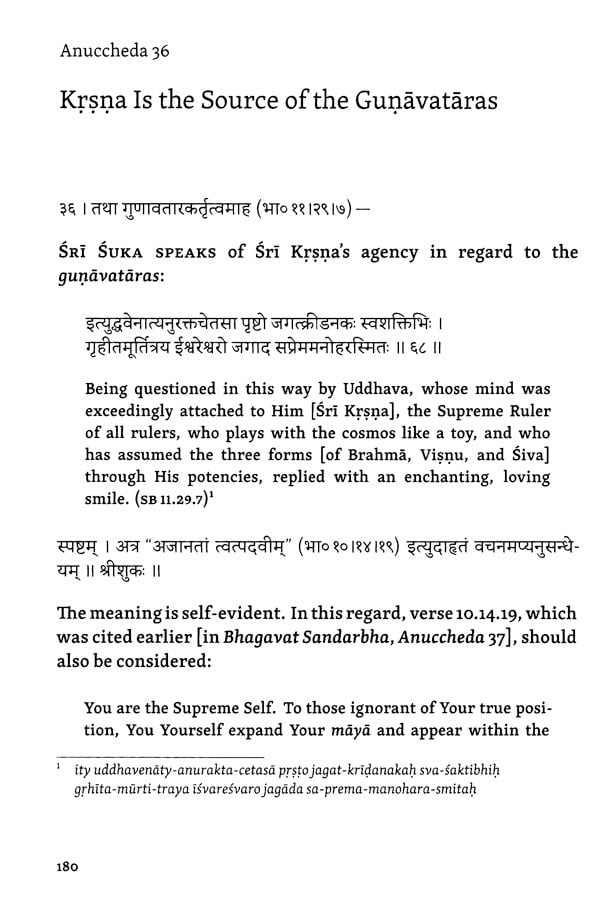
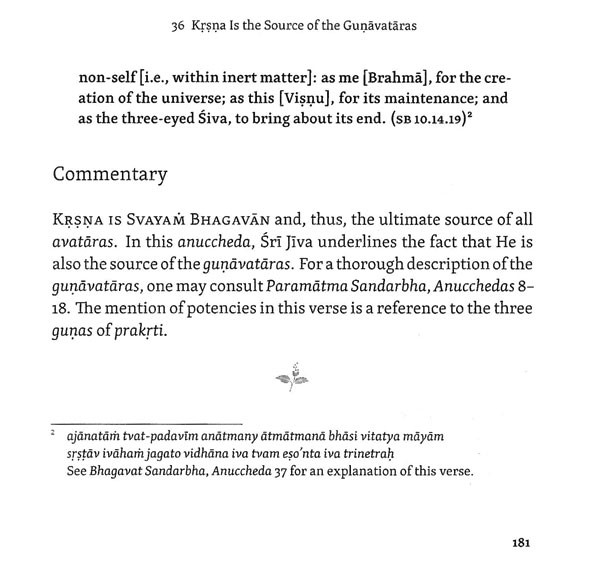
The conventional and for the most part unexamined point of view is that Krsna is simply an avatāra of Vişņu. In Krıņa Sandarbha, Śrī sīva Gosvāmī uproots this misconception, demonstrating that Bhagavān Vişnu, being ontologically related to the play of creation and hence to immanence, is Himself implicitly included within a more complete transcendent Whole (avatārī), technically known as Svayam Bhagavān, who is clearly identified in the text as Śrī Krsna. Although Śrī dīva previously delineated the ontology of Bhagavān in general terms in Bhagavat Sandarbha, he did not address the question of the identity of Svayam Bhagavān Himself, or Bhagavān in His ownmost essential being, nature, and original form. In this respect, Krsna's status in regard to the various avatāras was not yet made a subject of inquiry. By first establishing a comprehensive universal understanding of Bhagavān in Bhagavat Sandarbha, Jīva Gosvāmī laid the foundation for a detailed investigation into the ontology of Svayam Bhagavān in Krsna Sandarbha. His fundamental conclusion in the latter volume is that Kṛṣṇa is the source of all other avatāras of Bhagavān and that He has no source other than Himself.
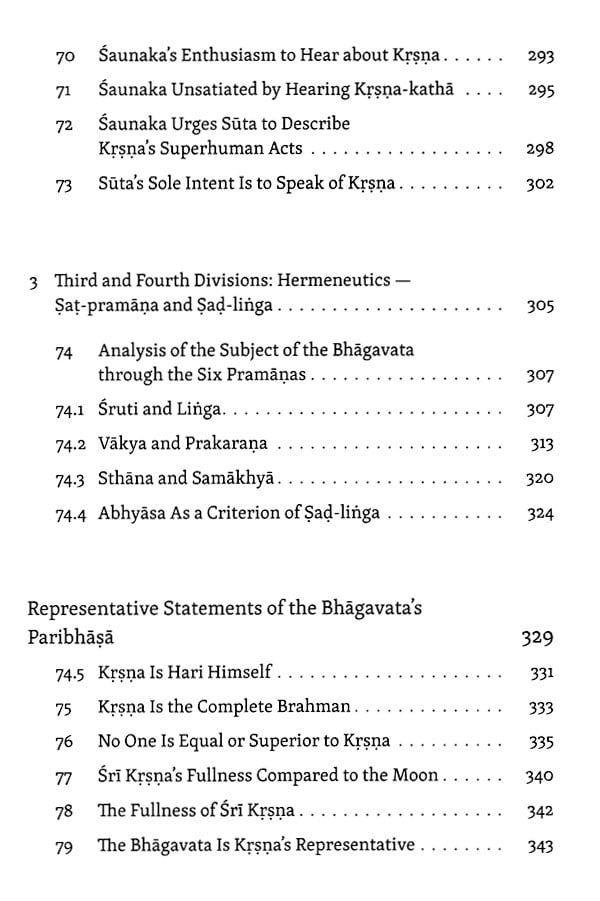
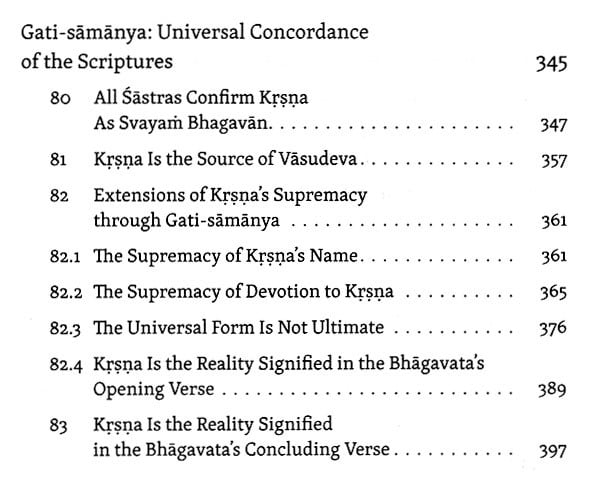
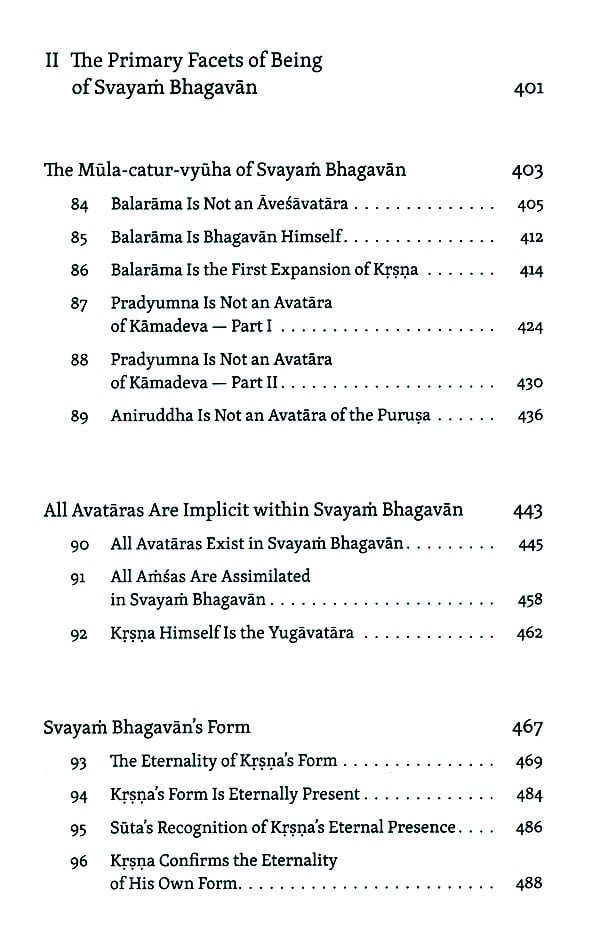
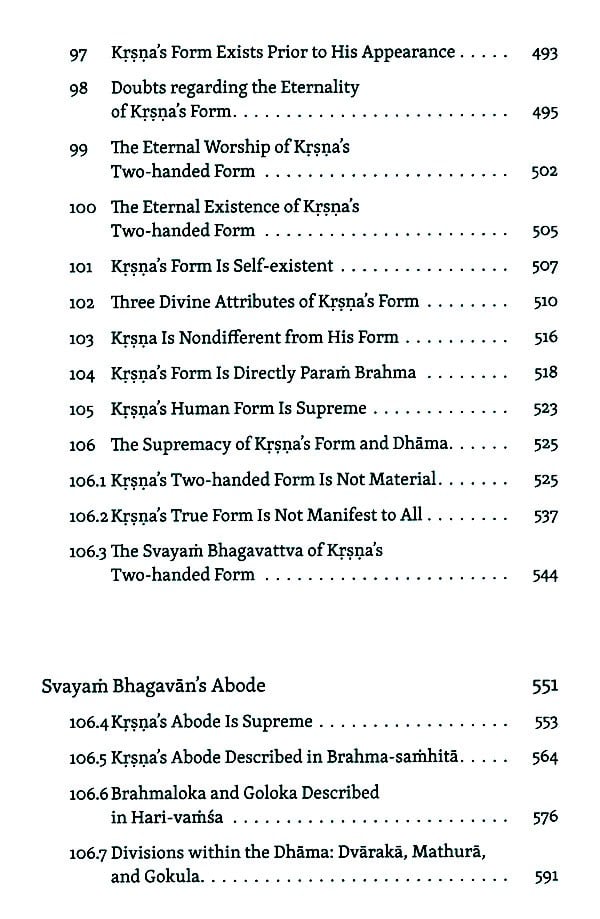
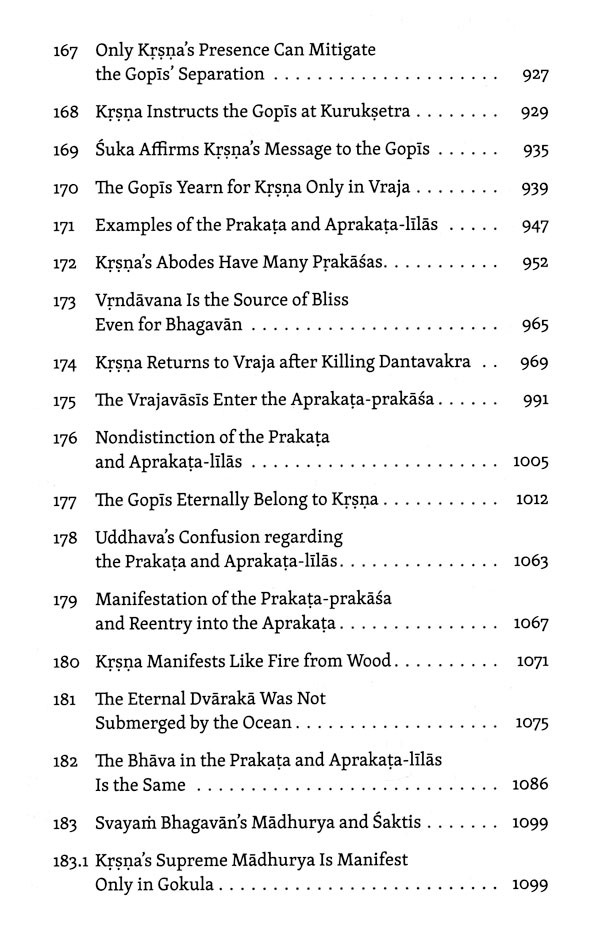
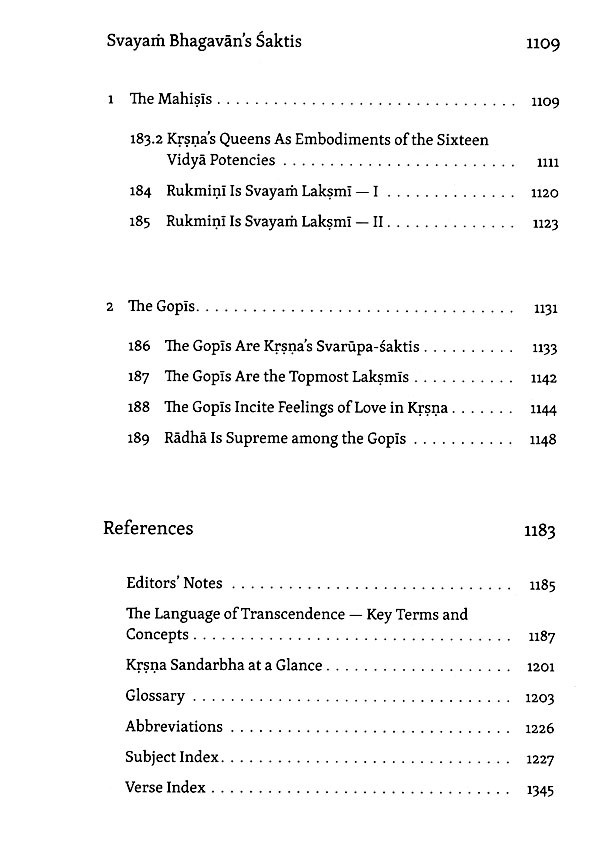
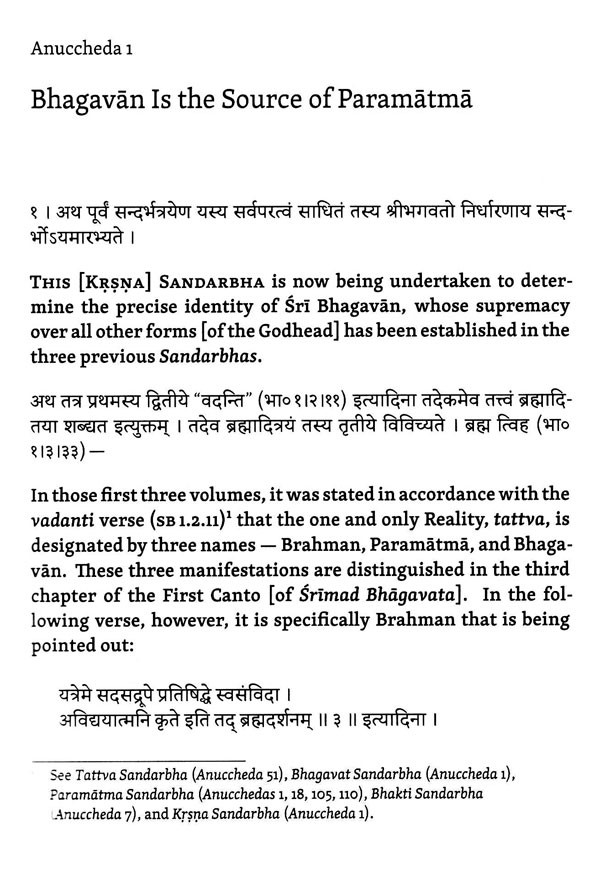
**Contents and Sample Pages**