About the Book Science and Technology tradition of India is very old. However, it is still amongst one of the low ranking countries as far as science and technology output is concerned except in few areas. Best of Indian stuents go for engineering education. But is it leading us to industrial and technological development? The present book takes up Engineering Education in India in totality-from evolution, to the present status and future aspirations. Even with a massive expansion and many regulatory bodies, is the quality at par with other countries in the world? The book, in its thirteen chapters analyses this. Starting from the origin, the university technial education system, the IIT system, the NIT system and the corresponding reports have been put together. Study have been made regarding the polytechnic system, curriculum, accreditation and private financing in engineering education. There are recommendations for future. The book will be useful to education planners, historians, policy makers, teachers, administrators and researchers in India and abroad to understand the trajectory of Engineering Education in India.
About the Author Samir Kumar Saha (b. 1948). Ph.D. is a full time professor and Ex-Head of the Mechanical Engineering Department of Jadavpur University. He has been teaching thermal sciences for about 40 years. As a researcher, his interest areas are Thermodynamics, Solar Thermal Energy, History and Philosophy of Science and Sustainability Transition. As the founder Director of the UGC-Academic Staff College, J.U., he built-up modules of Pedagogy. He has guided several Master's and Ph.D. level thesis in engineering, published extensively in National and International Journals and Conference Proceedings and edited 11 books and proceedings. He is a member of several expert committees at State and Central Govt. level. Fellow of Institution of Engineers (India), he is also Life Member of Solar Energy Society of India, Indian Society of Heat and Mass Transfer, Indian Society for Technical Education and other professional societies.
Foreword The social history of technical education in India is a fascinating subject, more so in view of the fact that India has reached a place of supremacy in the arena of science and technology, apart from fact that in the fields of liberal arts and humanities it had earned great respect from time immemorial. India's place of pride in science and technology as early as two thousand years back, is amply demonstrated in the domains of ceramics, textiles, civil and architecture (e.g. the stupendous and exquisite temples), metallurgy (e.g. brass and a vareity of bronzes and subsequently, the world-renowned Damascus Swords), medicine, surgery, astronomy, chemistry (e.g. mirrors) and more notably, mathematics (e.g. the concept of zero) to name a few. Especially, in the technology of construction of temples and the sculptures carved on stone tell us about the prevailing knowledge. Similarly, the development of Wootz Iron (King Porous gifted some pieces of the same to Emperor Alexander the conqueror) from which the Damascus swords were made remained a mystery to the technological community for over one thousand years and was only around the turn of the twenty first century. All these demonstrate that India had a robust system of technical education.
Preface India has a very old tradition of learning and dissemination of scientific and technical knowledge. However, coherent and planned documentation is absent. The development of medical education, because of its multidisciplinary context, played a significant role in laying the foundation of the scientific education in the country. Not so in engineering.
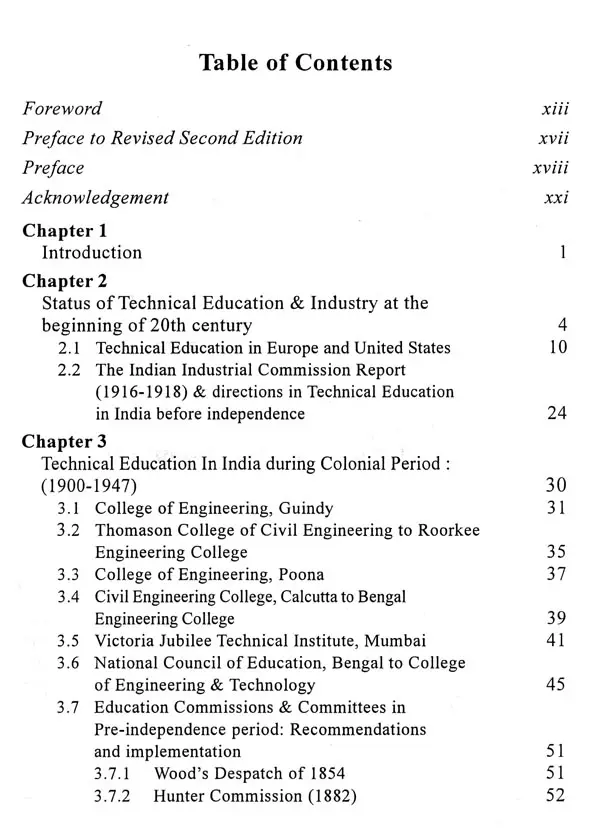
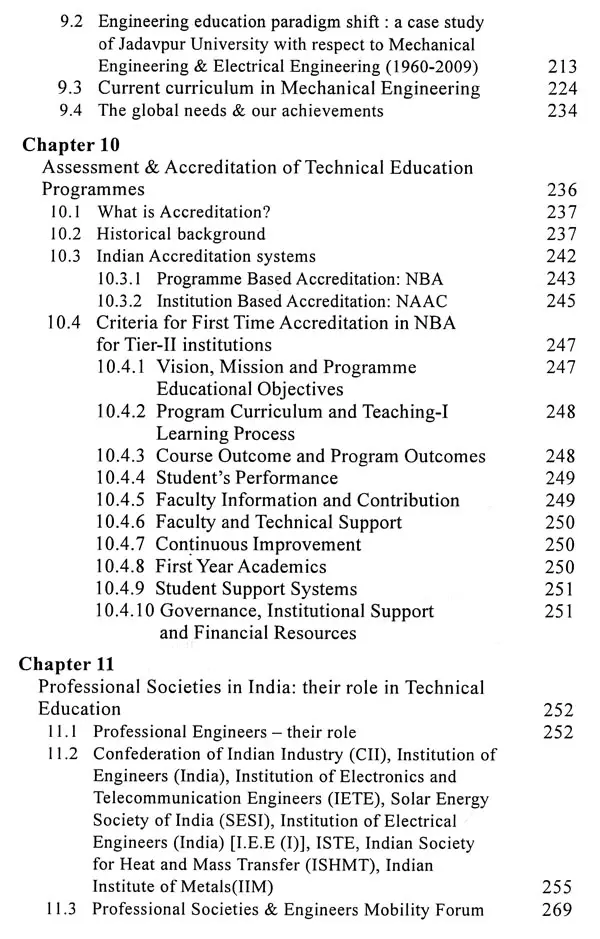
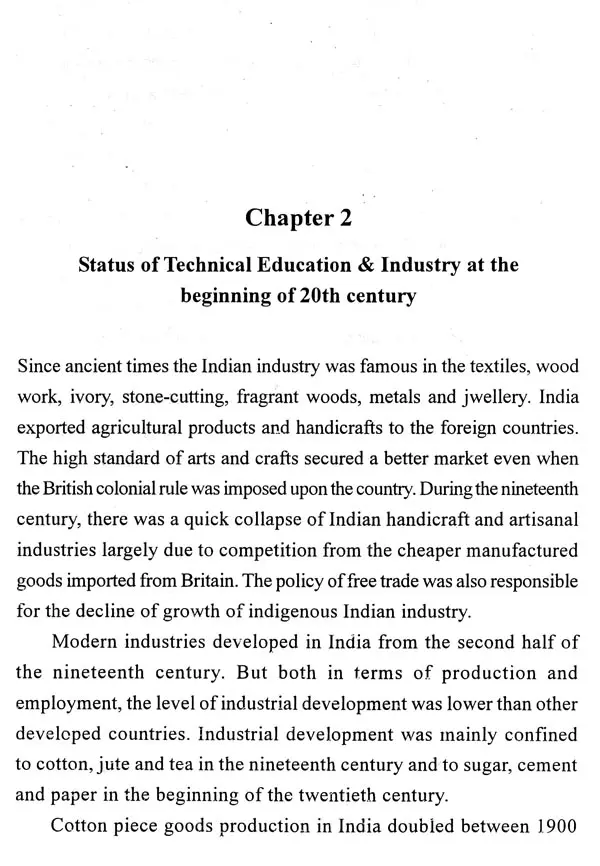
**Contents and Sample Pages**