

Samkhya-Yoga Epistemology
Book Specification
| Item Code: | IDI056 |
| Author: | Mukta Biswas |
| Publisher: | D. K. Printworld Pvt. Ltd. |
| Language: | English |
| Edition: | 2018 |
| ISBN: | 9788124603710 |
| Pages: | 264 |
| Cover: | Hardcover |
| Other Details | 5.6"X 8.6" |
| Weight | 490 gm |
Book Description
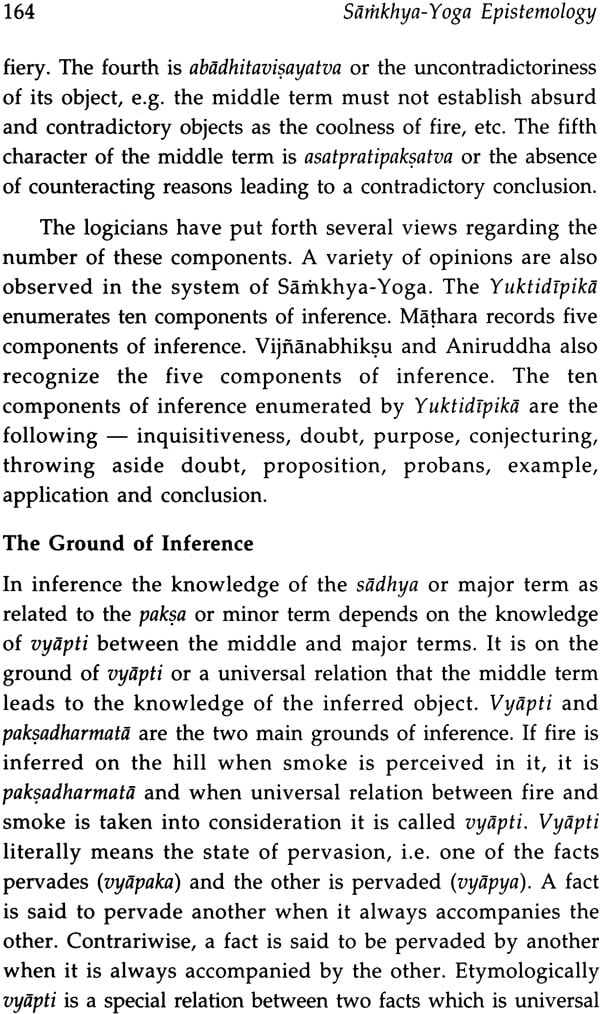
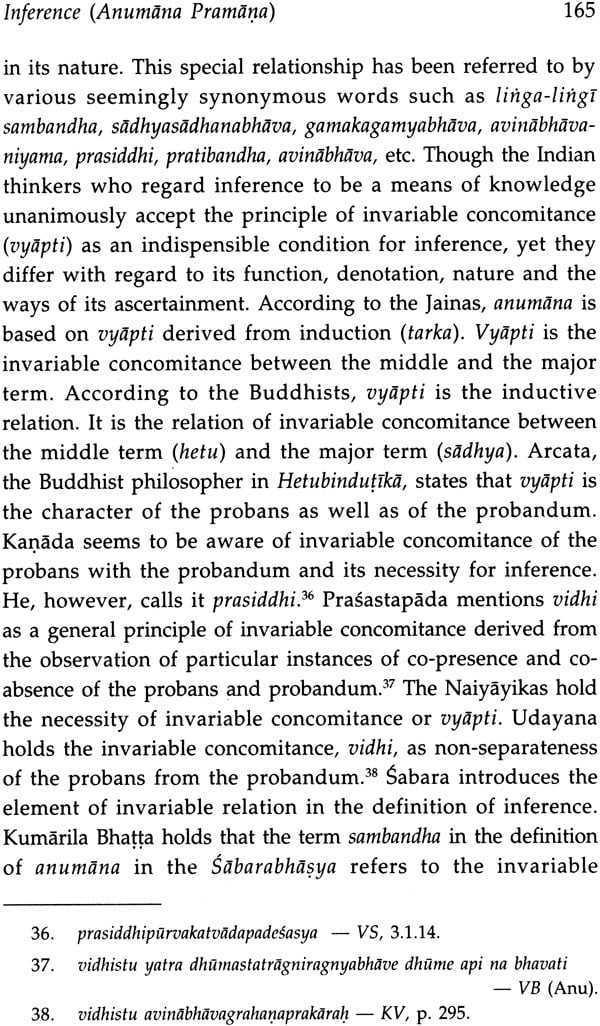
The book present a comprehensive idea of the Samkhya-Yoga epistemology by examining in detail specific representative works including the Samkhyakarika of Isvarakrsna, Yogasutra of Patanjali, and Yuktidipika, Matharavrtti and other schools of Indian Philosophy.
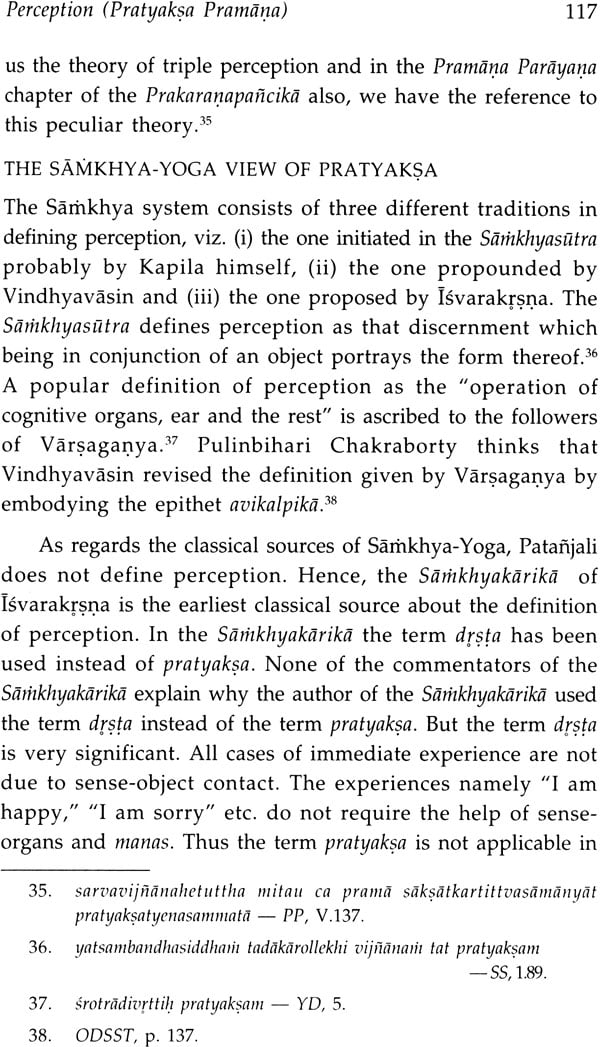
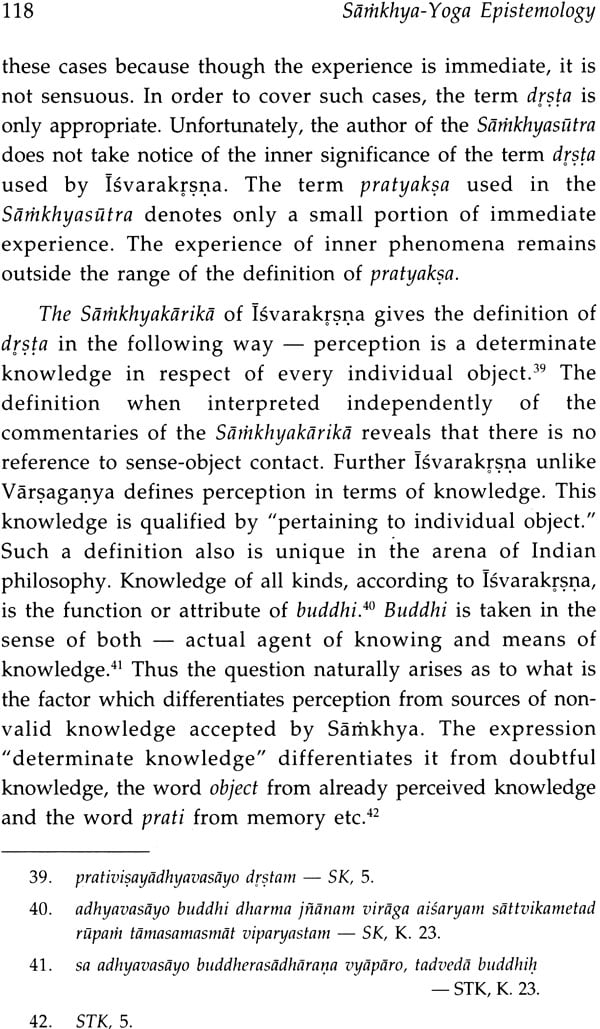
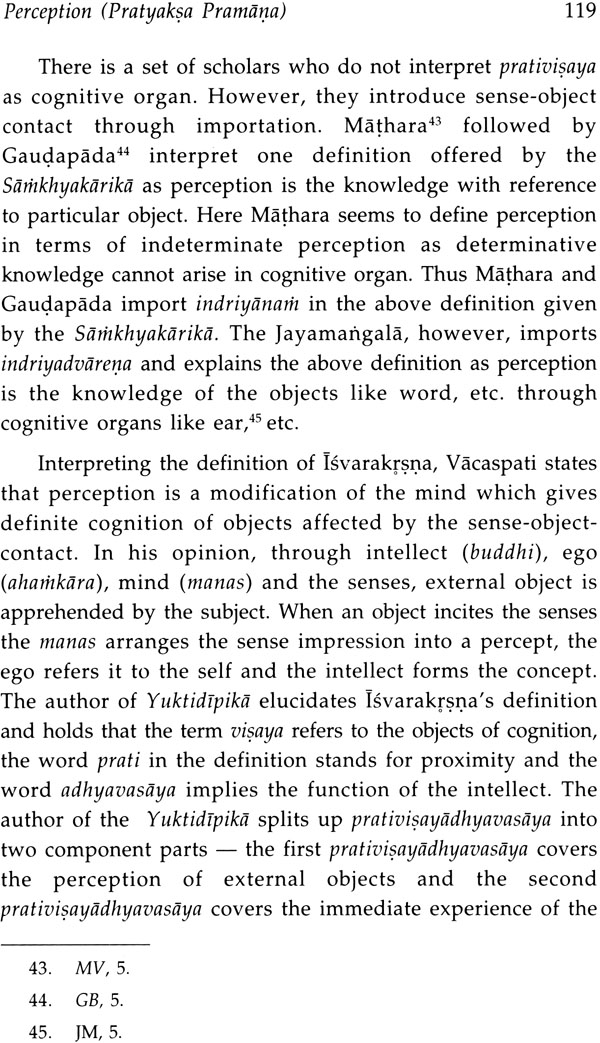
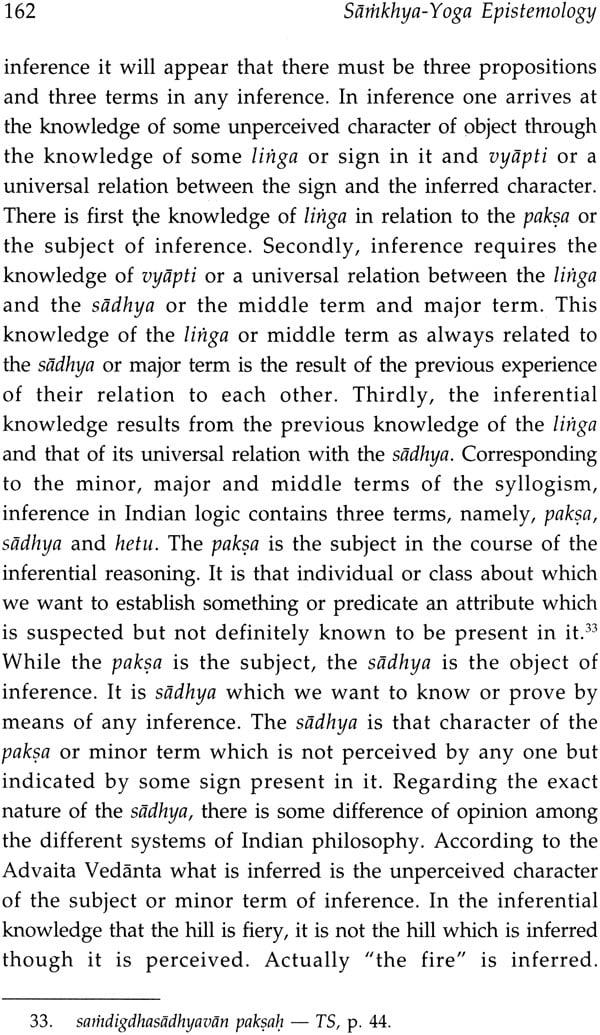
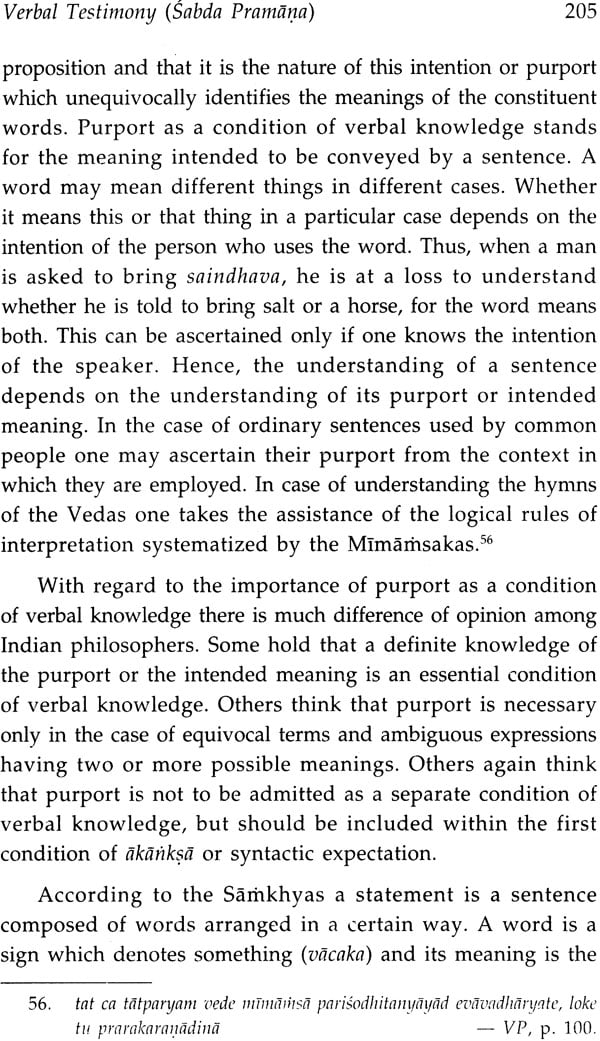
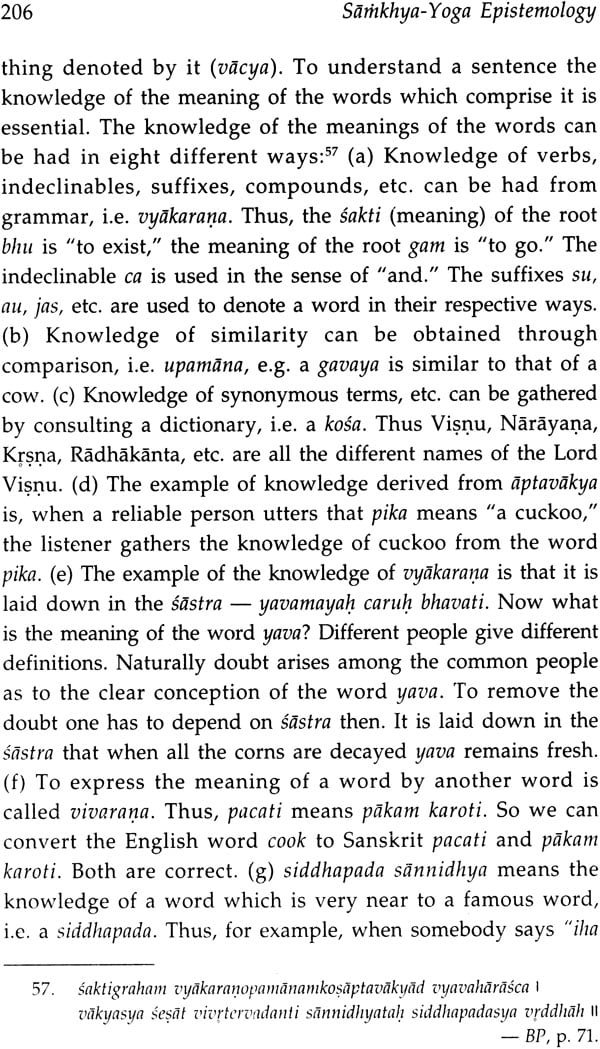
Beginning with some fundamentals like origin of the words 'Samkhya' and ' Yoga' it discusses important tenets of each system, their reference in the Upanisads, the definition of epistemology and its relation with ontology and logic. It delves into the two kinds of knowledge, direct ( Prama) and indirect (Pramana) as understood by the Samkhya-Yoga system and examines these concepts from the viewpoints of other philosophical school as will. It defines perception (Pratyaksa Pramana ) and inference (anumana) and critically assesses the understanding of these in defferent philosophical systems focusing on the Sankhya-Yoga interpretation. It also deals with the components of perception and inference along with the types and fallacies associated with them. Verbal testimony or Sabda is again treated in a detailed manner. The work examines aspects like the nature of word and logical structure of a sentence as well.
The book will be useful for students and scholars of Indian philosophy who are keen to grasp the fundamentals of the Indian Philosophical systems even while gaining in- depth understanding of each school of ancient Indian Philosophy Particularly their interpretation of concepts of knowledge.
Dr. (Mrs) Mukta Biswas is a reader in the Department of Sanskrit, Gauhati University, Assam. She has authored a number of research papers on ancient Indian culture, Philosophy, literature and language. She has participated in numerous national seminars and conferences and has been honoured with gold medals for her scholarship. She is the winner of awards including Dr. V. Raghavan awards for best paper at the 42nd session of all India Oriental Conference held in Varanasi, 2004.
In the present work I have made an endeavour to give a comprehensive and critical ideal of the Samkhya-Yoga epistemology. Epistemology of the Samkhya-Yoga school is a wide subject. However, a systematic approach on the subject has remained so for elusive. Tough early works explicitly declare that Knowledge of the objects depends upon the extant texts Samkhya - Yoga leaves behind an impression that this aspect has not been dealt with extensively and such an observation prompts us to take a view that the philosophers of both the schools were interested in metaphysical doctrines rather than being involved in the logical explanation of epistemology. It therefore becomes imperative to study the status of epistemology in Samkhya-Yoga philosophy. Thus the present work encompasses the studies of epistemology as evidenced in the works like Samkhyakarikaof Isvarakrsna, Yogasutra of Patanjali, Yuktidipika, Matharavrtti, and other schools of Indian philosophy. Efforts have been made to include the various judgements of the critics of Samkhya- Yoga system in order to bring out a critical analysis of the subject. However, I am aware of the possibility that the entire existing relevant documents on the subject might not have been incorporated in the present discussion despite best attempt. I am hopeful that this book will be of immense help for students and researchers to comprehend the idea of epistemology of Samkhya- Yoga thought in the proper perspective.
I have no words to express my deep sense of gratitude to my teacher, professor Dr. Rajendra Nath Sarma, M.A., Ph. D., D. Lit, Mimamsa- Vyakarana Sastri, formerly Head of the deptt. of Sanskrit, Gauhati University for his ungrudging guidance and untiring help offered to me during the preparation of the work. Without his help, advice and supervision the work would have never come to completion.
My acknowledgment would remain incomplete if I do not express my deep sense of indebtedness to my husband Dr. Ranjan Kumar Biswas who has been instrumental and chief inspirator in my taking up this course of study and has made possible to see it the light of the day.
I am greatly thankful to Mr. Susheel K. Mittal of D. K. Printworld for kindly accepting the work for publication and evincing keen interest towards the completion of the work.
| Preface | vii | |
| Key to Transliteration | xv | |
| Abbreviations | xvi | |
| 1 | Introduction | 1 |
| The nature of Philosophy | 1 | |
| Two Broad Divisions of Indian Philosophy | 3 | |
| The Significance of Samkhya Philosophy and the Origin of the Word Samkhya | 6 | |
| Samkhya Literature | 9 | |
| Sastitantra- The Samkhyakarika- the Tattvasamasa -The Samkhyasutra- The Samkhyasara- The Samkhya- tattva- pradipa- The Samkhya- tattva- kaumudi- The Yuktidipika- Samkhyacandrika- Samkhyataruvasantah | ||
| Samkhya Teachers | 15 | |
| Kapila- Asuri- Pancasikha- Vindhyavasa- Varsaganya-Jaigisavya-Vodhu- Devala- The Rest | ||
| Samkhya System | 20 | |
| The Important Tenets of the Samkhya System | 27 | |
| The Significance of Yoga Philosophy | 27 | |
| Origin of the Word Yoga | 28 | |
| Yoga Literature | 32 | |
| The Yoga System | 33 | |
| The Important Tenets of the Yoga System | 38 | |
| The relation of Samkhya System with Yoga | 38 | |
| Reference of Samkhya and Yoga in the Upanisads | 41 | |
| Samkhya in the Upanisads | 41 | |
| Yoga in the Upanisads | 42 | |
| Some Appreciation of Samkhya and yoga System | 44 | |
| The nature of Knowledge | 44 | |
| Epistemology of the Samkhya -Yoga School | 52 | |
| What is Epistemology | 52 | |
| Place of Epistemology in Philosophy | 53 | |
| Epistemology and Ontology or Metaphysics | 54 | |
| Epistemology and Logic | 55 | |
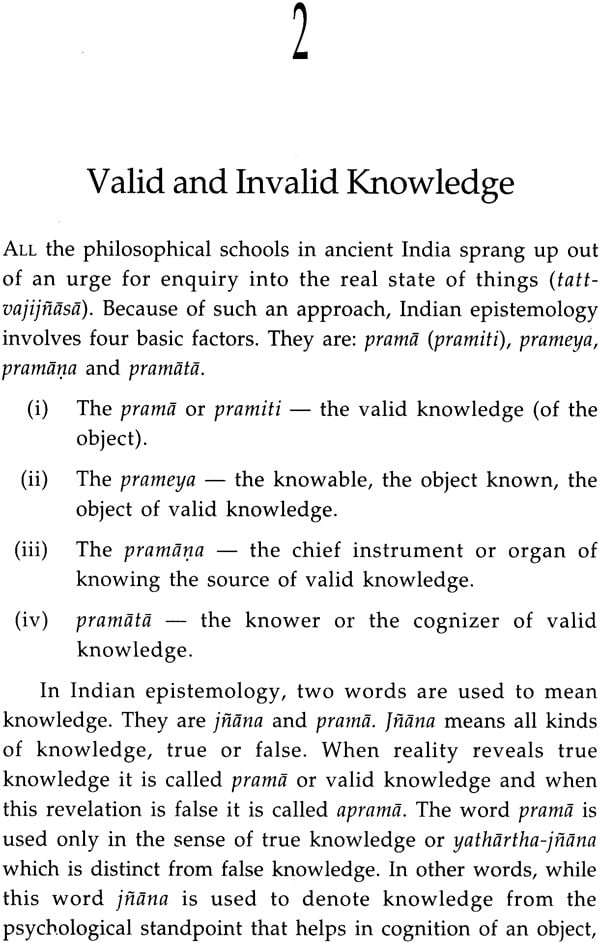
| 2 | Valid and Invalid Knowledge | 58 |
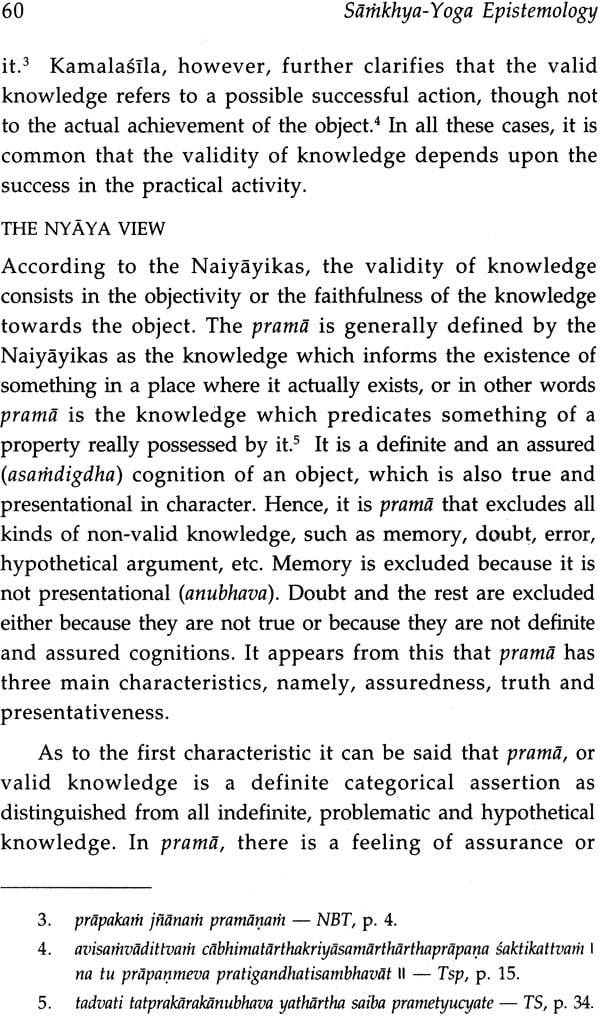
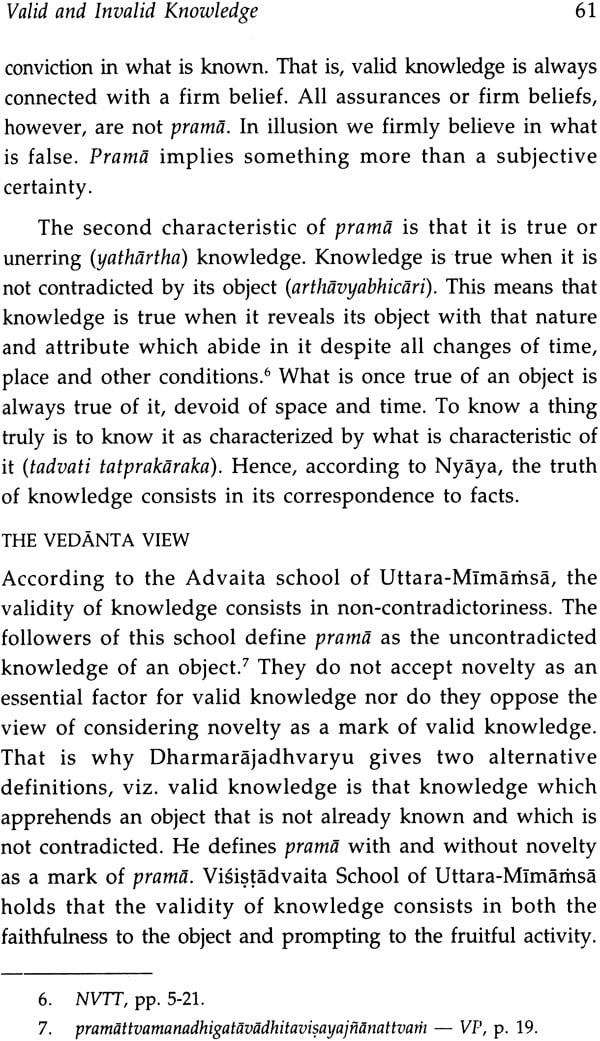
| Definitions of Valid Knowledge | 59 | |
| Buddha definition of valid knowledge | 59 | |
| The Nyaya View | 60 | |
| The Vedanta View | 61 | |
| The Bhatta Theory of Valid Knowledge | 62 | |
| The Prabhakara View | 63 | |
| The Vaisesika View | 64 | |
| The Jaina View | 65 | |
| The Samkhya- Yoga View | 65 | |
| The Sources of Valid Knowledge | 67 | |
| The Buddha View of Pramana | 69 | |
| The Jaina View of Pramana | 70 | |
| The Vaisesika View of Pramana | 70 | |
| The Nyaya View of Pramana | 70 | |
| The Bhatta View of Pramana | 71 | |
| The Prabhakara View of Pramana | 72 | |
| The Advaita View of Pramana | 72 | |
| The Samkhya- Yoga View of Pramana | 73 | |
| The Number of Pramanas According to Different Systems | 80 | |
| Forms of Invalid knowledge | 83 | |
| Asatkhyativada | 91 | |
| Atmakhyativada | 92 | |
| Anirvacaniyakhyati | 93 | |
| Satkhyativada | 94 | |
| Anyathakhyativada | 95 | |
| Sadasatkhyativada | 96 | |
| Memory (Smrit) | 98 | |
| Dream | 100 | |
| Doubt (Samsaya) | 102 | |
| Vikalpa | 103 | |
| Nidra (Sleep) | 103 | |
| Tarka(Hypothetical Argument) | 105 | |
| Reinculcation (Samvada) | 106 | |
| 3 | Perception (Pratyaksa Pramana) | 107 |
| Different Opinions of Pratyaksa | 109 | |
| Carvaka view of Pratyaksa | 109 | |
| The Jaina View of Pratyaksa | 111 | |
| Buddha view of Pratyaksa | 113 | |
| The view of Advaita Vedanta | 114 | |
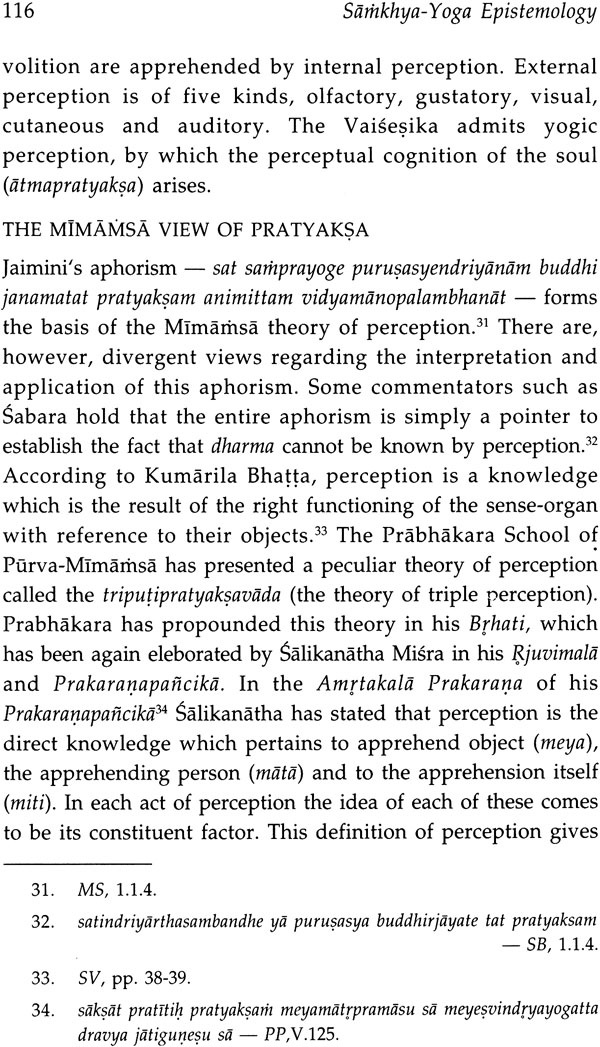
| Vaisesika view of Pratyaksa | 115 | |
| The Mimamsa view of Pratyaksa | 116 | |
| The Samkhya- Yoga view of Pratyaksa | 117 | |
| Role of Senses in Perception | 125 | |
| Function of the Senses | 127 | |
| Modes of Perception | 129 | |
| The Buddhist View | 129 | |
| The Grammarian's View | 130 | |
| The Majority View | 131 | |
| Internal Perception and Its Objects | 138 | |
| Recognition (Pratyabhijna) | 140 | |
| Non- Sensuous Perception in Philosophy | 141 | |
| The Nyaya Theory of Alaukika Pratyksa | 142 | |
| The Advaita Theory of Non- Sensuous Perception | 143 | |
| The Vaisesika View | 144 | |
| The Buddhist View of Yogi- Pratyaksa | 145 | |
| The Jaina View | 145 | |
| The Samkhya View | 146 | |
| The Supernormal Powers in Yoga System | 146 | |
| Theory of Perceptual Error | 147 | |
| 4 | Inference (Anumana) | 151 |
| The Views of Anumana According to Different Systems | 153 | |
| The View of the Carvakas | 153 | |
| The Buddha View | 154 | |
| The Jaina View | 155 | |
| Nyaya View of Anumana | 155 | |
| Vaisesika View of Anumana | 156 | |
| Mimamsa View of Anumana | 157 | |
| Vedanta View | 158 | |
| Samkhya- Yoga View of Anumana | 158 | |
| Distinction Between Perception and Inference | 161 | |
| The Constituents of Inference | 161 | |
| The Ground of Inference | 164 | |
| Ascertainment of Vyapti | 170 | |
| The Carvaka View | 170 | |
| The Buddhist View | 170 | |
| The Jaina View | 171 | |
| The Vaisesika View | 171 | |
| The Bhatta View | 171 | |
| The Prabhakara View | 171 | |
| The Vedanta View | 171 | |
| The Nyaya View | 172 | |
| The Samkhya- Yoga View | 172 | |
| The Types of Anumana | 173 | |
| Purvavat, Sesavat and Samanyatodrsta | 174 | |
| Svartha and Parartha | 178 | |
| Kevalanyi, Kevalavyatireki and Anvayavyatireki | 178 | |
| Vita and Avita | 179 | |
| Fallacy | 181 | |
| 5 | Verbal Testimony (Sabda Pramana) | 183 |
| The Denial of the Validity of the validity of the Verbal Testimony by the Carvakas | 185 | |
| Buddha View of Verbal Testimony | 186 | |
| The Vaisesika View of Verbal Testimony | 187 | |
| Establishment and the Nature of Verbal Testimony | 188 | |
| Jaina View of Verbal Testimony | 188 | |
| Mimamsa View of Verbal Testimony | 189 | |
| Vedanta View of Verbal Testimony | 189 | |
| Nyaya View of Verbal Testimony | 190 | |
| Samkhya-Yoga View of Verbal Testimony | 192 | |
| The Nature of Word | 197 | |
| Logical Structure of a Sentence | 202 | |
| Expectancy | 202 | |
| Compability | 203 | |
| Contiguity | 204 | |
| Purport | 204 | |
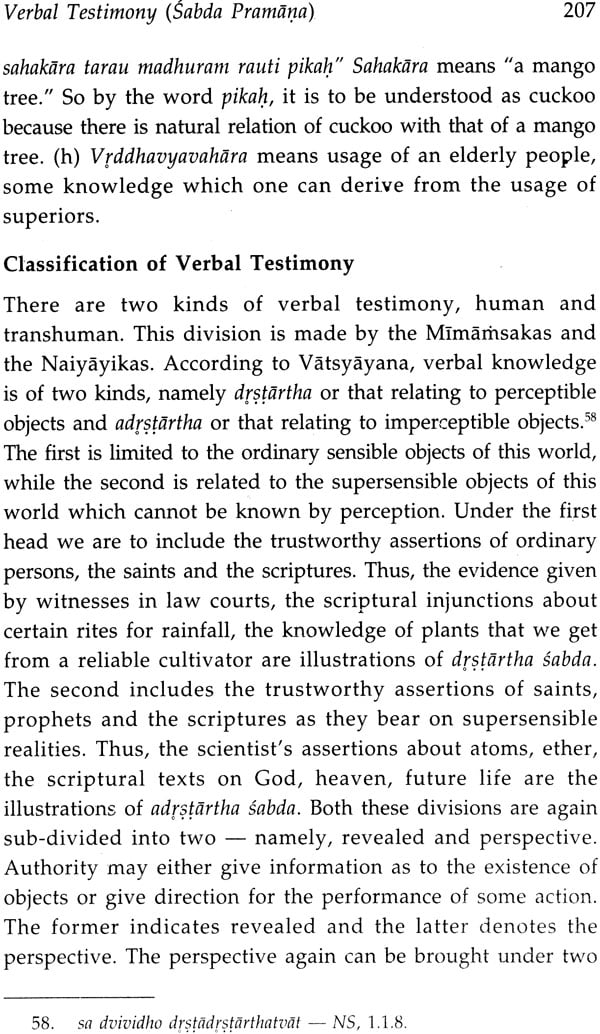
| Classification of Verbal Testimony | 207 | |
| 6 | Conclusion | 210 |
| Upamana (Comparison) | 211 | |
| The Nyaya View of Upmana | 212 | |
| The Mimamsa View of Upmana | 213 | |
| Advaita View of Upmana | 215 | |
| The Samkhya Criticism of Upmana | 216 | |
| Arthapatti (Postulation) | 218 | |
| The Samkhya Criticism of Arthapatti | 220 | |
| Anupalabdhi (Non- Apprehension) | 221 | |
| The Mimamsa View of Anupalabdhi | 222 | |
| Advaita View of Anupalabdhi | 223 | |
| Sambhava (Probability) | 226 | |
| Aitihya (Tradition) | 227 | |
| Cesta (Gesture) | 228 | |
| Pratibha (Intuition) | 229 | |
| Bibliography | 232 | |
| Index | 241 |