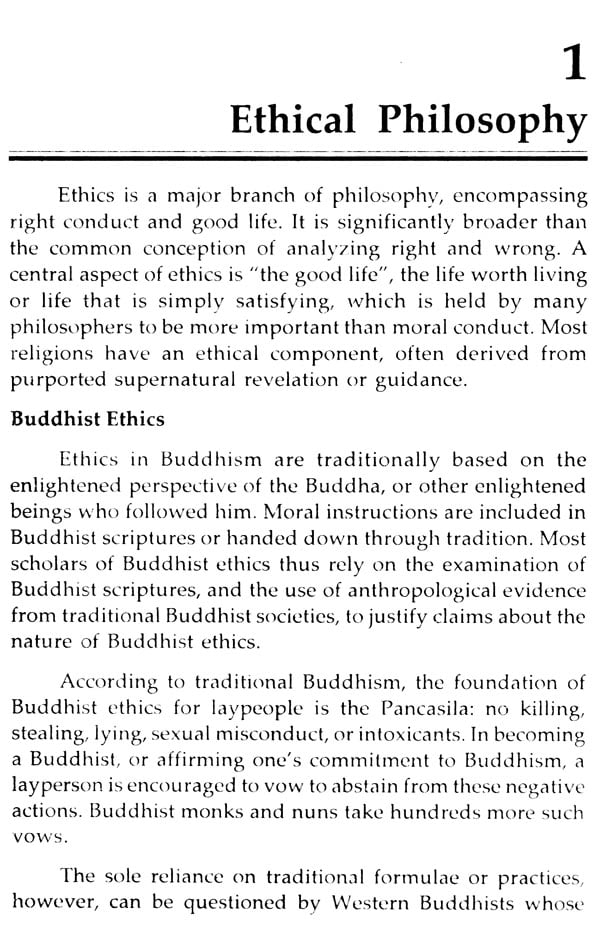
About the Book Ethics is a major branch of philosophy, encompassing right conduct and good life. It is significantly broader than the common conception of analyzing right and wrong. A central aspect of ethics is "the good life", the life worth living dry life that is simply satisfying, which is held by many philosophers to be more important than moral conduct. Most religions have an ethical component, often derived from purported supernatural revelation or guidance.
About the Author A.K. Dubey, M.A., M.Phil. from Allahabad University is an eminent Lecturer of Philosophy. His main area of interest is to study and preach the different religions and their philosophy. He has lectured on various issues of philosophy for more than a decade. He has worked on all aspects of Indian Philosophy. He has devoted himself for the welfare of society and associated with many institutions. Presently he is involved with many projects of religion and philosophy. During his services he has given contribution to the journals and magazines of repute.
Preface Indology as an academic discipline of studying Indian culture from a European perspective was established in the 19th century, led by scholars such as Max Muller and John Woodruff. They brought Vedic, Puranic and Tantric literature and philosophy to Europe and the United States. At the same time, societies such as the Brahmo Samaj and the Theosophical Society attempted to reconcile and fuse Abrahamic and Dharmic philosophies, endeavouring to institute societal reform. This period saw the emergence of movements which, while highly innovative, were rooted in indigenous tradition. They were based on the personalities and teachings of individuals, as with Shri Ramakrishna and Ramana Maharishi. Prominent Hindu .philosophers, including Sri Aurobindo and Swami Prabhupada (founder of ISKCON), translated, reformulated arid presented Hinduism' s foundational texts for con temporary audiences in new iterations, attracting followers and attention in India and abroad. Others such as Swami Vivekananda, Paramahansa Yogananda, B.K.S. Iyengar and Swami Rama have also been instrumental in raising the profiles of Yoga and Vedanta in the West. Today modern movements, such as ISKCON and the Swaminarayan Faith, attract a large amount of followers across the world.
Hinduism has no central doctrinal authority and many practicing Hindus do not claim to belong to any particular denomination. However, academics categorize contemporary Hinduism into four major denominations: Vaishnavism, Shaivism, Shaktism and Smartism. The denominations differ primarily in the god worshipped as the Supreme One and in the traditions that accompany worship of that god.
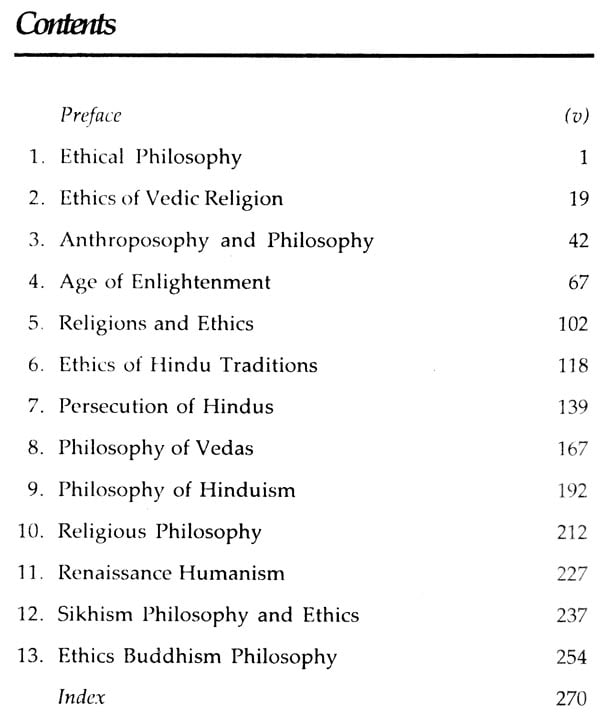
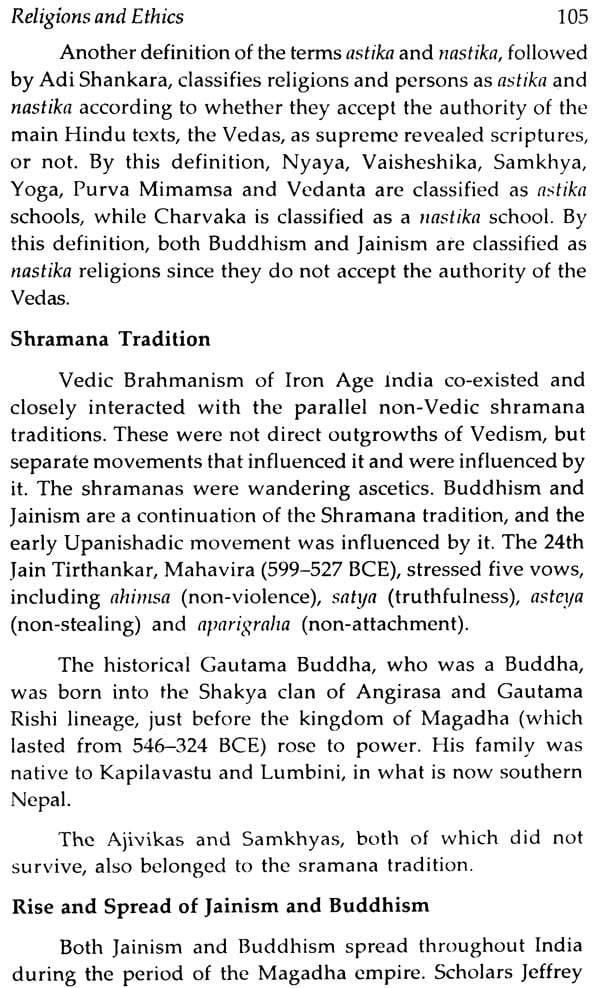
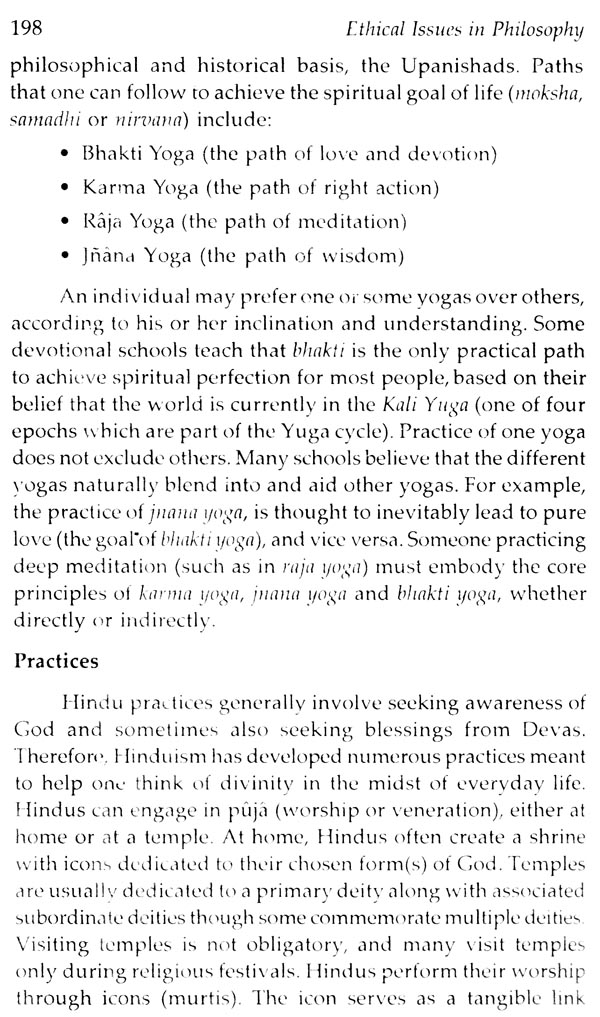
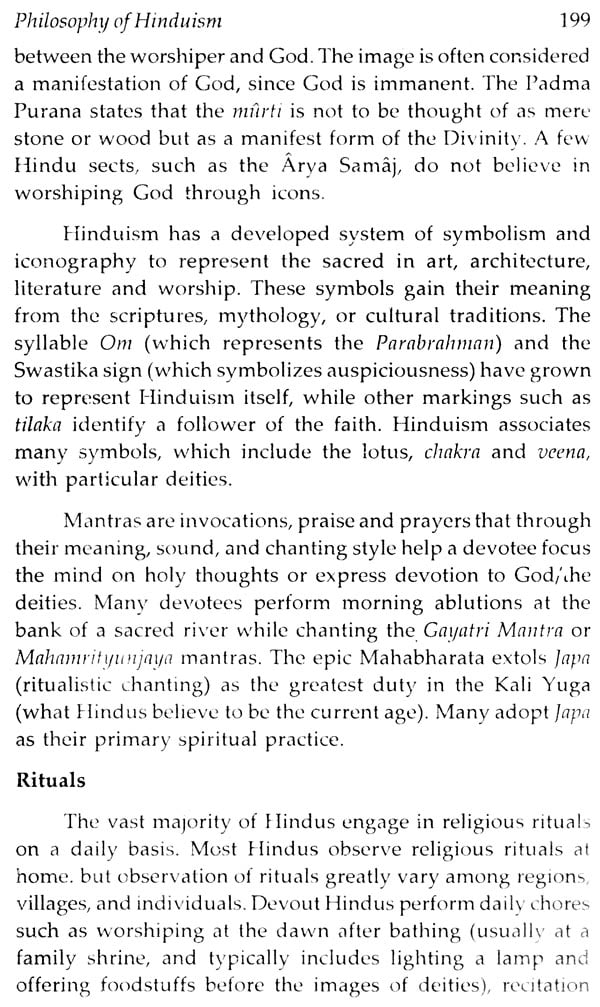
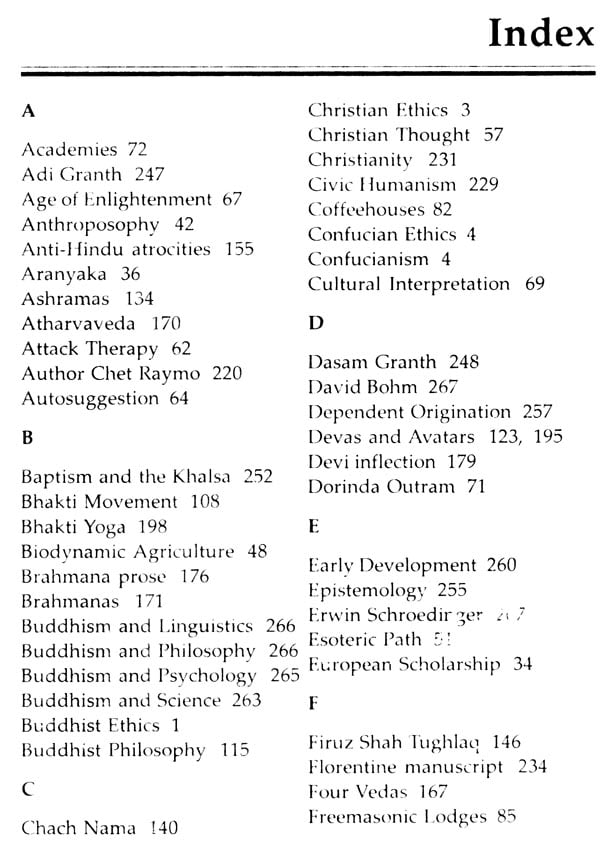
The major topics dealt in this book are: Ethical Philosophy; Ethics of Vedic Religion; Anthroposophy.and Philosophy; Age of Enlightenment; Religions and Ethics; Ethics of Hindu Traditions; Persecution of Hindus; Philosophy of Vedas; Philosophy of Hinduism; Religious Philosophy; Renaissance Humanism; Sikhism Philosophy and Ethics; Ethics Buddhism Philosophy; etc.
No doubt, these will serve the purpose of trainees and trainers, professionals and policy planners in the field. Since the sources of information are all secondary, we express our gratitude to the scholars whose works are cited or substantially made use of. We are thankful to all those who rendered ready help and cooperation while working on this project.
Book's Contents and Sample Pages