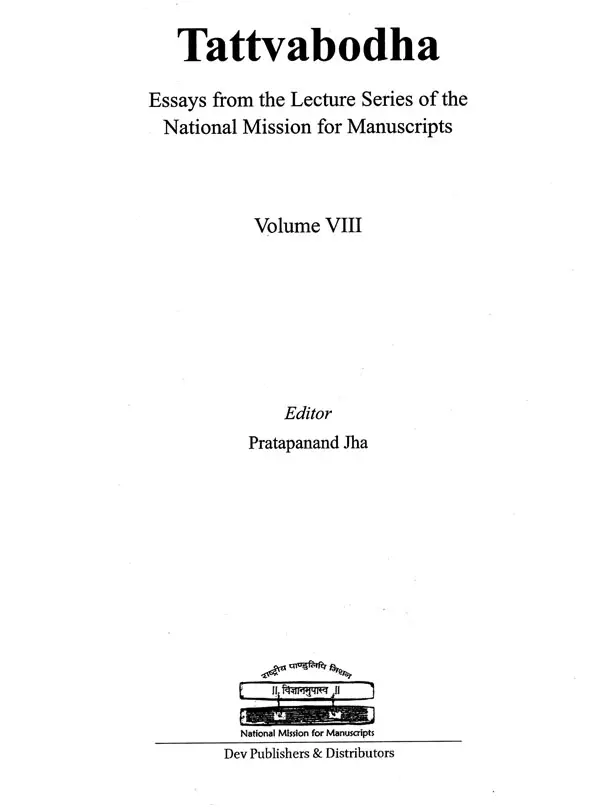


Tattvabodha - Essays From The Lecture Series of The National Mission For Manuscripts (Vol- VIII)
Book Specification
| Item Code: | UAF506 |
| Author: | Pratapanand Jha |
| Publisher: | National Mission For Manuscripts |
| Language: | English, Hindi and Sanskrit |
| Edition: | 2022 |
| ISBN: | 9789380829876 |
| Pages: | 237 (Throughout Color Illustrations) |
| Cover: | HARDCOVER |
| Other Details | 9.00 X 6.00 inch |
| Weight | 470 gm |
Book Description
The National Mission for Manuscripts was established in February 2003 by the Ministry of Culture, Government of India with the purpose of locating, documenting, preserving and disseminating the knowledge content of India's handwritten manuscripts. India is said to be the largest repository of handwritten knowledge documents in the world. While looking ahead to reconnect with the knowledge of the Past, the Mission is in the process of trying to re-contextualize the knowledge contained in manuscripts for the present and the future generations.
The Mission organises a monthly lecture series titled "Tattvabodha", in Delhi and other academic centres all over the country. Tattvabodha has established itself as a forum for intellectual discourse, debate and discussion where eminent scholars represent different aspects of India's knowledge systems and interact with highly receptive audiences.
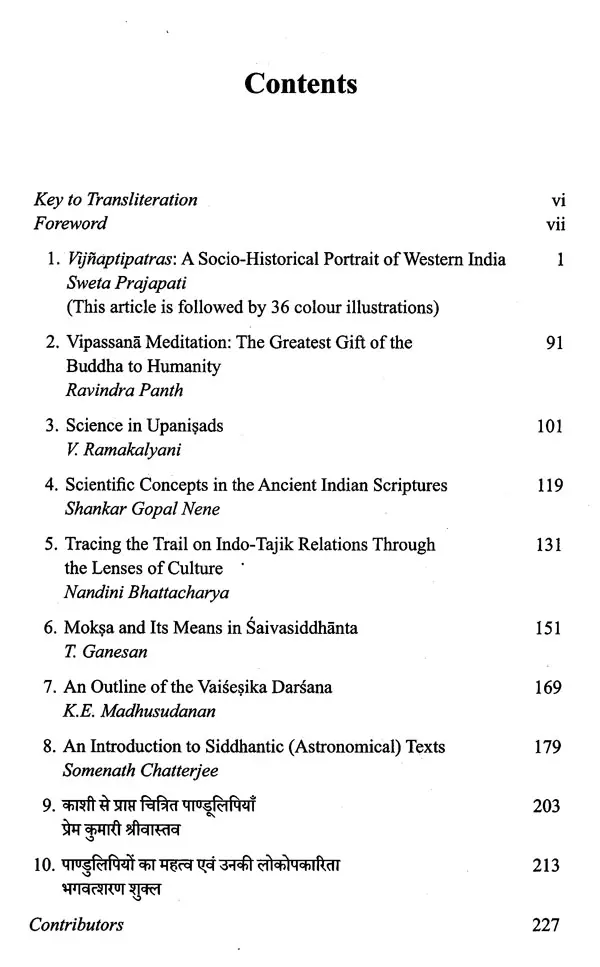
This volume, eighth in the series, contains ten papers presented in different Tattvabodha lectures by well-known scholars. These papers are in English and Hindi, covering a variety of subjects of Indian Knowledge system.
These scholarly articles hopefully will invoke keen interest amongst academicians and students of Indology.
India has immense treasure of millions of manuscripts in several languages and several scripts all over the Country. One of the main objectives of the National Mission for Manuscripts (NMM) is to explore, encompass and understand the wealth of information contained in these manuscripts. In order to disseminate the knowledge content of the ancient manuscripts, the Mission organizes Seminars and Lectures. Tattvabodha lecture series is one of such outreach programme of the Mission, which provides an interface among Experts and Scholars as well as academically inclined general listeners. Because of the pandemic situation, last one and a half year, the Mission was compelled to follow the New Normal and organized virtual Tattvabodha lectures on last Sunday of each month. The present publication, the eighth volume of Tattvabodha series comprises ten such Tattvabodha lectures covering variety of areas of Indian Knowledge System.
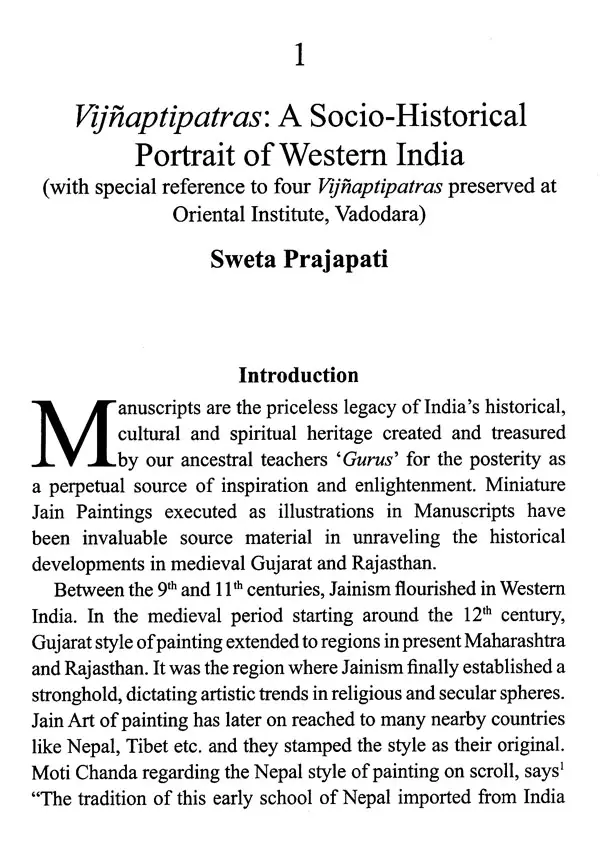
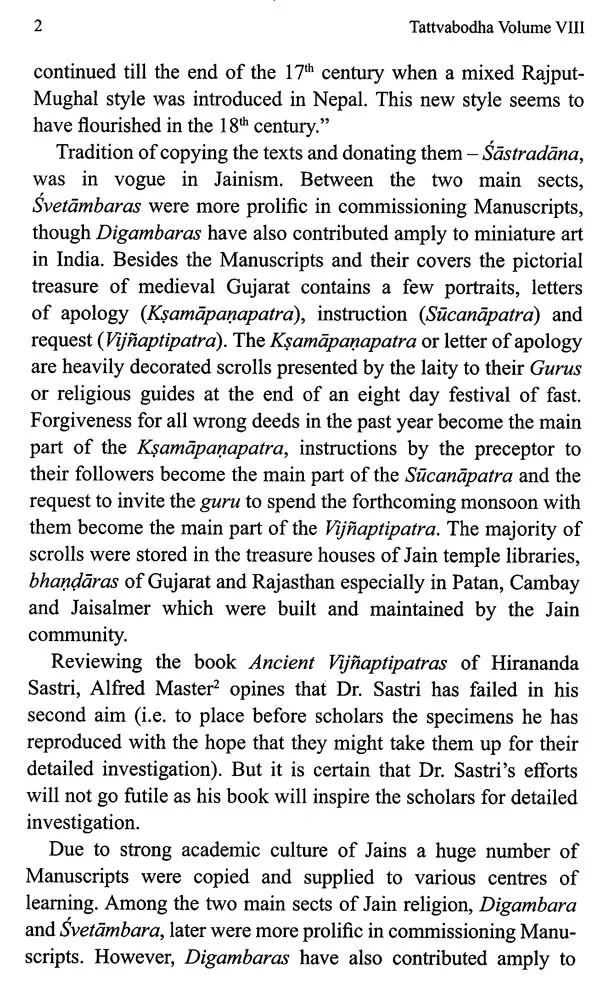
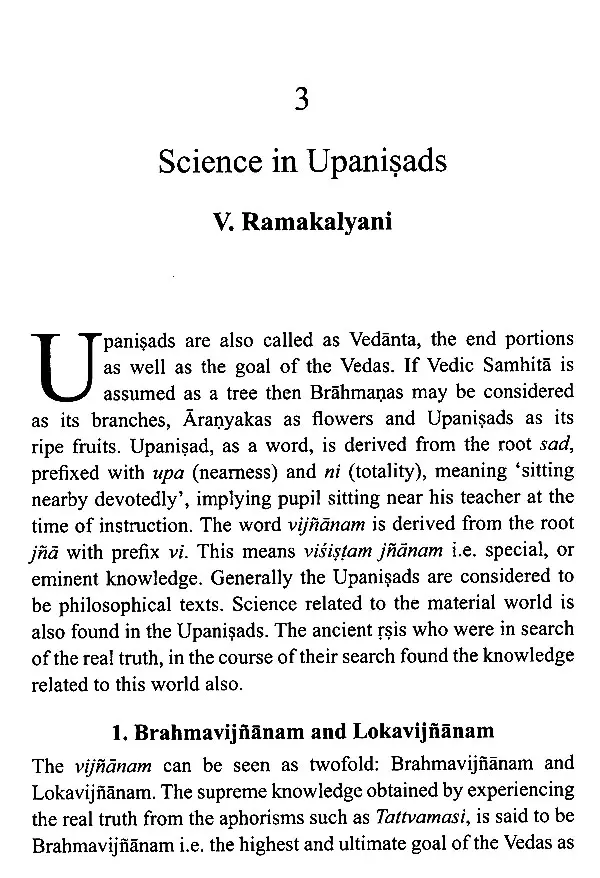
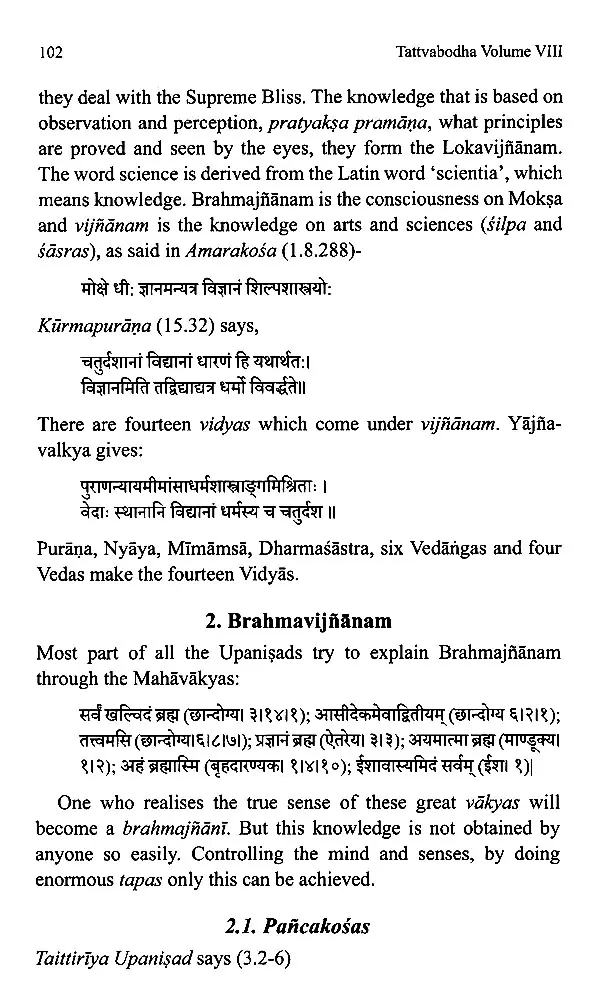
Vijnaptipatras, the long and illustrated scrolls of invitation have perpetuated and glorified the exclusive tradition of sending invitations regarding the visit of Jain Muni(s) in the Jain Cultural tradition starting from the later part of the fourteenth Century and extended upto eighteenth Century. Dr. Sweta Prajapati, in her paper, has depicted a socio-historical portrait of Western India through the vivid description of some Vijnaptipatras which are preserved at Oriental Institute, Vadodara. Prof. Ravindra Panth, in his presentation, has highlighted the techniques and benefits of practicing Vipassana meditation in order to attain the ultimate goal of life. Dr. V. Ramakalyani in her 'Science in Upanishads' brings out how Upanishads not only discuss about pancakosas etc. in Brahmavijnanam, but also the topics like five elements, creation of the World, nature, water, seasons, living beings, parts of the body, progeny, animals, plants, ganita, metals, earth, energies, light and quantum physics in Lokavijnanam. Dr. Shankar Gopal Nene in his Article "Some Scientific Concepts in Ancient Indian Scriptures" describes various concepts of modern physics and compares them with similar concepts in the ancient Indian scriptures in general and Vaisesika sastra in particular.
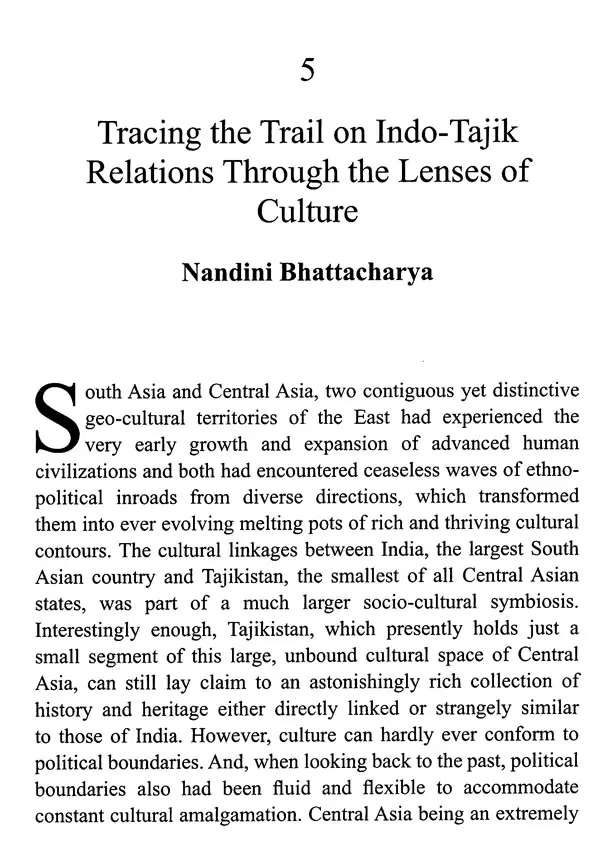
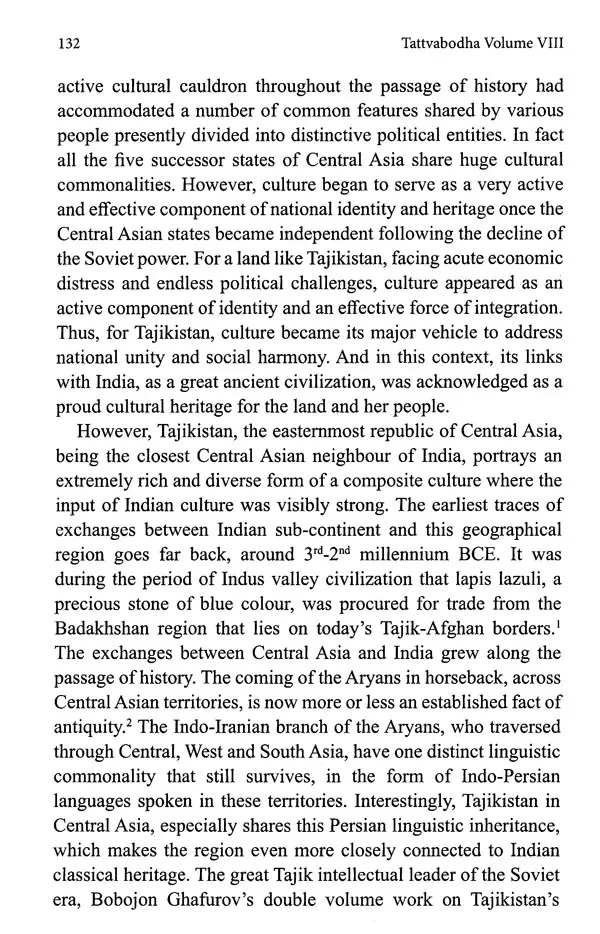
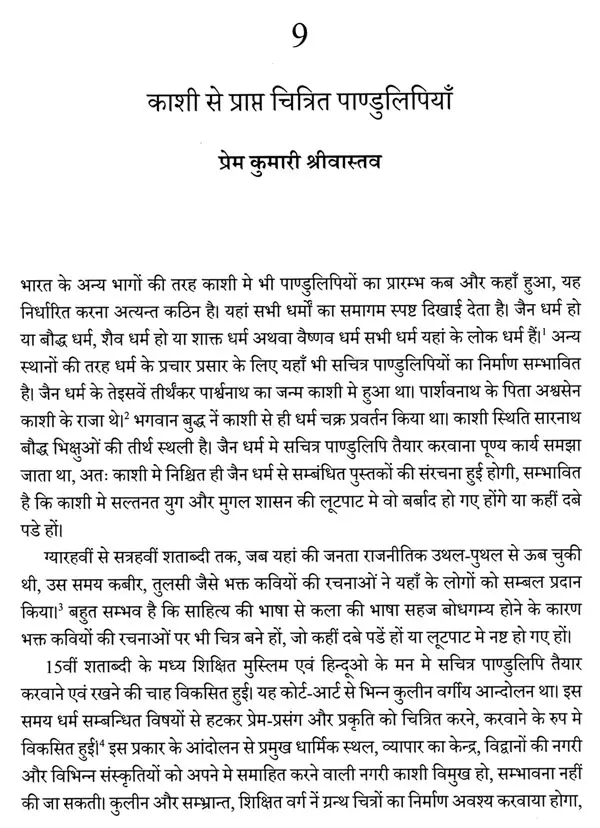
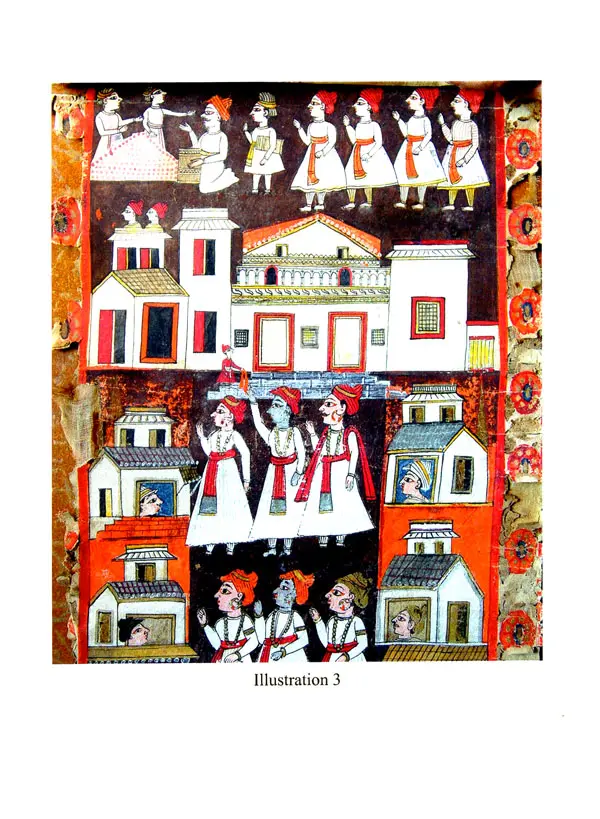
All the Indian philosophical systems consider liberation (moksa), as the highest goal of human life. The Saivasiddhanta, one of the earliest religio-philosophical systems that is based on the Saivagamas, deals elaborately with this concept. Dr. Ganeshan, in his paper, highlights some important aspects of the concept of the moksa as propounded in the Saivasiddhanta texts and its historical developments spanning more than a millennium as well as the means to attain that goal. Dr. K.E. Madhusudanan, in his article, started with the basic concept of Vaisesika philosophy and then moves on to how Vaisesika formed the foundation of ancient applied sciences such as Ayurveda, silpasastra and most fundamental entities of the physical World such as Matter, Energy, Space and Time. Dr. Nandini Bhattacharya has done an extensive research on Tajik Culture of Pre-Soviet, Soviet and Post-Soviet genre. Her special interest lies in nationality's question and identity politics. Astronomy, the Science of heavens, had received due importance in society from Vedic age. Sri Somenath Chatterjee, in his paper, tries to draw an outline of Indian astronomy of classic age, i.e. from Aryabhat to Bhaskaracarya while touching upon the astronomical thoughts of Vedic age. The article of Dr. Prem Kumari Srivastava, is the outcome of her findings of the illustrated manuscripts in Kashi, Varanasi, which are kept in Temples, religious as well as Academic Institutions or in private collections. Prof. Bhagavat Sharan Shukla, in simple language has highlighted the glorious tradition of ancient manuscripts and their practicality and usefulness in present day life.
I do hope this publication comprising diverse topics will be useful and interesting to the researchers as well as readers in general. My sincere thanks goes to the scholars for their contributions through virtual presentations. It would not be out of place to mention that the opinions expressed by the individual scholars in their respective papers are their own and it would be best to contact the authors themselves in case of any clarification needed.
**Contents and Sample Pages**