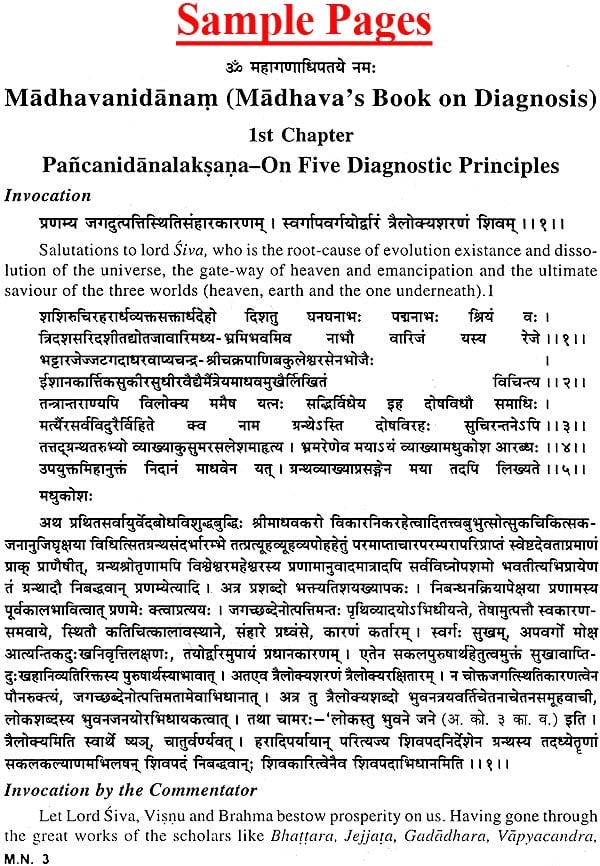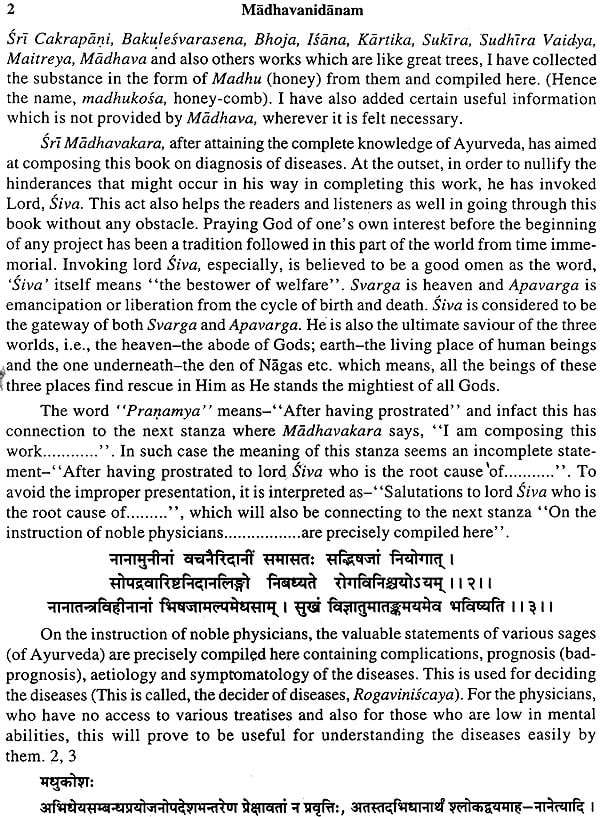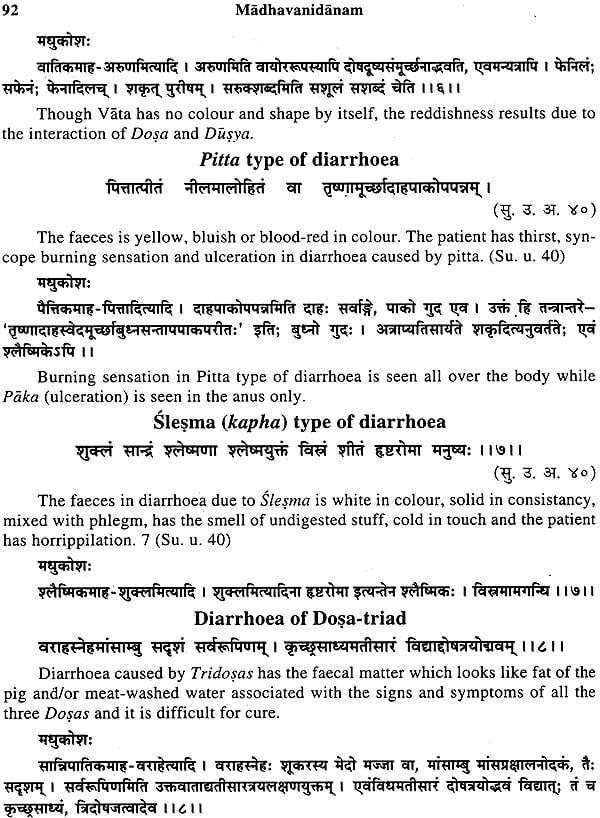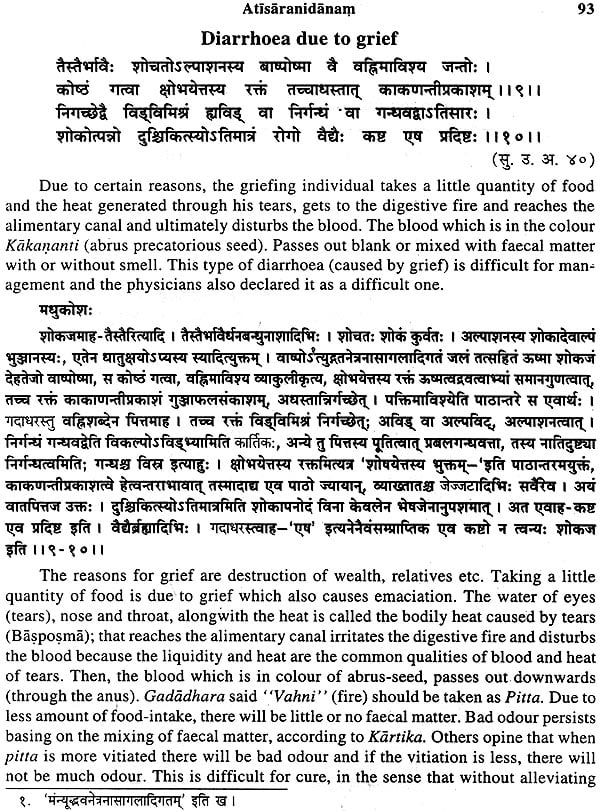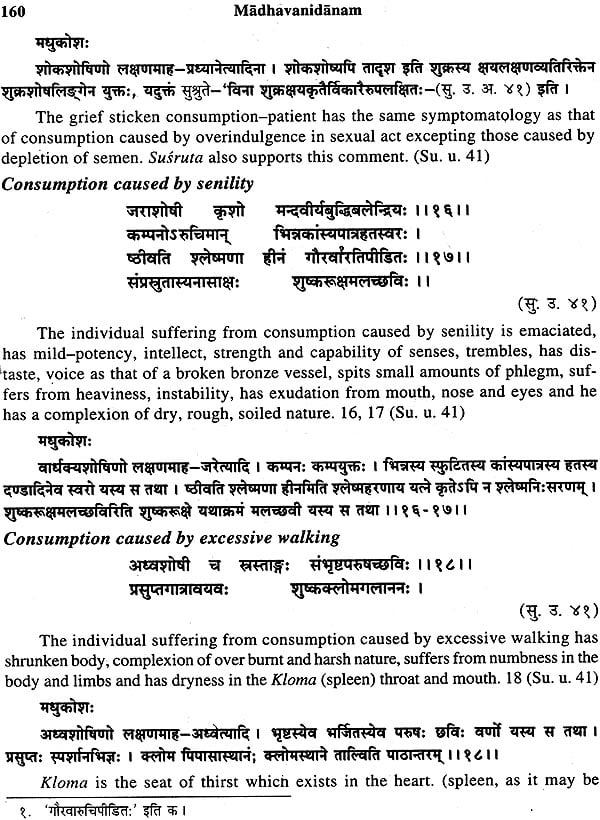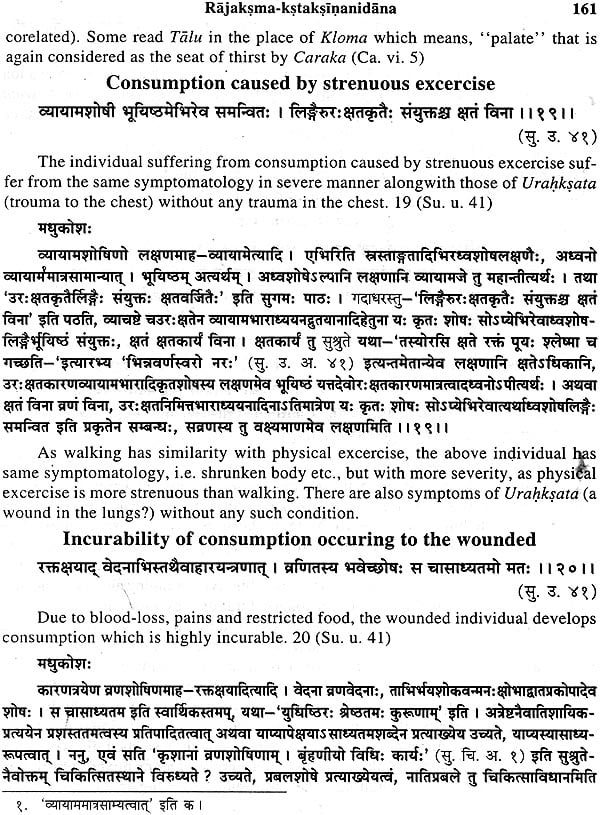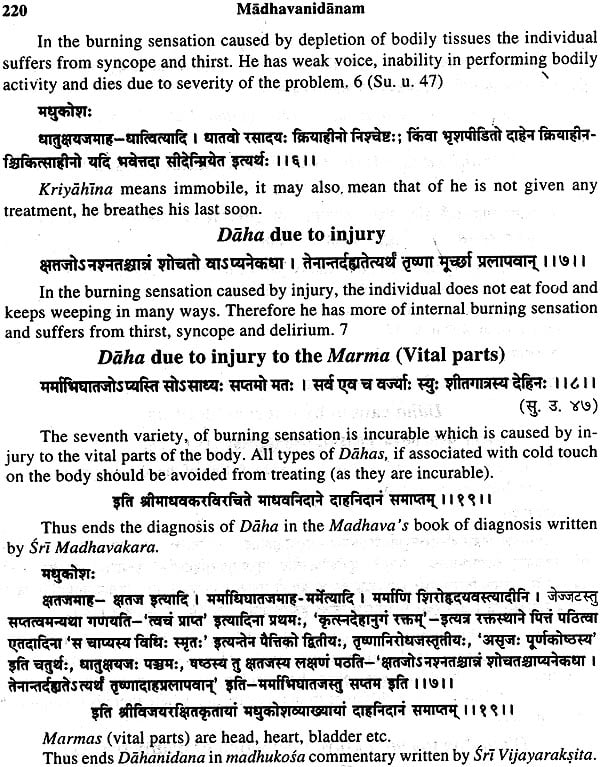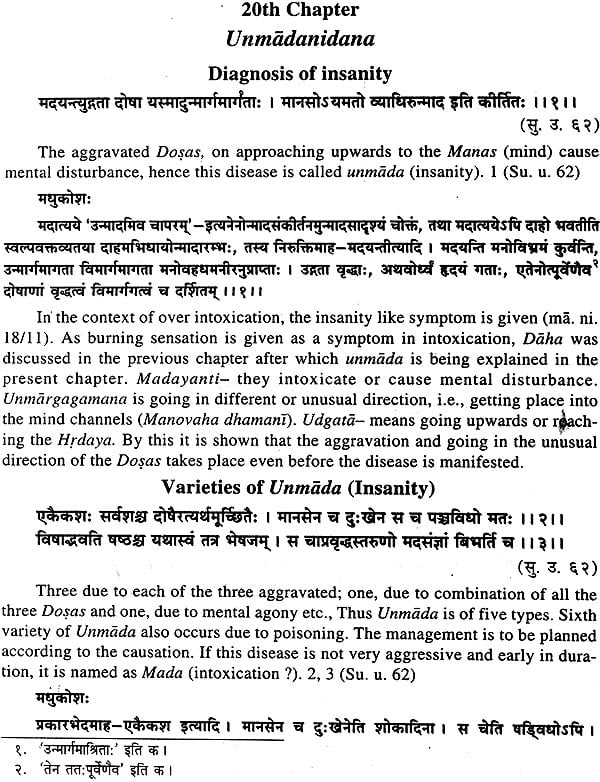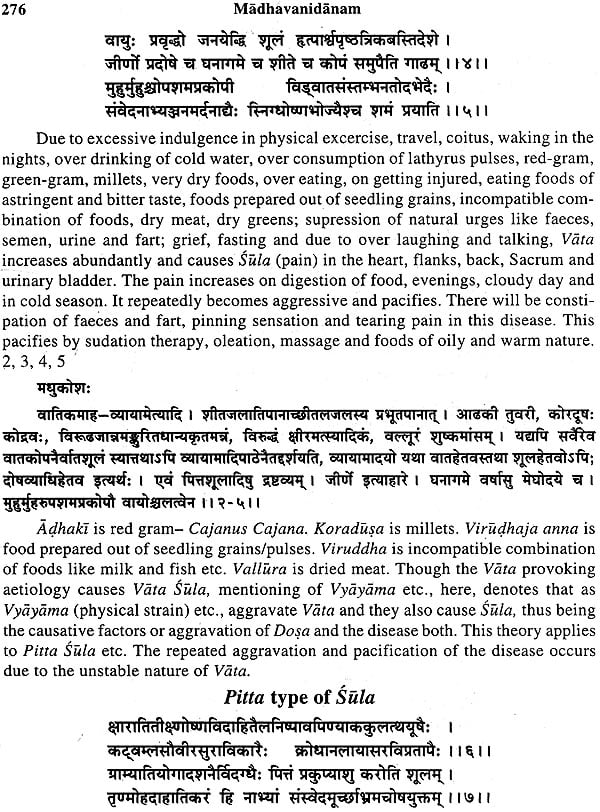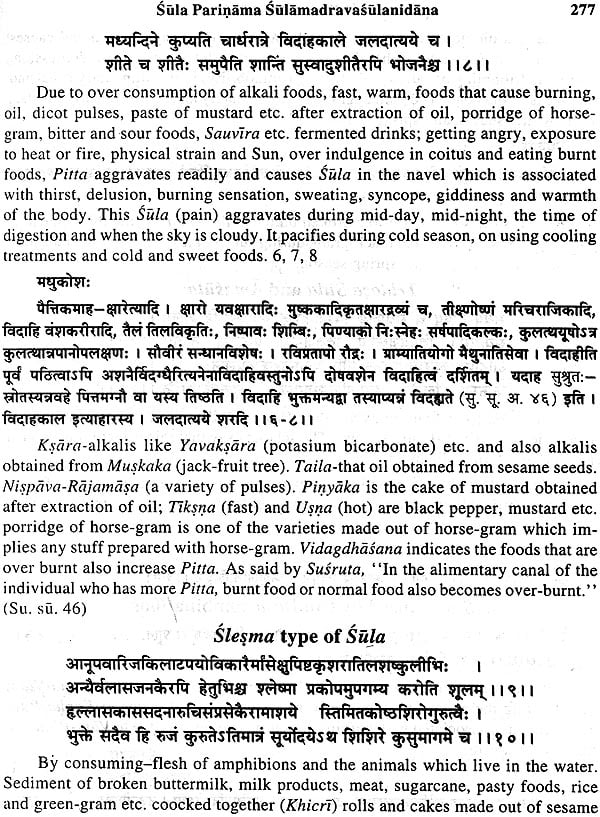


Madhavanidanam of Sri Madhavakara and Madhukosa Commentary (Volume One)
Book Specification
| Item Code: | IDI061 |
| Author: | Dr. P. Himasagara Chandra Murthy |
| Publisher: | Chowkhamba Sanskrit Series Office |
| Language: | Sanskrit Textwith English Translation and Glossary |
| Edition: | 2006 |
| ISBN: | 8170802156 |
| Pages: | 391 |
| Cover: | Paperback |
| Other Details | 7.5"X 9.7" |
| Weight | 700 gm |
Book Description
From the Jacket
Sarngadhar Samhita is regarded as one of the Laghutrayi, the second line triad of Ayurvedic literature. It is famous among the Ayurvedic physicians by virtue of its practical usefulness. In Sarngadhara Samhita Nadipariksa - the pulse -examination is given with full details for the first time, which is an added advantage for proper diagnosis. The pharmacological terms are explained along with examples. The principals and practice of pharmaceutics are allotted one complete section-12 chapters with details given in no other text in Ayurveda making this book a unique ready reference for such purposes.
Apart from herbalism many recipes of mercurial system have been included. The third section of this book is allotted to Pancakarma, the detoxification therapy of Ayurveda. The step by step account of each therapy is detailed very diligently making the work more adoptable.
The recipes given in the book are sure remedies for so many minor diseases. It also gives the details of various processes and therapies to be adopted in the eye diseases.
The book is presented in the manner that can cater to the felt- needs of an Ayurvedic practitioners. The English translation of the work is aimed at making the help, the practitioners and zealots of Ayurveda, all over the world, gain better knowledge of health and medicine.
Arogya Raksha kalpadruma, is a laudable literary source on specialty Ayurvedic pediatric care of Kerala terrain. Sri. Kaikkkulangara Rama Warier, one of the illustrious astute of ancient kerala, is considered as the author of this treasured literature. This literary work contains exceptional information regarding various diseases pathogenesis and its management, with reference to pediatric age group, which is not seen any of the other Ayurvedic literary works.
A sumptuous explanation of 15 type of Vasarpa (inflammatory skin diseases) etiology, pathogenesis and its management is explicatively explained in this book is its outstanding feature. Apart from this topic, various other disease pathogenesis and its management, such as rakta sthambha, kundalaka, sakha roha, nabhi roga etc. are explained in this work . This is another special feature not seen in any of the other Ayurvedic literary works present today. Another topic of special citation is that, is the lucid explanation on immunomodulatory methods followed in children, is explained under the topic as prakaradi yoga, is a specially of this book. Aside from all the above, Arogya raksha kalpadruma explains the innards of all the eight specially divisions of Ayurveda.
On rummaging the heirloom of Kerala's splendid Ayurvedic pediatric health care treasures, one can find, Arogya raksha kalpadruma, is the bible of the ancient Ayurvedic pediatric health care wisdom of Kerala.
"Nidanemadhavah sresthah" - For diagnosis, madhava nidana in the best as has been envisaged by the scholars. Such great work Madhavanidana has been use for practical and research purposes by the students, practitioners and researchers since its publication. Madhavakara has taken lot of pains to compile the concerned material from various sources like Caraka samhita, Susruta samhita, Astanga sangraha and Astangas hrdaya. That apart, he has composed verses out of his own experience by which he could add more value to his work. This work his deal exclusively with the diagnostic crieteria of diseases on Ayurvedic basis. Once the patient approaches the physician, the later should concentrate on fixing the diagnosis so as to give a pin pointed treatment to cure the disease. Though the material has been collected from Caraka samhita etc., the study of these works alone may not give such a clear picture of the disease. The arrangement of the subject material in Madhava nidana is so systematic that it can be understood by the physicians with the interlinking system of the diseases in a proper manner.
This work has attracted the attention of many a number of scholar from Ayurvedic field and also from the literature field. The first English translation was done by G. J. Mullenbeld, professor of Indology of Netherlands. It is purely on the literary view point and the language is so mechanical that the practitioners could not find it much useful. Prof. Srikanthamurthy of Bangalore has made a very good effort in translating this work into English. Now it is very popular work among English knowing enthusiasts of Ayurveda. But his translation is restricted to main text of Madhavanidana. The commentaries of Vijayaraksita and Srikantha datta aptly named as "madhukosa," meaning " Honeycomb" gives more clarity in the subject concern. Pt. Yadavji Trikamji Acharya himself wondered to see the reference of many unseen works of Ayurveda mentioned in this commentary. One should carefully go through the commentary without getting confused by honey -bee like language used in it and get the honey -Like knowledge. It is felt necessary to take -up the translation of the commentary also so as to make the English knowing zealots to enjoy the crux of the subject. There is no doubt that no translation can match the original text in expression but a sincere effort is made in the following pages to explore the intricacy of the subject in English. This venture has been encouraged by the renowned publishers, Chowkhamba Sanskrit Series office, Varanasi after they published my translation on "Sarngadhara samhita" which had gained popularity among the students and scholars of Ayurveda. I appeal to the learned that this may kindly be accepted and suggest about draw backs if any, which can be rectified in future editions. At present a part of this text, i.e., from chapter 1-32 are being presented.
About the Book
Madhavanidanam of Sri Madhavakara with Madhukosa commentary of Vijayaraksita and Srikanthadatta Part -I (1-32 Chapters) is translated into English by Dr. P. Himasagara Chandra Murthy a reputed academician in the field of Ayurveda. The subject is presented in call clarity and simplicity to make this work understandable and adoptable to the English - knowing zealots of Ayurveda. The text, as such, is louded for bringing together, vast subject of Ayurvedic diagnostics and presenting in a lucid manner. This translation will take it to the universal level making the work more worthy and useful to the medical field. In fact the expensive diagnostic aspect can be avoided effectively by following the principles laid down in this text.
The addition of Sanskrit- English glossary adds to the utility of this work making it a monumental one. The students, researchers and practitioners will find this as a must for their ready reference at every step. The Chaukhamba Sanskrit Series Office, the publishers have made a worthy attempt in publishing this translation. The author, who has already proved his mite through his translation of Sarandadhara Samhita, deserves all the commendation for his skills in translation and presentation.
About the Author
Hails from a Traditional Ayurvedic family, Dr. P. Himasagara Chandra Murthy has possessed his BAM & S from Sri Rangacharya Govt. Ayurvedic College, Guntur, A. P. and M.D. (Ayurveda) from Gujarat Ayurved University, Jamnagar. He started his career as a teacher in 1979 at B. H. Ayurveda Mahavidyalaya, Lodra. Gujarat and within short period he shifted to the Ayurveda College, Coimbatore, Tamilnadu, Where he rose to the position of a Principal within 5 Years. Since 1989 he is in the faculty of Govt. Ayurvedic College, Vijayawada. A. P. He is now a Gazetted Lecturer in the P. G. Department of Rasashastra and incharge professor and head of the same Department in Vijayawada. He is awarded with the " Caption Srinivasda Murthy Gold Medal" for his excellence in finding metallic impurities in Mercury through Namburi Phased Spot Test (NPST). Though he has specialized in Rasashastra, Dr. Murthy has equal proficiency in samhitas, which he taught for about 10 years and also translated Nidana, Vimana and Sharira sthanas of Charaka Samhita along with Chakrapani Commentary into Telugu. His English translation of Sarngadhara Samhita has become famous for its lucid presentation. Dr. Murthy has, to his credit, many research projects and presentations. He has also been a member in various Universities for studies and Examinations.
| I | Invocation | 1 |
| Pancanidana laksana- On five diagnostic principles | 1 | |
| Nidana- The etiology | 7 | |
| Purvarupa- Premonitory symptoms | 14 | |
| Rupa-The symptomatology | 17 | |
| Upasaya- The positive trail | 19 | |
| Samprapti- The pathogenesis | 25 | |
| II | Jvaranidanam ( Diagnosis of fever) | 37 |
| Common symptomatology of fever | 41 | |
| Prodomata of fever | 42 | |
| Signs and symptoms of Vata type of fever | 44 | |
| Signs and symptoms of Pitta type of fever | 45 | |
| Signs and symptoms of Kapha type of fever | 47 | |
| Signs and symptoms of Vata-pitta type of fever | 48 | |
| Signs and symptoms of Vita-slesma type of fever | 49 | |
| Signs and symptoms of Slesma- pitta type of fever | 49 | |
| Signs and symptoms of Sannipata fever | 50 | |
| Prognosis of Sannipata fever | 56 | |
| Agantu (fever caused by extrinsic factors) | 57 | |
| Onset of Visama jvara (irregular fever) | 60 | |
| Dhatu- relationship of irregular fever | 61 | |
| Time of bouts of irregular fever | 62 | |
| Caturthaka viparyaya (reversal quartan) fever | 66 | |
| Vatabalasaka fever | 68 | |
| Pralepaka fever | 69 | |
| Fevers where half of the body is afflicted by temperature | 69 | |
| Sitapurva(Starting with cold) dahapurva (starting with burning sensation) fevers | 70 | |
| Dhatu based fevers | 72 | |
| Prakrta and Vaikrta fevers | 74 | |
| Internal and external fevers | 77 | |
| Ama ( undigested) Pacyamana (digesting) and Nirama (digested) fevers | 78 | |
| Curability of fever | 81 | |
| Incurability of fever | 81 | |
| Premonitory symptoms of relief of fever | 85 | |
| Signs and symptoms on relief of fever | 86 | |
| III | Atisaranidanam (Diagnosis of diarrhoea) | 88 |
| Pathogenesis of diarrhoea | 89 | |
| Prodromata of diarrhoea | 91 | |
| Vata type of diarrhoea | 91 | |
| Pitta type of diarrhoea | 92 | |
| Slesma type of diarrhoea | 92 | |
| Diarrhoea of Dosa-triad | 92 | |
| Diarrhoea due to grief | 93 | |
| Diarrhoea due to Atma(undigested stuff) | 94 | |
| Characteristics of Ama-afflicted feaces and those of non- afflicted one | 94 | |
| Incurable diarrhoea | 95 | |
| Pravahika (dysentery) | 97 | |
| Varieties of Pravahika | 97 | |
| Symptoms of cure of diarrhoea | 98 | |
| IV | Grahaniroganidanam(Diagnosis of sprue) | 100 |
| Purvarupa of Grahani | 101 | |
| Aetiology, pathogenesis and symptomatology of Vata type of Grahaniroga | 101 | |
| Pitta type of Grahaniroga | 103 | |
| Kapha type of Grahaniroga | 103 | |
| Sannipatagrahaniroga( Sprue caused by all three of Dasas) | 104 | |
| Sangrahagrahani and Ghatiyantragrahani | 105 | |
| Prognosis of Grahaniroga | 105 | |
| V | Arsonidanam (Diagnosis of piles) | 107 |
| Samprapti (pathogenesis) of Arsa (piles) | 108 | |
| The aetiology of Vata types of piles | 108 | |
| Aetiology of pitta type of piles | 109 | |
| Aetiology of Kapha type of piles | 109 | |
| Aetiology of piles of dual Dosa affliction | 110 | |
| Aetiology of piles of three Dosa affliction | 110 | |
| Symptomatology of Vata type of piles | 111 | |
| Symptomatology of Pitta type of piles | 112 | |
| Symptomatology of Slesma type of piles | 113 | |
| Symptomatology of Sannipata (tridosa) and Sahaja (congenital) piles | 114 | |
| Symptomatology of Raktarsas (bleeding piles) | 114 | |
| Association of Vata and Kapha in bleeding piles | 115 | |
| Premonitory symptoms of Arsas (piles) | 116 | |
| The role of piles in troubling the whole body | 117 | |
| Prognosis of the disease of piles | 118 | |
| Complications of the piles- disease | 119 | |
| The muscular spourts occurring in places other than the anus | 120 | |
| Carmakila(wart) | 120 | |
| VI | Agnimandya, Ajirna, Visucika, Alasaka, Vilambika Nidanam (Diagnosis of decreased appetite, indigestion and related diseases) | 121 |
| Varieties of indigestion | 122 | |
| Aetiology/causative factors of Ajirna (indigestion) | 124 | |
| Symptomatology of Ajirna | 125 | |
| Complications of indigestion | 126 | |
| Over- eating leads to indigestion | 126 | |
| Visuci (gastro-enteritis) | 127 | |
| Symptomatology of visuci | 127 | |
| Alasaka(lethargy of food) | 128 | |
| Vilambika | 128 | |
| Role of Ama (unripe or undigested stuff) in causing diseases | 129 | |
| Incurability of Visuci and Alasaka | 129 | |
| Signs of relief of indigestion, complications of Visuci and significance of tackling indigestion and symptomatology of common indigestion | 130 | |
| VII | Kriminidanam (Diagnosis of worm-infestation) | 131 |
| The external worms | 131 | |
| Aetiology of worm- infestation | 132 | |
| Aetiology of worm- infestation basing on the origin | 132 | |
| Symptomatology of worm-infestation | 133 | |
| The features of worms of Kapha origin | 133 | |
| the features of worms of Rakta origin | 134 | |
| Worms of purisa (faeces) origin | 134 | |
| VIII | Pandu, Kamala, Kumbhakamala and Halimaka (Diagnosis of anaemia, jaundice and advanced stages of jaundice) | 136 |
| Aetiology of Pandu(anaemia) | 137 | |
| Premonitary symptoms of Pandu | 137 | |
| Signs and symptoms of Vata type of anaemia | 137 | |
| Signs and symptoms of Pitta type of anaemia | 138 | |
| Signs and symptoms of Kapha type of anaemia | 138 | |
| Signs and symptoms of Sannipata type of Pandu | 138 | |
| Samprapti (pathogenesis) of Pandu caused by eating soil | 139 | |
| Symptomatology of Pandu caused by eating soil | 139 | |
| Prognosis of Pandu | 140 | |
| Kamala jaundice | 141 | |
| Kumbhakamala (Advanced stage of jaundice) | 142 | |
| Prognosis of kamala (jaundice) | 143 | |
| Prognosis of Kumbhakamala | 143 | |
| Halimaka (The advanced stage of Pandu) | 143 | |
| Panaki | 143 | |
| IX | Raktapittanidana(Diagnosis of haemorrhagic disease) | 145 |
| Premonitary symptoms of Raktapitta | 146 | |
| Slesma type of Raktapitta | 146 | |
| Vata type of Raktapitta | 146 | |
| Pitta type of Raktapitta | 146 | |
| Dosa relation in Raktapitta | 148 | |
| Prognosis of Raktapitta | 148 | |
| Curability of Raktapitta | 148 | |
| Curability of Raktapitta as per Dosa involvement | 149 | |
| Complications of Raktapitta | 149 | |
| Incurability of Raktapitta | 150 | |
| X | Rajayaksma-Ksataksina Nidana (Diagnosis of consumption-emaciation) | 152 |
| Pathogenesis of Rajayaksma | 153 | |
| Prodromata of consumption | 154 | |
| Symptomatology of consumption | 155 | |
| Six features of consumption | 156 | |
| Prognosis of consumption | 158 | |
| Curability of consumption | 158 | |
| The two types of consumption | 159 | |
| consumption caused by grief | 159 | |
| Consumption caused by senility | 160 | |
| Consumption caused by excessive walking | 160 | |
| Consumption caused by strenuous exercise | 161 | |
| Incurability of consumption occurring to the wounded | 161 | |
| Urahksata (traumatic chest) | 162 | |
| Prodromata of traumatic chest | 162 | |
| The Symptomatology of emaciation due to traumatic chest (Ksataksina) | 164 | |
| Prognosis of Ksataksina (emaciation due to traumatic chest) | 164 | |
| XI | Kasanidanam (Diagnosis of couch) | 165 |
| Varieties of Kasa | 166 | |
| Prodromata of Kasa | 166 | |
| Vata type of Kasa (cough) | 166 | |
| Pitta type of cough | 166 | |
| Ksatakasa (cough due to traumatic chest) | 166 | |
| Ksayajakasa (cough due to pthisis) | 168 | |
| Curability and incurability of Kasa (cough) | 168 | |
| XII | Hikkasvasanidana (Diagnosis of hiccup and dyspnoea) | 170 |
| Main feature of hiccup | 171 | |
| Pathogenesis and varieties of hiccup | 171 | |
| Prodromata of hiccup | 171 | |
| Annaja type of hiccup | 172 | |
| Yamala hikka (dual hiccup) | 172 | |
| Ksudra hikka (minor hiccup) | 172 | |
| Gambhira hikka (deep hiccup) | 173 | |
| Mahati hikka (big hiccup) | 173 | |
| Incurability of hiccup | 173 | |
| Varieties of Svasa (dyspnoea) | 174 | |
| Prodromata and pathogenesis of dyspnoea | 175 | |
| Mahasvasa (great dyspnoea) | 175 | |
| Urdhvasvasa (upward dyspnoea) | 176 | |
| Tamakasvasa (bronchial asthma) | 177 | |
| Pratamaka and santamaka svasa | 177 | |
| Ksudrasvasa (mild dyspoea | 179 | |
| XIII | Svarabhedanidanam(Diagnosis of disturbed voice) | 181 |
| Vata type of svarabheda | 181 | |
| Pitta type of Svarabheda | 182 | |
| Kapha type of Svarabheda | 182 | |
| Sannipata type of Svarabheda | 182 | |
| Svarabheda caused by Ksaya (consumption) | 183 | |
| Svarabheda caused by Medas (fat) | 183 | |
| Incurability of Svarabheda | 184 | |
| XIV | Arocakanidanam(Diagnosis of anorexia) | 185 |
| Vata type of Arocaka | 185 | |
| Pitta type of Arocaka | 185 | |
| Kapha type of Arocaka | 186 | |
| Agantu type of Arocaka | 186 | |
| Tridosa type of Arocaka | 187 | |
| Specific symptomatology of Arocaka | 187 | |
| XV | Chardinidanai (Diagnosis of vomiting) | 189 |
| Definition and aetiology of Chardi (vomiting) | 189 | |
| Prodromata of Chardi | 189 | |
| Vata type of Chardi | 190 | |
| Pitta type of Chardi | 190 | |
| Kapha type of Chardi | 191 | |
| Tridosa type of Chardi | 191 | |
| Incurability of Chardi | 191 | |
| Agantu (sudden) type of Chardi | 192 | |
| Chardi caused by Krimi (worm-infestation) | 193 | |
| Incurability of Chardi | 193 | |
| Complications of Chardi | 193 | |
| XVI | Trsnanidana (Diagnosis of thirst) | 194 |
| Nidana (aetiology)Samprapti (pathogenesis) and Bheda (varieties) of Trsna (thirst) | 194 | |
| Vata type of Trsna | 195 | |
| Pitta type of Trsna | 195 | |
| Kapha type of Trsna | 196 | |
| Trsna due to injury | 197 | |
| Trsna due to Ksaya (emaciation) | 197 | |
| Trsna caused by Ama (undigested stuff) | 197 | |
| Bhaktodbhava Trsna-Thirst caused by eating certain foods | 198 | |
| Upasargaja Trsna(Thirst caused as a complication to some other disease) | 198 | |
| Incurability of Trsna | 199 | |
| XVII | Murccha- Bhrma- Nidra- Tandra- Sanyasa Nidana (Diagnosis of syncope, giddiness, sleep, dizziness and coma) | 200 |
| Prodromata of murccha | 201 | |
| Vata type of murccha | 201 | |
| Pitta type of murccha | 202 | |
| Kapha type of murccha | 202 | |
| Sannipata (tridosa) type of murccha | 202 | |
| Raktaja murccha(syncope caused by smelling blood) | 203 | |
| Murccha caused by Visa (poison) and Madya (alcohol) | 204 | |
| The features of Murccha of Rakta (blood) Madya (alcohol) and Visa (poison) | 205 | |
| The factors involved in causing Murccha, Bhrama, Tandra and Nidra | 205 | |
| The features of Tandra | 206 | |
| Difference between Murccha and Sannyasa | 206 | |
| Features of Sannyasa | 206 | |
| XVIII | Panatyaya, Panajirna, Panavibhramanidana (Diagnosis of various stages of alcoholic intoxication) | 208 |
| Cause of Intoxication | 208 | |
| Good and bad effects of Madya ect. | 208 | |
| The benefit of using Madya in a specific method | 209 | |
| Signs and symptoms of Prathamamada (Primary intoxication) | 210 | |
| Madhyama mada (Secondary or medium intoxication) | 211 | |
| Trtiya mada (Third stage of intoxication) | 211 | |
| Caturtha mada (Fourth stage of intoxication) | 212 | |
| Some more irregularities in consuming alcohol and the effect | 213 | |
| Diseases caused by irregular alcoholism | 214 | |
| Madatyaya (Panatyaya) or excessive intoxication | 214 | |
| Paramada (ultimate intoxication) | 215 | |
| Panavibhrama | 215 | |
| Incurability of intoxication | 216 | |
| Complications of intoxication | 216 | |
| XIX | Dahanidana (Diagnosis of burning sensation) | 218 |
| Raktaja type of Daha | 218 | |
| Pitta type of Daha | 218 | |
| Trsna nirodhaja Daha | 219 | |
| Daha caused by internal bleeding | 219 | |
| Daha due to Dhatuksaya (depletion of bodily tissues) | 219 | |
| Daha due injury | 220 | |
| Daha due to injury to the Marma (vital parts) | 220 | |
| XX | Unmadanidana (Diagnosis of insanity) | 221 |
| Varieties of Unmala (insanity) | 221 | |
| Common aetiology of Unmada (insanity) | 222 | |
| Samprapti (pathogenesis) of Unmada (insanity) | 222 | |
| Common symptomatology of Unmada | 223 | |
| Vata type of Unmada | 223 | |
| Pitta type of Unmada | 224 | |
| Kapha type of Unmada | 224 | |
| Sannipata type of Unmada | 225 | |
| Sokaja Unmada ( insanity caused by grief) | 226 | |
| Visaja Unmada (insanity caused by poison) | 226 | |
| Incurability of Unmada | 227 | |
| Unmada caused by supernatural powers | 227 | |
| Unmada caused by Deva (gods) | 228 | |
| Unmada caused by Devasatru (enemies of God-demons) | 228 | |
| Gandhrvagraha- affliction | 228 | |
| Yaksagraha- affliction | 229 | |
| Pitrgraha- affliction | 229 | |
| Nagagraha- affliction | 229 | |
| Raksaksa-affliction | 230 | |
| Pisaca-affliction | 230 | |
| Incurability of Unmada | 230 | |
| The time of affliction | 231 | |
| The invisibility of afflicting Grahas | 231 | |
| The affliction- relation of human- being and supernatural powers | 231 | |
| XXI | Apasmara Nidana (Diagnosis of epilepsy) | 233 |
| Prodromata of Apasmara | 233 | |
| Vata type of Apasmara | 234 | |
| Pitta type of Apasmara | 234 | |
| Kapha type of Apasmara | 234 | |
| Sannipata type of Apasmara and incurability | 235 | |
| Periodicity of the bouts of Apasmara | 235 | |
| XXII | Vatavyadhi Nidana (Diagnosis of Vata- disorders) | 237 |
| Purvarupa (prodromata) | 239 | |
| Various ailments caused by Vata | 239 | |
| Kosthasrta Vata laksana (symptomatology of Vata when situated in the Guda and Amasaya | 241 | |
| Signs and symptoms caused by Vata seated in the intestines | 241 | |
| Signs and symptoms of Vata seated in the skin | 242 | |
| Signs and symptoms of Vata getting into Asrk (blood) | 242 | |
| Signs and Symptoms which occur when Vata reaches mamsa and medas, Majja and Asthi | 243 | |
| Features of vitiated Vata when it reaches Sukra (semen) | 243 | |
| Siragata Vata (Vata seated in the veins) | 243 | |
| Snayugata Vata (Vata seated in the ligaments) | 244 | |
| Sandhigatavata (Arthritis) | 244 | |
| Signs and symptoms when Pitta and Kapha individually make Avarana (covering) on each of the five types of Vata | 244 | |
| General features of Aksepaka (convulsions) | 245 | |
| Apatantraka and Apatamaka | 246 | |
| Dandapatanaka (plenostuotonos) | 247 | |
| Dhanustambha (tetanus) | 247 | |
| Incurability of apatanaka | 249 | |
| Paksavadha (haemiplegia) | 249 | |
| Association of Pitta and Kapha in Paksavadha and the pregnosis of this disease | 250 | |
| Arditavata (facial paralysis/bell's palsy) | 250 | |
| Incurability of Arditavata | 251 | |
| The temporary relief in convulsions | 252 | |
| Hanugraha (lock-jaw) | 252 | |
| Manyastambha (torticollis/dry neck) | 253 | |
| Siragraha | 253 | |
| Grdhrasi (sciatica) | 253 | |
| Visvaci (radio- ulnar paralysis) | 254 | |
| Krostukasirsa (inflamed knee) | 255 | |
| Khanja (limp/monoplegia) and Pangu (paraplegia) | 255 | |
| Kalayakhanja (lathyrism) | 256 | |
| Vatakantaka(ankle sprain) | 256 | |
| Padadaha (burning feet) | 257 | |
| Padaharsa (horipplation of the feet) | 257 | |
| Amasosa | 257 | |
| Avabahuka | 257 | |
| Muka, Minmina, Gadgada (dumbness etc.) | 258 | |
| Tuni | 258 | |
| Pratituni | 259 | |
| Asthila | 259 | |
| Hinderance of urination due to disturbance of Vata | 260 | |
| Kampavata(shaking palsy) | 260 | |
| Khallivata | 261 | |
| Urdhva Vata | 261 | |
| Knowing the remaining Vata disorders | 261 | |
| Curability and incurability of Vata disorders | 261 | |
| Upadrava (complications )of Vata disorders | 262 | |
| Normalcy of Vata | 262 | |
| XXIII | Vataraktanidanam (Diagnosis of gout) | 264 |
| Aetiology of Vatarakta (gout) | 264 | |
| Samprapti (pathogenesis) of Vatarakta | 265 | |
| Purvarupa (premonitory symptoms)) | 265 | |
| Symptomatology of Vatarakta, Dosa-wise | 266 | |
| The process of spreading of Vatarakta | 267 | |
| Prognosis of Vatarakta | 267 | |
| XXIV | Urustambhanidanam (Diagnosis of rigidity of the thighs) | 269 |
| Aetiology and pathogenesis of Urustambha | 269 | |
| Purvarupa (prodromata), Anupasaya (negative trail treatment) and Sadhyasadhyata (prognosis) of Urustambha (rigidity of thighs) | 270 | |
| XXV | Amavatanidana (Diagnosis of rheumatoid arthrities) | 272 |
| General symptomatology of Amavata | 273 | |
| Advanced stage of Amavata | 273 | |
| Specific features of Amavata when it is associated with Pitta, Vata and Kapha | 274 | |
| Prognosis Amavata | 274 | |
| XXVI | Sula, Parinamasulannadravasulanidana (Diagnosis of abdominal colic, peptic ulcer and gastric ulcer) | 275 |
| Number of Sulas (colic) | 275 | |
| Vata type of Sula | 275 | |
| Pitta type of Sula | 276 | |
| Slesma type of Sula | 277 | |
| Tridosa Sula and Amasula | 278 | |
| Sula caused by two Dosa combinations | 278 | |
| Prognosis of Sula | 279 | |
| Parinama Sula (peptic ulcer) | 279 | |
| Dosa-based symptomatology of Parinamasula | 280 | |
| Annadrava Sula | 280 | |
| XXVII | Udavartanahanidanam (Diagnosis of bloating of abdomen and chronic constipation) | 282 |
| Signs and symptoms caused by suppression of fast etc. | 282 | |
| Udavarta caused by aggravation of vata | 284 | |
| Anaha (flatulence) | 285 | |
| XXVIII | Gulmanidanam (Diagnosis of abdominal tumour) | 287 |
| Definition of Gulma | 287 | |
| The type of Gulma | 288 | |
| Premonitary symptoms of Gulma | 289 | |
| General symptomatology of Gulma | 290 | |
| Vata type of Gulma | 290 | |
| Pitta type of Gulma | 291 | |
| Kapha type of Gulma | 291 | |
| Involvement of Dosa-due in causing Gulma | 292 | |
| Sannipata gulma | 292 | |
| Raktagulma | 293 | |
| Incurability of Gulma | 295 | |
| XXIX | Hrdroganidana (Diagnosis of heart- disease) | 297 |
| Pathogenesis and main feature of heart- disease | 297 | |
| Vata type of Hrdroga | 297 | |
| Pitta type of Hrdroga | 298 | |
| Kapha type of Hrdroga | 298 | |
| Sannipata and Krimi types of Hrdroga | 298 | |
| Upadravah (complications) of Hrdroga (heart disease) | 300 | |
| XXX | Mutrakrcchranidana (Diagnosis of dysuria- difficulty in urination) | 301 |
| Nidana and Samprati (aetiology and pathogenesis) of Mutrakrcchra | 302 | |
| Dosa-wise signs and symptoms of Mutrakrcchra | 302 | |
| Similarity and contrast between Asmari varieties | 302 | |
| XXXI | Mutraghatanidana (Diagnosis of obstructed micturition) | 304 |
| Enumeration of Mutraghata Varieties | 304 | |
| Vatakundalika (spasmodic stricture) | 304 | |
| Asthila | 305 | |
| Vatabasti (retention of urine) | 305 | |
| Mutratita (incontinence of urine) | 305 | |
| Mutrajathara(distended bladder) | 305 | |
| Mutrotsanga (stricture of urethra) | 306 | |
| Mutraksaya (suppression of urine) | 306 | |
| Mutragranthi (tumour of the bladder) | 306 | |
| Mutrasukra (spermaturia) | 307 | |
| Usnavata (haematuria) | 307 | |
| Mutrasada (scanty urination) | 308 | |
| Vidvigraha (recto- vesical fistula) | 308 | |
| Vastikundala(atony of the bladder) | 308 | |
| Dosa-wise symptomatology of Vastikundala | 307 | |
| Prognosis of Vastikundala | 309 | |
| Features of Kundala | 309 | |
| XXXII | Asmarinidana (Diagnosis of urinary calculus) | 311 |
| Purvarupa (prodromata) | 311 | |
| Common symptomatology of Asmari | 312 | |
| Vata type of Asmari | 312 | |
| Pitta type of Asmari | 313 | |
| Kapha type of Asmari | 313 | |
| Curability of Asmari | 313 | |
| Sukrasmari (calculus by holding semen) | 314 | |
| Sarkara (sandy urination) | 314 | |
| Transformation of Asmari into Sarkara | 315 | |
| Incurability of Asmari | 316 | |
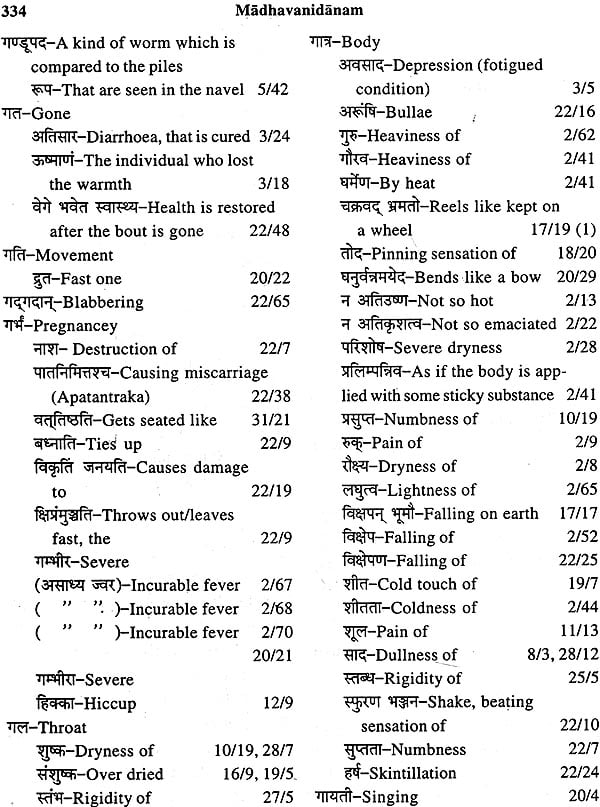
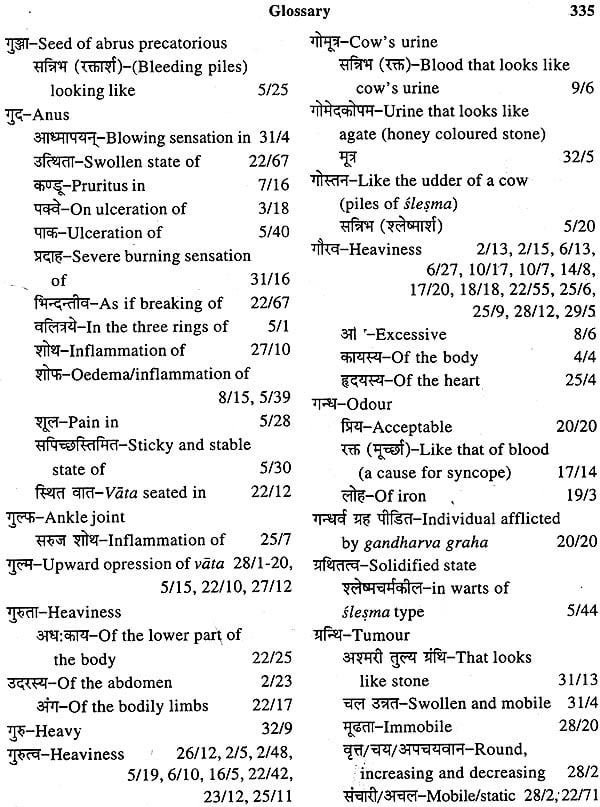
| Glossary | Sanskrit English | 316 |