

Nepal Under The Ranas (Set of 2 Volumes)
Book Specification
| Item Code: | NAL712 |
| Author: | Adrian Sever |
| Publisher: | B.R. Publishing Corporation |
| Language: | English |
| Edition: | 2014 |
| ISBN: | 9789350501375 |
| Pages: | 589 (Throughout Color and B/W Illustrations) |
| Cover: | Hardcover |
| Other Details | 9.5 inch x 7.5 inch |
| Weight | 2.10 kg |
Book Description
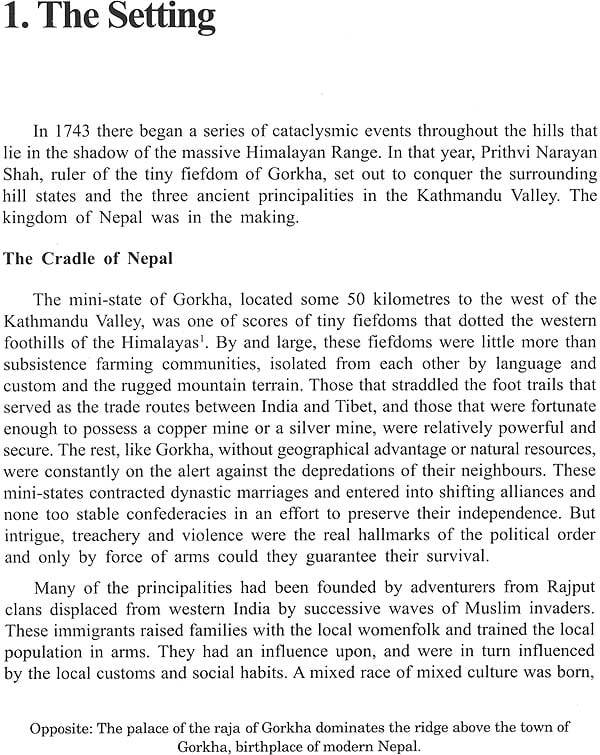
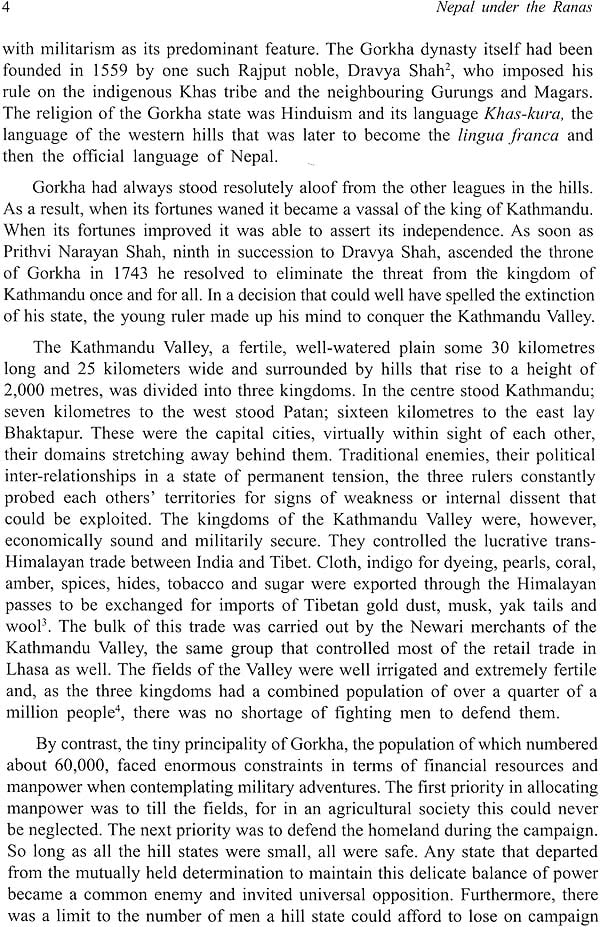
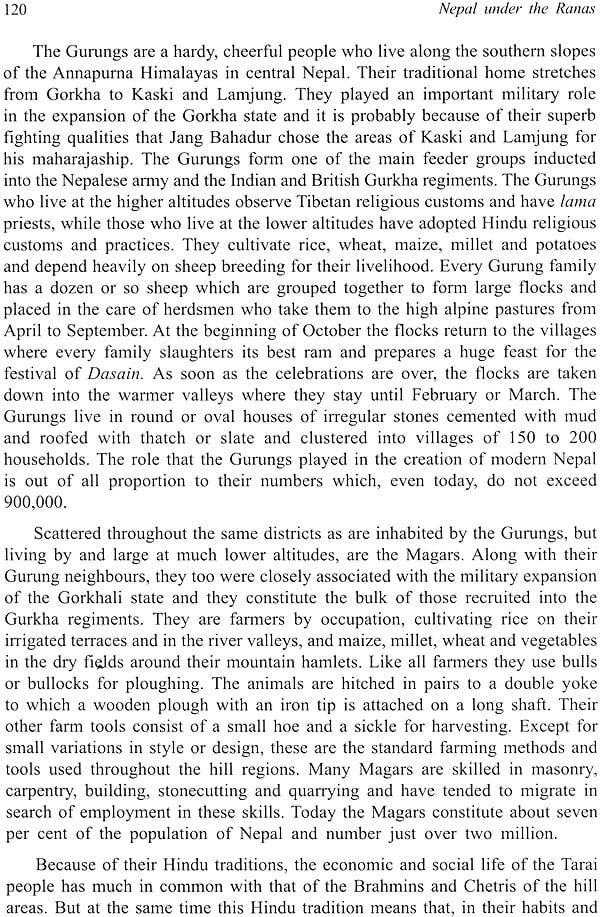
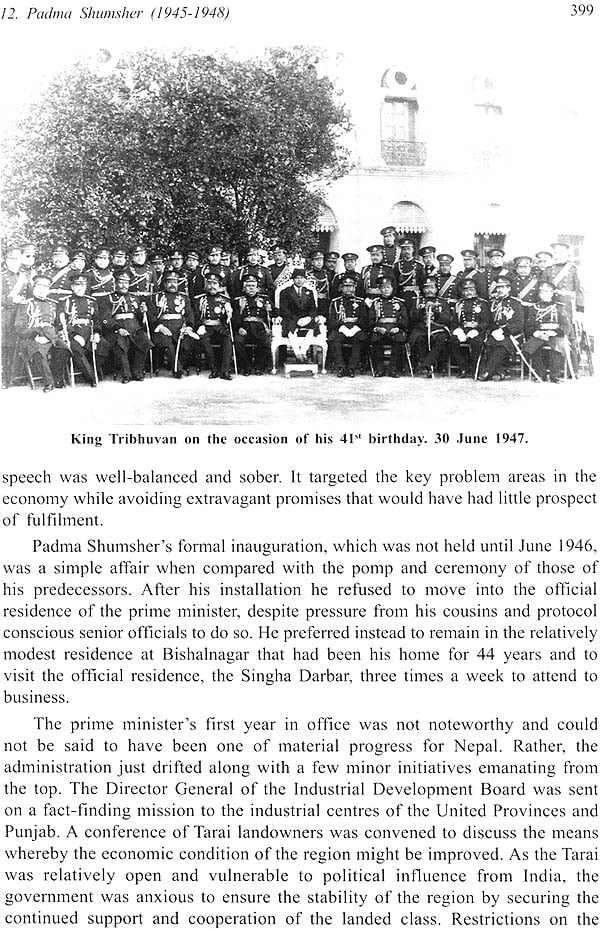
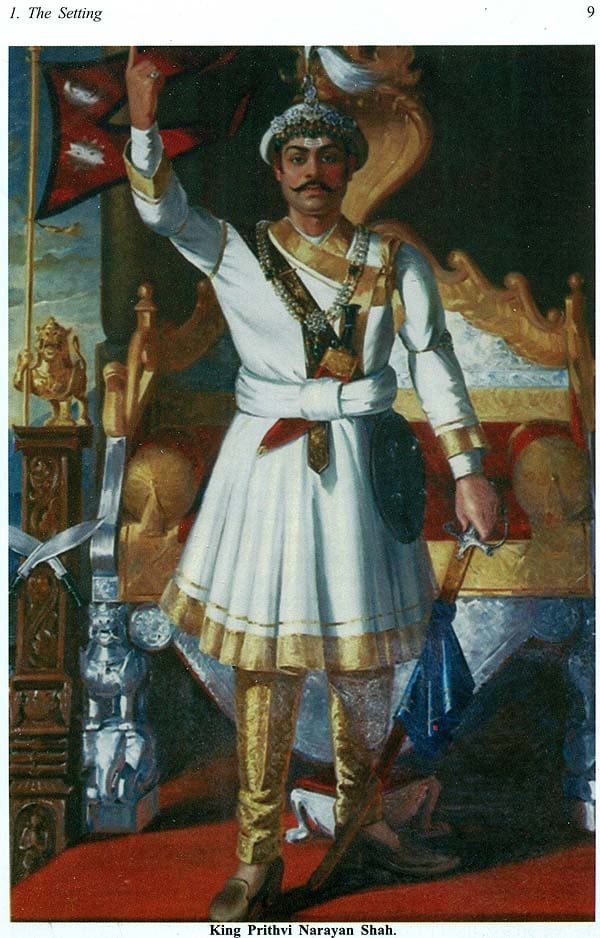
The history of Nepal as a modern state dates from the conquest of the Kathmandu Valley in 1768 by Prithvi Narayan Shah, ruler of the small Himalayan hill state of Gorkha. He and his successors continued to expand the area under their control, Subjugating independent tribes and principalities until the Kingdom reached its present size in 1816. However all of Prithvi Narayan Shah’s successors inherited the throne as minors and even when they came of age they proved incapable of governing effectively. Consequently, real power was usually vested in the hands of a chief minister who enjoyed the backing of the army. In 1846, a young and ambitious minor aristocrat named Jang Bahadur Rana was appointed prime minister. He quickly usurped the power and authority of the crown and made the prime minister ship hereditary within his family. This situation, analogous to that of the emperor and the Shogun in contemporary Japan, was to last for 104 years until, in 1951, the regime was toppled and the power of the monarchy restored.
This is the story of Nepal during that period; the story of Nepal under the rule of the Rana family.
The purpose of this book is to examine the nature of Rana rule, the devices whereby the Rana family kept itself in power, and the strategies that is employed to preserve the independence of Nepal against the encroachment of the British imperial power in India.
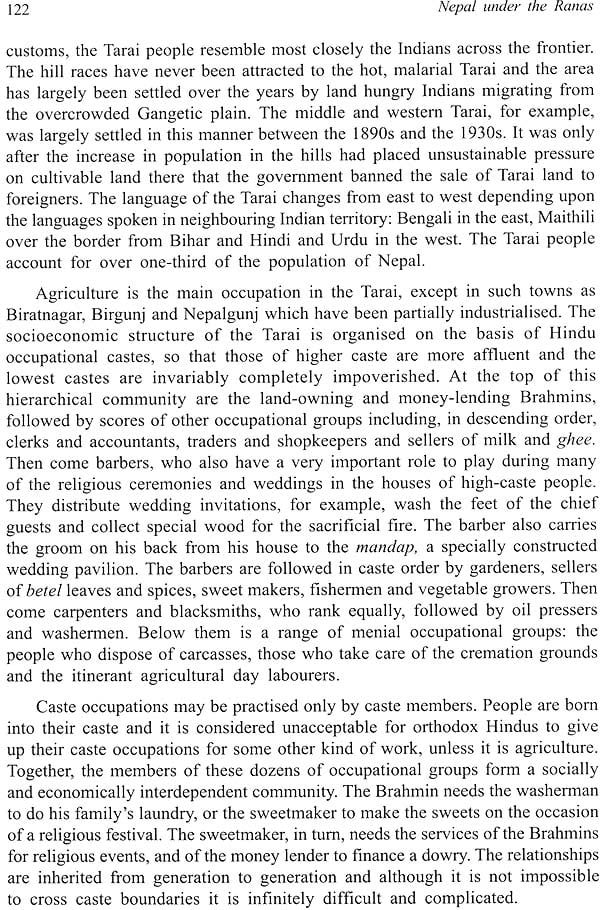
The book is chronological in structure, the framework for each chapter being the events that occurred during a specific prime ministership. Woven into the story is a series of studies of economic, political, social, military, administrative, legal and cultural issues. The composite effect is a rounded picture of Nepal at that time. The book concludes with a final analysis and assessment of the regime. A set of appendices provides a wealth of historical data in support of the text and is a useful resource for the student and enquiring reader.
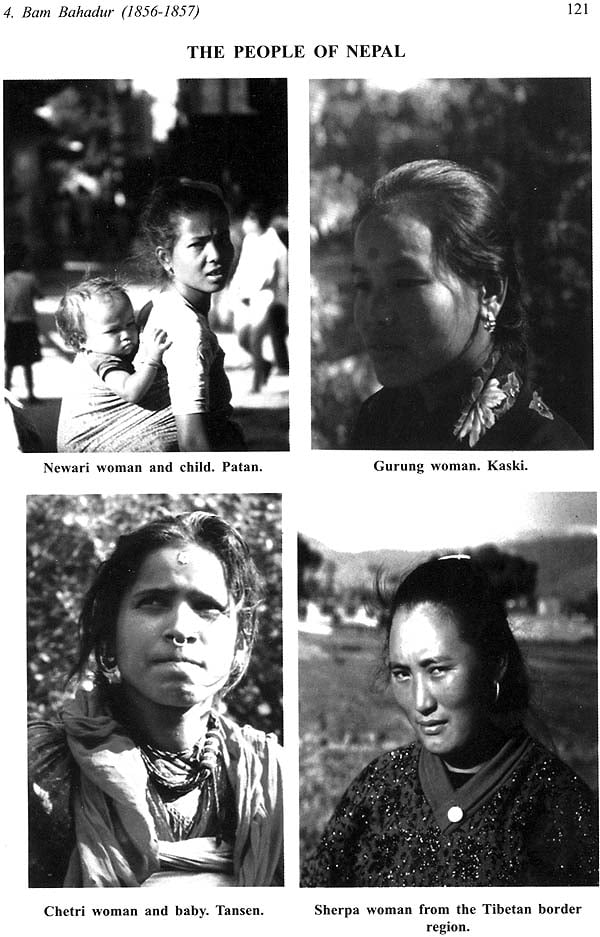
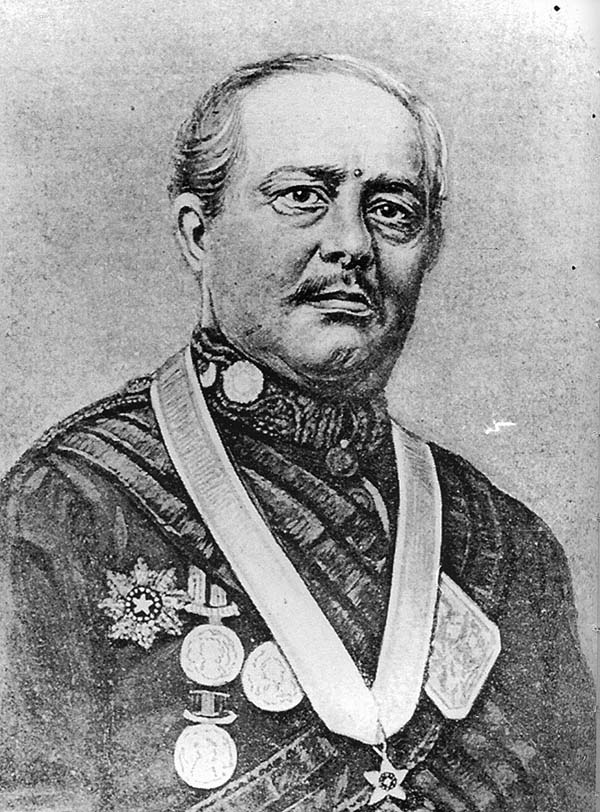
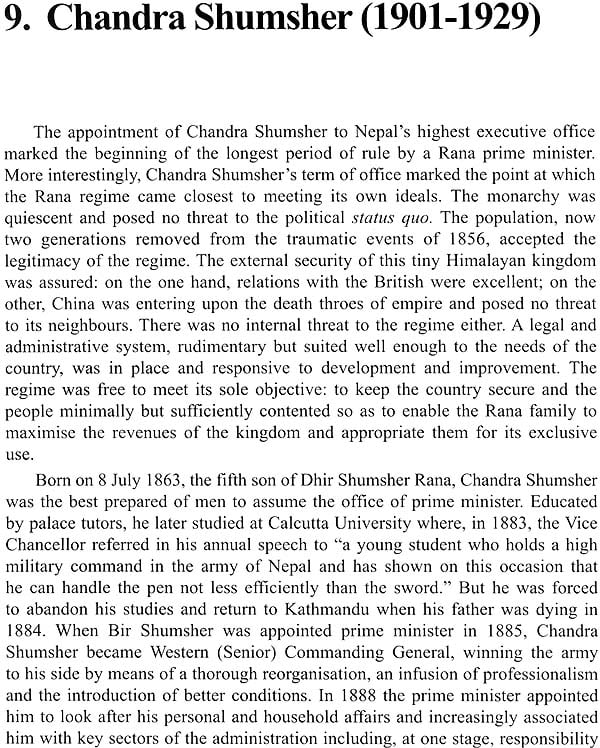
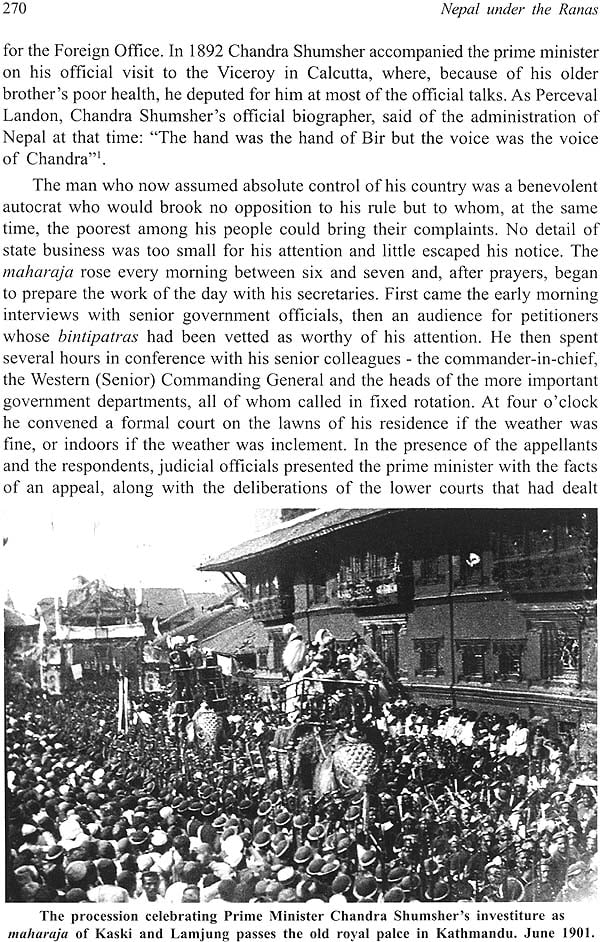
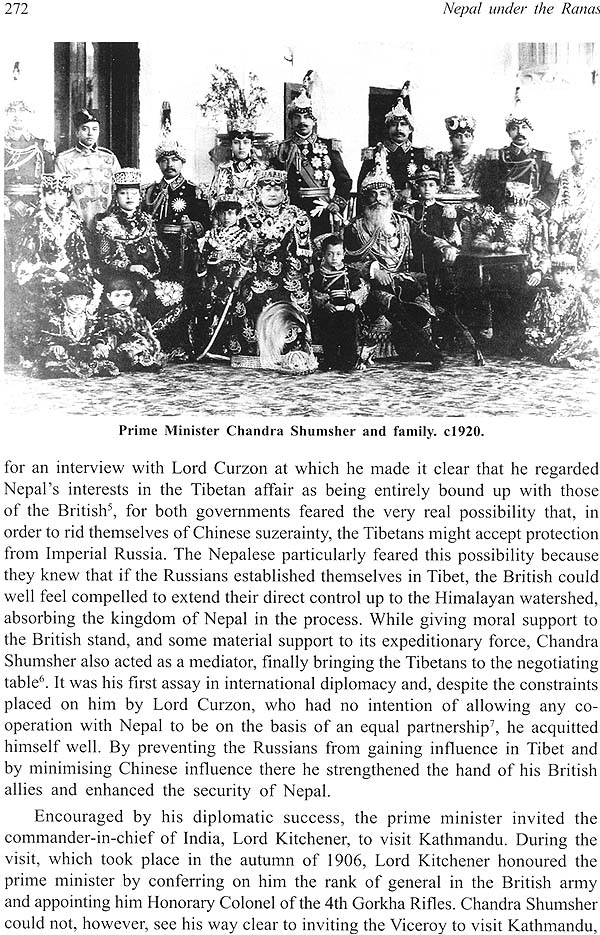
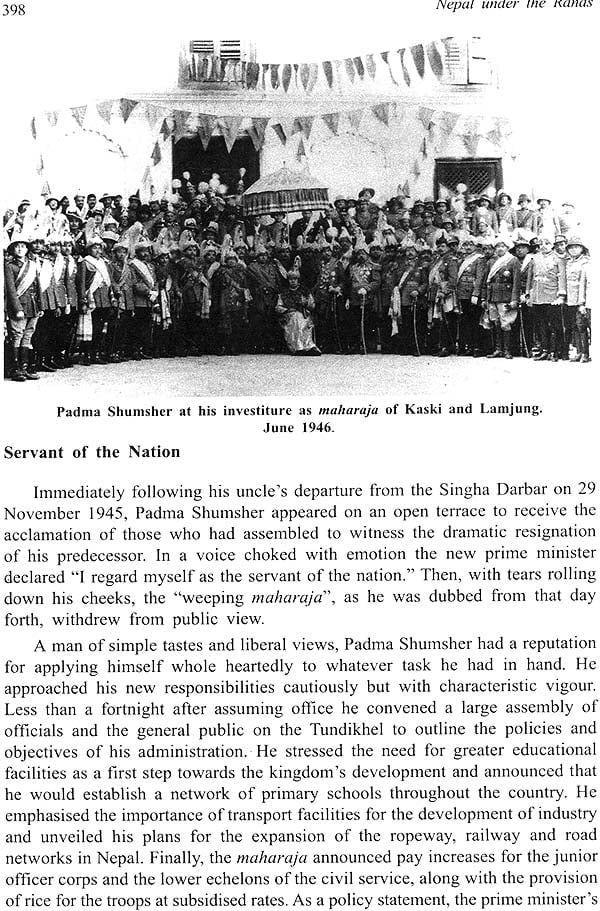
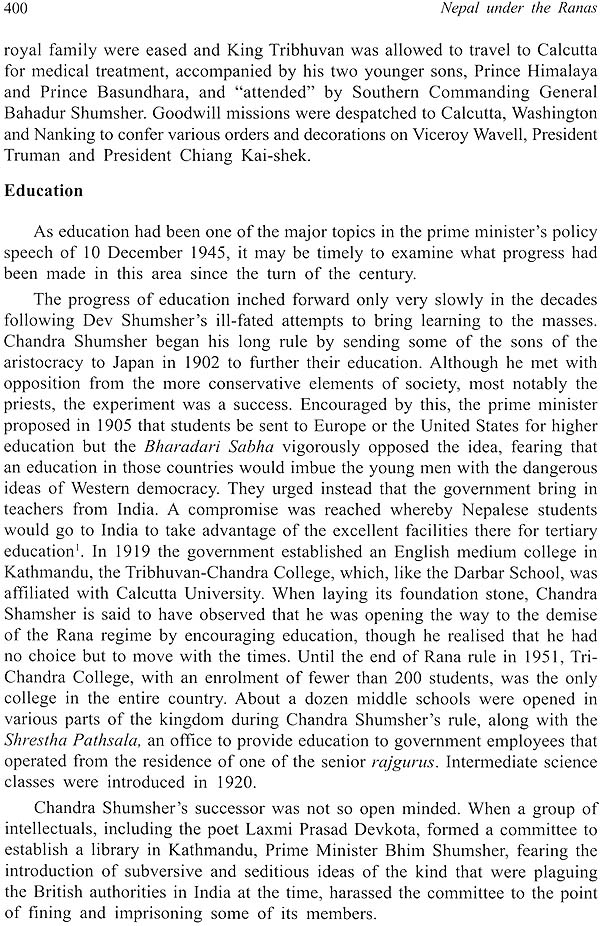
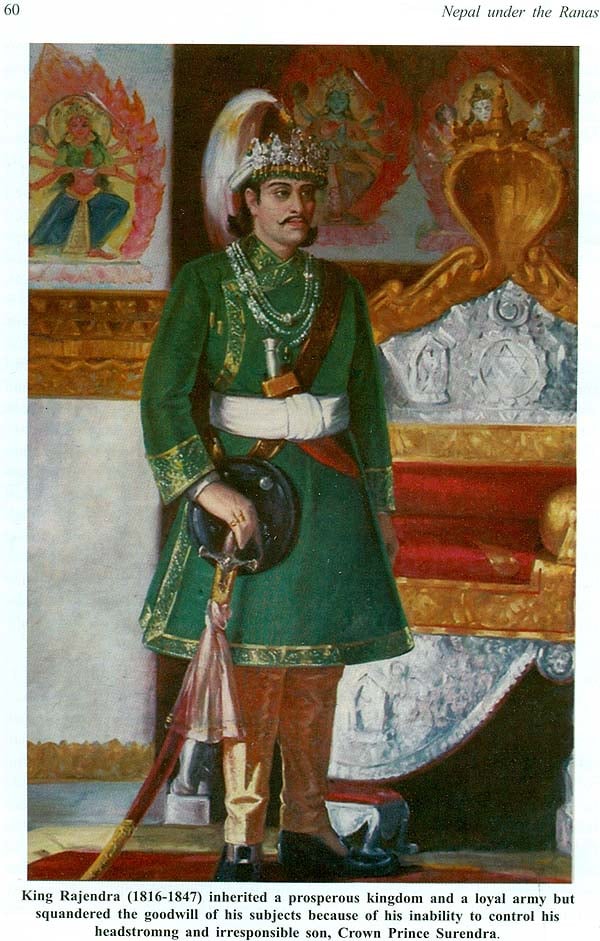
The book has a double impact: firstly, through the wealth of photographs, most of which have never been published before, and secondly, through the text: a comprehensive, balanced and intellectually sound treatment of Nepal during the Rana period – in effect, a definitive history of modern Nepal.
Adrian Sever was born in Australia and is a graduate in History from Murdoch University in Perth. His abiding interest in Nepal began when he paid the first of numerous extended visits in 1964. Since then he has taken a postgraduate degree in Asian Studies at the Australian National University and served in the Australian diplomatic service in Cambodia, China and North Korea, and as Deputy Permanent Australian Representative to UNESCO. In 1984 he became the first resident Australian diplomat in Nepal when he established the Australian Embassy in Kathmandu and stayed on to serve as Charg’e d’ affaires for two years. He is the author of four other books and numerous articles on the history and culture of various Asian countries.
The history of Nepal as a modern state dates from the conquest of the Kathmandu Valley in 1768 by Prithvi Nrayan Shah, ruler of the small Himalayan hill state of Gorkha. He and his successors continued to expand the area under their control, subjugating independent tribes and principalities until the kingdom reached its present size in 1816. However all of Prithvi Narayan Shah’s successors inherited the throne as minors and even when they came of age they proved incapable of governing effectively. Consequently, real power was usually vested in the hands of a chief minister who enjoyed the backing of the army. In 1846, a young and ambitious minor aristocrat named Jang Bahadur Rana was appointed prime minister. He quickly usurped the power and authority of the king and made the prime ministership hereditary within his family. This situation, analogous to that of the emperor and the shogun in contemporary Japan, was to last for 104 years until, in 1951, the regime was toppled and the power of the monarchy restored. This is the story of Nepal during that period; the story of Nepal under the rule of the Rana family
The purpose of this book is to examine the nature of Rana rule, the devices whereby the Rana family kept itself in power, and the strategies that it employed to preserve the independence of Nepal against the encroachment of the British imperial power in India.
Three categories of primary source have been used in writing this book:
- Unpublished British Indian Government records in the National Archives of India in Delhi and the India Office Library and Records in London. These include the papers of the Bengal Secret Consultations, Foreign Department Proceedings, Foreign Political Consultations, Foreign Secret Consultations and the India Political and Secret Files.
- Published British, British Indian and Indian government records, including government reports and memoranda, parliamentary papers and speeches, provincial administrative reports and treaty series.
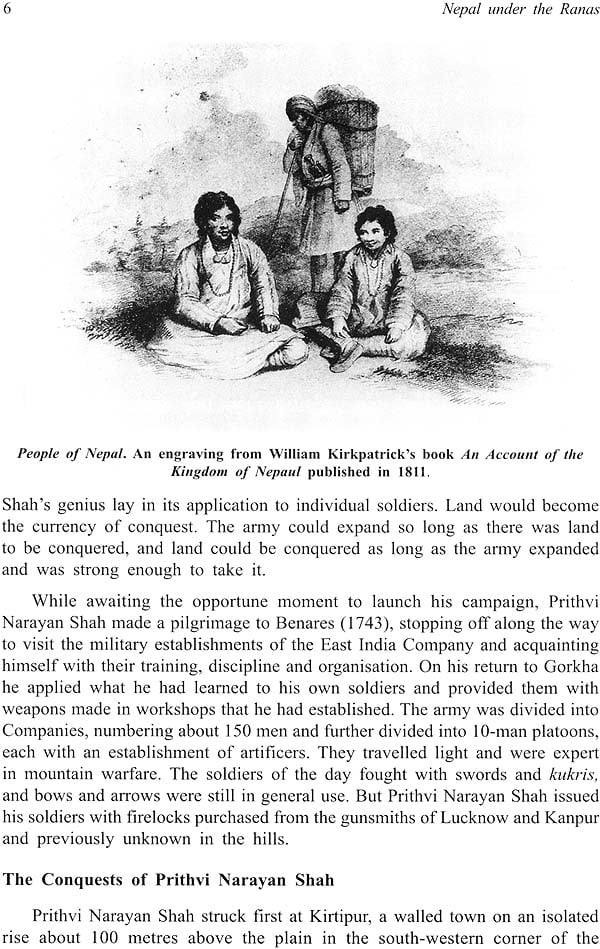
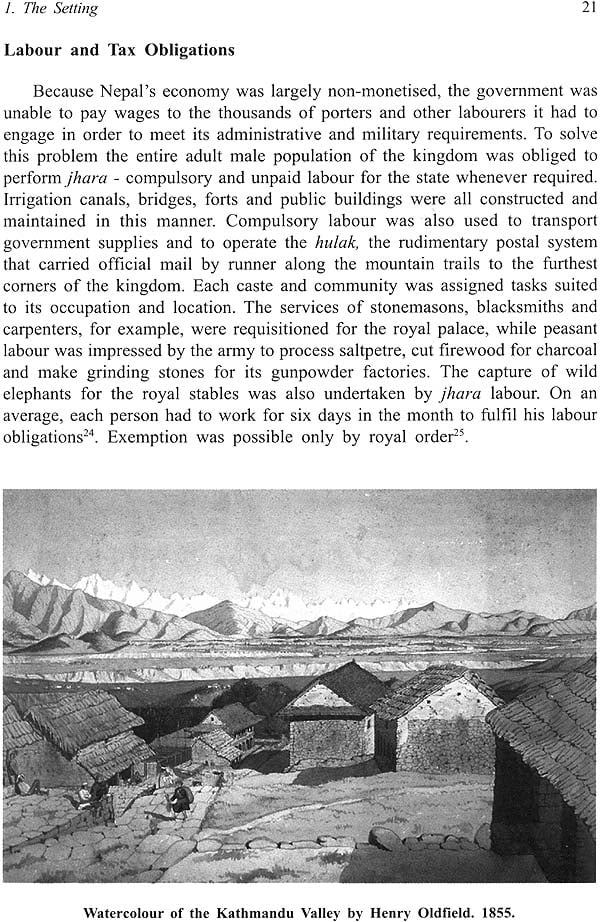
- Published works of 19th century British observers. The kingdom of Nepal was completely closed to foreigners until the fall of the Rana regime in1951. Prior to this date, the only westerners to enter the country were the British Residents and the occasional official guest. As Nepalese historiography during this period had not developed beyond the simple compilation of genealogical lists and rudimentary dynastic chronicles (vamsavalis) of dubious historical accuracy, interspersed as they were with religious and legendary tales, the official reports and the impartial accounts and observations of contemporary British travellers such as William Kirkpatrick, Francis Hamilton., George Ramsey, Daniel Wright, Brian Hodgson and Henry Oldfield are an invaluable source of information on most aspects of 18th and 19th century Nepal.
I have referenced the work of the pre- eminent economic historian of Nepal, Mahesh Chandra Regmi, who has collected and translated into English a vast number of government reports, regulations, instructions and directives, dating back almost to the formation of the kingdom of Nepal in the 1770s. They have never been published but are available on subscription in two compilations known as the Regmi Research Collection and the Regmi Research Series. The range of subject matter is vast and the two compilations from an invaluable data base for the non-Nepali speaking researcher. I have also researched the work of other contemporary scholars of Nepalese society and history, notably Krishna Kant Adhikari, Hem Narayan Agrawal, Satish Kumar, Tri Ratna Manandhar, Kanchanmnoy Mojumdar, Dinesh Raj Pant, D.S. Regmi, Rishikesh Shaha and John Whelpton.
I benefited greatly in writing this book from correspondence with Dr. John Whelpton, a leading non – Nepali scholar of nineteenth century Nepalese politics, and from correspondence and discussions with Rishikesh Shaha and Dinesh Raj Pant. I would particularly like to thank Dr. Whelpton for his patient and constructive advice and guidance. Given the present state of Nepalese historiography, Appendix 3 (Rana- Shah Matrimonial Connections) was particularly difficult to compile. My thanks are due to Greg Hickman, who kindly made available his exhaustive research on the genealogies of the Rana and Shah families and provided some of the more elusive data. I am also indebted to the staff of the India Office Library in London, the keshar Library in Kathmandu and the National Library of Australia in Canberra for their kind assistance with my research.
Finally, and most importantly, I would like to thank Jharendra Shumsher Rana and Rani Manju Rana for making available to me their collection of historic photos of the Rana family, most of which have never been published before. It was, in fact, our shared wish to see these photographs published that motivated me to write the text that would bring them to the world for the first time.
| Introduction | vii | |
| 1 | The Setting | 1 |
| The Cradle of Nepal | 3 | |
| The Conquests of Prithvi Narayan Shah | 6 | |
| The Gorkhali State | 11 | |
| Village Nepal | 16 | |
| Land Revenue Assessment and Collection | 18 | |
| Labour and Tax Obligations | 21 | |
| Gorkhali Foreign Policy | 22 | |
| The Making of "Greater Nepal" | 24 | |
| The Waning Monarchy | 26 | |
| The Monarchy : An Assessment and Analysis | 32 | |
| War with the British | 34 | |
| The Fall of Bhim Sen Thapa | 36 | |
| The Monarchy in Crisis | 39 | |
| 2 | The Rise of Jang Bahadur. | 47 |
| On the Periphery of Power | 49 | |
| Edging Towards Chaos: Tentions and Disarray in the Darbar | 50 | |
| The Political Education of Jang Bahadur | 54 | |
| The Kot Massacre | 59 | |
| The Consolidation of Power | 63 | |
| 3 | Jang Bahadur (1846-1856) | 71 |
| Problems with British India | 74 | |
| Jang Bahadur's Visit to Europe | 78 | |
| Jnag Bahadur's Visit: An Assessment | 82 | |
| The Badri Narsingh Plot | 82 | |
| The Legal System Reviewed and Codified | 87 | |
| Enhancing the Status of the Konwar Family | 94 | |
| War and Tibet | 96 | |
| 4 | Bam Bahadur (1856-1857) | 103 |
| The Maharajaship of Kaski and Lamjung | 105 | |
| Suppressing the Influence of the Monarchy | 107 | |
| Jang Bhadur's Dilemma | 108 | |
| The Rana Hierarchy | 108 | |
| The Non-Rana Hierarchy | 110 | |
| The Apparatus of Government | 115 | |
| The People of Nepal | 119 | |
| The Arts of Nepal | 129 | |
| Bam Bahadur's Performance as Prime Minister | 135 | |
| 5 | Jang Bahadur (1857-1877) | 141 |
| Strengthening the Shah-Rana Matrimonial Alliance | 144 | |
| Nepal and the 1857 Uprising in Northern India | 145 | |
| Power and Patronage: the Prime Ministership in Action | 146 | |
| Internal stability. | 149 | |
| Expanding the Rana-Shah Matrimonial Alliance | 157 | |
| Famine | 157 | |
| The tibetan Problem | 161 | |
| Jang Bhadur's Proposed Visit to Great Britian | 163 | |
| The Visit of the Prince of Wales | 164 | |
| The Ram Lakhan Thapa Uprising | 165 | |
| The Death of Jnag Bahadur | 166 | |
| Jnag Bhadur: An Assessment | 167 | |
| 6 | Ranaudip Singh (1877-1885) | 171 |
| The Conspiracies Begin | 173 | |
| Relations with the British: Gurkha Recruitment | 178 | |
| The 1882 Bomb Conspiracy | 179 | |
| Trade and Commerce | 185 | |
| The Return of Confiscated Land to the Brahmins | 190 | |
| Problems with Tibet | 192 | |
| Ahouse Divided | 195 | |
| Relations with the British: Honours and Titles | 198 | |
| Coup d'etat | 198 | |
| 7 | Bir Shumsher (1885-1901) | 205 |
| The Jang Ranas in Exile | 211 | |
| The Conspiracies Begin | 214 | |
| Ranabir Jang | 216 | |
| Relations with the British | 220 | |
| Bir Shumsher: A Profile | 224 | |
| Nepalese Complementary Missions to China | 227 | |
| The Sijapati Episode | 231 | |
| Place Polities | 232 | |
| District Administration | 235 | |
| 8 | Dev Shumsher | 245 |
| The Benevolent Autocrat | 248 | |
| Slavery | 249 | |
| Searching for the Popular Will | 253 | |
| Education | 254 | |
| The Conspiracies Begin | 254 | |
| The Law Courtys | 258 | |
| The Fall of Bhim Sen Thapa | 262 | |
| 9 | Chandra Shumsher (1901-1929) | 267 |
| Relations with the British | 271 | |
| The ABC of Rana Family Politics | 275 | |
| King George V's Hunting Trip in the Tarai | 277 | |
| The Machinery of Government | 279 | |
| Nepal and the First World War | 286 | |
| District Administation | 292 | |
| The Prince of Wale'Hunting Trip in the Tarai | 300 | |
| The Anglo- Nepal Treaty of Friendship.1923 | 301 | |
| The abolition of Slavery | 306 | |
| The Dawn of Political Consciousness | 308 | |
| The Modernisation of Nepal | 315 | |
| 10 | Bhim Shumsher (1929-1932) | 323 |
| Rana Places | 326 | |
| A Beleaguered Prime Minister | 329 | |
| The Civil Service | 333 | |
| Dessention in the Ranks | 337 | |
| Foresty | 338 | |
| 11 | Juddha Shumsher (1932-1945) | 345 |
| The Great Earthquake of 1934 | 349 | |
| Purge | 354 | |
| The Symbols of Independence | 359 | |
| The Law Courts | 365 | |
| The Anti- Rana Movements | 369 | |
| The Emergence of a Commercial and Industrial Infrastructure | 377 | |
| The Literature of Nepal | 382 | |
| Nepal and the Second World War | 384 | |
| Juddha Shumsher and the Third Stage of Man | 385 | |
| 12 | Padma Shumsher | 395 |
| Servant of the Nation | 398 | |
| Education | 400 | |
| The Rise of Political Opposition | 402 | |
| The Rise of Popular Unrest | 403 | |
| Nepal Broadens Its World View | 405 | |
| Contitutional Reform | 407 | |
| The 1948 Constitution | 409 | |
| The Constitution: An Assessment | 411 | |
| Resignation | 411 | |
| 13 | Mohan Shumsher (1948- 1951) | 415 |
| Unity in Diversity : The Growth of Oppositional Politics | 419 | |
| The Crucial Variable : Relations with India | 421 | |
| The King Plays His Hand | 426 | |
| The Collapse of Power | 429 | |
| Rana Nepal : An Analysis and Assessment | 435 | |
| The Setting | 437 | |
| The Rise of the House of Rana | 439 | |
| Nepal under the Ranas | 440 | |
| Appendices | 451 | |
| 1 | Genealogy of the Rana family | 453 |
| 2 | Genealogy of the Shah dynasty | 454 |
| 3 | Rana-shah Matrimonial Connection | 455 |
| 4 | Kings, Regents and Prime Ministers of Nepal.1743-1951 | 456 |
| 5 | Rna Administration | 463 |
| A | Organisational Structure- Early Period | 463 |
| B | Organisational Structure- Later Period | 464 |
| C | District Administration- Early period | 465 |
| D | District Administration- Later period | 466 |
| E | Staffing | 467 |
| 6 | The Rolls of Succession | 469 |
| 7 | The Anglo- Nepalese Treaties | 480 |
| 8 | A Who's Whi of Revolutionary Nepalese Politics | 487 |
| 9 | Principal Events | 490 |
| 10 | Biographical Notes | 503 |
| Glossary | 523 | |
| Bibliography | 541 | |
| Index | 553 |