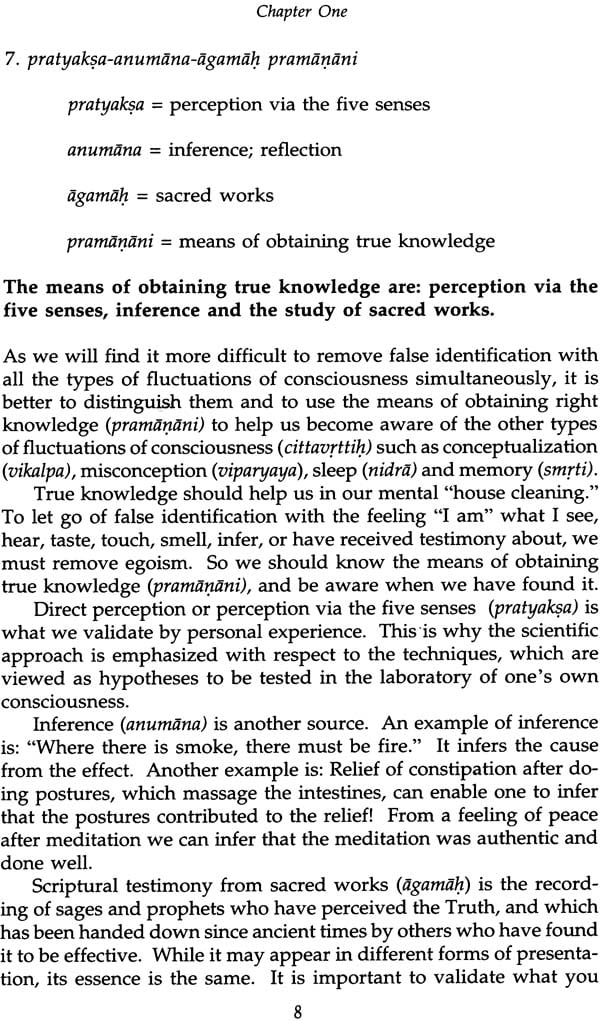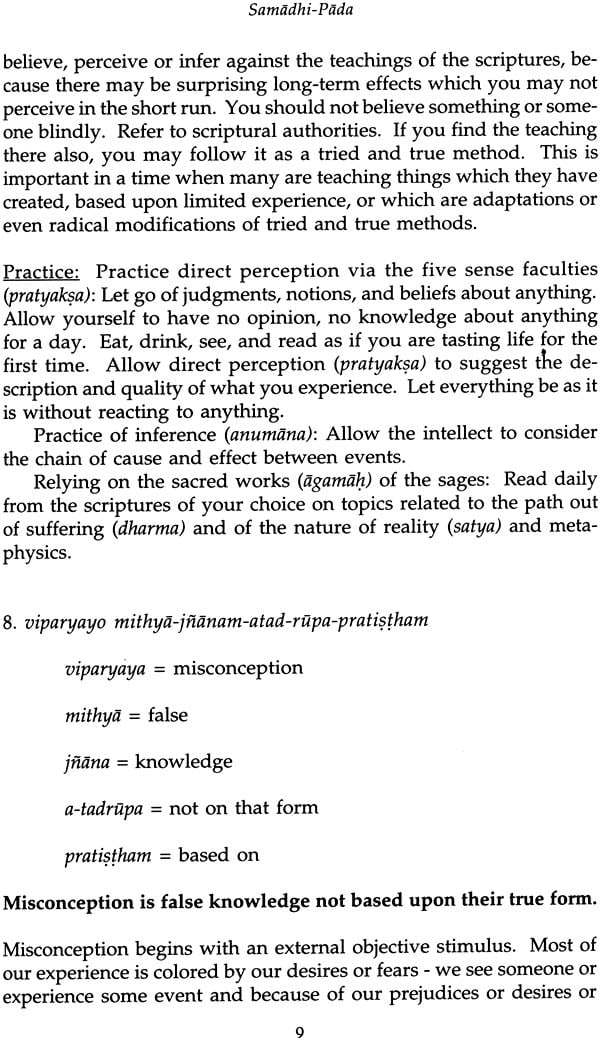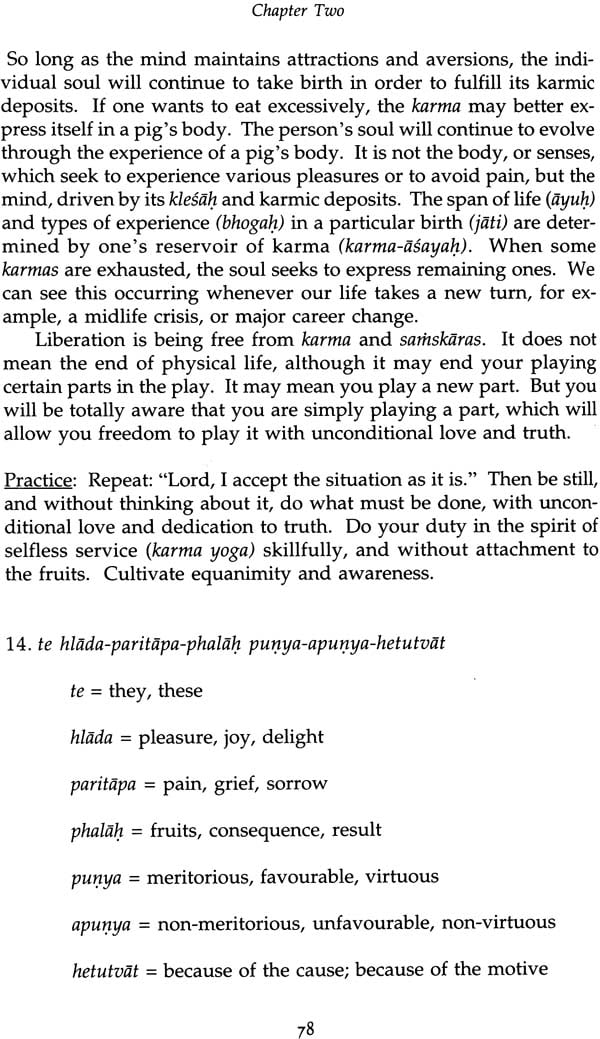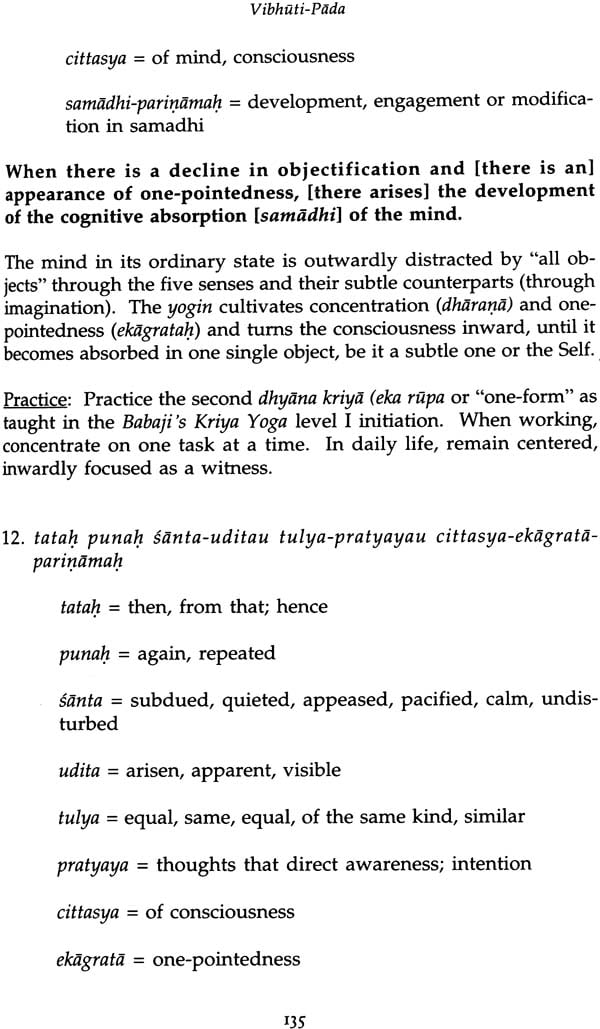


Kriya Yoga Sutras of Patanjali and the Siddhas
Book Specification
| Item Code: | IHL660 |
| Author: | M. Govindan |
| Publisher: | Babaji’s Kriya Yoga Trust |
| Language: | Translation, Commentary and Practice |
| Edition: | 2003 |
| ISBN: | 1895383129 |
| Pages: | 285 |
| Cover: | Paperback |
| Other Details | 8.5 inch X 5.5 inch |
| Weight | 400 gm |
Book Description
About the Author
Marshall Govindan has practiced Babaji’s Kriya Yoga intensively since 1969. He studied and practiced Kriya Yoga in India for five years with Yogi S.A.A. Ramaiah, assisting him in the establishment of 23 yoga centers around the world during an 18 years period. During this period he practiced Kriya Yoga for eight hours per day on average.
In 1980 he assisted in the collection and publication of the complete writings of Siddha Boganathar. In 1986 he administered the construction of a rehabilitation hospital dedicated to Yoga therapy and physical therapy in Tamil Nadu, India. In 1988 he was asked by Babaji Nagaraj, the founder of Kriya Yoga to begin teaching. In 1991, he wrote the best selling book, “Babaji and the 18 Siddha Kriya Yoga Tradition”, now published in 9 languages. In 1992 he established Babaji’s Kriya Yoga Ashram in St. Etienne de Bolton, Quebec. Classes, seminars and retreats are offered there year round.
In 1995 he retired from his work as the chief systems auditor for Quebec’s largest employer, the cooperative Mouvement Desjardins to devote himself full time to teaching and publishing in the field of Yoga. Since then, he has traveled extensively throughout the world guiding about 50 Kriya Yoga study groups in over 20 countries, an ashram in Bangalore, India, and a lay order of teachers of Kriya Yoga” Babaji’s Kriya Yoga Order of Acharyas, a non-profit educational charity, incorporated in the USA, Canada and India. Since 1989 he has personally initiated over 6,000 persons in Babaji’s Kriya Yoga in a series of intensive sessions and retreats.
In October 1999 he was blessed with the darshan of Babaji Nagaraj near his ashram in Badrinath, Himalayas.
Back of the Book
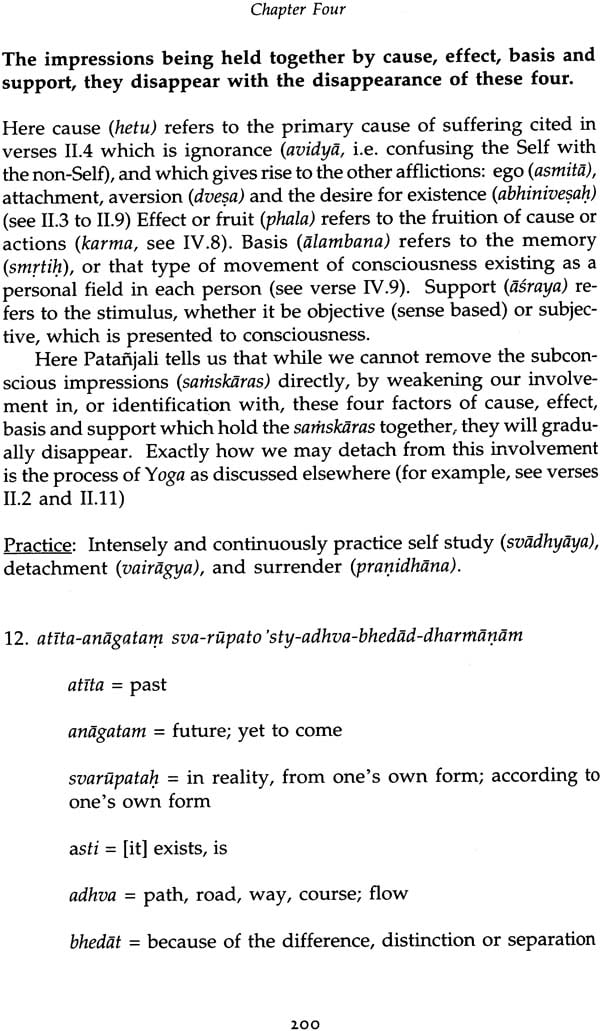
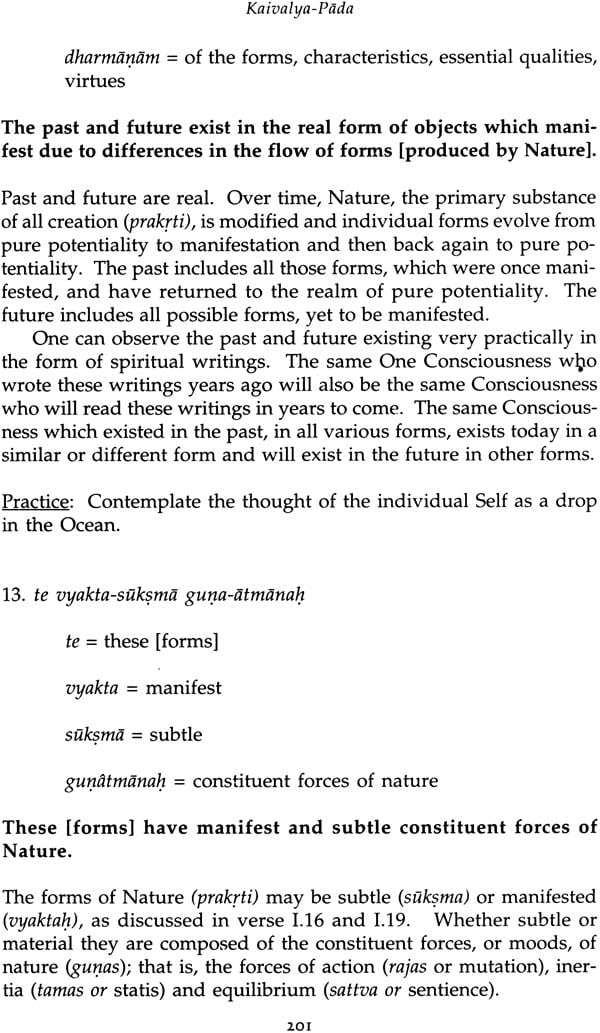
Patanjali refers to his yoga as “Kriya Yoga”: the “yoga of action with awareness.” His Yoga-Sutras are universally considered to be among the two or three most important texts in the field of yoga. Until now, commentators have treated it as a philosophical reference, and have largely ignored its implications for yogic practice. They have also ignored the fact that it is also an esoteric work, and that only initiates, with sufficient prior experience, can grasp its deeper meaning.
The New translation and commentary provides a practical guide to Self-realization or enlightenment. It clearly explains how to apply Patanjali’s profound philosophical teachings in everyday life, in any situation. When one practices the techniques of Kriya Yoga, it is like driving a powerful automobile. But without a road-map, most students are “stuck in traffic” or at “dead ends.” Now for the first time, there is a clear roadmap to guide the student to remarkable destinations.
In Tamil Nadu and other southern states of India, there is a tradition of yogic adepts known as Siddhas, who are renowned for their longevity, miraculous powers, and remarkable contributions to an enduring culture. They have left a large body of literature, including Tirumandiram by the Siddha Thirumoolar, who was, by many indications, a brother disciple of Patanjali.
“Study (svadhyaya) has always been an integral aspect of Yoga. Western students, in my opinion, need to take this yogic practice more seriously. Because of its succinctness and focus on essentials, the Yoga-Sutra is ideally suited for in-depth study. Its approach is rational, systematic, and philosophical. By contrast, the Thirumandiram is ecstatic and poetic and filled with precious nuggets of yogic experience and wisdom. Both texts complement each other beautifully, and their combined study will be found illuminating and elevating. Govindan’s book provides an excellent platform for such a study. He writes from his own long experience of Kriya Yoga and a deep love and respect for the heritage of Yoga…Marshall Govindan’s Kriya Yoga Sutras of Patanjali and the Siddhars is a valuable addition to the study of Yoga in general and the Yoga-Sutra in particular. I can wholeheartedly recommend it…In particular, the growing number of students of Kriya Yoga throughout the world will find his treatment indispensable, but others will benefit from it.” From the Foreword by Dr. Georg Feuerstein, Ph D., author of “The Sutras of Patanjali” and the “Encyclopedia of Yoga.”
Foreword
Today tens of millions of people around the world practice Yoga of one kind or another. Often what they practice barely resembles traditional Yoga, as it has been pursued over five millennia in India. Therefore there is a real need for sincere voices like that of Marshall Govindan, who stands for authentic Yoga, which is always concerned with the great ideal of profound personal transformation and liberation. Govindan, as he prefers to be called, represents the tradition of Kriya Yoga (Skt.kriya yoga), which was first taught by the Himalayan adept known as Babaji and has been handed down through several teaching lineages. Govindan was initiated into Kriya Yoga by Yogi S. A. A. Ramaiah and since 1988 has himself initiated thousands of students.
S. A. A. Ramaiah is a South Indian master who claims to have been initiated directly by Babaji, best known from Paramahamsa Yogananda’s Autobiography of a Yogi, as one of the immortal adepts of Siddha Yoga. According to Govindan’s Babaji and the 18 Siddha Kriya Yoga Tradition, Yogi Ramaiah has provided some biographical details about that great adept, including his birthdate of November EQ. 203 AD Apparently, Babaji was a disciple of Pokanathar pronounced Boganathar), who presided over the temple of Katirgama (Skt. Karttikeyagrama) to be found in a forest at the south-ernmost tip of Sri Lanka. At a certain point, Pokanathar sent his disciple to the great adept: Agastyar under whose guidance Babaji achieved liberation and immortality.
Another great master of South Indian Siddha Yoga was "Tirumular, the author of the well—known Tirumantiram pronounced Tirumandiram). In this work, Tirumular speaks of himself as a disciple of Nandi, who apparently also taught a certain Patanjali. Few Western students of Yoga have heard of Tirumular, but they know Patanjali, the compiler of the famous Yoga—Sutras. This aphoristic work masterfully maps out the yogic path from a philosophical and psychological perspective.
The Yoga—Sutras are generally assigned to the period between 200 BC and 200 AD. The former date is generally favored by those who identify the compiler of the Sutras with the famous grammarian Patanjali. More and more scholars, however, opt for the latter date, which takes into account that the Yoga-Sutras reflect the language and conceptual universe of Mahayana Buddhism.
Tradition knows of several other individuals by the name of Patanjali, Samkhya authority and a composer of a Sutric work on ritual. Virtually nothing is known about them or their dates. Tirumular’s mention of a fellow disciple called Patanjali further muddies the historical waters.
Most scholars place Tirumular’s between the first and seventh century AD. The ideas and practices found in the Tirumantiram, however, represent a stage of development of Hindu Tantra that suggests a date between the fifth and tenth century AD. If correct, this would make Tirumular’s fellow disciple Patanjali someone other than the compiler of the Yoga-Sutra. But regardless of such scholarly considerations, a comparison between the Yoga—Sutras and the Tirumantiram is important and long overdue.
For the past 35 years, my research into Yoga has been focused on the Sanskrit sources. I first encountered the Tirumantiram, which is written in Tamil, in 1998 in the edition arranged and published by Govindan five years earlier. I had of course known of the Tirumantiram many years earlier, having myself republished in 1993 The Poets of the Powers by the renowned scholar of Tamil Kamil V. Zvelebil, who described Tirumular as "the foremost exponent of Yoga in Tamil" (p. 38). Zvelebil’s short quotations from Tirumular’s work intrigued me greatly, and thus B. Natarajan’s English rendering of the Tirumantiram, published by Govindan, was an incredible find for me. I readily appreciated the enormous depth of Tirumular’s treatment of Yoga and in the meantime have come to believe that all students of Yoga should carefully study the Tirumantiram alongside the Yoga-Sutras and the Bhagavad—Gita.
The present book examines Patanjali’s Yoga-Sutras in the light of the Siddha Yoga of the Tirumantiram. Govindan has spared no effort to make the aphorisms accessible to those interested in yogic practice. In particular, the growing number of students of Kriya Yoga throughout the world will find his treatment indispensable, but others too will benefit from it.
It is most curious that while Patanjali’s teaching has become virtually equated with eight—limbed Yoga (astanga-yoga), he himself called his path that of action Yoga (kriya—yoga) in pada 2.1. As I tried to show in my monograph The Yoga—sutra: An Exercise in the Methodology of Textual Analysis, the aphorisms in the Yoga-Sutras dealing specifically with the eight limbs appear to have been quoted by Patanjali or subsequently added to his text. There is no real satisfactory explanation for why Patanjali used the label kriya-yoga for his teachings. However, if we assume with Govindan that the compiler of the Yoga-Sutras was a fellow disciple of Tirumular, we have a direct link to the Tantric heritage of South India, which knows the term kriya—yoga in the sense of ritual activity.
Study (svadhyaya) has always been an integral aspect of Yoga. Western students, in my opinion, need to take this yogic practice more seriously. Because of its succinctness and focus on essentials, the Yoga-Sutras are ideally suited for in-depth study. Its approach is rational, systematic, and philosophical. In contrast, the Tirumantiram is ecstatic and poetic and filled with precious nuggets of yogic experience and wisdom. Both texts complement each other beautifully, and their combined study will be found illuminating and elevating. Govindan’s book provides an excellent platform for such a study. He writes from his own long experience of Kriya Yoga and a deep love and respect for the heritage of Yoga.
I have known Govindan only for a couple of years but have become impressed with his sincerity as a Yoga practitioner and teacher. He is indefatigable in his commitment to the teachings of his guru, Babaji, and his many students around the world. His energy, modesty, and kindness are a clear indication of the efficacy of the teachings he is embodying and passing on to others.
Marshall Govindan’s Kriya Yoga Sutras of Patanjali is a valuable addition to the study of Yoga in general and the Yoga—Sutras in particular. I can wholeheartedly recommend it
| Acknowledgements | vii |
| Notes to Translation | ix |
| Guide to the pronunciation of Sanskrit | xi |
| Foreword | xiii |
| Introduction Part 1 & 2 | 2 |
| A Comparison Between the Yoga Sutras and Tirumantiram | xviii |
| Patanjali’s Kriya Yoga: Constant Practice and Detachment | xxiii |
| Translation with Commentary | |
| Chapter 1: Samadhi-Pada | 1 |
| Chapter 2: Sadhana-Pada | 63 |
| Chapter 3: Vibhuti-Pada | 125 |
| Chapter 4: Kaivalya-Pada | 185 |
| Continuous Translation of the 195 Sutras | 225 |
| Notes to Introduction and Chapters | 237 |
| Bibliography | 241 |
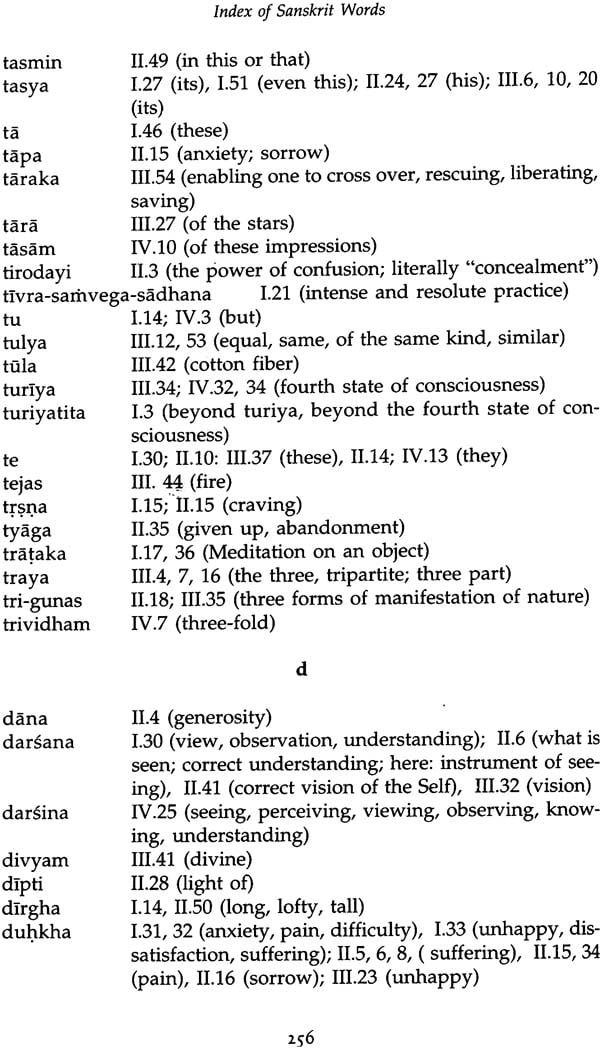
| Index of Sanskrit Words in the Sutras | 245 |
| Index of English Words in the Sutras | 269 |
| Index of Kriyas Indicated in the Sutras | 281 |
| About the Author | 285 |