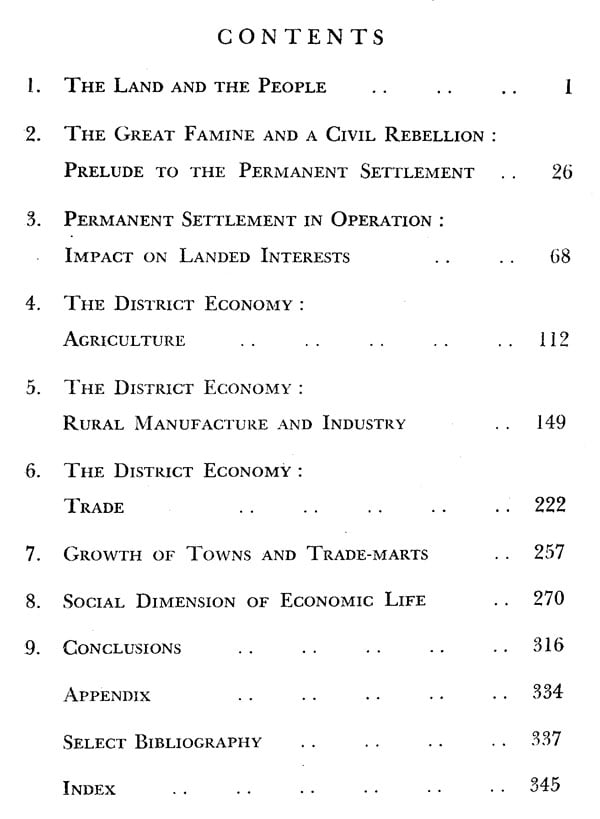
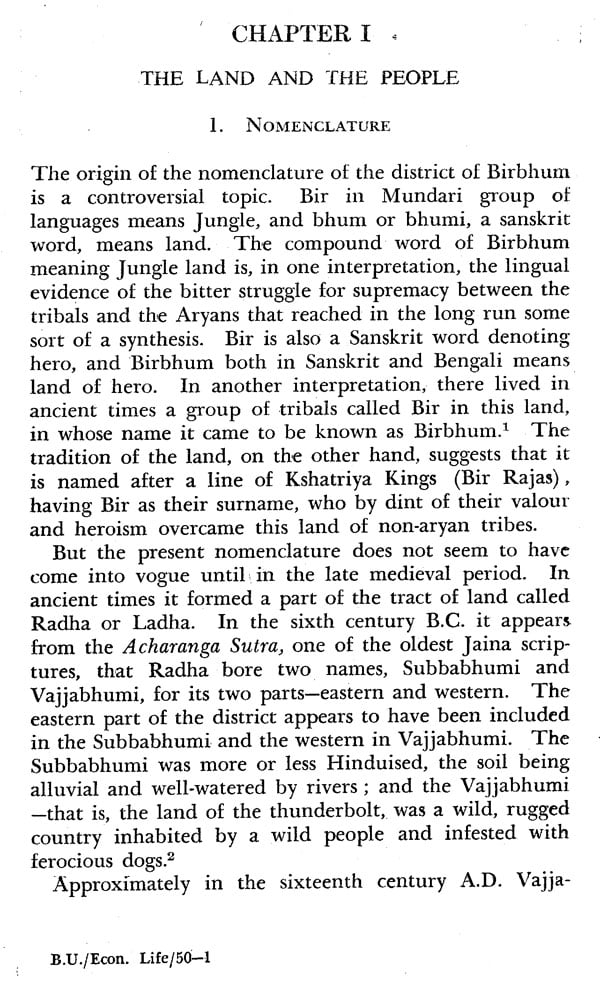
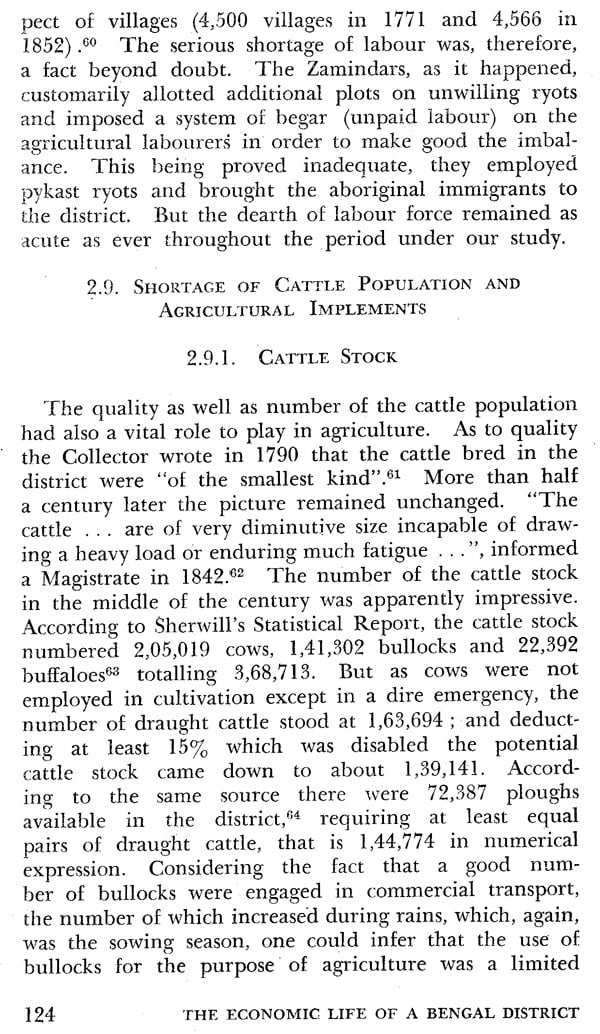
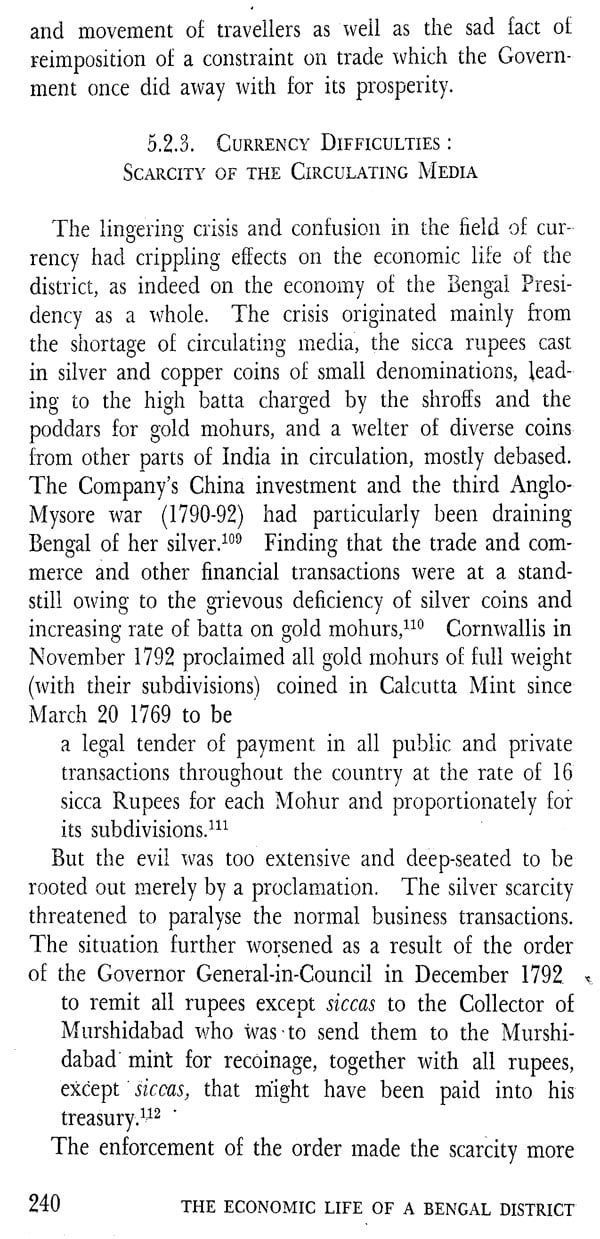
About the Book A pioneer work in the field, Economic Lite of A Bengal District is a thorough, in-depth study of the socio-economic life of Birbhum, a Bengal district, between 1770, the year of the great Bengal Famine, and 1857, the year of the Indian Revolt. Based mostly on original, untapped sources, it covers economic life of the district that centered round agriculture, rural manufacture and industry, and trade. The social kalei-doscope embracing both tribal and non-tribal people has also been brought under focus. The study goes deep at the roots of some of the present-day maladies of the district and explodes many an established myth.
The author, Dr. Ranjan Kumar Gupta (b. 1932), took his M. A. and Ph. D. under the University of Calcutta. He has contributed quite a large number of papers to different research journals. Dr. Gupta teaches history and is the head of history department, Suri Vidyasagar College. The manuscripts of his studies on the valuable archival papers of a Birbhum zamindar family are ready for the press.
Introduction Studies in the economic and social history of Bengal have generally concentrated on Bengal as a whole, and it is only recently that local history has attracted the attention of professional students of history. About the validity of local history there can hardly be any doubt, and its importance lies mainly in its contribution to our understanding of the history of the wider region of which the particular locality forms a part. Historical generalizations are unlike the general propositions in science, which are universally valid, and should therefore be constantly tested with reference to the multitude of variables in the given, historical situation, which a historian has set out to investigate and explain. Local history greatly helps him in this. This is particularly true of the studies of agrarian societies, where the range of regional variations is admittedly very wide. Professor Eileen Power's words of caution about generalizations on rural history could be recalled here. A historian, she feels, "who commits himself to a generalisation is digging a pit into which he will later assuredly fall, and nowhere does the pit yawn deeper than in the realm of rural history."
1, This study is an attempt at analyzing the economic changes in Birbhum between 1770 and 1857.
Before indicating its scope I owe an explanation to state why I selected the district of Birbhum for my enquiry.
This is not the first time that Birbhum of bygone days comes under a historical enquiry. As early as 1868 W. W. Hunter did a pioneering work in the field by publishing his well-known work, The Annals of Rural Bengal. In this study he extensively used part of the "neglected heaps" of the old correspondence volumes he himself discovered at the collectorate archieves while engaged in official duty here.
Book's Contents and Sample Pages