

Governing Business and Relationships
Book Specification
| Item Code: | NAM805 |
| Author: | A. Parthasarathy |
| Publisher: | A. Parthasarathy, Mumbai |
| Language: | English |
| Edition: | 2010 |
| ISBN: | 9788190617963 |
| Pages: | 203 |
| Cover: | hard cover |
| Other Details | 8.5 inch X 5.5 inch |
| Weight | 420 gm |
Book Description
Businesspersons mechanically follow routine practices laid down by self-styled business schools. Spouses and parents are overwhelmingly emotional and impulsive in their behaviour with each other and their children. There is little reason and judgement governing actions and relationships. Human beings blindly adopt a life set by predecessors. The intellect, lacking development and strength, hardly plays a part in the conduct of their business and home.
Consequently, families are torn apart, business houses collapse and nations are at daggers drawn. While governing bodies in the fields of education, politics and religion helplessly gaze at the internal and external crises that humanity faces.
The solution lies in developing a powerful intellect to gain suzerainty over the perennial confrontations of the world.
Parthasarathy is an internationally acclaimed philosopher with a multi-disciplined academic base including post-graduation from London University. He has researched for over 'sixty years on the state of human beings and focused on the imperative need to revive, rehabilitate the human intellect. His dedicated service has resulted in four distinct achievements:
Writings
He has published nine books which present ancient philosophical teachings and wisdom of thinkers from the East and West. Three of them have earned bestselling status.
Vedanta Academy
Founded in January 1988 in Malavli Hills, near Mumbai, India. It offers three-year residential courses designed to build the intellect and instil higher values of life in students from India and abroad.
Public Discourses
His discourses have captivated audiences the world over for more than fifty years. And widely acclaimed by prestigious universities, institutions and organizations.
Business Seminars
He has been a distinguished resource of the Entrepreneurs' Organisation (EO), Young Presidents' Organisation (YPO), World Presidents' Organisation (WPO), World Economic Forum and multinational corporations round the world.
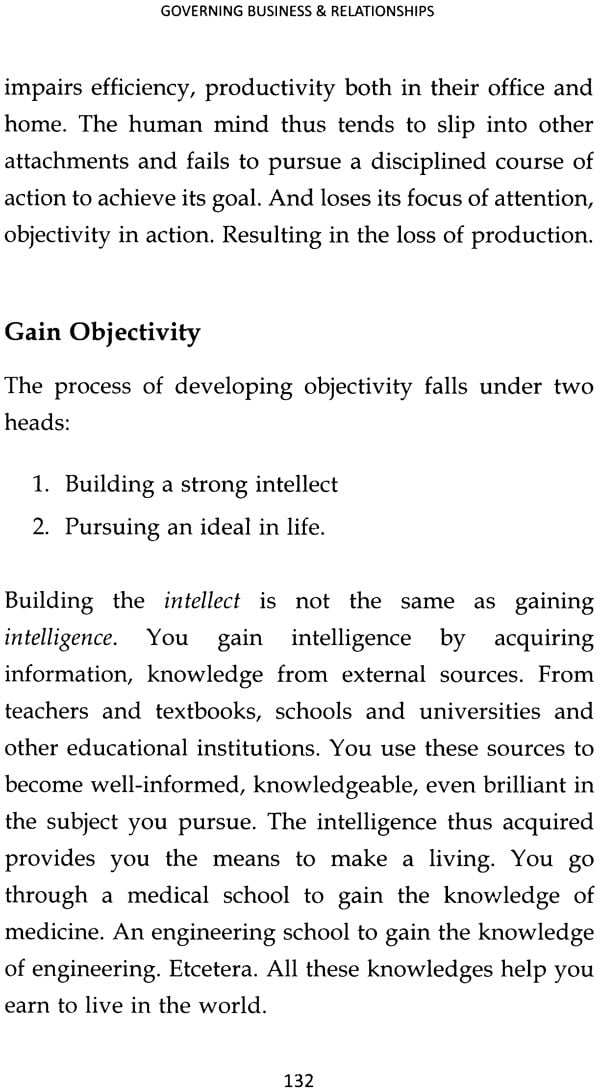
All the problems that people encounter with their business and relationships converge to one rudimentary problem. It is the lack of development and use of the intellect. You remain unaware of the power and grandeur of your intellect. Make little use of it while you combat the multifarious problems of life. You are all fighting the challenging forces of the world with bows and arrows when you have an F-16 in your hangar!
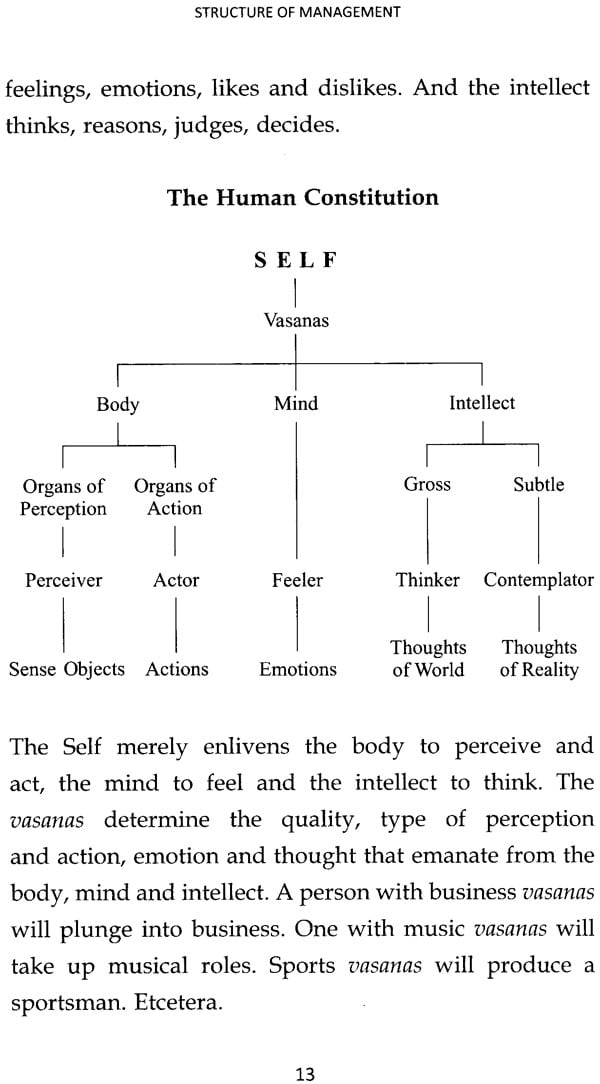
The intellect and the mind are the two equipments which drive the body to act. Of the two the intellect is most powerful. It is the faculty of thinking, reasoning, judging. The mind is the seat of impulses, feelings, emotions. When the intellect guides the mind in actions then they would be discretionary, mature. And when the mind overpowers the intellect the actions would be impulsive, immature. Thus all management emanates from these two equipments. And the calibre of management would depend upon the use of the intellect in deciding the course of action.
The world today lacks the awareness of the intellect. Much less the necessity to develop it. For centuries the human intellect has been totally neglected. Causing severe damage to persons and families, corporations and countries. Yet people have not awakened to this stark reality. They remain complacent, not realising the vital role the intellect plays in human life. That all management and sound relationship must proceed from reason and judgement of the intellect rather than feeling and emotion of the mind.
The corporates mechanically follow routine practices in the conduct of their business laid down by self- styled business schools. Spouses and parents are overwhelmingly emotional than rational in their approach to each other and their children. While religious practitioners pursue dogged, pertinacious procedures set by their leaders' baseless beliefs, superstitions and rituals. The entire human race blindly adopts a life set by predecessors. The intellect, lacking development and strength, hardly plays a part in the lives of people.
Consequently, families are torn apart, business houses collapse and nations are at daggers drawn. While governing bodies in the fields of education, politics and religion helplessly gaze at the internal and external crises that humanity faces.
The human intellect can handle, harness the rigours of nature and the colossal challenges of life. But the neglect of the intellect has left human beings troubled and tortured by the slightest confrontation of the world. The celebrated English poet William Wordsworth laments on this sad state: It grieves my heart to think what man has made of man when every flower enjoys the air it breathes.
Furthermore, the intellect is of two kinds based on its distinct functions. They are known in Sanskrit language as tikshna buddhi gross-intellect and sukshma buddhi subtle-intellect. The gross-intellect's function is confined to the extremities of the universe. While the subtle- intellect can go beyond the universe and reach the transcendental Reality through identification with one's own Self within.
A powerful gross-intellect could with ease take care of the problems pertaining to all mundane affairs. Be it business or time management, work ethics or leadership, family relationships or stress. Whereas, the subtle-intellect identifying with the Self could gain the ultimate of all management.
Herein you are given the formula for governing the perennial confrontations of the world you live in and rising above to attain complete sovereignty over it.
| Preface | 7 | |
| Chapter I | Structure of Management | 11 |
| Manager | 11 | |
| Managing | 16 | |
| Chapter II | Role of the Intellect | 21 |
| What is Intellect | 22 | |
| How to Develop Intellect | 24 | |
| Intellect versus Intelligence | 27 | |
| Acquisition and Enjoyment | 30 | |
| The Human Temperaments | 37 | |
| Chapter III | Life in Focus | 41 |
| Objective Scientists | 42 | |
| Subjective Scientists | 43 | |
| Paradox in Life | 44 | |
| Who is a Materialist | 48 | |
| Who is a Sensualist | 48 | |
| Who is Emotional | 49 | |
| Who is Intelligent, who Intellectual | 50 | |
| Who is Religious, Spiritual | 51 | |
| Chapter IV | Technique of Time Management | 53 |
| What is Self-management | 55 | |
| Plan, Programme your Life | 57 | |
| Assess Work Related Factors | 58 | |
| Plan Life's Project Backward | 63 | |
| Programme Line of Action | 64 | |
| 24 Hours for All | 65 | |
| Chapter V | Value Systems For Positive Living | 69 |
| Fundamental Values of Life | 70 | |
| The Ultimate Objectives | 81 | |
| Chapter VI | Work Ethics For Effective Management | 91 |
| Ego | 92 | |
| Egocentric Desires | 95 | |
| Work Ethics | 97 | |
| Deal with Corruption | 101 | |
| The Aggressive and the Passive | 104 | |
| Chapter VII | Principles of Stress Management | 109 |
| Anatomy of Stress | 112 | |
| Mind Wreaks Havoc | 113 | |
| Assess the W orld | 122 | |
| Chapter VIII | Science of Productivity | 129 |
| Objectivity in Action | 130 | |
| Gain Objectivity | 132 | |
| Initiative versus Incentive | 135 | |
| Formula for Success | 138 | |
| Chapter IX | Essence of Leadership | 143 |
| The Leader | 143 | |
| Characteristics of Leadership | 145 | |
| Attitudes in Leadership | 149 | |
| Qualities of a Leader | 152 | |
| Obligations of a Leader | 154 | |
| Chapter X | Setting Relationsidps Right | 159 |
| Streamline Your Relation | 160 | |
| Art of Parenting | 166 | |
| Chapter XI | The Ultimate Management | 175 |
| Hierarchy in Management | 175 | |
| Gain Identity with Self | 180 | |
| Attain Supremacy of Self | 181 | |
| Reach Ultimatum of Self | 182 | |
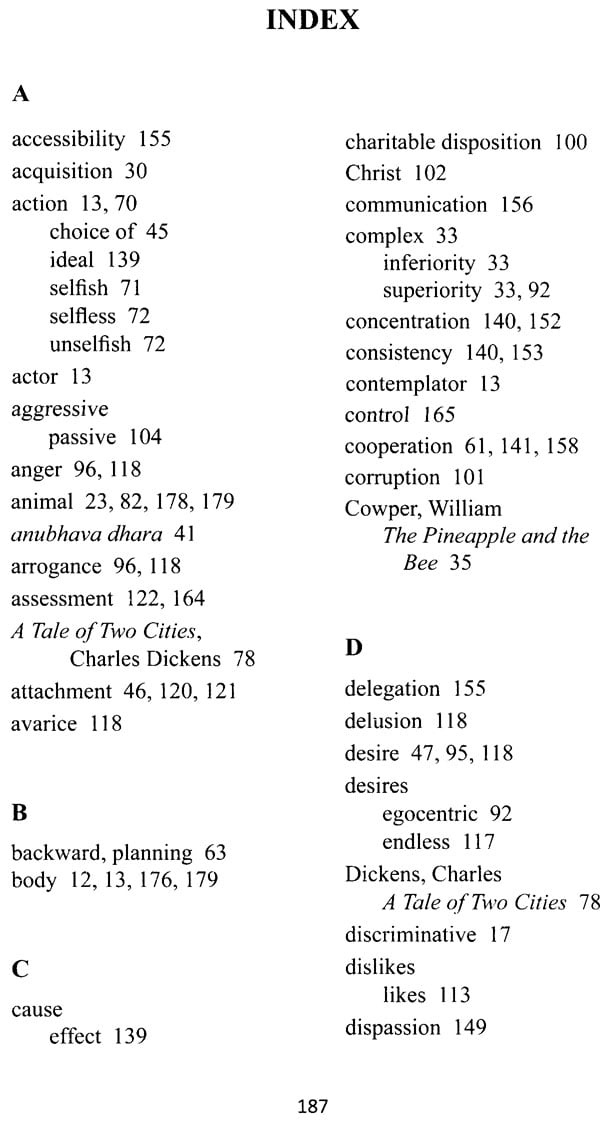
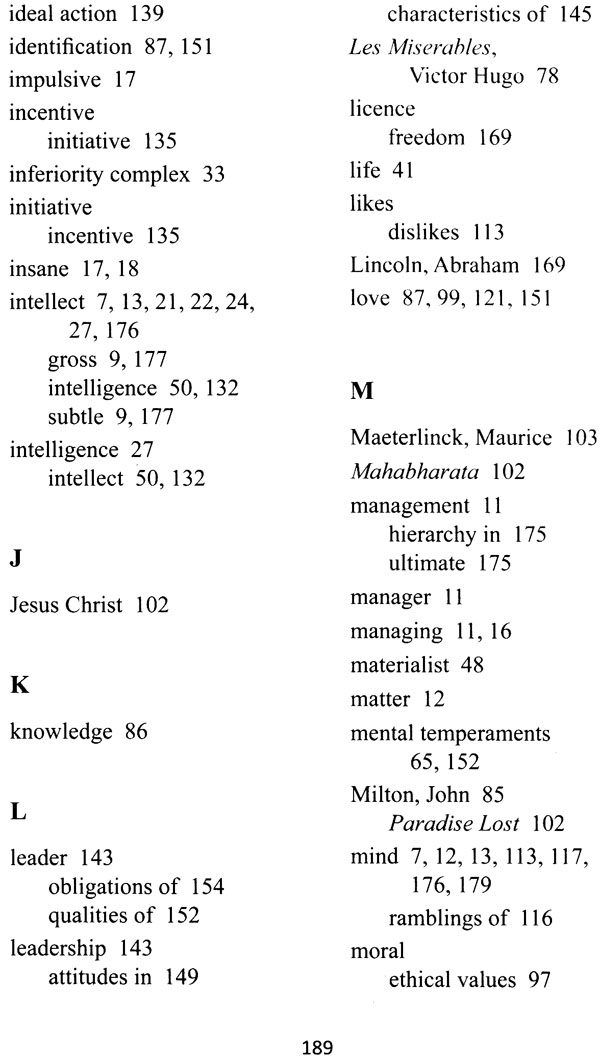
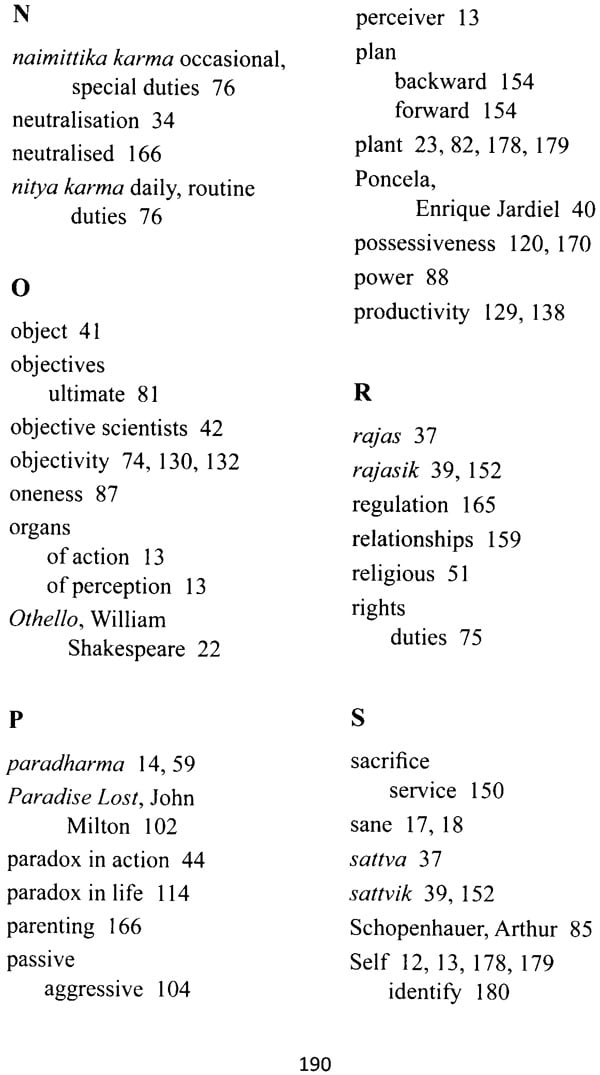
| Index | 187 |