

Mann Ki Baat (A Social Revolution on Radio)
Book Specification
| Item Code: | NAN472 |
| Publisher: | Lexis Nexis |
| Language: | English |
| Edition: | 2017 |
| ISBN: | 9789350359907 |
| Pages: | 444 (5 Color Illustrations) |
| Cover: | Paperback |
| Other Details | 9.0 inch X 6.0 inch |
| Weight | 410 gm |
Book Description
'Mann Ki Baat, Prime Minister Narendra Modi's popular and ubiquitous monthly radio address, has developed into a tour-de-force in itself. Ever since the programme began on Vijaya Dashami in 2014 (3rd October 2014) there has been considerable curiosity about the origins of the programme, the idea behind it and the mind of the man behind the inspiring voice that reaches millions every month.
In times of visual bombardment, 'Mann Ki Baat' has become one of the most popular programmes in the history of the radio, not just in India but indeed worldwide.
Here is a man who is perhaps among our most popular leaders ever and has great command over the visual medium, but decides to do a radio programme.
In times of pervasive skepticism, 'Mann Ki Baat' functions as a magnet for positivity by attracting it from all over the nation. It then acts as a megaphone, amplifying positivity with the great reach it has.
Despite having a medium that provides incredible potential for political consolidation, the man speaking on the programme has made it a platform above politics, partisanship and power. The brand that has evolved is completely apolitical with a focus on 'Jan Shakti' -the inherent strength of 125 crore Indians and a message of optimism.
These seemingly counter-intuitive facts have naturally sown a widespread keenness to know more about the origin and evolution of this programme. How and why did Prime Minister Narendra Modi decide to do a radio address? How did the format develop? How does he select the topics and most importantly, how does he keep it detached from politics?
It was while seeking answers to these questions that the idea of a book on 'Mann Ki Baat' originated. This book contains insights from none other than the Prime Minister himself. His inputs provide us a peek into how one of the most popular leaders of our time approaches an idea like 'Mann Ki Baat' and what its historical value maybe.
Interactions with the Prime Minister gave substantial detail on how he decides what the core content should be. It also throws light on how he approaches feedback from the people and how he lays emphasis on proper correspondence and follow-up by the respective government departments.
There is also immense curiosity in the public and media perception of 'Mann Ki Baat'. To address this, a comprehensive analysis of the television debates, print media articles and social media reactions was also done.
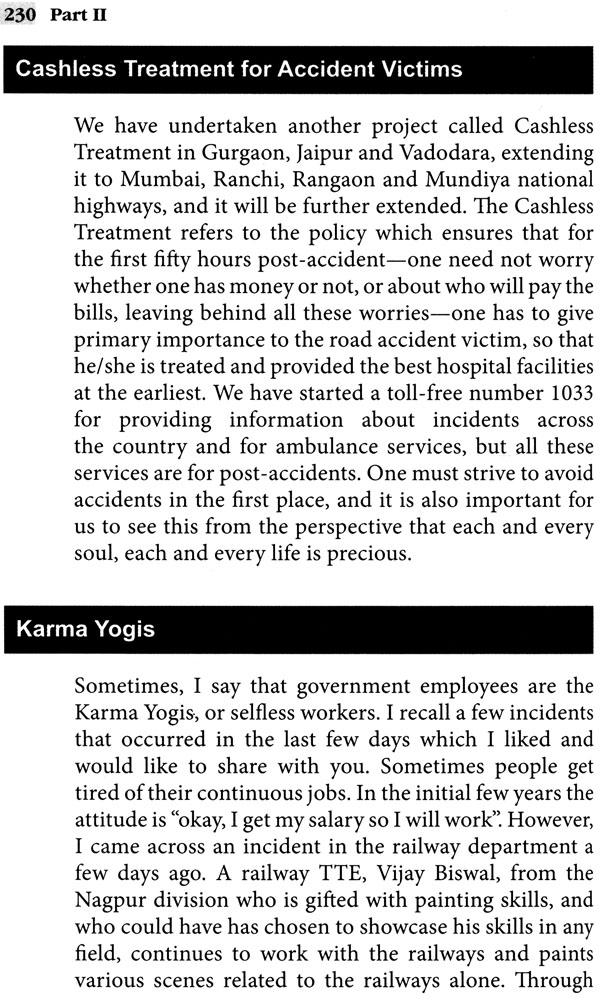
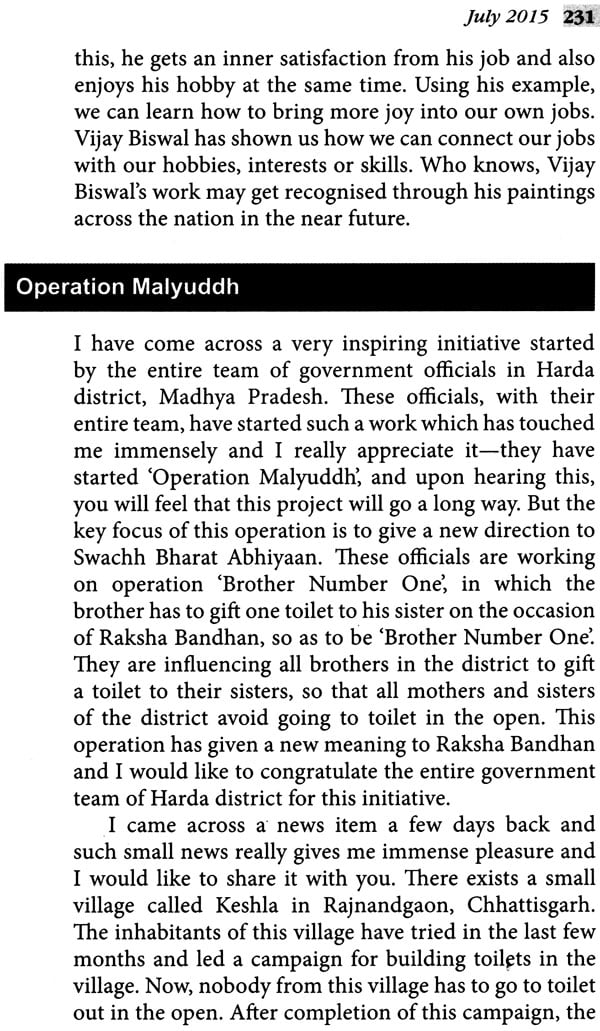
This book entailed a detailed study of the correspondence that comes to the Prime Minister before every 'Mann Ki Baat' episode-lakhs of letters, emails, posts on MyGov, inputs on the 'Narendra Modi Mobile App' and inputs from various Ministries and MPs. These indicated what the people wanted to hear from the Prime Minister and reiterated his strong personal popularity among the youth.
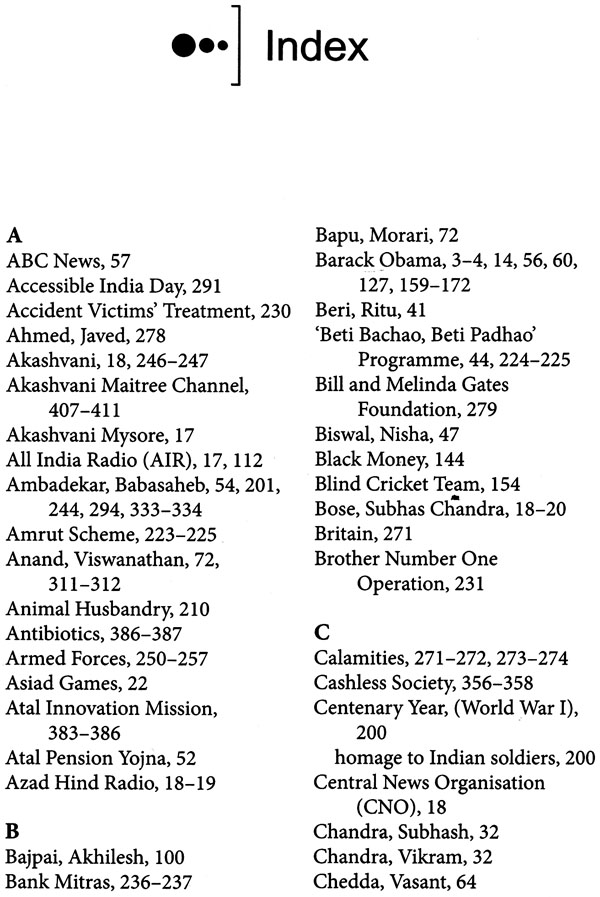
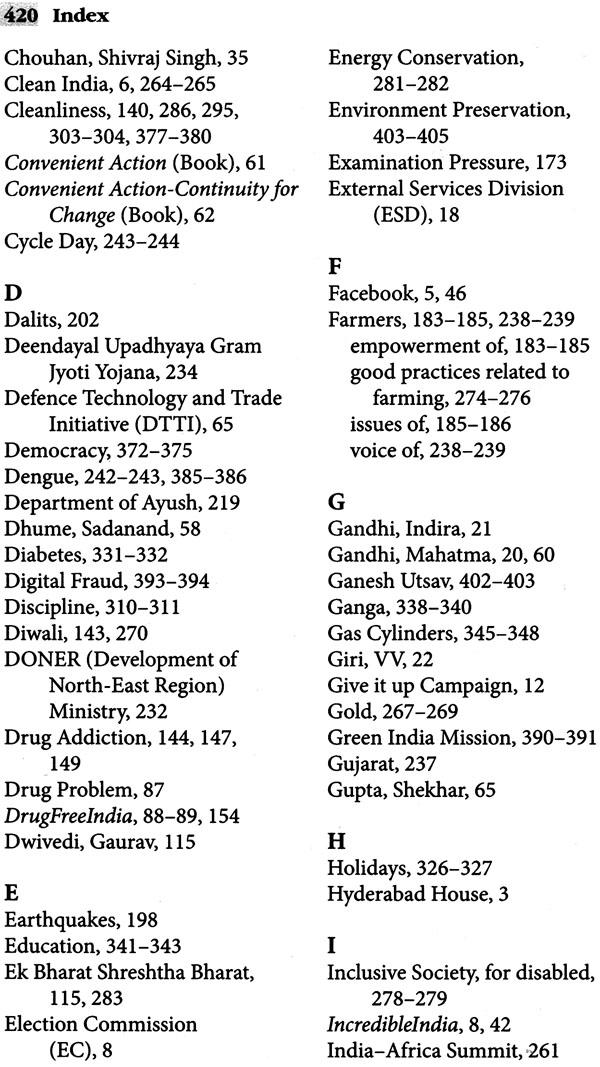
While preparing this book, a detailed study of every 'Mann Ki Baat' transcript was also undertaken. Beyond the themes and the overall narratives of every episode, each transcript is also a treasure trove of knowledge that deserves to be stored for posterity.
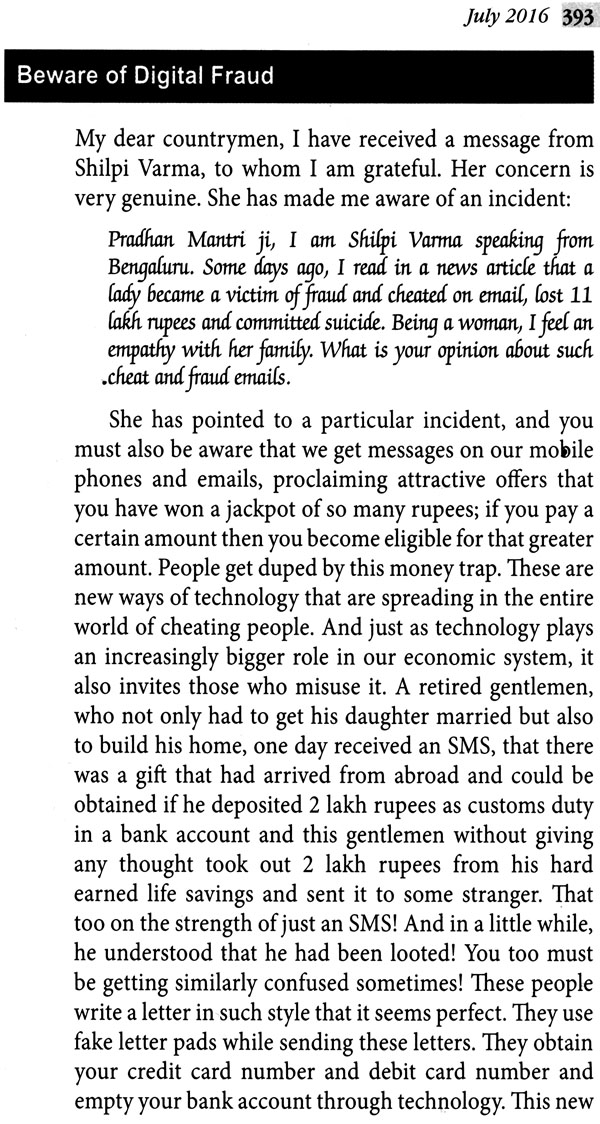
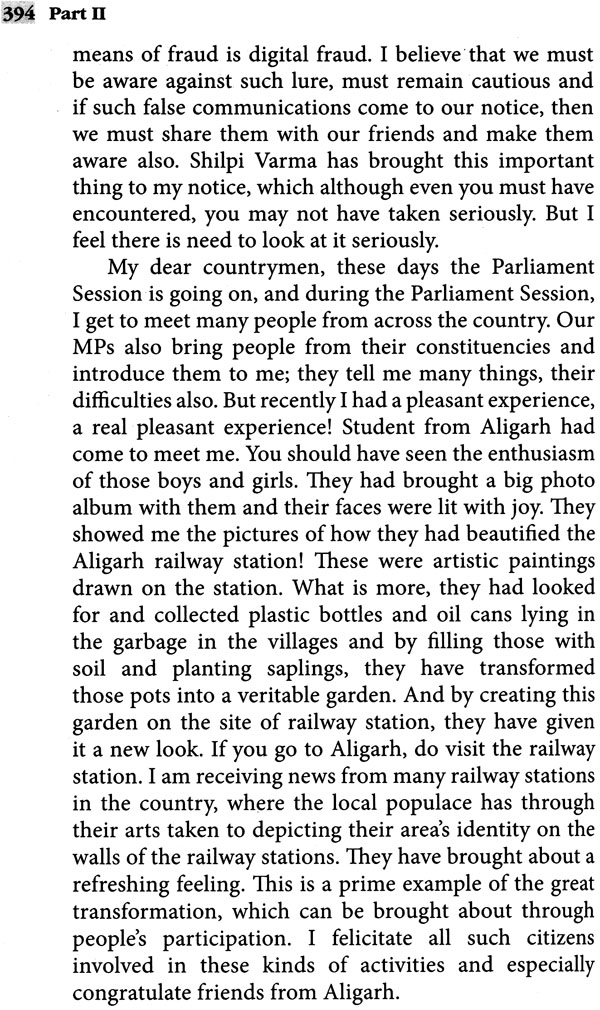
Hence, the book offers a definitive transcript of the first 23 episodes. These are useful in analysing the Prime Minister's monthly addresses in greater detail. The transcripts would be particularly useful for researchers and readers who want to examine the growth of a radio programme that became a movement in itself.
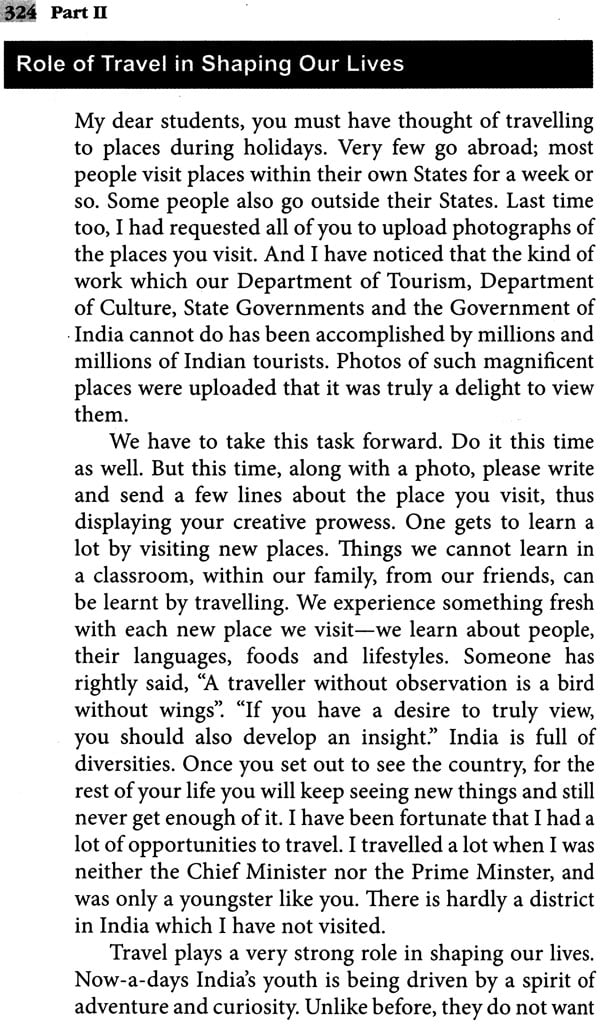
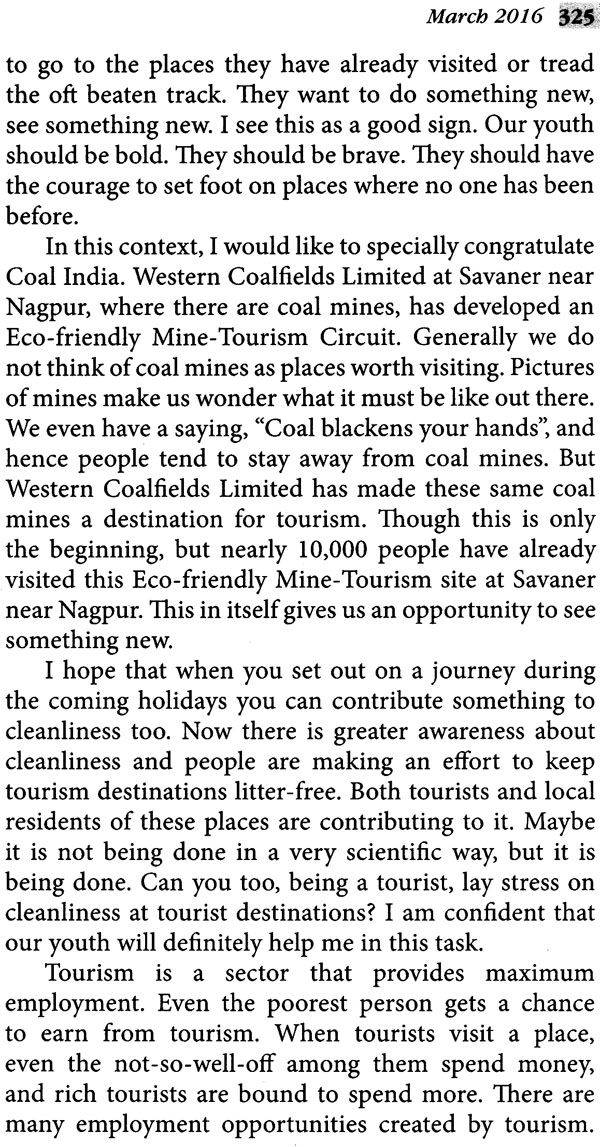
The journey of a radio programme that transformed into an important means of manifesting 'Ian Shakti' has been analysed. It highlights the transformative potential of each Indian and their Prime Minister who used the radio to ignite numerous mass movements for the nation's progress. These movements include instilling a sense of cleanliness, fighting drug menace, road safety, getting more tourists to India, saving the girl child and Divyang welfare to name a few.
There are interesting anecdotes shared by the members of the Prime Minister's team and people from AIR to quench people's curiosity about the minute but interesting details of how the idea of a radio programme came up, how the name and frequency were decided, and how the format was chalked out, among other things.
The core idea of 'Mann Ki Baat' is the Prime Minister's taking to his heart the views of the people. This book takes the reader behind the scenes on how public feedback is received through various channels, processed and followed-up after every episode, including letters which the Prime Minister does not talk about on the programme.
For this book, we are glad to have had the cooperation of the 'Narendra Modi Mobile App' team, which has been working tirelessly to strengthen the Prime Minister's bond with the people of India. At the end of every transcript is a QR code that enables the reader to hear the corresponding episode in 22 languages. The thorough work by the 'Narendra Modi Mobile App' team converts this book about a radio address into a 'multimedia book' -a beautiful confluence of the conventional and the modern, much like the programme itself.
The insights and analysis received from the All India Radio and MyGov teams were equally valuable. The scale at which feedback is received and processed at these places is revealing in its magnitude and efficiency.
The artwork in this book has been prepared by Akbar Saheb, a well-wisher of the Prime Minister and a very well-respected artist based in UAE.
Feedback on the book is welcome. Any error, though unintended, is the responsibility of the authors.
| 1 | Massage | v |
| 2 | Authors'Note | vii |
| 3 | About BlueKraft Digital Foundetion | xi |
| PART I | ||
| 1 | Genesis | 3 |
| 2 | A Resurrection | 16 |
| 3 | Swachh Bharat on the Airwaves | 28 |
| 4 | Mann Ki Baat' spurs a Mass Movement | 38 |
| 5 | Mann Ki Baat' Saath Saath : When President Obama and PM Modi shared their 'Mann ki Baat' | 57 |
| 6 | Youth's Mann Ki Baat' | 69 |
| 7 | Social Transformation through the Airwaves | 81 |
| 8 | Mann ki Baat' and Participatiive Goverance: Mails, MyGov, Mobile and Missed Calls | 93 |
| 9 | Post Box 111 and more : Harnessing the Idea of 125 crore Indians | 110 |
| 10 | What the Numbers tell us | 120 |
| PART II | ||
| 1 | October 2014 | 132 |
| 2 | November 2014 | 139 |
| 3 | December 2014 | 147 |
| 4 | January 2015 | 159 |
| 5 | Frebruary 2015 | 173 |
| 6 | March 2015 | 183 |
| 7 | April 2015 | 198 |
| 8 | May 2015 | 204 |
| 9 | June 2015 | 216 |
| 10 | July 2015 | 226 |
| 11 | August 2015 | 235 |
| 12 | September 2015 | 245 |
| 13 | October 2015 | 258 |
| 14 | November 2015 | 273 |
| 15 | December 2015 | 285 |
| 16 | January 2016 | 296 |
| 17 | February 2016 | 307 |
| 18 | March 2016 | 321 |
| 19 | April 2016 | 335 |
| 20 | May 2016 | 351 |
| 21 | June 2016 | 367 |
| 22 | July 2016 | 381 |
| 23 | Augut 2016 | 397 |
| 24 | Conclusion | 413 |
| 25 | Index | 149 |