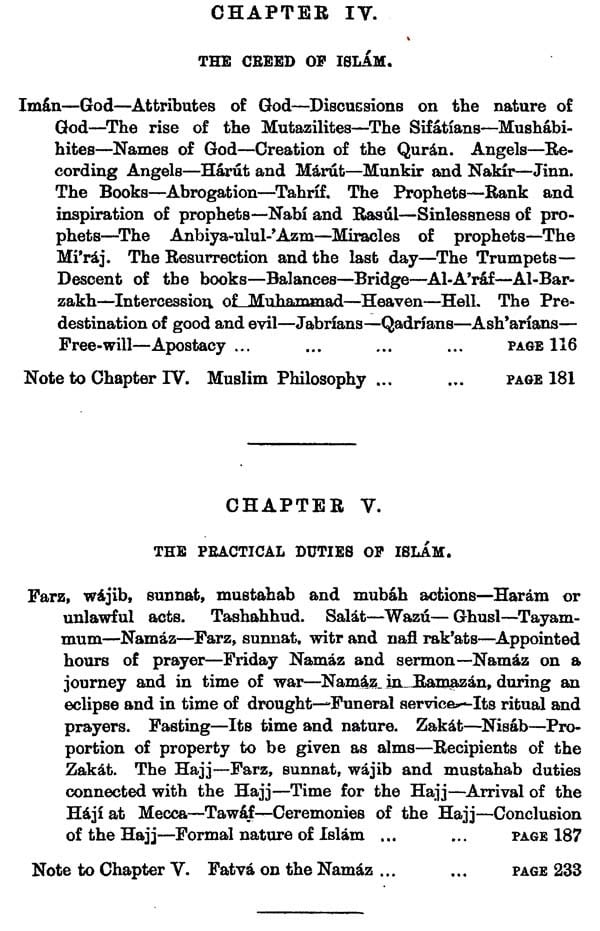
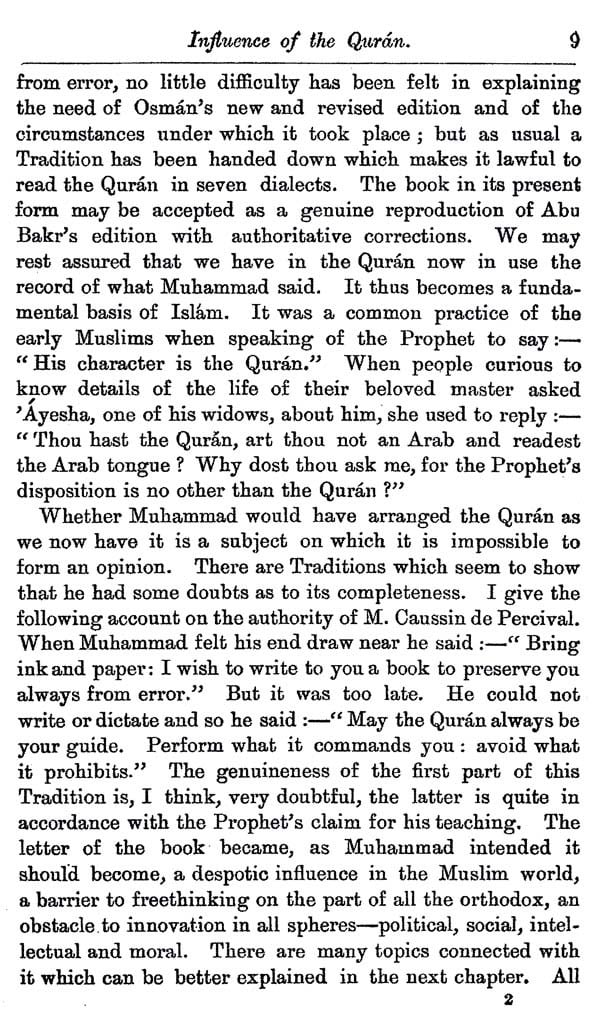
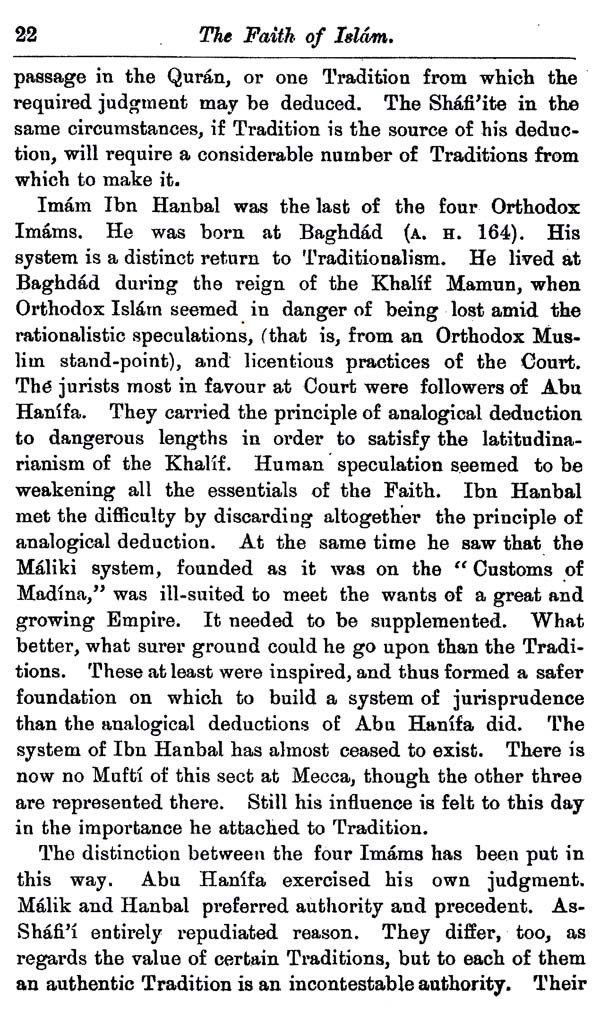
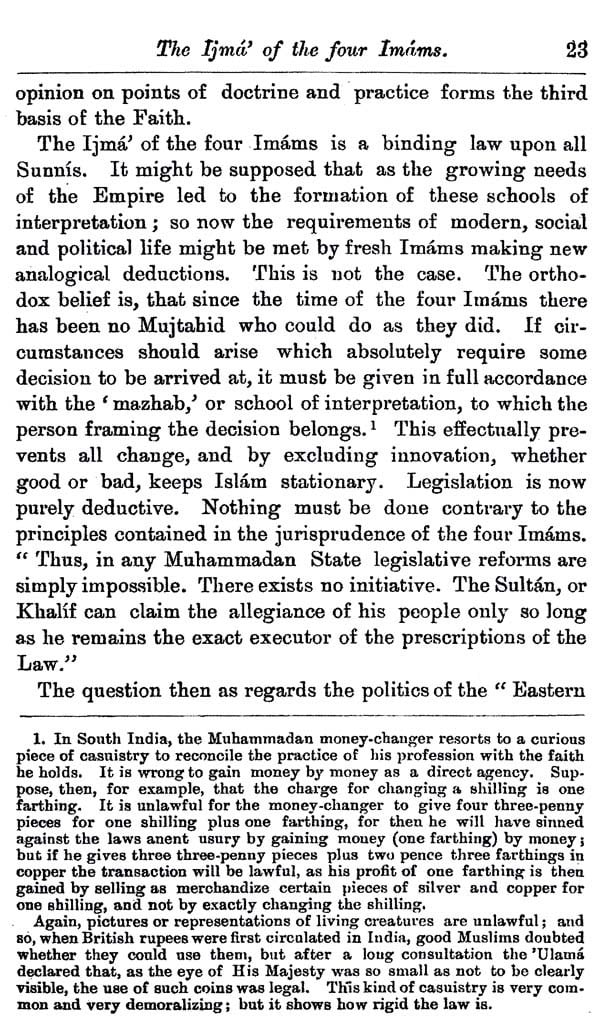
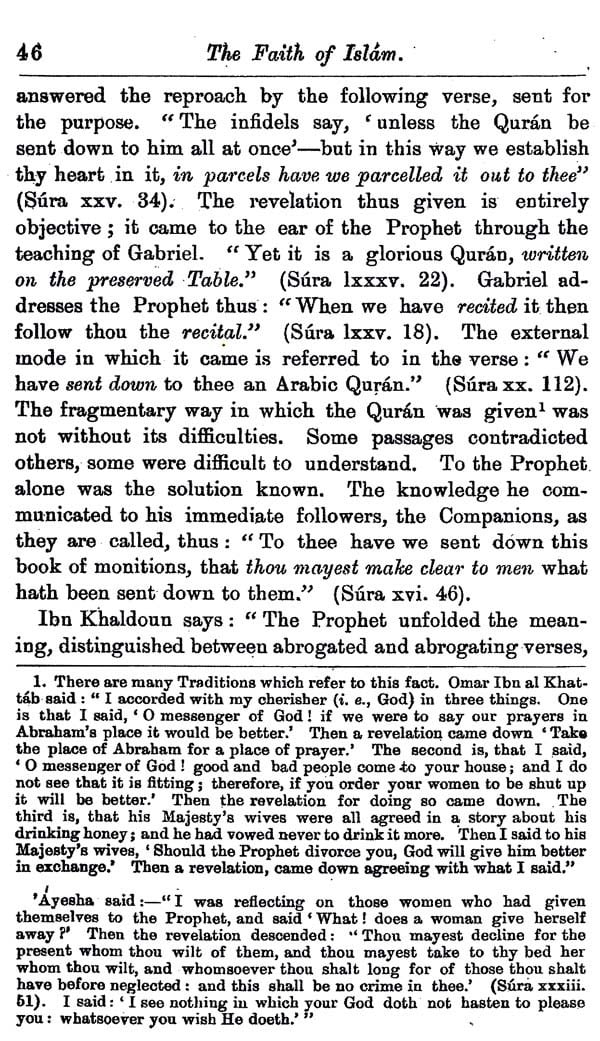
About the Book The portion of the creed considered in the last chapter was connected with Iman (faith: the remaining portion is connected with Din (practical religion). The five principal acts are called Irkan-i-Din, pillars of religion. They are: (1) The recital of the Kalima, or short confession of faith; (2) Sulat, the five stated periods of prayer: (3) Roza, the thirty days fast of Ramazan: (4) Zakat, legal alms; (5) Hajj, the pilgrimage to Mecca. These are all farz duties, being based on a Nass-1-Zahir, or obvious," sentence of the Quran, a proof derived from which is called dalil-i- gata'1. This is the strongest of all kinds of proofs. The authorities, however, specify other religious duties which good Muslims should perform.These duties are: (1) To make the Umra, or Pilgrimage to Mecca in addition to the Hajj: (2) obedience to parents; (3) the obedience of a wife to her husband; (4) the giving of alms after a fast; (5) the offering of sacrifice; (6) the saying of Namaz witr, (7) the support of relatives: The duties numbered as (4) and (5) are wajit orders to the rich; but only mustahab to the poor: that is, it is meritorious if they perform them, but not sinful if they leave them undone.
About the Author Canan Edward Sell (1839-1932) was an Anglican orientalist, writer and missionary in India. After finishing his studies in 1862, Sell was ordained deacon and in 1867, priest. Sell served as the examining chaplain for the Bishop of Madras and in 1889 he was appointed canon at St George's Cathedral, Madras. He is commemorated by a plaque in the Cathedral. In 1865 Sell became the of the Harris High School for Muslims in Madras in which capacity he continued until 1881. It was also during this time that he was secretary of the Church Missionary Society for the dioceses of Madras and Travancore. He officially retired from the CMS in 1923, but continued to live in India, involving himself in and ministry. When he died in Bangalore on 15 February 1932, he was working on his fiftieth book. Sell wrote extensively on Islam and biblical subjects, in particular, the Old Testament. His works include: The Faith of Islam, London, 1880 m-1-Tajwid; or, The Art of Reading the Quran With an Account of the Rules for the Rasm-Ul-Khat, and a List of the Various Readings of the Last Sura, 1882 Jami'-Ul-Qavanin. An Urdu Grammar, with Chapters on Rhetoric and Prosody, 1885 The Historical Development of the Quran, 1897 Essays on Islam, 1901 The Exile, 1931 Covenants: The Day of the Lord, 1931 etc.
Preface Tax following pages embody a study of Islám dur- ing a residence of fifteen years in India, the greater part of which time I have been in daily inter- course with Musalmáns. I have given in the foot- notes the authorities from which I quote. I was not able to procuro in Madras a copy of the Arabic edition of Ibn Khaldoun's great work, but the French translation by Baron M. de Slane, to which I so frequently refer, is thoroughly reliable. The quotations from the Qurán are made from Rodwell's translation. The original has been con- sulted when necessary.
A few slight and occasional errors in translit- eration have occurred, such as Sulát for Salát, Munkar for Munkir, &c., but in no case is the meaning affected.
In some words, such as Khalif, Khalifate, and Omar, I have retained the anglicised form instead. of using the more correct terms, Khalifa, Khilafat, 'Umr. The letter Q has been used to distinguish the Káf-i-Karashat from the Káf-i-Tází.
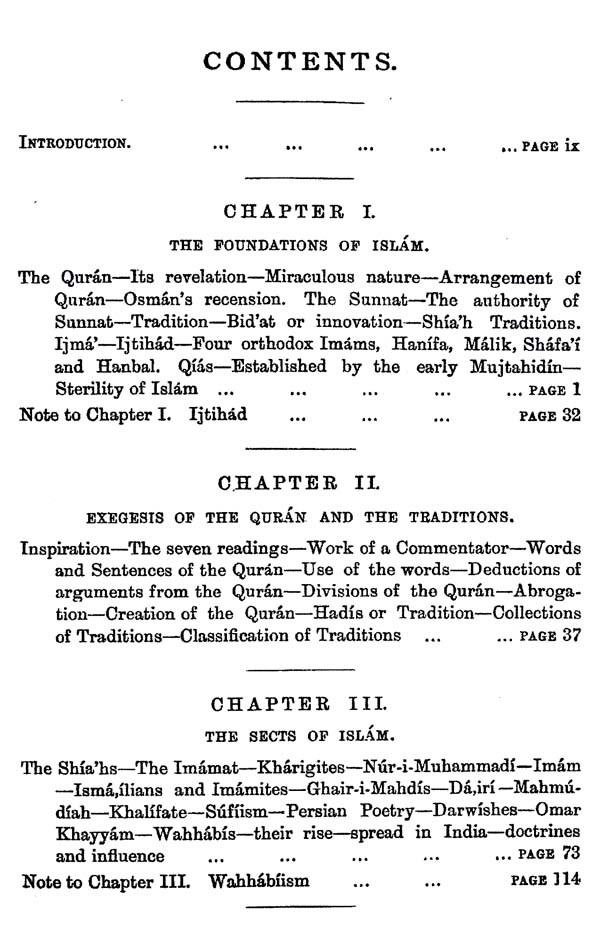
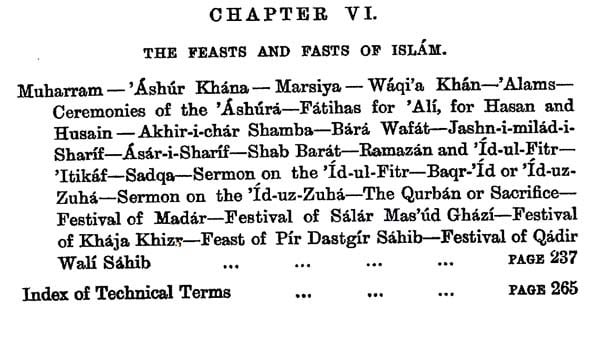
**Contents and Sample Pages**