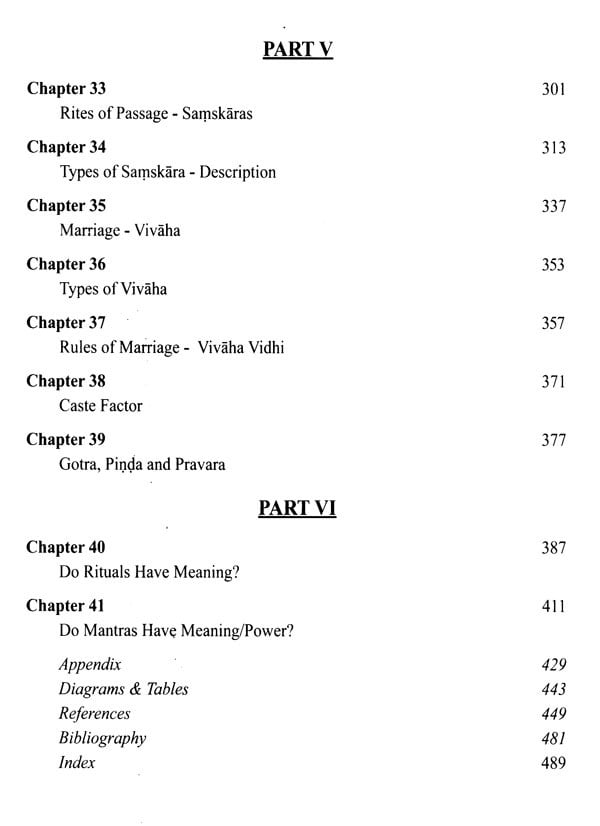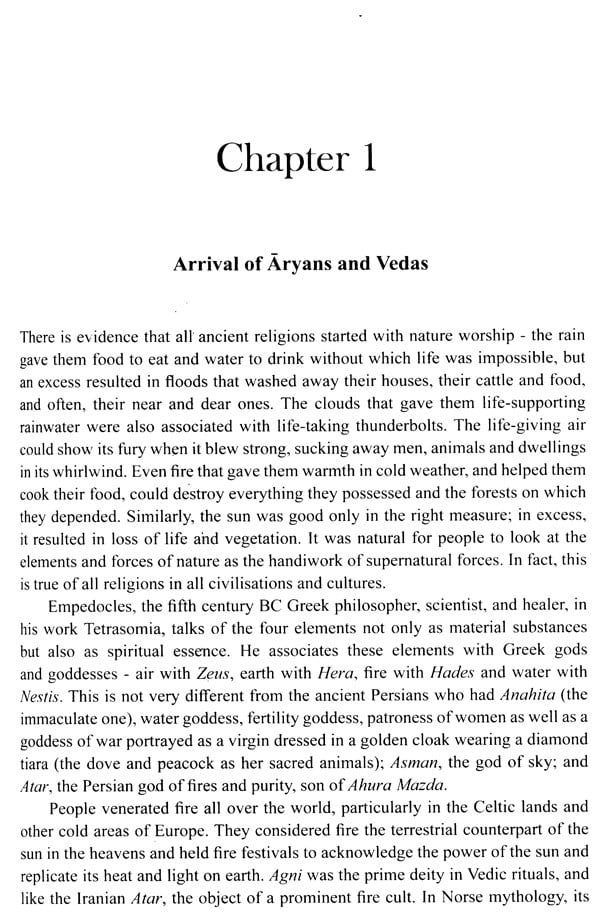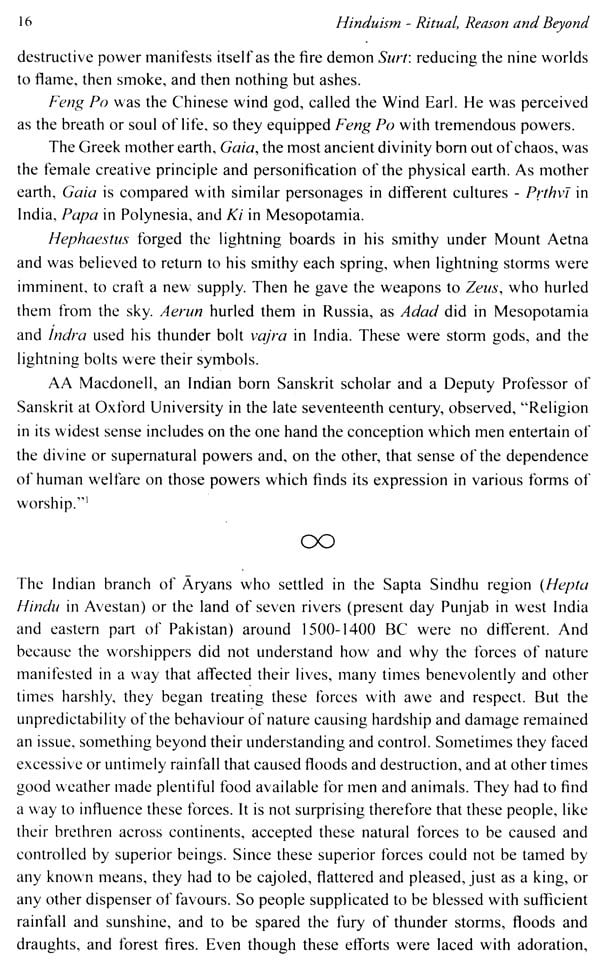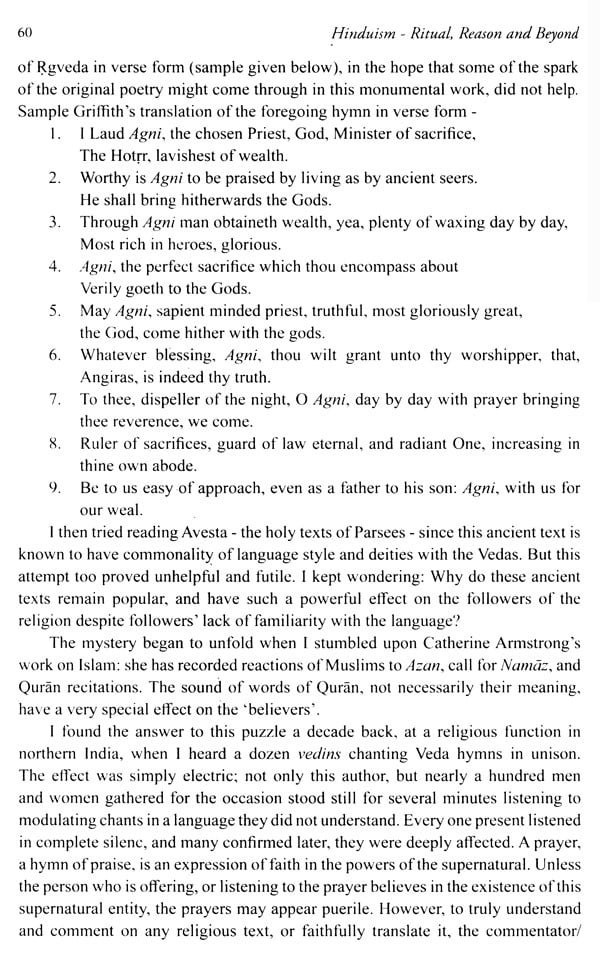


Hinduism- Rituals, Reason and Beyond (A Journey Through the Evolution of 5000 Year Old Traditions)
Book Specification
| Item Code: | UBE959 |
| Author: | Ashok Mishra |
| Publisher: | Story Mirror Infotech Pvt. Ltd. |
| Language: | English |
| Edition: | 2021 |
| ISBN: | 9789388698139 |
| Pages: | 534 |
| Cover: | Hardcover |
| Other Details | 9.00 X 6.00 inch |
| Weight | 530 gm |
Book Description
As the barber held the head of my nephew's daughter, she started to scream and hearing the child cry, her father (my nephew) intervened, instructing the barber not to shave, to use a pair of scissors instead to symbolically cut off a lock of hair. Many of nephews and nieces present murmured their approval, making me react more sharply than I had intended to. If I remember correctly, I said something along these lines; if you're not happy with the head being shaved, then better not have the ceremony at all! Let's not pretend that by clipping a lock of hair you would have performed mundana samskära. I remember adding - we can all have a nice party even without the samskara, but if the idea is for the child to go through mundana. then let's do it properly because it is an important milestone in the life of a Hindu child, and the family. There was a momentary silence - everyone gathered there thought I was upset because a tradition was not being followed. They were taken aback because they knew me as a non-traditionalist; not a 'conservative' Hindu, but as a great liberal. The child's father remarked that he did not know shaving of the head was a samskära, an important milestone in the life of a child.
For some strange reason we see our genesis only in Vedic Aryans! We seem to think that the India of pre-Vedic days (Indus Valley, Mehrgarh and earlier) belonged to some other peoples who were not our forefathers. How strange, and yet not strange at all.
It is not strange because, as a student, I was never taught at any stage of my schooling that the history of my ancestors is at least as old as the skeletons, the mud bricks, and the broken pot shreds of Mehrgarh. Or that my ancestors baked the clay bricks and built those beautiful double storeyed houses which had bathrooms on the upper floor from where, through the vertical pipes, the water flowed down into the covered drainage system on the streets. For us, those people of the Indus Valley (and prior) were a different race that, for reasons we aren't very sure of, completely disappeared from the face of India.
And it is strange because we - the argumentative Indians, who like to question even that which is obvious have believed for several generations, with nary a question, that an entire race disappeared with the Indus Valley civilization. We do not enquire: How did a fairly developed civilization, several centuries old, completely cease to exist, thereby leaving the slate of Indian civilization clean for Vedic Aryans and their Hindu descendants to script their own story?
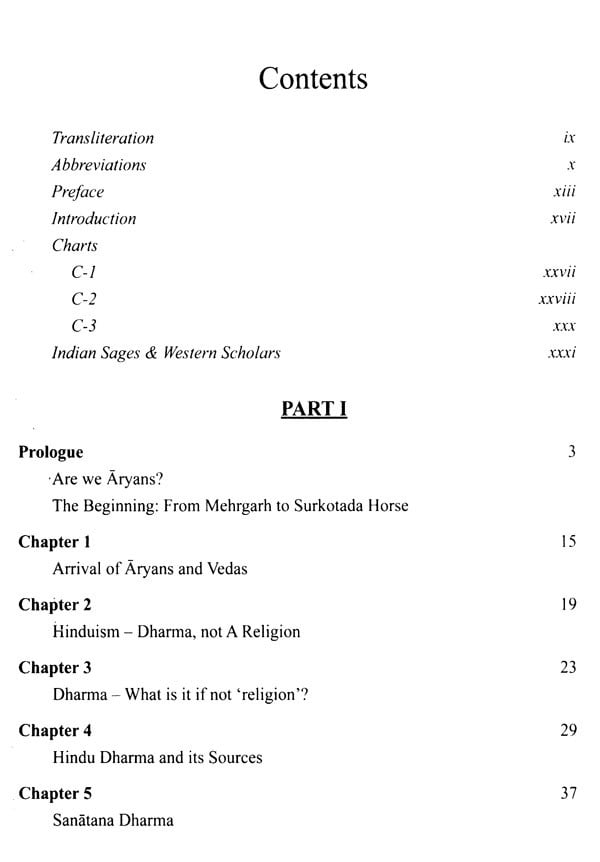
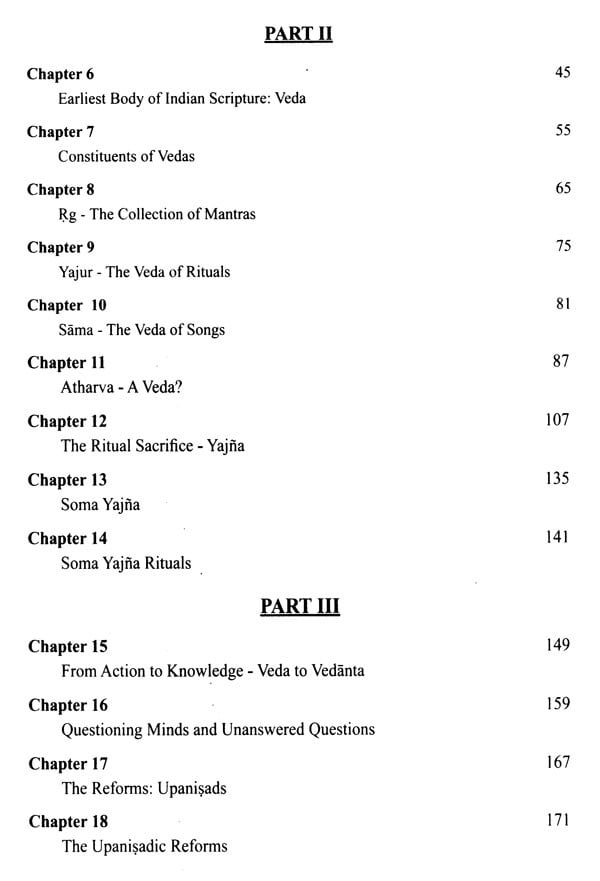
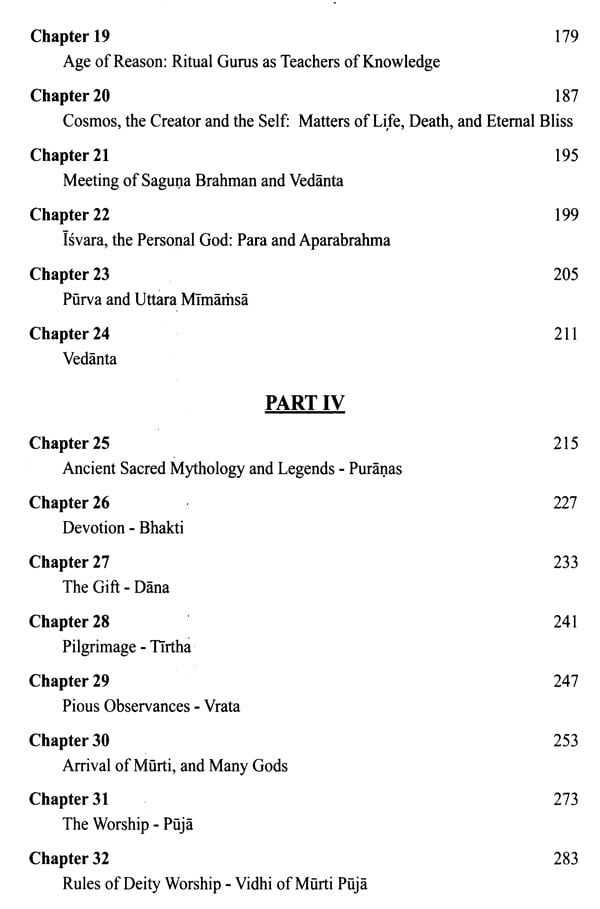
**Contents and Sample Pages**