

Musical Instruments of the World
Book Specification
| Item Code: | UAR359 |
| Author: | Himani Pandey |
| Publisher: | Edukeen Publisher |
| Language: | English |
| Edition: | 2019 |
| ISBN: | 9789389387322 |
| Pages: | 276 |
| Cover: | HARDCOVER |
| Other Details | 9.50 X 6.50 inch |
| Weight | 550 gm |
Book Description
A musical instrument makes sounds. Once humans moved from making sounds with their bodies-for example, by clapping-to using objects to create music from sounds, musical instruments were born. Primitive instruments were probably designed to emulate natural sounds, and their purpose was ritual rather than entertainment. The concept of melody and the artistic pursuit of musical composition were unknown to early players of musical instruments. A player sounding a flute to signal the start of a hunt does so without thought of the modern notion of "making music". Musical instruments are constructed in a broad array of styles and shapes, using many different materials. Early musical instruments were made from "found objects" such a shells and plant parts. As instruments evolved, so did the selection and quality of materials. Virtually every material in nature has been used by at least one culture to make musical instruments. One plays a musical instrument by interacting with it in some way-for example, by plucking the strings on a string instrument.
Himani Pandey is Director of the Center for Ethnomusicology at the Private University. She edited Music, a monograph published in 2002. Besides her academic writing, Pandey is also a noted performer of Indian music and Islamic chant.
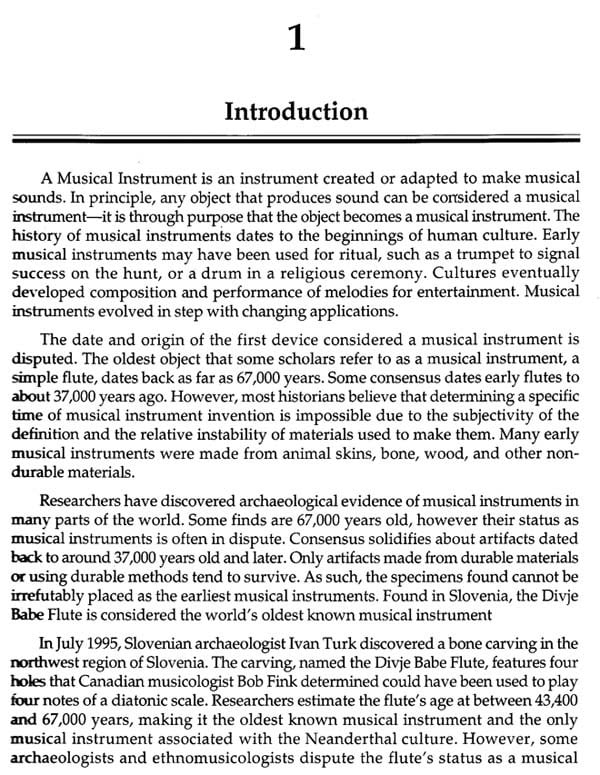
A Musical Instrument makes sound. Once humans moved from making sounds with their bodies-for example, by clapping-to using objects to create music from sounds, musical instruments were born. Primitive instruments were probably designed to emulate natural sounds, and their purpose was ritual rather than entertainment. The concept of melody and the artistic pursuit of musical composition were unknown to early players of musical instruments. A player sounding a flute to signal the start of a hunt does so without thought of the modem notion of "making music".
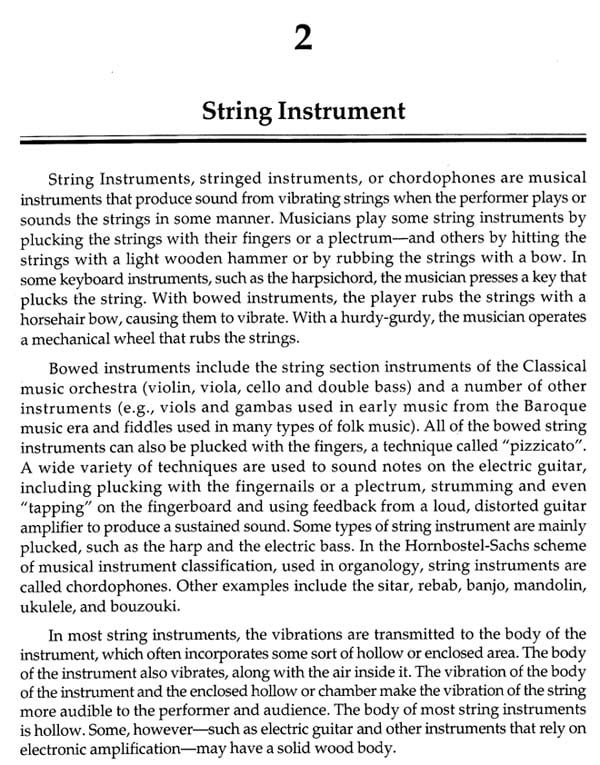
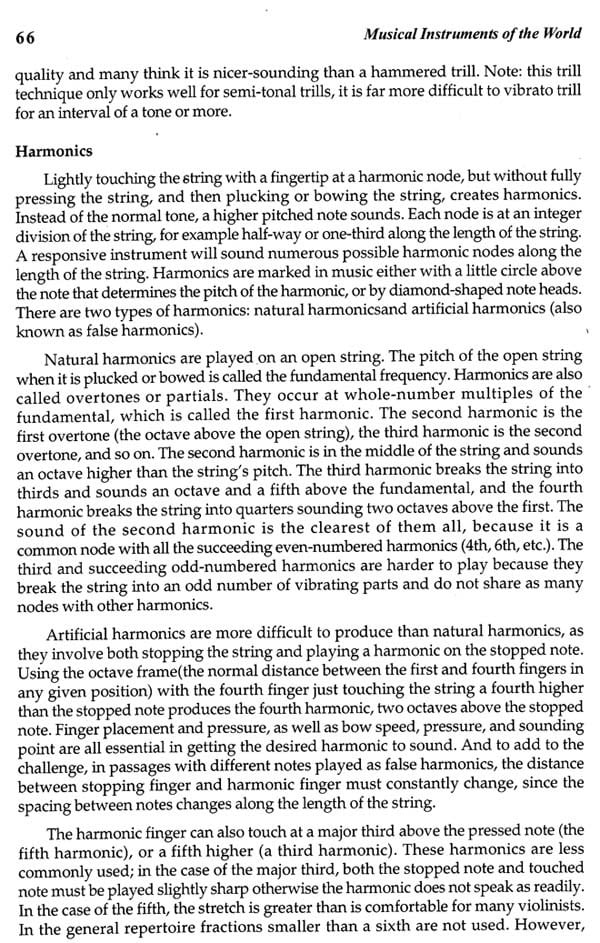
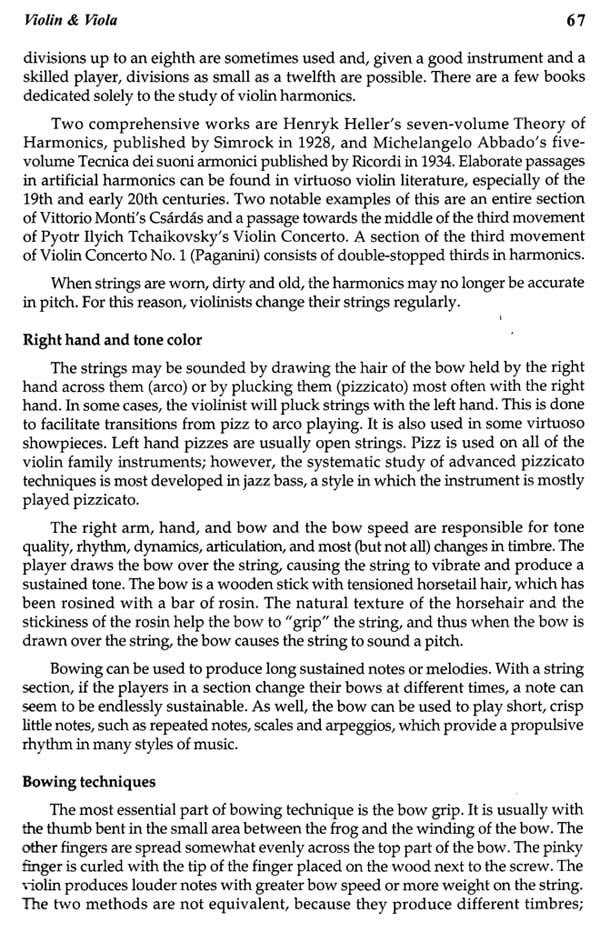
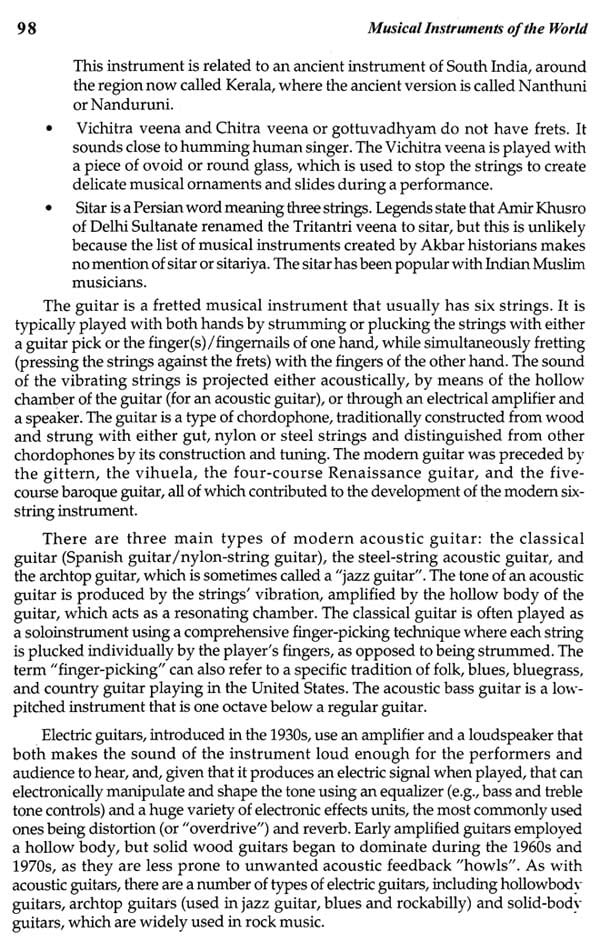
Musical Instruments are constructed in a broad array of styles and shapes, using many different materials. Early musical instruments were made from "found objects" such a shells and plant parts. As instruments evolved, so did the selection and quality of materials. Virtually every material in nature has been used by at least one culture to make musical instruments. One plays a musical instrument by interacting with it in some way-for example, by plucking the strings on a string instrument.
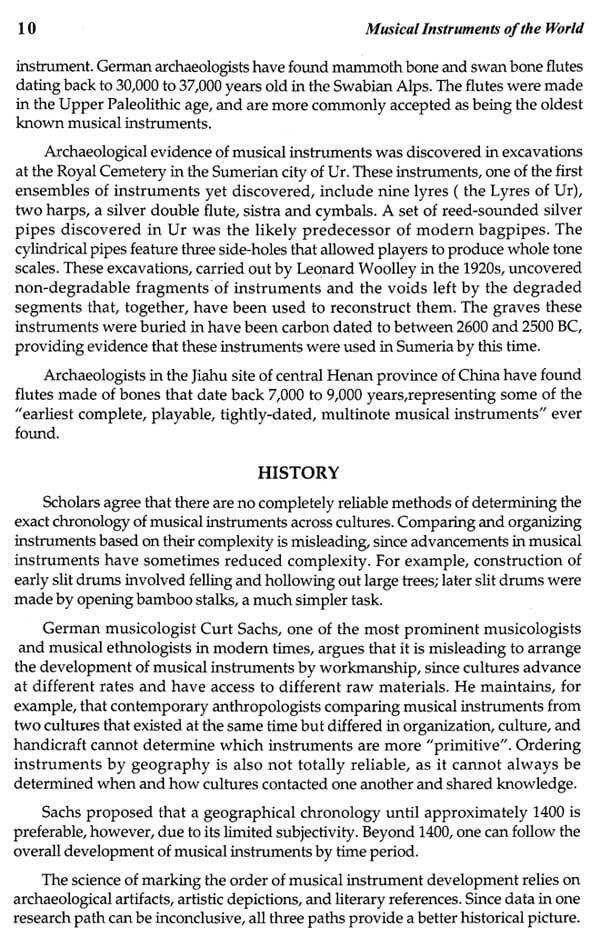
Musical Instruments developed independently in many populated regions of the world. However, contact among civilizations caused rapid spread and adaptation of most instruments in places far from their origin. By the Middle Ages, instruments from Mesopotamia were in maritime Southeast Asia, and Europeans played instruments from North Africa. Development in the Americas occurred at a slower pace, but cultures of North, Central, and South America shared musical instruments. By 1400, musical instrument development slowed in many areas and was dominated by the Occident.
Musical Instrument classification is a discipline in its own right, and many systems of classification have been used over the years. Instruments can be classified by their effective range, their material composition, their size, etc. However, the most common academic method, Hornbostel-Sachs, uses the means by which they produce sound. The academic study of musical instruments is called organology.
Himani Pandey
**Contents and Sample Pages**