

Maratha and Rise of Afghan Power
Book Specification
| Item Code: | UAQ918 |
| Author: | Narayan Prasad Kota |
| Publisher: | Peridot Literary Books |
| Language: | English |
| Edition: | 2022 |
| ISBN: | 9789390393244 |
| Pages: | 286 |
| Cover: | HARDCOVER |
| Other Details | 9.50 X 6.50 inch |
| Weight | 640 gm |
Book Description
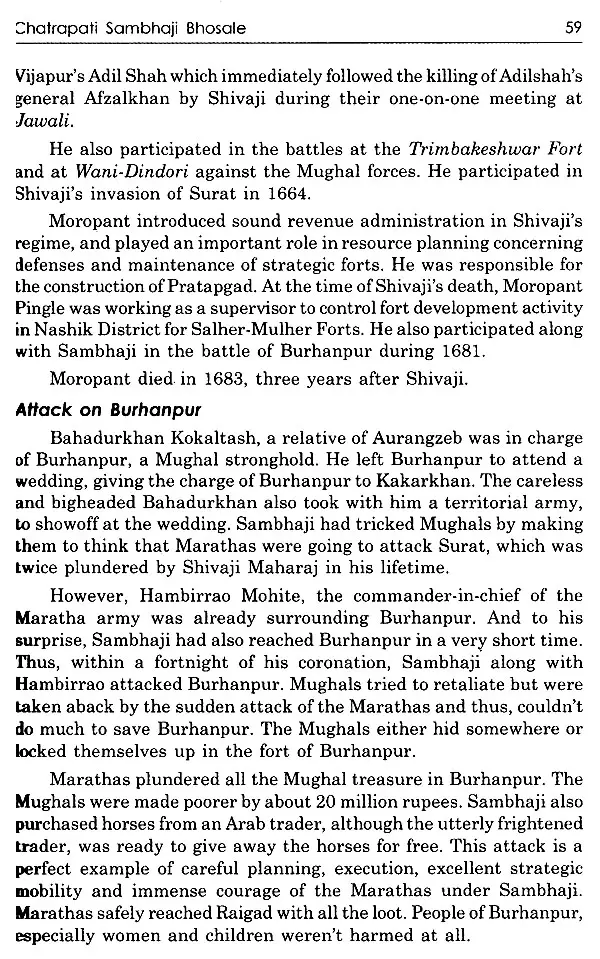
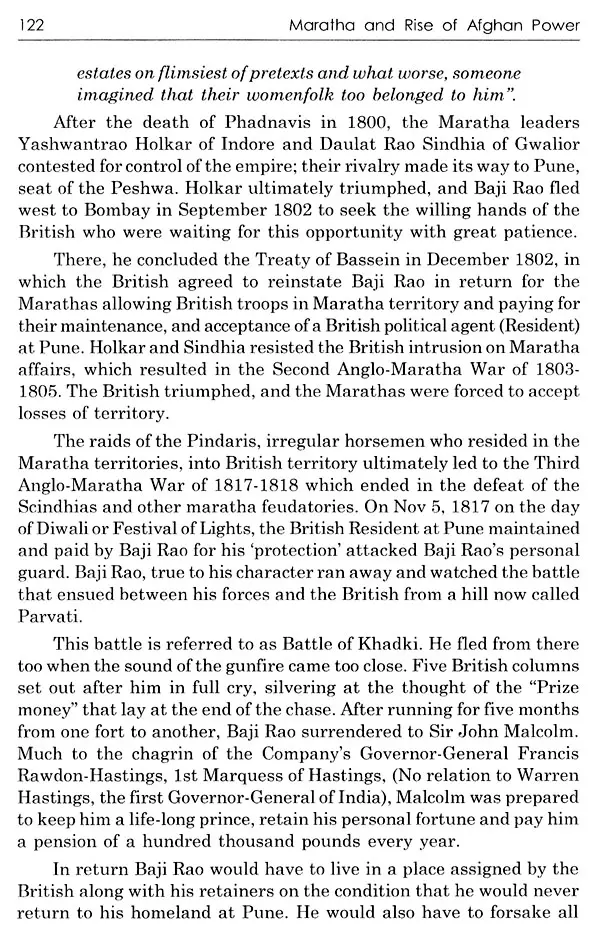
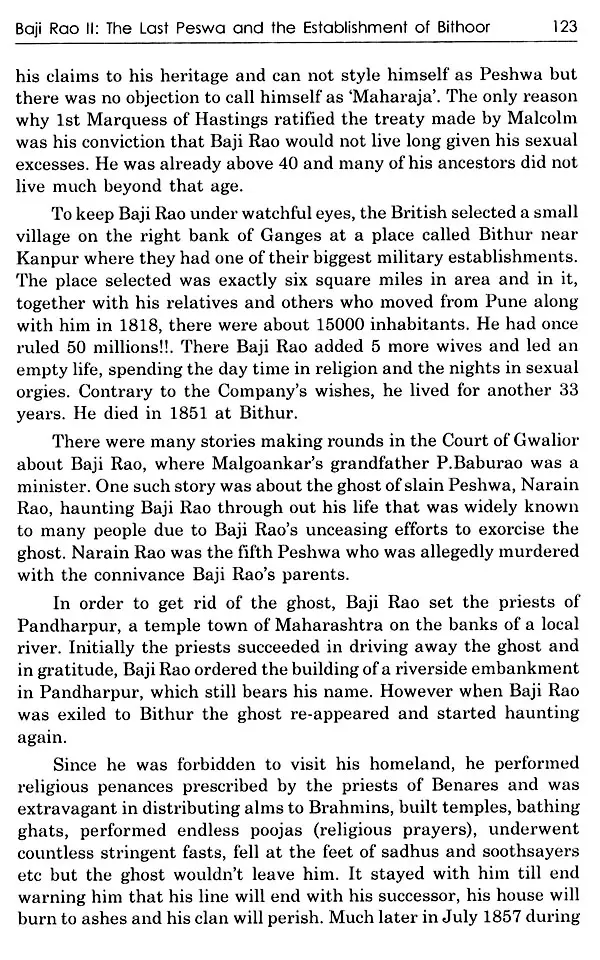
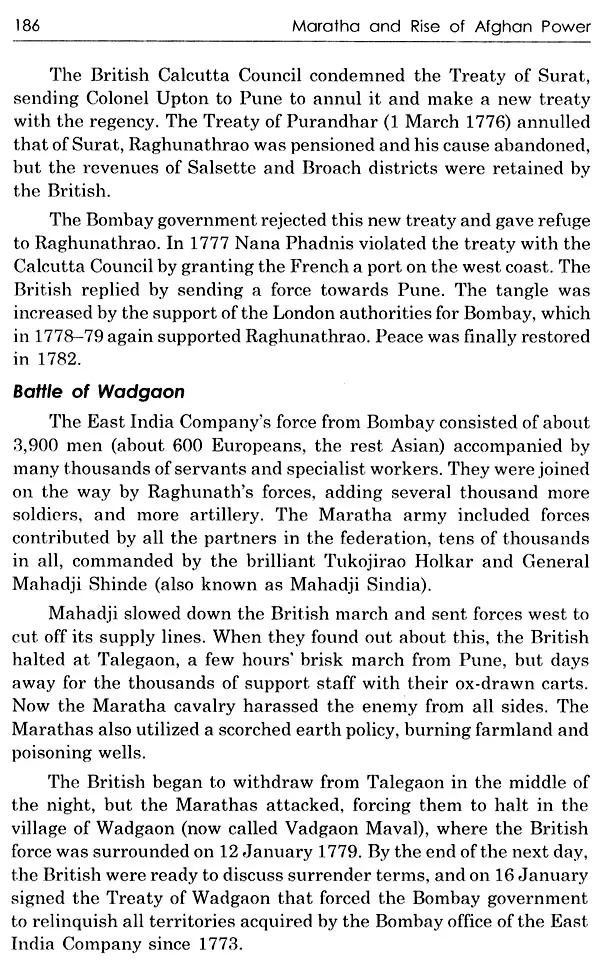
The Maratha Empire, also known as the Maratha Confederacy, dominated a large portion of India during the 17th and 18th century. The Empire was established in 1645 and with the defeat of Peshwa Bajirao-2, it was demolished in 1818. The empire is largely known for ending of the Mughal rule. The empire had its capital at Raigad Fort. The Empire was ruled by Chhatrapati and Peshwas. The empire was established in the region of western Deccan plateau, known as Maharashtra today. The most important challenge to the decaying Mughal power came from the Maratha Kingdom which was the most powerful of the succession states. In fact, it alone possessed the strength to fill the political vacuum created by the disintegration of the Mughal Empire. Moreover, it produced a number of brilliant commanders and statesmen needed for the task. But the Maratha sardars lacked unity, and they lacked the outlook and programme which were necessary for founding an all-India empire. And so they failed to replace the Mughals. This comprehensive book is an overview of rise and fall of Maratha Empire in India. Graduate students of History will find this work valuable in their studies.
Narayan Prasad Kota is Professor in the Department of History at J.D. men's College, Patna, a constituent unit of Magadh University, Bodhgaya. His several research papers have been published in reputed journals and he attended and presented papers in many national seminars and symposiums.
The Maratha Empire, also known as the Maratha Confederacy, dominated a large portion of India during the 17th and 18th century. The Empire was established in 1645 and with the defeat of Peshwa Bajirao-2 it was demolished in 1818. The empire is largely known for ending of the Mughal rule. The empire had its capital at Raigad Fort. The Empire was ruled by Chhatrapati and Peshwas. The empire was established in the region of western Deccan plateau, known as Maharashtra today. The most important challenge to the decaying Mughal power came from the Maratha Kingdom which was the most powerful of the succession states. In fact, it alone possessed the strength to fill the political vacuum created by the disintegration of the Mughal Empire. Moreover, it produced a number of brilliant commanders and statesmen needed for the task. But the Maratha sardars lacked unity, and they lacked the outlook and programme which were necessary for founding an all-India empire. And so they failed to replace the Mughals. They did, however, succeed in waging continuous war against the Mughal empire, till they destroyed it. Shahu, the grandson of Shivaji, had been a prisoner in the hands of Aurangzeb since 1689. Aurangzeb had treated him and his mother with great dignity, honour, and consideration, paying full attention to their religious, caste, and other needs, hoping perhaps to arrive at a political agreement with Shahu Like the Mughals, the Maratha rulers were also mainly interested in raising revenue from the helpless peasantry. For example, they too collected nearly half of the agricultural produce as tax. Unlike the Mughals, they failed even to give sound administration to the people outside Maharashtra. They could not inspire the Indian people with any higher degree of loyalty than the Mughals had succeeded in doing Their dominion, too, depended on force and force alone. The only way the Marathas could have stood up to the rising British power was to have transformed their state into a modern state. This they failed to do. There is no doubt that the single most important power to emerge in the long twilight of the Mughal dynasty was the Maratha confederacy. Initially deriving from the western Deccan, the Marathas were a peasant warrior group that rose to prominence during the rule in that region of the sultans of Bijapur and Ahmadnagar.
Book's Contents and Sample Pages