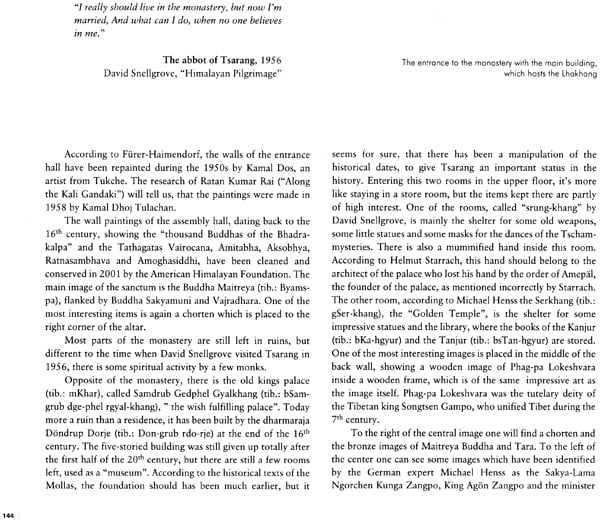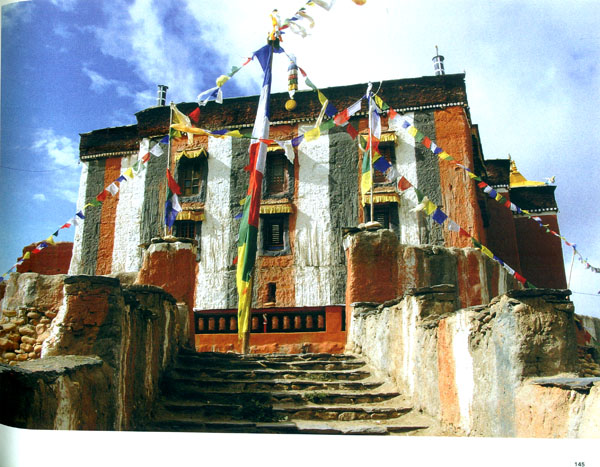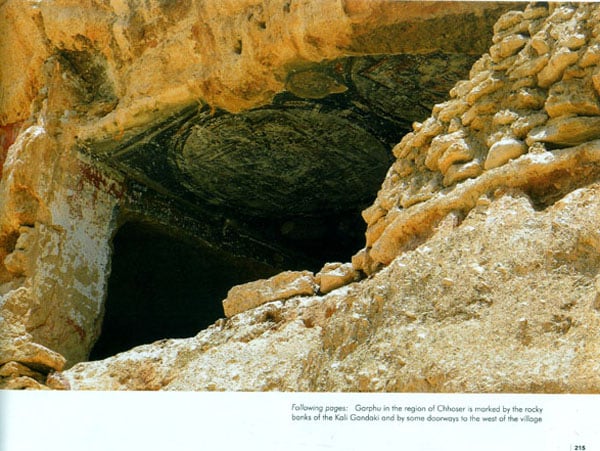


Mustang - The Culture and Landscape of Lo
Book Specification
| Item Code: | NAO814 |
| Author: | Michael Beck |
| Publisher: | Vajra Books, Nepal |
| Language: | English |
| Edition: | 2014 |
| ISBN: | 9789937623179 |
| Pages: | 290 (Throughout Color & B/W Illustrations) |
| Cover: | Hardcover |
| Other Details | 9.5 inch x 10.5 inch |
| Weight | 1.40 kg |
Book Description
“ The normals look like bandits with their swords tucked into their belts, their long unkempt hair, and their heavy wool and leather garments. Unsubmissive and restless, they are free master of the vast silences on the roof of the world, They are the only people I envy: they are unfettered, serene in their essential simplicity, ignorant of illusory architecture which time wears down and blows like dust before the wind. As they wander through those immense spaces they seems to be suspended between heaven and earth.
The landscape “ I had been prepared for a fairly barren land, but this was beyond everything I had imagined. How could any humans live here? What I saw below me was just chaos, and in my surprise I failed to grasp the strange beauty of this landscape.”
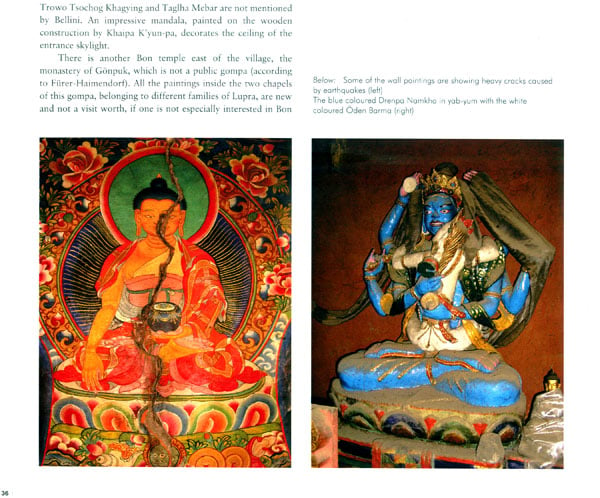
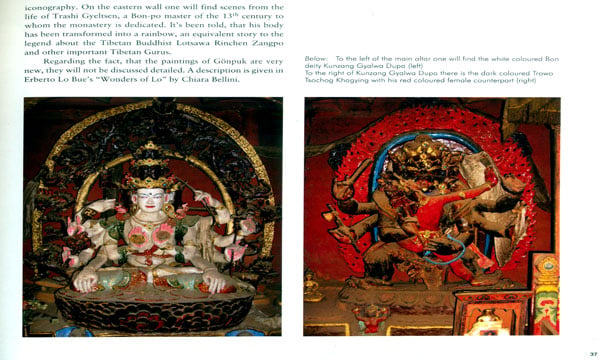
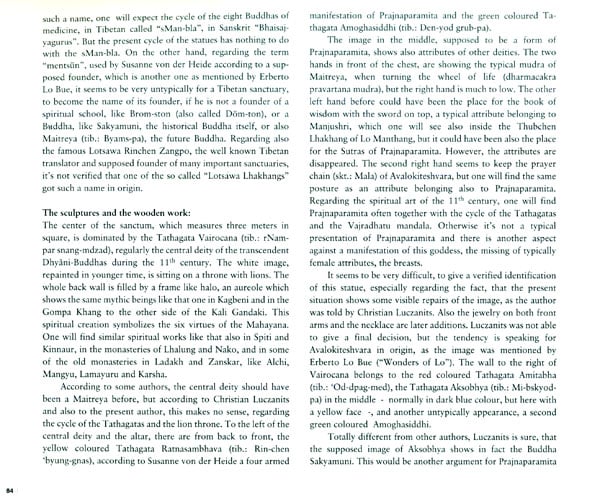
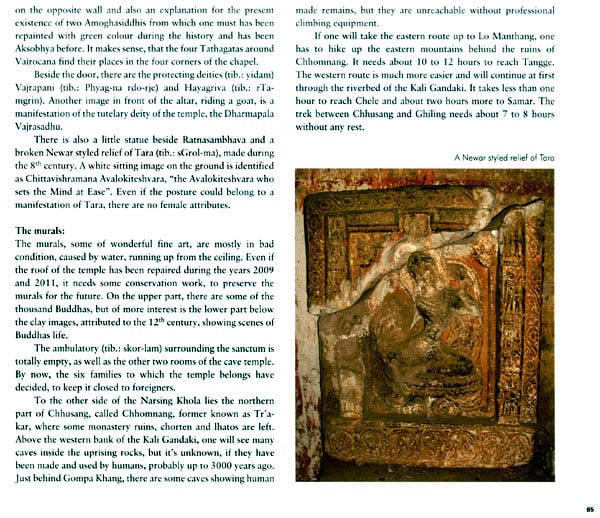
Mustang was and still is an enchanted region where nature and culture intermingled to keep a very old tradition alive. Culturally, geographically, and historically Tibetan, but within the Borders of Nepal , it has become a time capsule of Tibetan Heritage and a place where the rich traditionof Tibetan Buddhism is carried on to this.
People may wonder why and how communities may have chosen to settle in such unforgiving living conditions, but if you were actually living there, you would probably understand it by yourself.
There is a profound spiritual bond with nature and with the sacred keeping the locals strongly attached to this land. The harshness of the region, its remotness and its difficult access helped the Mustang people developing a unique culture based on simplicity,yet fullness.
In the past 15 years I’ve been involved in and unusual project sponsored by the American Himalayan Foundation, for the restoration of Tibetan monasteries scattered through the remote kingdom of Mustang, Nepal. The main aim of the project, apart from restoring 15th century wall paintings, was to form a local team that could have worked in the future without the help of foreign consultancy. Given that trainees were mainly farmers or people who never touched a brush, quite often not even a pen or a pencil, turned any tasks in something really challenging. The majority of the training had to be based on practice, and through that the main operations of restoration were successfully transferred. Even though all the operations are crucial to a proper restoration intervation, the aesthical aspect of the artwork, which is the key of any artwork, would strongly depend on how the pictorial integeration be carried out.
The western culture developed its concepts of conservation emphasizing the importance of the artwork and the artist himself, not considering at all the function of his creation. In this way, the pictorial integration was based on the respect of the artwork, meaning that reconstructions of missing parts were basically forbidden. This way of thinking cannot be applied in the eastern way of thinking for the artwork still has a function, especially from a religious point of view.
In all this years on the Himalaya I have matured the idea that we restores should try to come to terms with the locals and their philosophy. Conservation theories should be developed accordingly, and this is what we are trying to achieve in Mustang.
The essence of Mustang’s beauty I believe, is within the contrast between the desert-like landscape and the richness of the culture and the way they grew together in a thriving balance.
| Preface | 11 |
| Jomoson | 13 |
| South of Jomoson | |
| Thini Gaon | 16 |
| Garab Dzong | 24 |
| Hutsaptemga Gompa | 24 |
| Syang | 28 |
| Marpha | 28 |
| Kali Gandaki | 31 |
| Eklo Bhatti | 34 |
| Lupara | 34 |
| Jharkot | 38 |
| Dzong | 43 |
| Muktinath | 43 |
| Gyu La | 43 |
| Kagbeni | 45 |
| Tiri Gaon | 55 |
| Tangbe | 62 |
| Chhusang | 69 |
| Tetang | 99 |
| The western route between Chhusang and lo Manthang | |
| Chele | 99 |
| Taklam La/ Dajori La | 99 |
| Bhen La/ Beg La | 99 |
| Samar | 100 |
| Rangchyung Cave Cortan | 104 |
| Syanboche | 111 |
| Syanboche | 111 |
| Ghilling | 111 |
| Nyi La | 126 |
| Ghemi | 126 |
| Tsarng La | 135 |
| Dhakmar | 135 |
| Mui La | 138 |
| Lo Gekar Gompa | 138 |
| Lo Gekar Village | 143 |
| Marang La | 143 |
| Tsarng La | 155 |
| Sumda Chortan | 155 |
| Lo Manthang | 159 |
| Byams-pa Lhakhang | 164 |
| Thubchen Lhakhang | 166 |
| Shakya Chyyodi Gompa | 184 |
| Lo Kunphen Mentsi Khang | 184 |
| The King of Lo | 186 |
| Around Lo Manthang | |
| Khacho Dzong | 196 |
| Samduling | 196 |
| Namgyal | 197 |
| The Kabum Chortan of Lo | 199 |
| North/ Northest of Lo Manthang | |
| Nenyul | 200 |
| Konchokling Cave Temple | 200 |
| Nyiphu | 211 |
| Jhong Cave | 214 |
| Nupchoking Cave Temple | 214 |
| Rindzingling Cave Temple | 216 |
| Garpha | 216 |
| Kora La | 218 |
| Nyamdo | 218 |
| Kimaling | 219 |
| Thinggar | 219 |
| East of Lo Manthang | |
| Sam Dzong | 220 |
| Cho Dzong | 220 |
| The Eastern Route Between Lo Mathang and Chhusang | |
| Lo La | 220 |
| Dhi Gaon | 225 |
| Yara Gaon | 229 |
| Ghara Gaon | 232 |
| Luri Gompa | 232 |
| Luri Nunnery | 240 |
| Tashi Kabum Cave Chorten | 243 |
| Tangge | 252 |
| Narsing La/Paha | 260 |
| History of Lo | 262 |
| The Historical Trade route | 271 |
| Foreigner who entered Mustang Before 1991 | 277 |
| Biblography | 279 |