

Family Values System in Hindu
Book Specification
| Item Code: | UAR245 |
| Author: | Subhash Tomar |
| Publisher: | Edukeen Publisher |
| Language: | English |
| Edition: | 2019 |
| ISBN: | 9789389387100 |
| Pages: | 265 |
| Cover: | HARDCOVER |
| Other Details | 9.50 X 6.50 inch |
| Weight | 550 gm |
Book Description
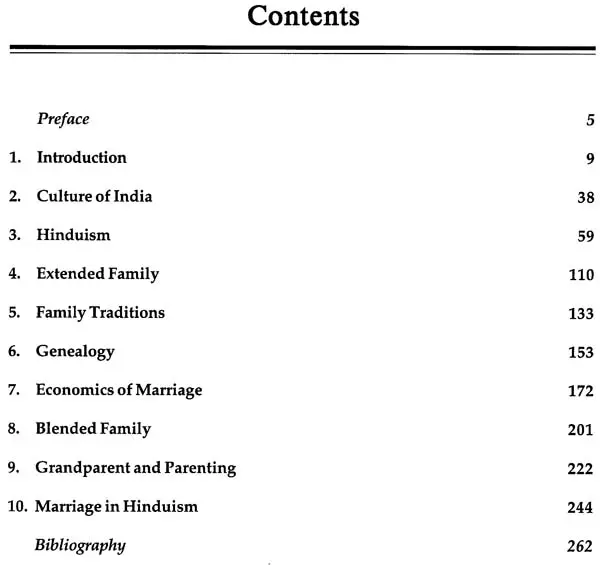
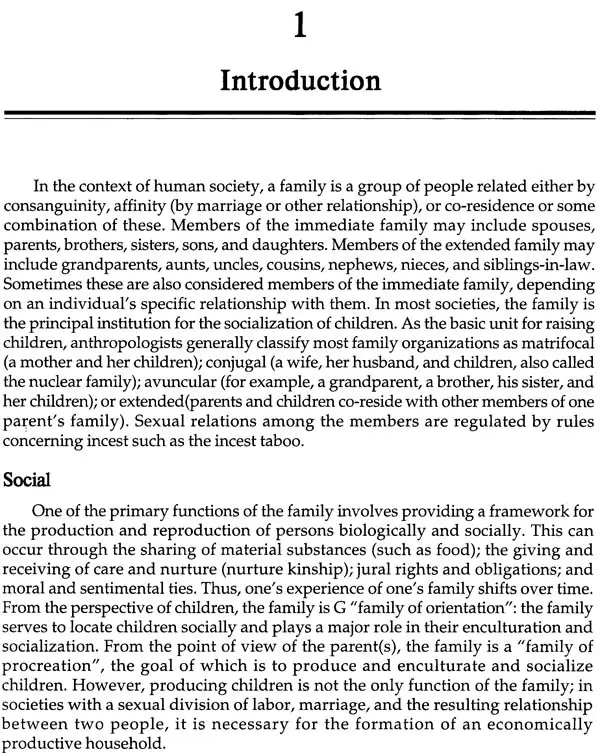
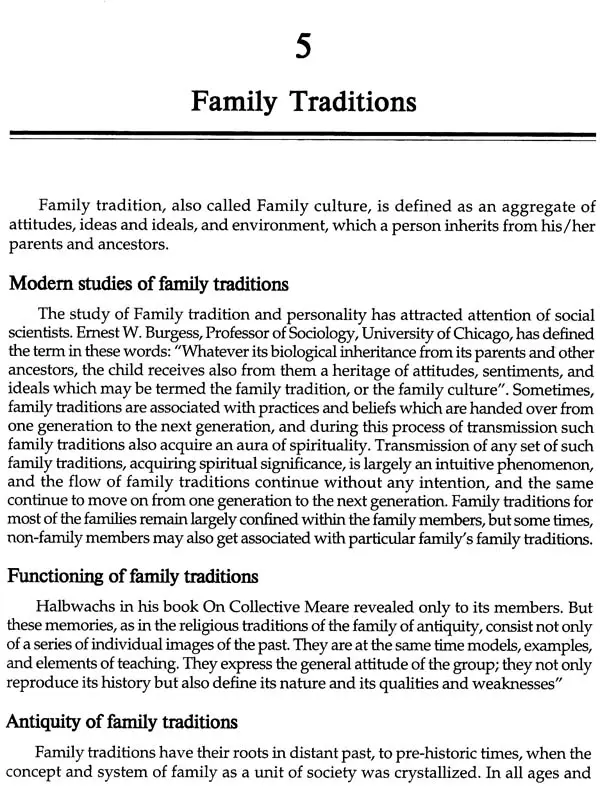
Family values, sometimes referred to as familial values, are traditional or cultural values that pertain to the family's structure, function, roles, beliefs, attitudes, and ideals. In the social sciences and U.S. political discourse, the term "traditional family" refers to a nuclear family a child-rearing environment composed of a breadwinning father, a homemaking mother, and their biological children; sociologists formerly referred to this model as the norm. A family deviating from this model is considered a nontraditional family. However, in most cultures at most times, the extended family model has been most common, not the nuclear family, and the nuclear family became the most common form in the U.S. in the 1960s and 1970s.
Journalist, photographer (sometimes Photojournalist) Subhash Tomar, is also an author and broadcaster. Though he mostly works freelance, sending his photos and articles to magazines, journals, and newspapers worldwide, he usually features as the Newspaper architecture and design correspondent. He has written many novels.
Family values, sometimes referred to as familial values, are traditional or cultural values that pertain to the family's structure, function, roles, beliefs, attitudes, and ideals. In the social sciences and U.S. political discourse, the term "traditional family" refers to a nuclear family " a child-rearing environment composed of a breadwinning father, a homemaking mother, and their biological children; sociologists formerly referred to this model as the norm. A family deviating from this model is considered a nontraditional family. However, in most cultures at most times, the extended family model has been most common, not the nuclear family, and the nuclear family became the most common form in the U.S. in the 1960s and 1970s. Several well- known online dictionaries define "family values" as the following: "The moral and ethical principles traditionally upheld and passed on within a family, as honesty, loyalty, industry, and faith." "Values especially of a traditional or conservative kind which are held to promote the sound functioning of the family and to strengthen the fabric of society." "Values held to be traditionally taught or reinforced within a family, such as those of high moral standards and discipline."
**Contents and Sample Pages**