

Rabindranath Tagore's Nationalism
Book Specification
| Item Code: | UAT989 |
| Author: | Rabindranath Tagore |
| Publisher: | JYOTI ENTERPRISES |
| Language: | English |
| Edition: | 2020 |
| ISBN: | 9788189580384 |
| Pages: | 96 |
| Cover: | PAPERBACK |
| Other Details | 8.50 X 5.50 inch |
| Weight | 130 gm |
Book Description
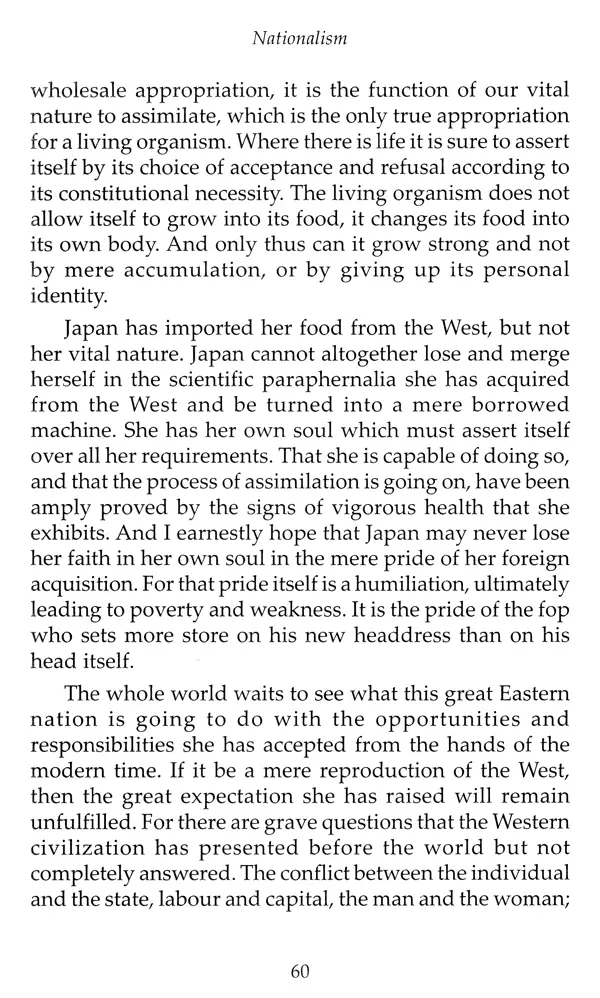
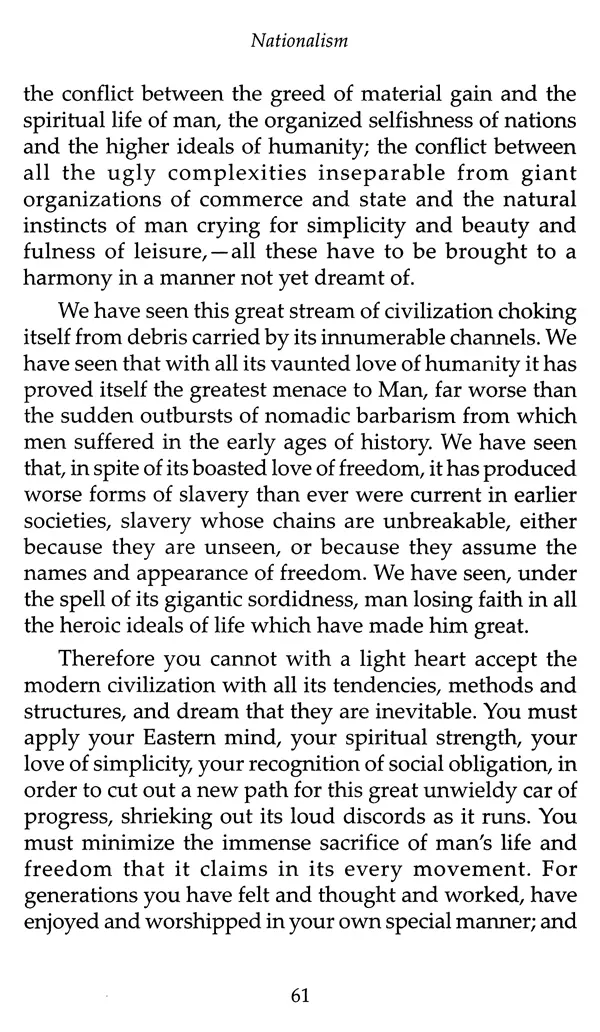
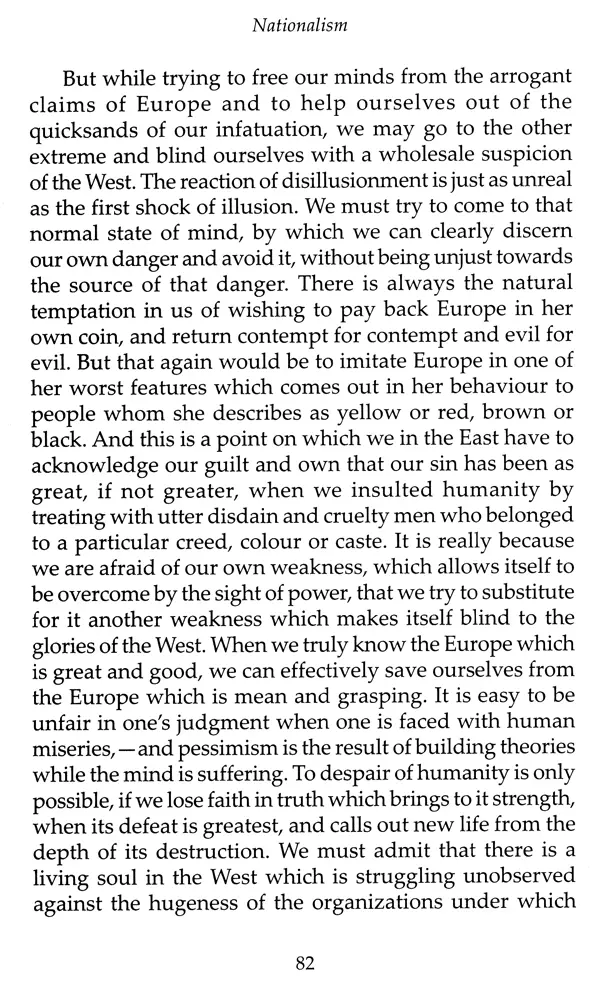
Few people in the history of India have had the clarity of thought that Gurudev Rabindranath Tagore did. This clashed with those of his peers.
He joined global rationalists of the time, international citizens who like him saw the menace that was ravaging through the world in these guises. They recoiled with horror when they saw the full force of the idea of nationalism and patriotism as the world plunged into World War I. It was during this first Great War, that Tagore crystallized his ideas into a lecture he delivered across the world. These were later compiled as a book titled 'Nationalism' in 1917. It has ideas that can guide and even help understand the current discourse about nationalists and anti nationalists raging in India.
A Bengali polymath who reshaped Bengali literature, music, and Indian art with Contextual Modernism in the late 19th and early 20th centuries, Rabindranath Tagore became the first non-European to win the Nobel Prize in Literature in 1913.
Born in Calcutta in 1861 to parents Debendranath Tagore and Sarada Devi, he was raised mostly by servants. The Tagore family was at the forefront of the Bengali Renaissance. They were regular hosts of the publication of literary magazines, theatre, and recitals of Bengali and Western classical music. Tagore avoided classroon schooling and loathed formal education. His brother tutored and physically conditioned him. He learned drawing, anatomy, geography, history, literature, mathematics, Sanskrit and English-his least favourite subject. His scholarly travails at the local Presidency College apanned a single day. Years later he held that proper teaching does not explain things but stokes curiosity.
Tagore's father wanted him to become a barrister so he enrolled at a public school in Brighton, East Sussex, England in 1878, but returned to Bengal degreeless in 1878, resolving to reconcile Europeon novelty with Brahmo traditions. He married Mrinalini Devi in 1883 with whom he had five children, two of whom died in childhood.
**Contents and Sample Pages**