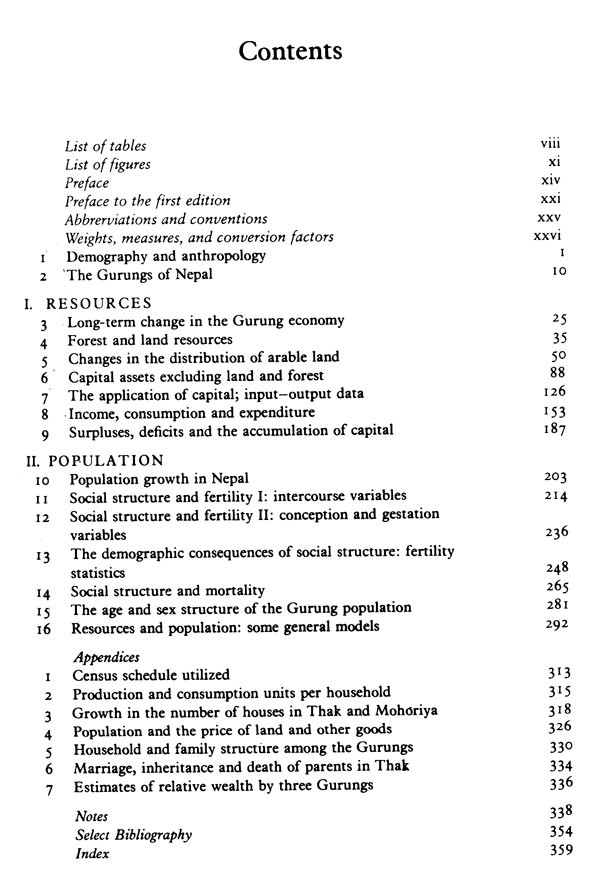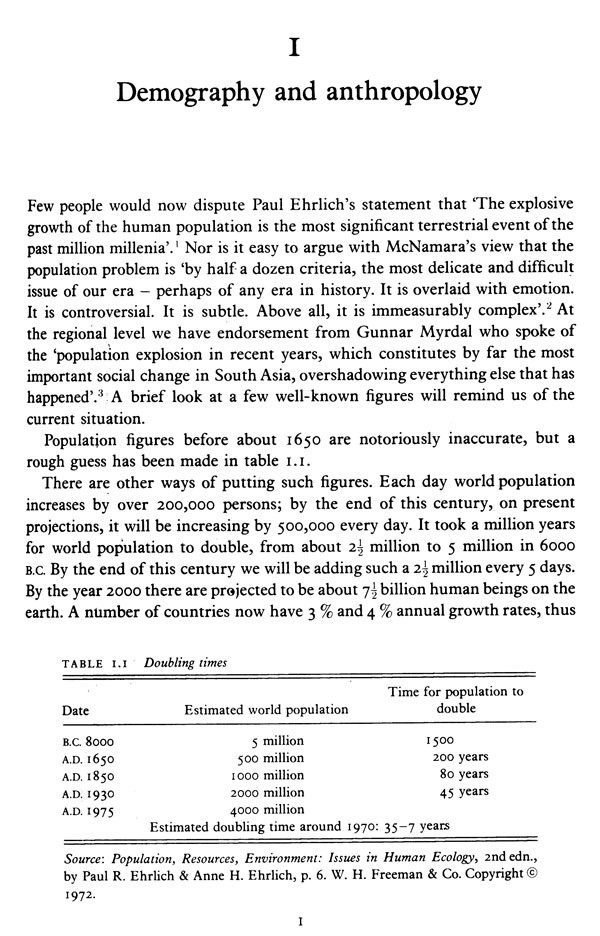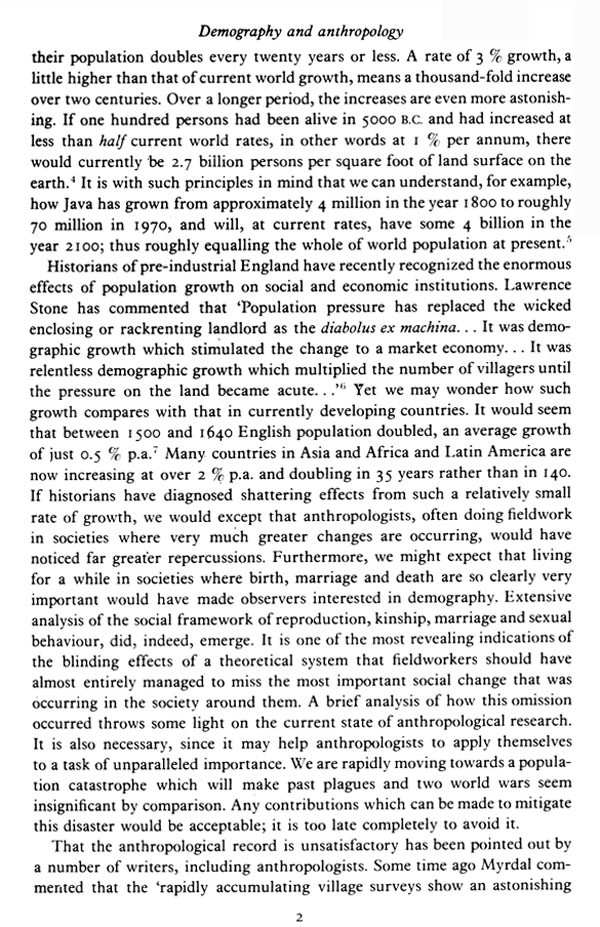


Resources and Population- A Study of the Gurungs of Nepal
Book Specification
| Item Code: | UAR867 |
| Author: | Alan Macfarlane |
| Publisher: | Ratna Pustak Bhandar, Nepal |
| Language: | English |
| Edition: | 2003 |
| ISBN: | 9789993303779 |
| Pages: | 386 |
| Cover: | PAPERBACK |
| Other Details | 9.00 X 6.00 inch |
| Weight | 590 gm |
Book Description
Himalayas during this century, and investigates how the destruction of forests and the growth of settled rice cultivation have occurred, and some of the consequences. The Gurungs are famous as recruits to the Gurkha regiments of the British and Indian armies, and the demographic and economic effects of foreign merce nary labour are among the topics examined.
The book is a contribution to the literature on population patterns in small, non-industrial communities and supplements our information on domestic economics. It also contri butes to the debate, centred on the work of Malthus and Boserup, on the relation between agricultural system and population growth. The conclusions are extremely gloomy, especially when set within the context of more general theories concerning the relations between population and economy.
In one sense, at least on the surface, there has been little change in the village since my first fieldwork. The basic agricultural and craft techniques described in 'Resources and Population' are still used. The amount of labour input for various tasks is roughly the same and the village lands shown in the maps have not changed greatly. The main village and the nearby hamlets are not greatly changed in their physical form, though a number of houses have tin roofs and there is now a diesel mill and two television sets (powered by car batteries) in the village. The track up the valley is somewhat improved and it is possible to get a car to the bottom of the steep climb up to the village, saving a three hour walk. The water pipe is larger and a number of houses have taken small pipes off it. Yet there is still no electricity, no telephone, no motorable road, and no health post. The children no longer have to climb down to a school forty minutes below the village, as there is a village school with five classes in it. There is a government office and a large water tank with watchman's house (unoccupied). The two 'shops' have a much wider range of goods, including beer and coke, than in 1968 when they basically only had tea.
**Contents and Sample Pages**