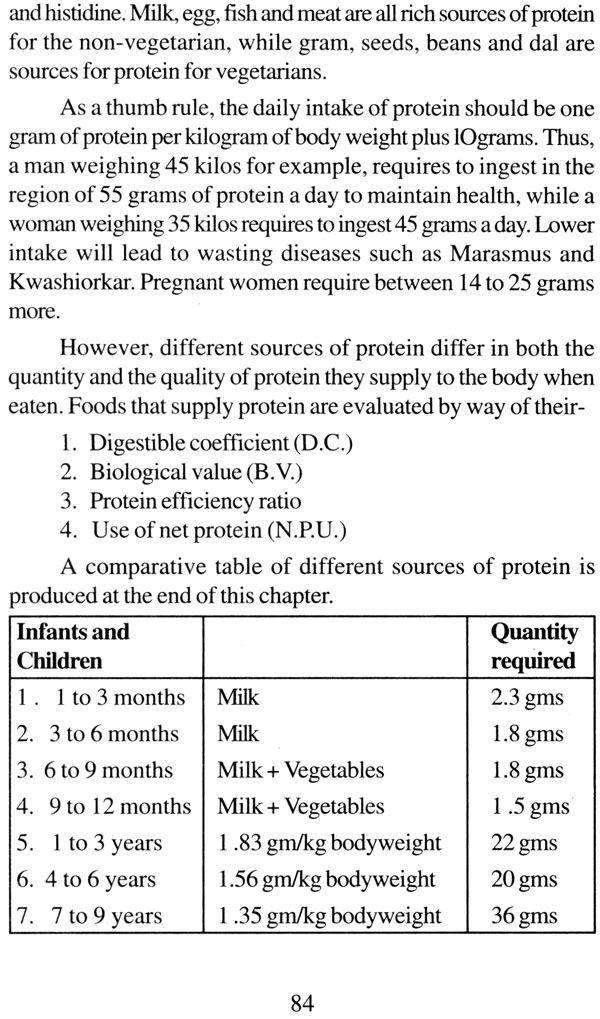


Speaking of Ayurveda Yoga and Nature Cure
Book Specification
| Item Code: | NAL032 |
| Author: | Dr. T. L. Devaraj |
| Publisher: | Chaukhambha Orientalia |
| Language: | English |
| Edition: | 2015 |
| ISBN: | 9788189469894 |
| Pages: | 313 (62 B/W Illustrations) |
| Cover: | Hardcover |
| Other Details | 8.5 inch x 5.5 inch |
| Weight | 440 gm |
Book Description
Prof. Dr. Theranya Lakkanna Gowda is an erudite scholar of Ayurveda and Ambassador of Ayurveda as he spreads Ayurveda Worldwide Through his 44 Books on Ayurveda, articles on Ayurveda indifferent medias and free consultations to public.
He had written 44 books on Ayurveda in English, Kannada and Hindi and English books are exported all over the world and two books are translated into Russian language.
He is awarded National Award, International Service Award, Dhanwantari Gold Medal Award, Karnataka State Rajyotsava Award, Ayurveda Academy Award and so on. The Present book deals with details of health promoting ideas as Divacharya, Ritucharya, Sadachara, Sadvritta, Nishacharya and Brahmacharya. Yoga and Nature cure aspects are also to help in maintaining bodily and mental health to prevent bodily and physio disorders. So, totally one can attain Dharma, Artha and Kama in this world and salvation (Moksha) after death. It is hard book for the readers to keep their health in whim mentally and physically and to live long for more than one hundred years.
Ayurveda, an ancient science of medicine practised in India, has postulated some of the best principles for maintaining and preserving the health of any individual. It lays down certain rules, not only for healthy living, but also for-hygiene - a key requisite for health.
Health is an important factor in attaining individual goals, whether it be wealth or happiness, material or spiritual, or indeed Moksha or salvation. Ayurveda stresses that the four influencing factors that play their part in gaining Moksha in the after-life are:
1. Dharma - truthful living
2. Artha - generating money and resources
3. Kama - fulfillment of desires, including the sexual
4. Moksha, itself - attainment of life's ultimate goal: Salvation
Ayurveda propounds healthy living by following a set of regimen - on a seasonal, daily and even nightly basis, coupled with sadvritta. Regimes encompass food and activity and these are detailed in this book.
The modern age is characterised by pressures - hurry, worry, the pressures of making a quick buck and the temptations of corruption. These are bound to lead to deviation from the safe routines of diet and habit, and so, to imbalances of health. The old practices of eating meals at fixed times, starting the day with exercise, supplemented with oil baths and massage, all contributed in keeping old age at bay, by keeping one's body in prime fitness, by keeping the eye keen.
However, in modern India, deviation from these principles and the effect of all manner of pollution, from food adulteration to pollution in the air and water, down to even the very lifestyles that are led, is the order of the day. Ayurveda offers relief to those suffering on account of these, whether rich or poor, in all walks of life. This book covers the ameliorating aspects of Ayurveda, for the individual and for communities. The book has four sections starting with Part A which details the historical background and basic concepts of Ayurveda before moving on to socially related issues such as Family Planning. Ayurveda developed in order to address such community needs and this segment will examine issues of contraception and conception - such as conceiving a child of desired gender. Part B deals with topics such as the environmental perspectives of Ayurveda and issues related to the construction of communities - whether they happen to be schools, villages or cities or even just a basic lavatory. Both past and present practices are explained for the benefit of readers.
There is a special section, Part C, which is devoted to Nisargopacharam or Nature Cure, based upon the axiom of the five bhutas - air, earth, fire, water and space. These are the basic components that make up every human being, though the proportions vary from person to person. The fact is that these elements, the five bhutas, make up nature itself, Man being only a microcosm of the macrocosmic universe. This section is illustrated with photographs.
Also illustrated is the next section of the book, Part D, which deals with the subject of Yoga Vijnanam, the linkage of Yoga with Ayurveda. Postures, such as Asanas and Pranayama, which help to maintain health and can cure health problems, are explained for the benefit of the readers.
This book should prove to be valuable not only for general readers, for whom it contains matter related to the prevention of disease, protection of health and prolongation of life, but also for those students of Ayurveda who are studying for their B.A.M.S. degrees, as it covers their required curriculum.
| Preface | v - vii | |
| Acknowledgement | x | |
| Part A | PRINCIPLES OF HEALTH AND LONGEVITY (SWASTHAVRITTA VIJNANAM) | |
| 1 | Derivation and Definition of Swasthavritta | 3 |
| 2 | Historical. Background of Swasthavritta | 6 |
| 3 | The Physically Perfect Human Body | 8 |
| 4 | Daily Duties and Health | 14 |
| 5 | Sleep and Health | 25 |
| 6 | Sex and Health | 27 |
| 7 | Seasonal Conduct and Health | 30 |
| 8 | Doshas and Health | 34 |
| 9 | Spiritual and Mental Health | 39 |
| 10 | Satvadi Gunas and Health | 41 |
| 11 | Mental Health | 43 |
| 12 | Measures to Maintain Health | 47 |
| 13 | The Defective Constitution | 50 |
| 14 | Ojas and Health | 52 |
| 15 | Perspectives About Food | 54 |
| 16 | Swasthavritta in Women | 58 |
| 17 | Swasthavritta in the Young and the Old | 62 |
| 18 | The Right Conduct (Sadvritta) | 64 |
| 19 | The Impact of Occupation on Health | 67 |
| 20 | Public Health | 71 |
| 21 | Health for the Military | 75 |
| 22 | Prevention of Disease | 78 |
| 23 | Maintaining Health Statistics | 81 |
| 24 | Modern Nutrition | 83 |
| 25 | Samshodhana and Samshamana | 88 |
| 26 | Rasayana and Vajeekarana | 96 |
| 27 | Effect of Location | 101 |
| 28 | School Health Programmes | 103 |
| 29 | Family Welfare Programmes | 104 |
| 30 | Prophylactic Measures | 106 |
| 31 | Disposal of Faeces | 115 |
| 32 | Public Health Administration | 119 |
| 33 | Ayurveda and Family Planning | 121 |
| Part B | THE SCIENCE OF SOCIAL AND PERSONAL HYGIENE (SAMAJIKA SWASTHAVRITTA VIJNANAM AND VAIYUKTIKA SWASTHVRITTA) | |
| 34 | The Science of Social and Personal | 135 |
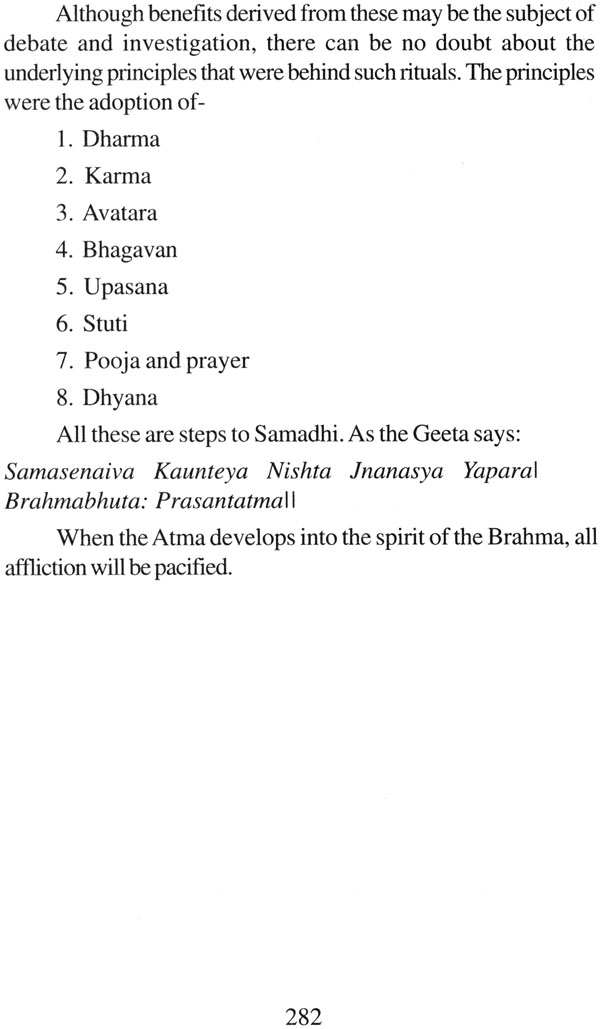
| 35 | Country or Area (Desna) | 138 |
| 36 | The Food We Eat (Ahara) | 143 |
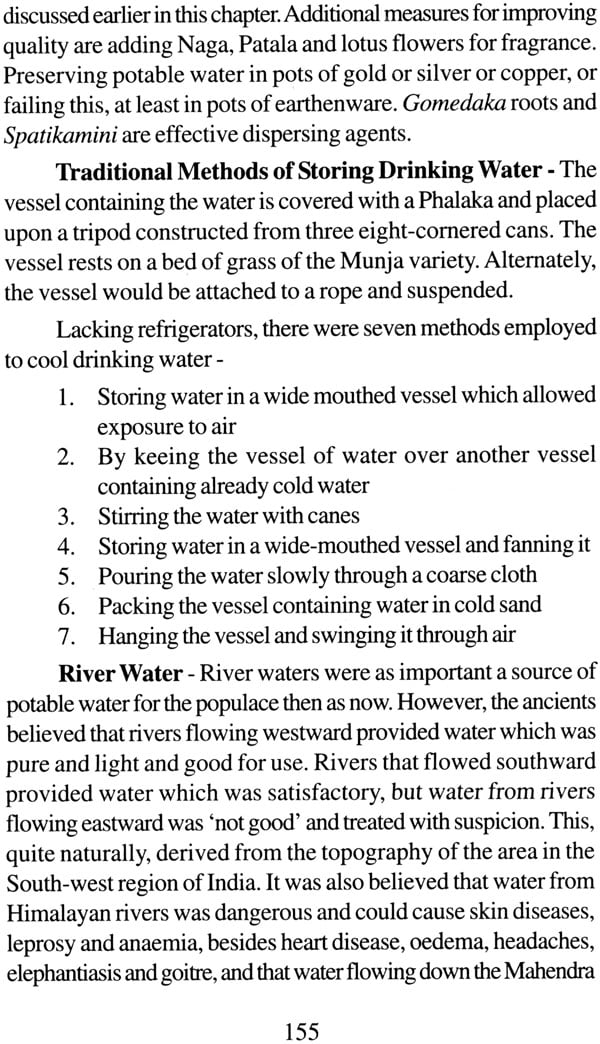
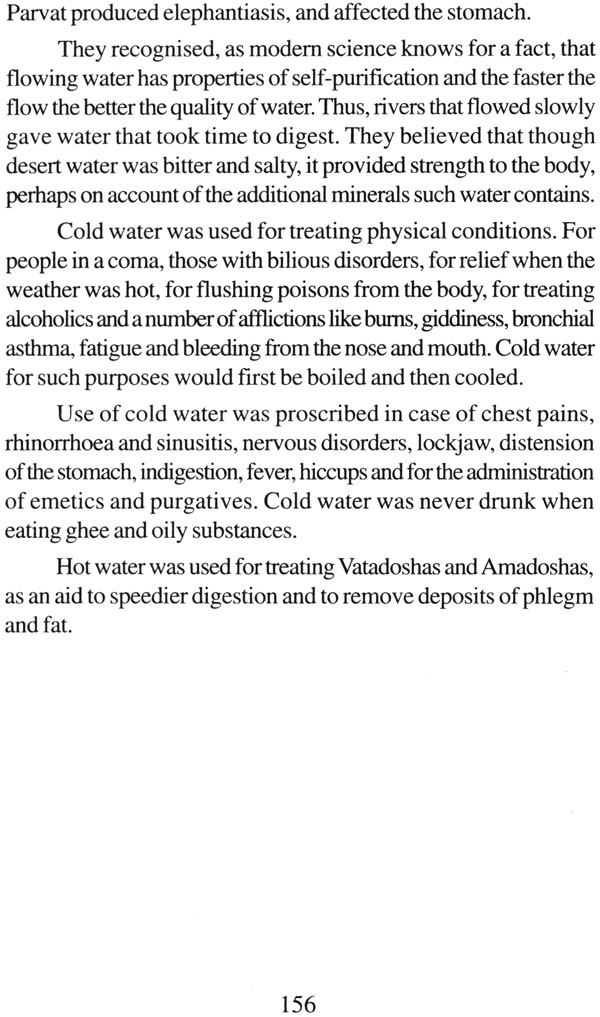
| 37 | Water (Udaka) | 150 |
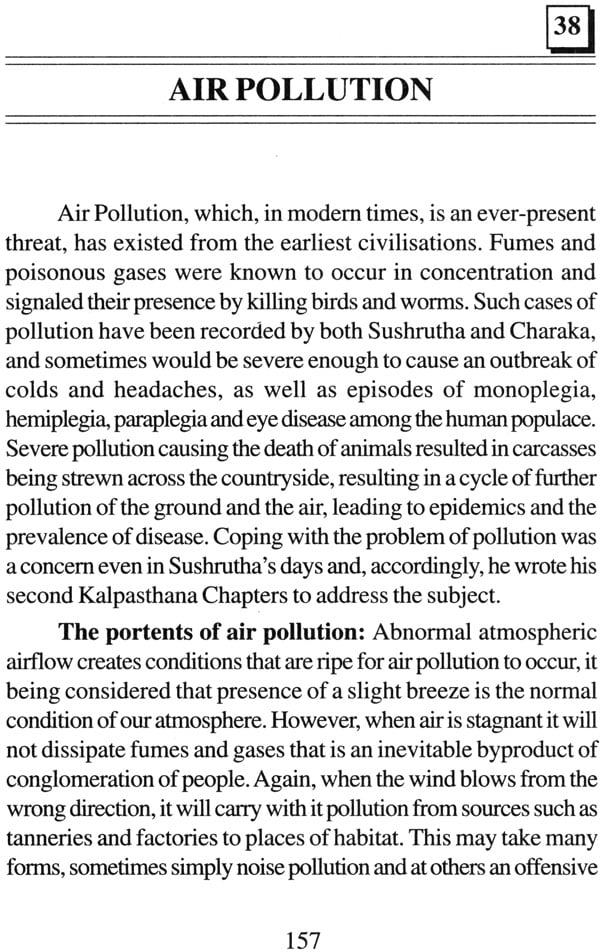
| 38 | Air Pollution | 157 |
| Part C | NATURE CURE | |
| (NISARGOPACHARAM) | ||
| 39 | Introducing Nisargopacharam | 165 |
| 40 | Hydrotherapy | 167 |
| 41 | Mudbaths and Prakshalana | 170 |
| 42 | Steam Inhalation and Sudation Therapy | 177 |
| 43 | Sauna Baths | 179 |
| 44 | Massage | 182 |
| 45 | Fasting | 184 |
| 46 | Exercise (Vyayama) | 186 |
| 47 | Enema Therapy (Vasti Karma) | 188 |
| 48 | Vaginal Douche (Yoni Prakshalana) | 190 |
| 49 | The Sun Bath | 192 |
| Part D | THE SCIENCE OF YOGA (YOGA VIJNANAM) | |
| 50 | How Ayurveda Relates to Yoga (Swasthavritta Vijnanam) | 197 |
| 51 | Description of Yoga in Ayurveda | 201 |
| 52 | The Role of Yoga as a Safeguard for Health | 204 |
| 53 | The Origin and Structure of Yoga | 208 |
| 54 | Regulations for Yoga Learners | 214 |
| 55 | The Sun Salutation (Surya Namaskara) | 217 |
| 56 | Some Important Postures (Asanas) | 222 |
| 57 | Breath Control (Pranayama) | 239 |
| 58 | Cleaning Internal Tracts and Facets of Yoga (Shatkarma and Samadhi) | 251 |
| 59 | Concepts of Ida and Pingla | 261 |
| 60 | Nasal Therapy (Nauli Karma) | 264 |
| 61 | Flushing the Intestines (Vasti Karma) | 267 |
| 62 | Exercising the Eyes (Trataka) | 269 |
| 63 | Sub-Routines (Bandha) | 271 |
| 64 | Yoga and Ayurveda as Relievers of Stress and Unhappiness | 274 |
| 65 | Rajayoga and Hathayoga | 277 |
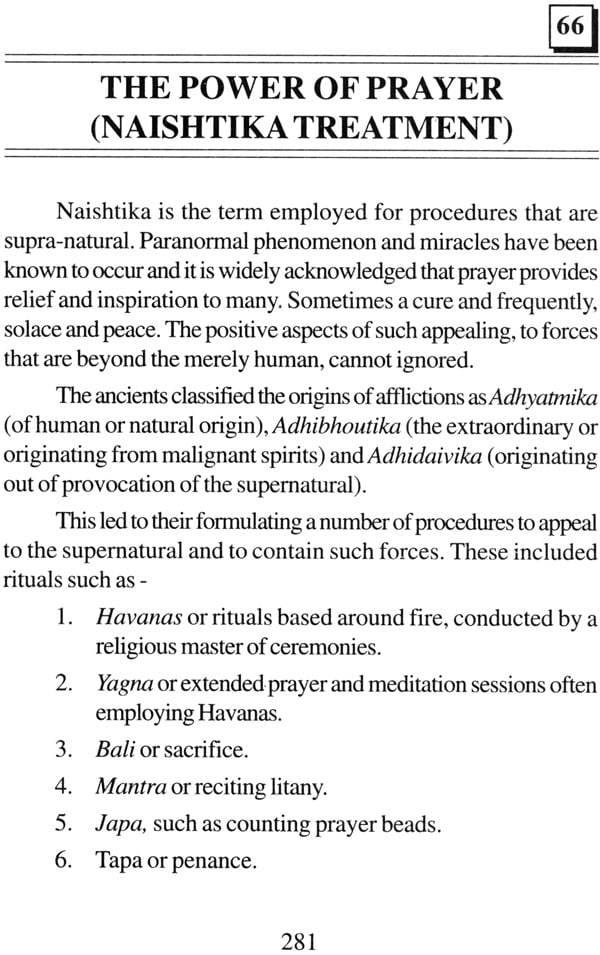
| 66 | The Power of Prayer (Naishtika Treatment) | 281 |
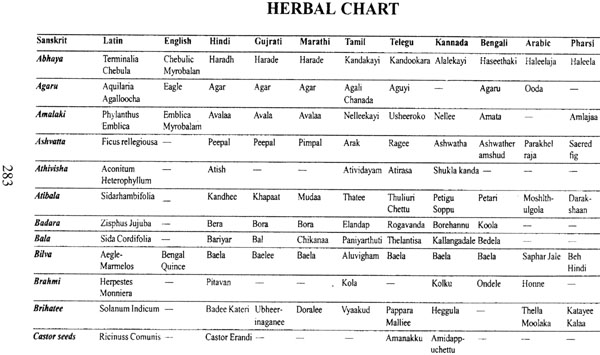
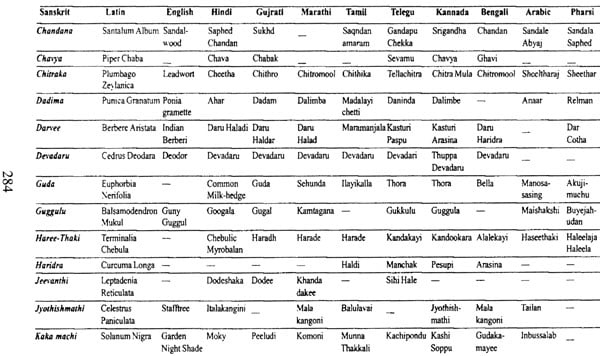
| Herbal Chart | 283 | |
| Bibliography | 289 | |