

Sri Hari- Nama
Book Specification
| Item Code: | AZA330 |
| Author: | Bhaktivinoda Thakura |
| Publisher: | Rupa Ragunatha Vani Publications |
| Language: | English |
| Edition: | 2017 |
| ISBN: | 9788193456828 |
| Pages: | 184 |
| Cover: | PAPERBACK |
| Other Details | 8.5 x 5.5 inches |
| Weight | 200 gm |
Book Description
The ten kinds of offenses should be considered. In the beginning, when one is initiated into the chanting of the Hare Krsna mahā-mantra, there are naturally many offenses. Therefore the devotee should very carefully try to avoid these offenses and chant purely. This does not mean that the Hare Krsna mahā-mantra is sometimes pure and sometimes impure. Rather, the chanter is impure due to material contamination. He has to purify himself so that the holy names will be perfectly effective. Chanting the holy name of the Lord inoffensively will help one get immediate shelter at Krsna's lotus feet. This means that by chanting purely, one will immediately be situated on the transcendental platform. We should note, however, that according to Sri Caitanya Mahāprabhu's instructions, one should not wait to purify himself before chanting the Hare Krsna mantra. Whatever our condition may be, we should begin chanting immediately.
- Śrī Caitanya-caritāmrta Madhya 25.199 purport
hare krsna hare krsna krsna krsna hare hare hare rāma hare rāma rāma rāma hare hare
ei śloka nāma bali” laya mahā-mantra sola-nāma batriśa-aksara ei tantra
“Hare Krsna Hare Krsna Krsna Krsna Hare Hare Hare Rāma Hare Rāma Rāma Rāma Hare Hare. This verse is called the holy name, the mahā-mantra. It contains sixteen holy names of the Lord composed of thirty-two syllables.”
In the year 1884, Śrīla Bhaktivinoda Thākura, the great reviver of pure devotional service to Lord Caitanya Mahāprabhu in the modern age, delivered a very important lecture on the significance of the chanting of the holy name without offenses in Bengali in the Hari-bhakti-pradāyinī Sabhā in Calcutta. He then printed it in the form of a pamphlet with the title Sri Hari-nāma and had it extensively distributed during his Nāmahatta preaching
Later, his able son and extraordinarily empowered eternal associate and follower, Śrīla Bhaktisiddhānta Sarasvati Thākura Prabhupāda, reprinted this pamphlet in 1924 after he established the Gaudīya Matha.
In 1944, His Divine Grace A.C. Bhaktivedanta Swami Prabhupāda, paraphrased the first few paragraphs of this pamphlet in English as “Message of Thakur Bhakti Vinode” in the very first issue of his Back To Godhead magazine.
So it is with pleasure that we offer this text to the community of Thākura Bhaktivinoda's ardent followers. Concerning the writings of Śrīla Bhaktivinoda Thākura, Śrīla Prabhupāda has noted:
The statements of Thakura Bhaktivinode are as good as scriptures because he is liberated person.
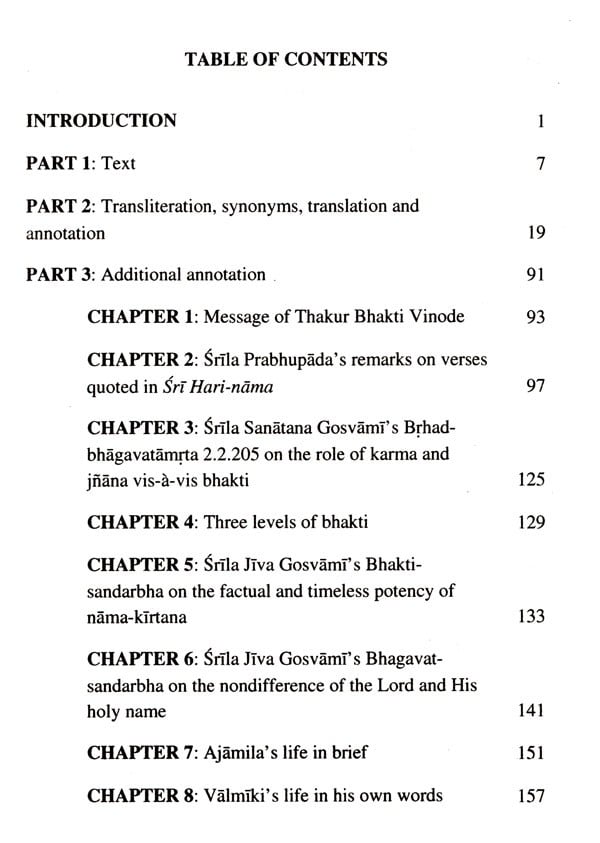
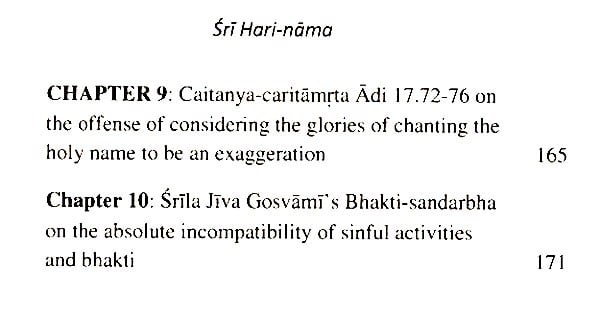
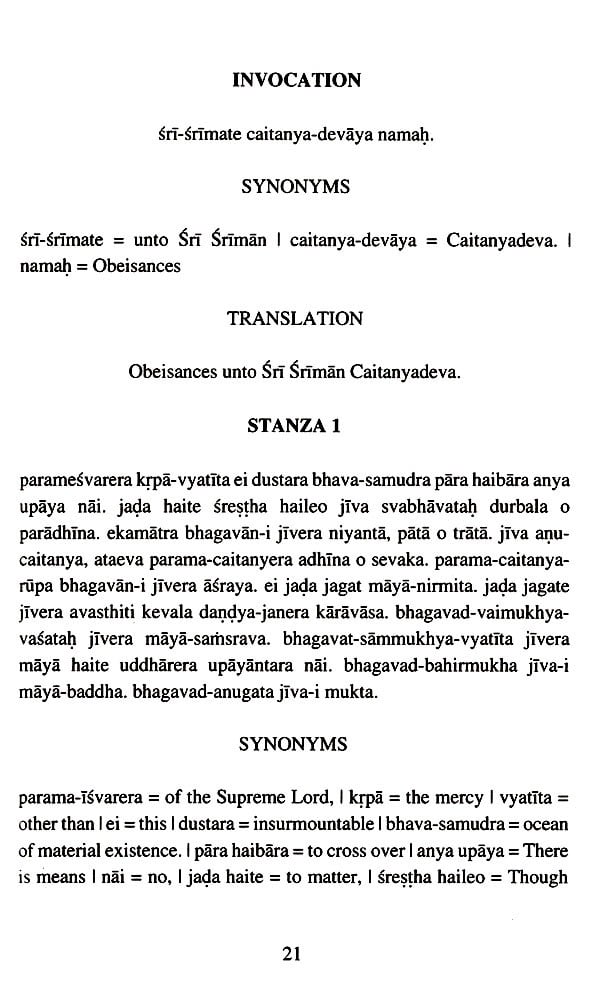
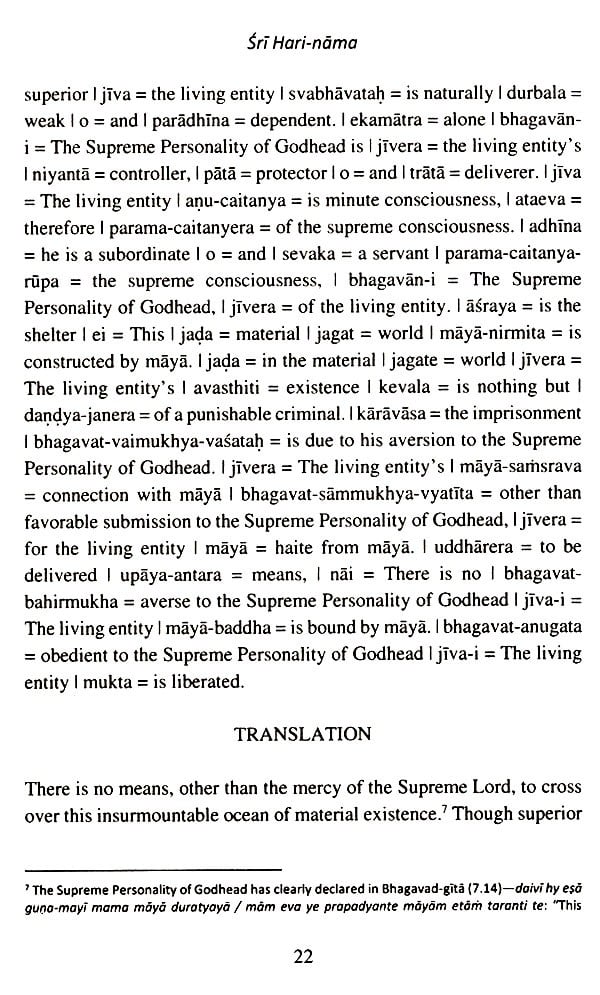
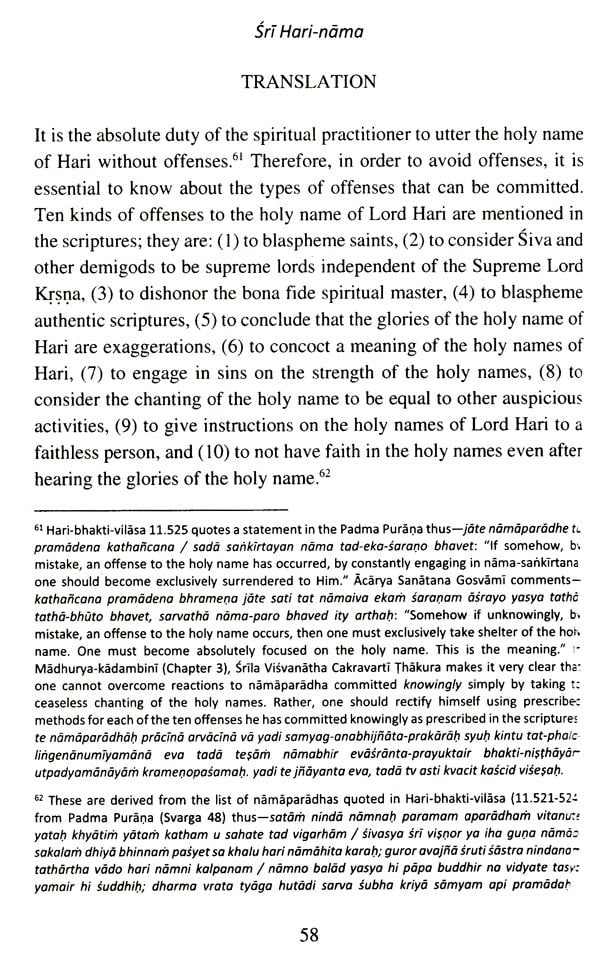
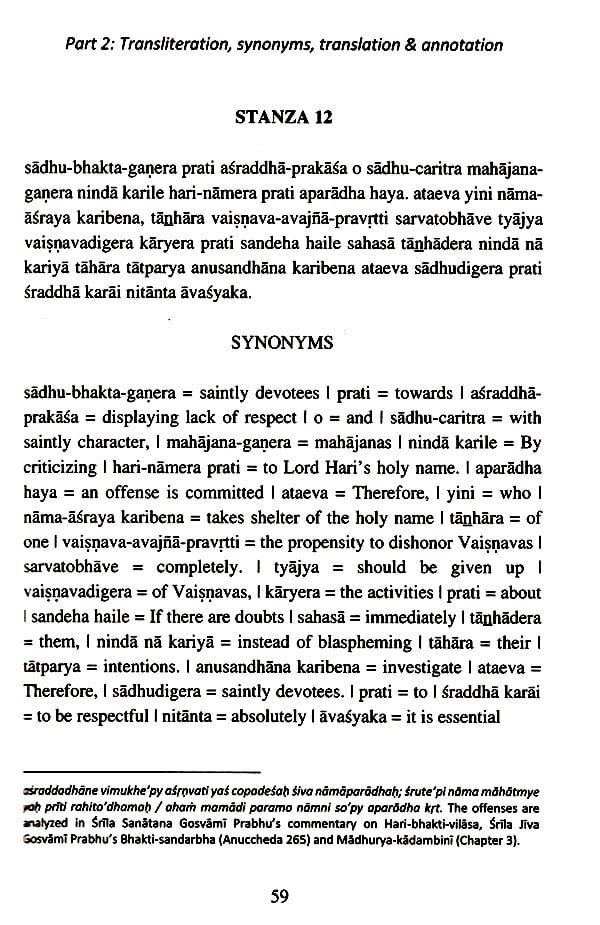
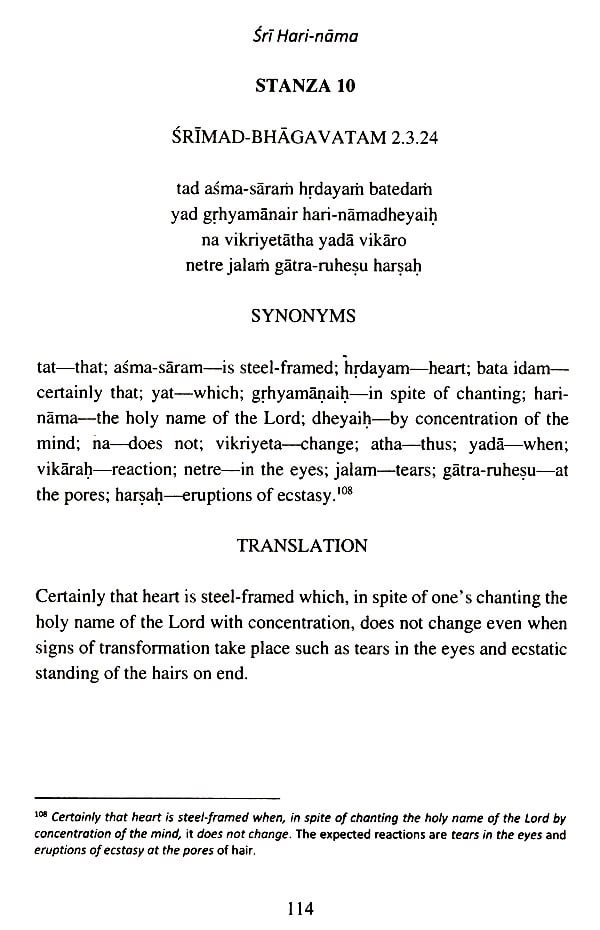
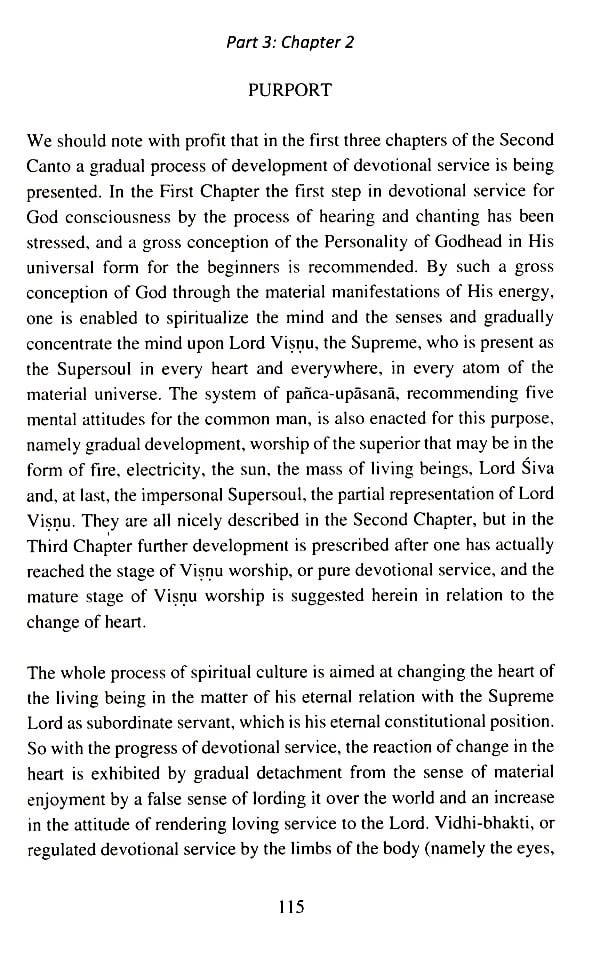
Therefore, in this edition we have divided the text of Śrīla Bhaktivinoda Thākura's Sri Hari-nāma into stanzas and then provided synonyms and translation. We have presented the Bengali text in the Bengali script as it is found in the 1924 Gaudīya Matha edition as Part 1 of this book. In Part 2, we have presented one stanza at a time, each followed by a roman transliteration of the Bengali text, contextual Bengali-English (or Sanskrit-English, as the case may be) synonyms and then a translation
**Contents and Sample Pages**