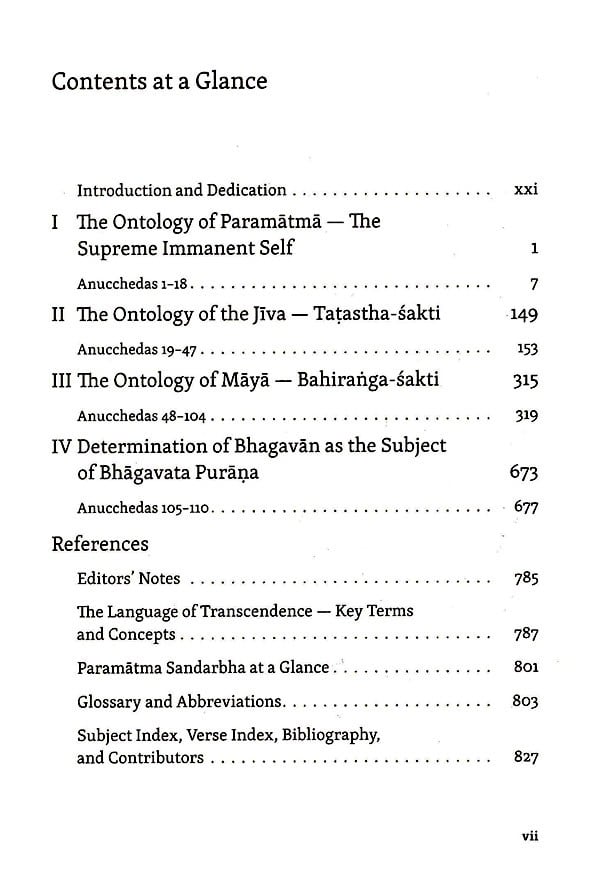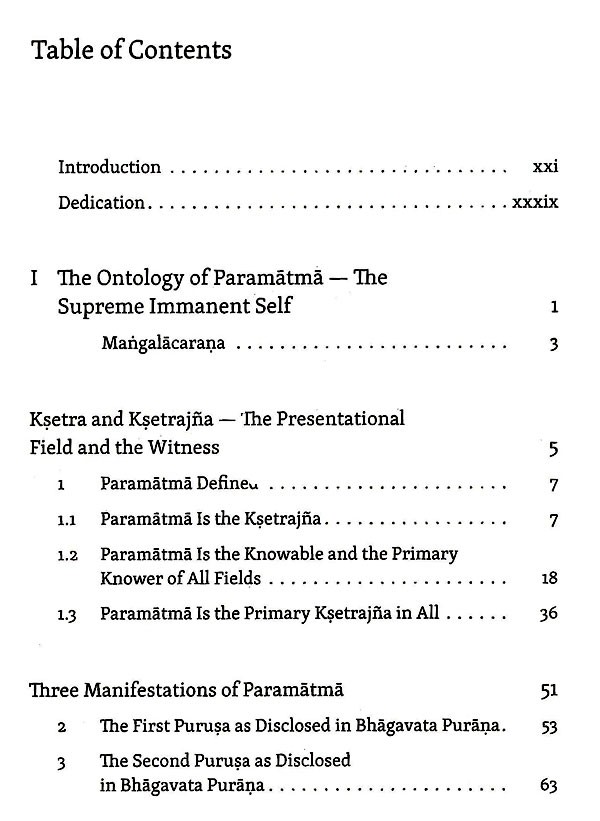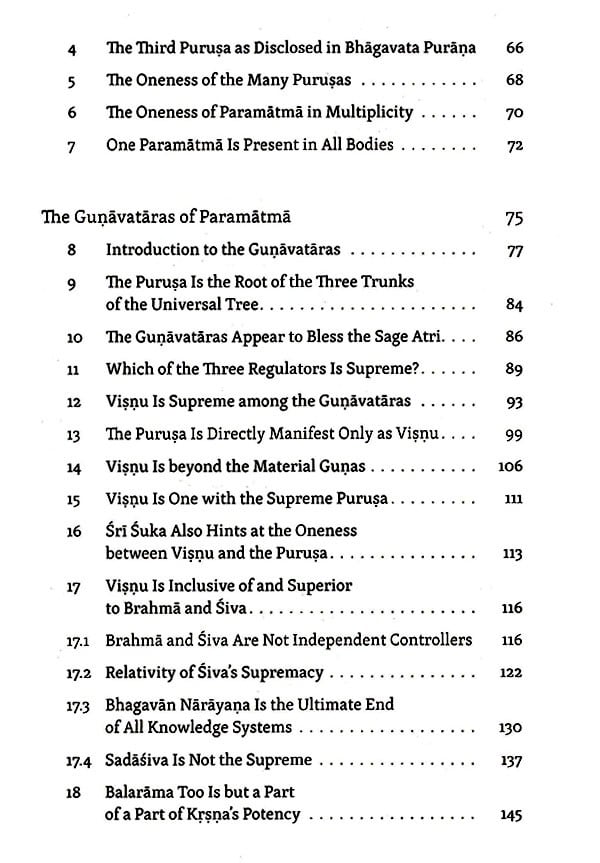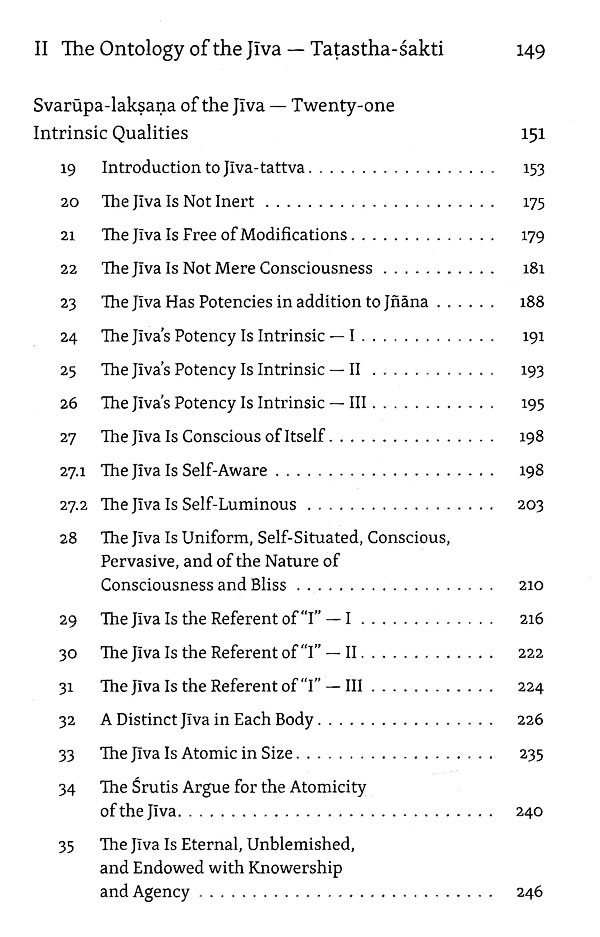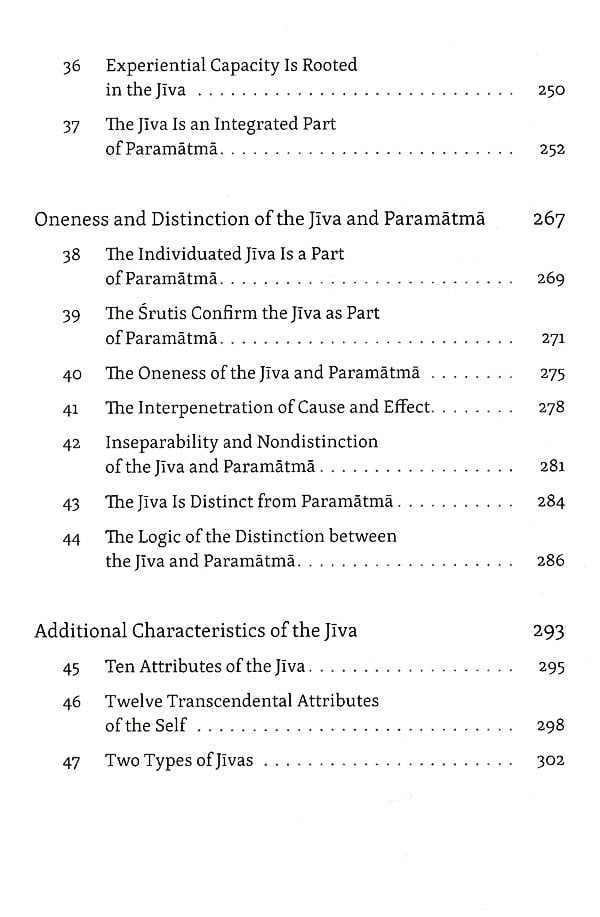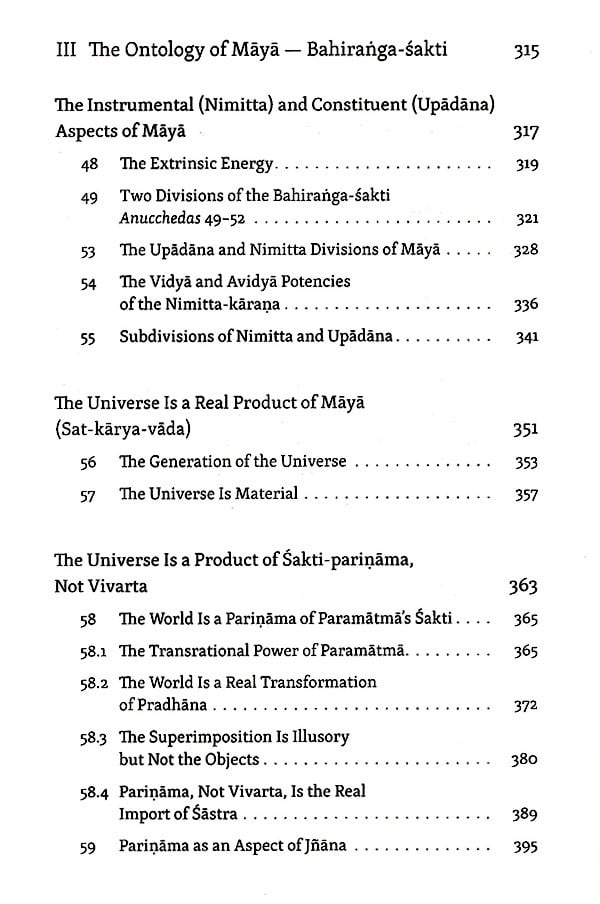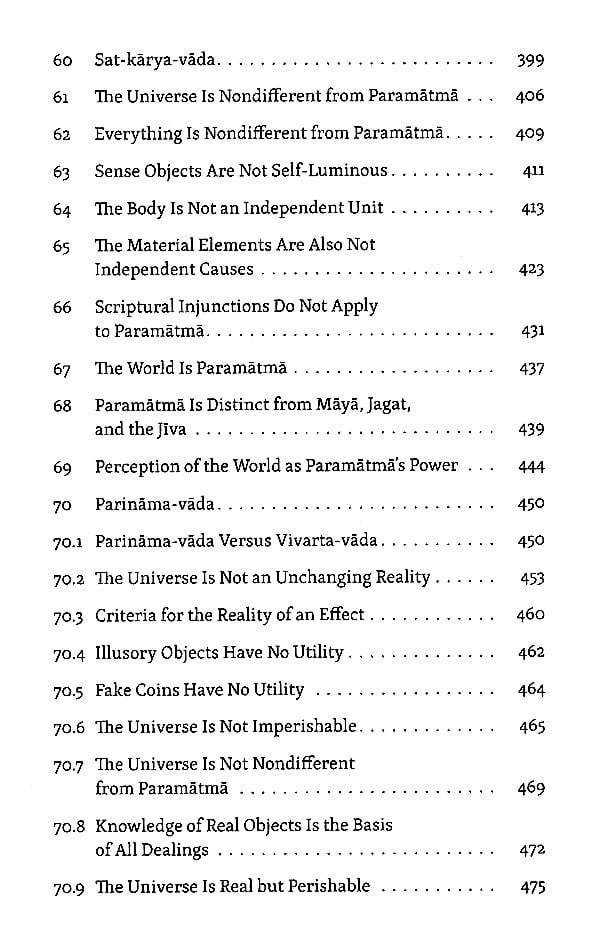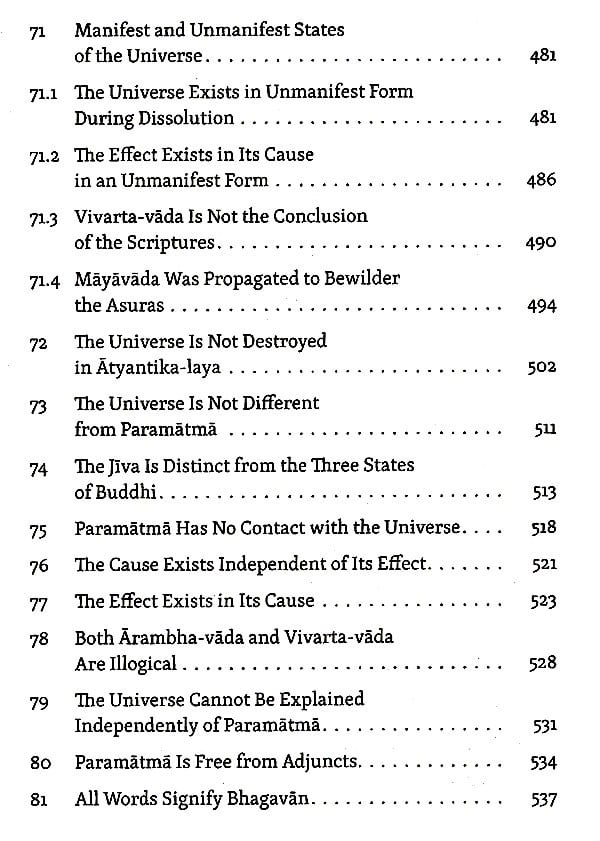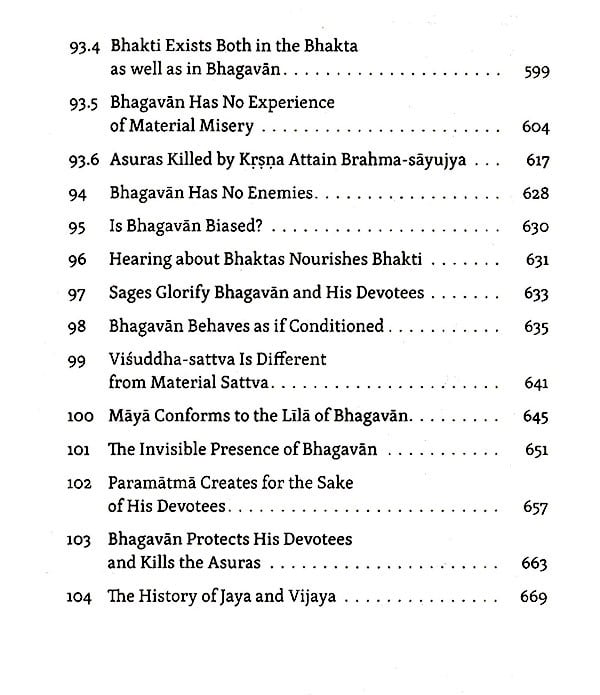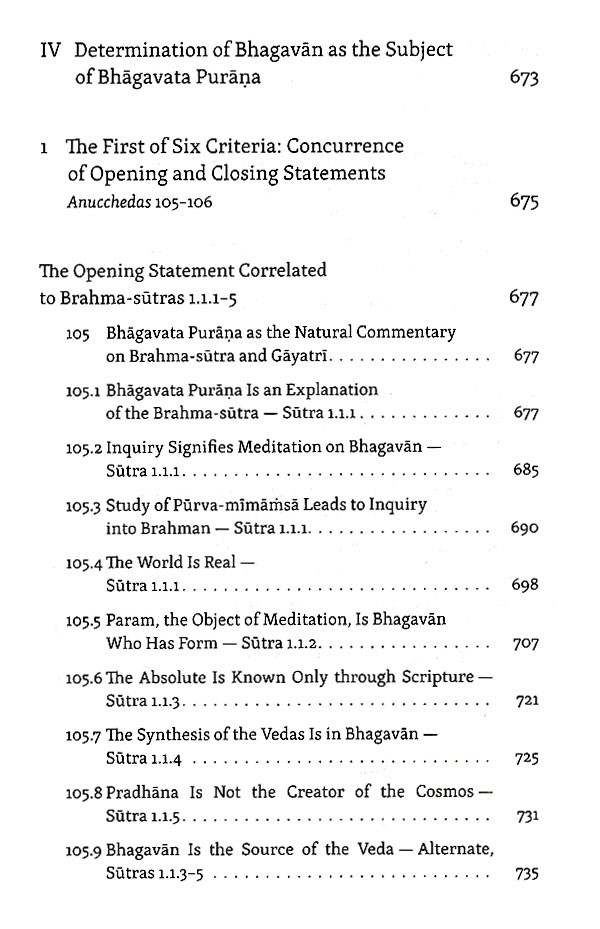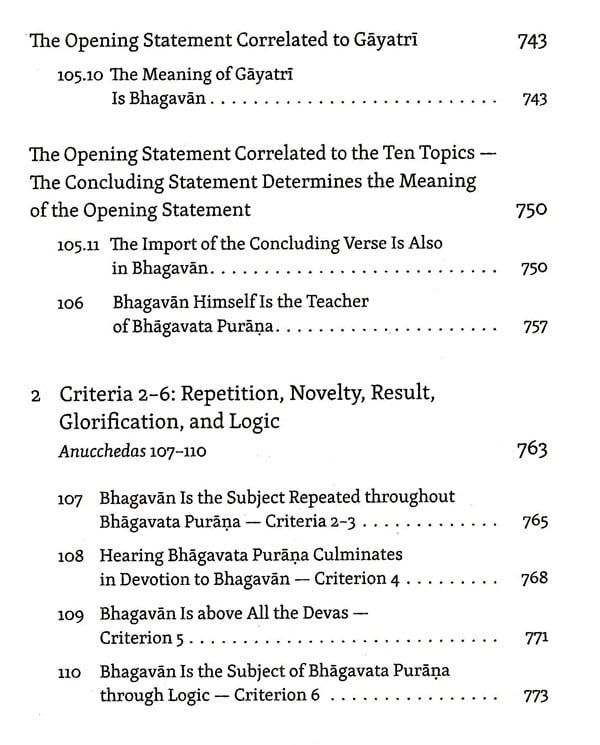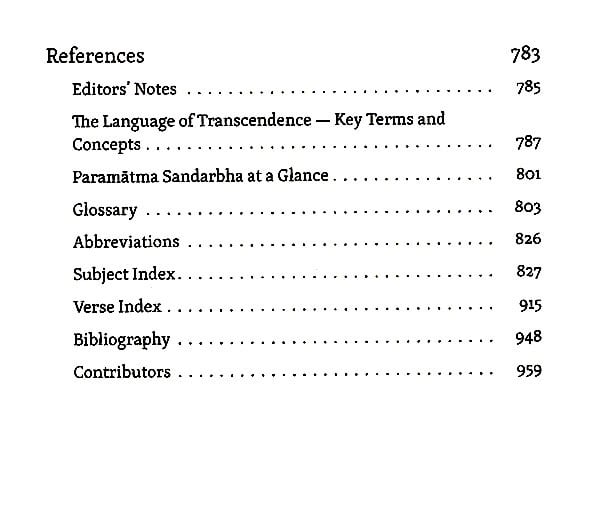


Sri Paramatma Sandarbha (The Living Being, Its Bondage, and the Immanent Absolute)
Book Specification
| Item Code: | NBZ357 |
| Author: | Satyanarayana Dasa |
| Publisher: | Jiva Institute, Vrindavan |
| Language: | Sanskrit Text with English Translation |
| Edition: | 2016 |
| ISBN: | 9788187153467 |
| Pages: | 1002 |
| Cover: | HARDCOVER |
| Other Details | 8.60 X 5.80 inch |
| Weight | 1.04 kg |
Book Description
THIS IS THE THIRD BOOK in the series of six treatises called Şat Sandarbhas or Bhagavata Sandarbha. It is an elaborate essay on the nature of Paramatma. The distinction between Absolute Reality's manifestations as Paramatma and Bhagavan is relatively unknown, even to specialists in the field of Vedanta. These two specific designations are often used synonymously to refer to a single aspect of the tattva. It was Śrī Jiva Gosvami's genius to clearly define them and enumerate their characteristics and functions in detail. There is no other work in the entire gamut of Indian theological and philosophical literature that throws light on this subject so lucidly. Paramatma, also called Puruşa, is akin to what people usually conceive of as God, the creator and overseer of the cosmos, whereas Bhagavan is God in His supreme transcendence, without reference to the phenomenal world - God in His own intrinsic being. Paramatma is the regulator of the intermediary potency (tațastha-sakti) and the extrinsic potency (bahiranga-sakti), otherwise known as maya. He is never influenced by this extrinsic potency, even while present in the midst of it.
Satyanarayana Dasa BORN IN 1954, he was drawn to the spiritual traditions of his home country India since his childhood. After receiving a postgraduate degree in 1978 from IIT Delhi, he then worked in the United States for four years. After this period, he returned to India to begin formal study of the orthodox systems of Indian philosophy known as şad-darśana under the direct guidance of his guru Śrī Haridāsa Šāstrī Mahārāja and Svāmī Śyāma Śaraña Mahārāja. This education was pursued in the traditional manner for more than 25 years as he dedicated himself to the practice of bhakti-yoga. In 1991 he accepted the traditional Vaisnava order of renounced life, bābājī-veşa. His main focus has been on the works of sīva Gosvāmī, particularly the Șat Sandarbhas, providing English translation and commentary. He also earned four śāstric degrees, and received both a law degree and a PhD in Sanskrit from Agra University. Satyanarayana Dasa is the director of the Jiva Institute of Vaishnava Studies in Vrindavan, India. In 2013 he was honored by the president of India, Pranab Mukherjee, for his extraordinary contribution in presenting Vedic culture and philosophy to students and audiences within India and internationally.
PARAMĀTMA SANDARBHA is the third book in the series of six treatises called Sat Sandarbhas or Bhāgavata Sandarbha. In the first of these, Tattva Sandarbha, Śrī Jīva Gosvāmī begins his exposition with a discussion of epistemology, establishing Srimad Bhāgavata Purāna as the most authoritative means of valid knowing (pramāņa) in the matter of the self-disclosure of Absolute Reality. Having done so, he proceeds to examine the contents of the book to determine the knowable (jñeya). Taking up the topic of ontology (prameya), he inquires into the nature of the signified Reality (sambandhi-tattva), the means of Its immediate realization (abhidheya), and the end to be achieved in regard to that Reality (prayojana). To do so, he analyzes the samadhi of Śrīla Vyāsadeva, which contains the gist of the essential teachings of śrīmad Bhāgavata Purāņa. In the state of supracognitive absorption (samādhi), Absolute Reality was self-disclosed to Vyāsa as Bhagavān Śrī Krsna, replete with varieties of energies.
Vyāsa directly witnessed that among the potencies belonging to the Supreme Personal Absolute, Śrī Krsņa, His extrinsic energy, māyā, was situated apart from Him, while yet entirely supported by Him (tad-apāśraya). Vyāsa also saw the individual living beings, the jīvas, as conscious integrated parts of the Complete Whole, Bhagavān. Although the jīvas are beyond the insentient gunas of māyā, they become identified with those guņas due to māyā's influence and are thus subjected to the miseries of phenomenal existence. It was further disclosed to Vyāsa that the yoga of unalloyed devotion (bhakti) to Bhagavān Śrī Krsna is the direct means of transcending such material identification, establishing the pure self in its intrinsic identity and relation with its conscious source.
This is the core teaching of Bhāgavata Purāņa and also of the Şaț Sandarbhas, which represent an analysis of the essential topics of Bhāgavata Purāņa. In particular, Śrī Jīva cites verse 1.1.2 of the Bhāgavatam to outline its primary subject - that is, knowledge of the Supreme Immutable Reality (vāstava-vastu). The nature of this Reality is specified further in the seminal vadanti verse (SB 1.2.11) from which Tattva Sandarbha as well as the following two Sandarbhas, Bhagavat and Paramātma, derive their names. This Reality, or tattva, is nondual consciousness (jñānam advayam) and is referred to as Brahman, Paramātmā, and Bhagavān. Śrī Jīva Gosvāmi expands on this verse in the concluding portion of Tattva Sandarbha and the two Sandarbhas that follow.
In the second book, Bhagavat Sandarbha, Śrī Jīva Gosvāmī demonstrates that Bhagavān, the transcendent Absolute replete with personhood, qualities, form, and action, is the most complete manifestation of the Absolute Reality, while Paramātmā and Brahman are but partial manifestations of that same truth. Reality is one only, but it manifests primarily in three aspects to three different types of spiritual seekers - as the qualified Absolute, Bhagavān, to the devotional transcendentalists, as the Immanent Self, Paramātmā, to the yogis, and as the unqualified Absolute, Brahman, to the jñānīs. From this perspective, Brahman realization amounts to nothing other than the immediate intuition of the Absolute known as Bhagavān, yet divested of His intrinsic qualities, potencies, and form. Paramātmā is a partial manifestation of Bhagavān who animates prakrti for the evolution and regulation of the cosmos. Realization of Bhagavān naturally includes awareness of the other two, and thus Bhagavān is considered to be the most complete manifestation of Absolute Reality (tattva).
**Contents and Sample Pages**