

The Daily Practice of the Hindus
Book Specification
| Item Code: | IDE818 |
| Author: | Srisa Chandra Vasu |
| Publisher: | Munshiram Manoharlal Publishers Pvt. Ltd. |
| Language: | English |
| Edition: | 2000 |
| ISBN: | 8121505380 |
| Pages: | 206 |
| Cover: | Hardcover |
| Other Details | 8.75" X 5.75" |
| Weight | 400 gm |
Book Description
From the Jacket:
The Vedas-Rg, Yajur and Sama-have enjoined on the Hindus a number of rites that are to be performed during the succeeding hours of the day. Every moment of one's waking hours, from dawn to dusk, is so taken care of that even if one wishes, there is not a minute to spare for frivolous pursuits. These daily practices have taken cognizance of man's nature-that unless he is compelled by injunction, inducement, circumstances or ambition, he would fritter away his energy and time in chasing transient success-and aim to awaken the mental, moral and spiritual powers lying dormant in him.
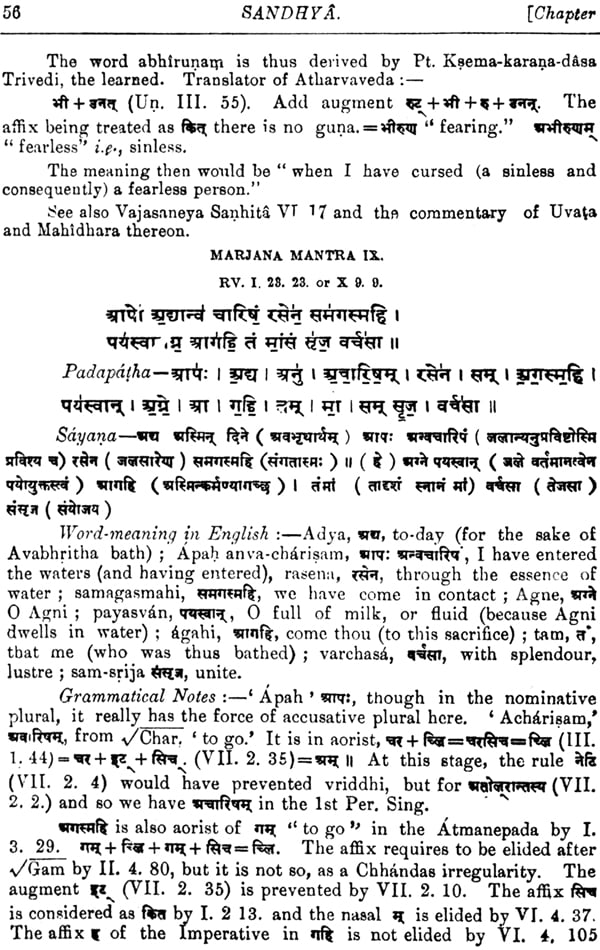
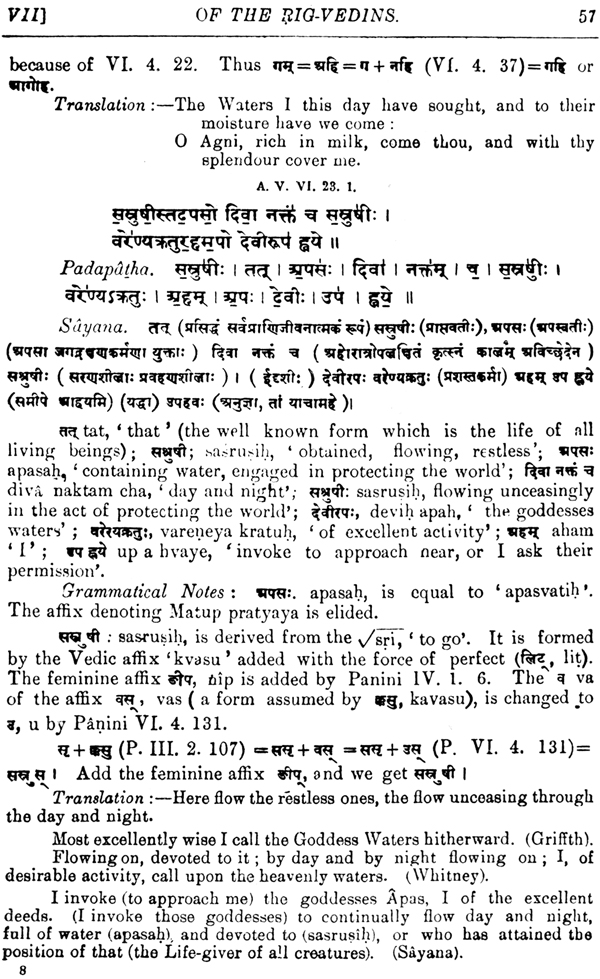
Rai Bahadur Srisa Chandra Vasu's The Daily Practice of Hindu describes in detail all the Vedic rites connected with the morning and midday duties. The Sanskrit text, its transliteration, work-meaning, translation and grammatical notes provide the assistance for the understanding of Vedic mantras. The chapters on Tantric and Universal Sandhya liberates the use of this book from its sectarian confinement.
Everyone, irrespective of his creed, shall find this book invaluable; for it caters to everybody's physical and spiritual well-being.
In this book both the Vaidiki and Tantriki Sandhyas are given. All twice –born persons are entitled to the first; while the Tantriki is meant for all mankind, without distinction of caste, race or creed. The Yajur Vedi Sandhya2 is based upon the text published by Pandit Devi Datt Joshi. It is an excellent hand-book. A chapter on the Sandhya of the Rig-Vedins as well as one on the Tantriki Sandhya is added.
In the present edition, the Midday Duties, namely, the worship of Visnu, Shiva &c; is also given, as well as the Five Great Sacrifices. The book is more than double the size of the last edition.
I have consulted, in giving commentary on the Vedic mantras is, the edition of the Anandasrama series also.
The translation of the Vedic mantras is, in many cases, my own and, in some instances, taken from Griffith, MaxMuller, Whitney and Peterson.
CONTENTS
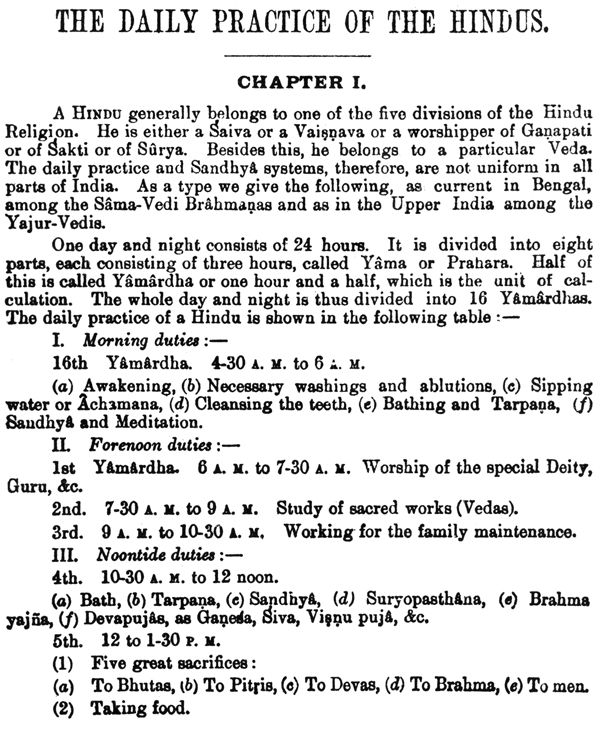
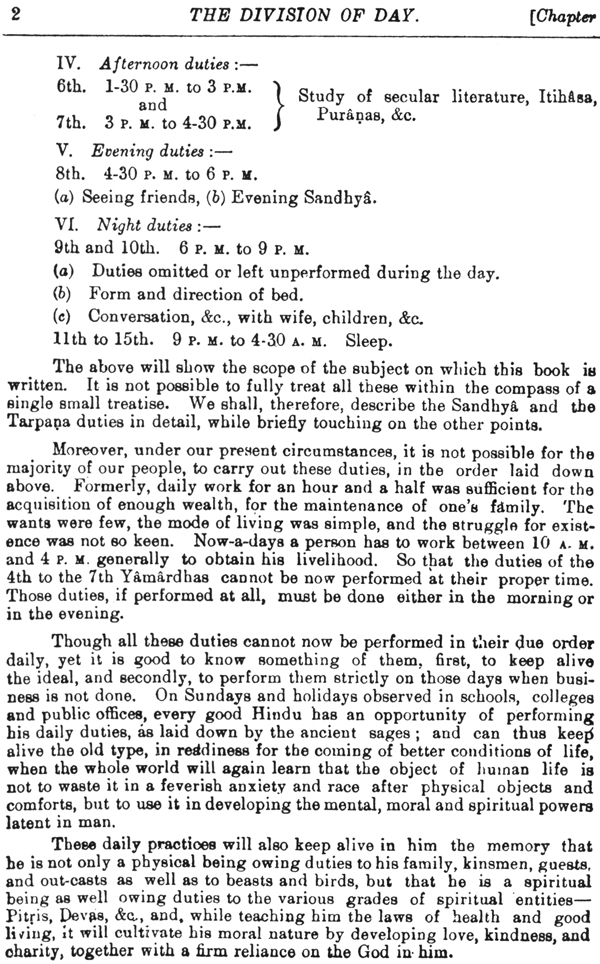
| 1. | Table of duties and time | 1 |
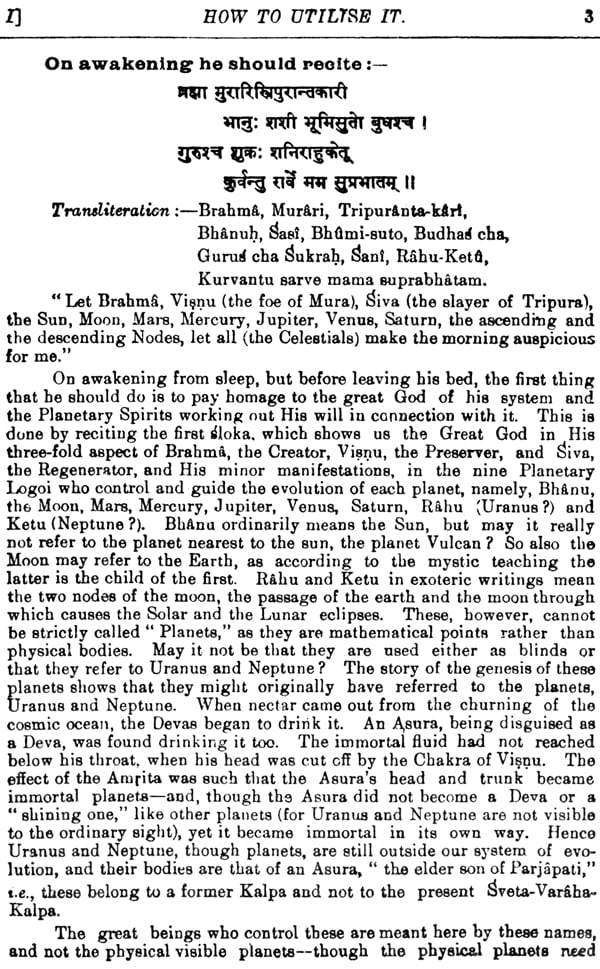
| 2. | Awakening recitations | 3 |
| Prayer to God | ib. | |
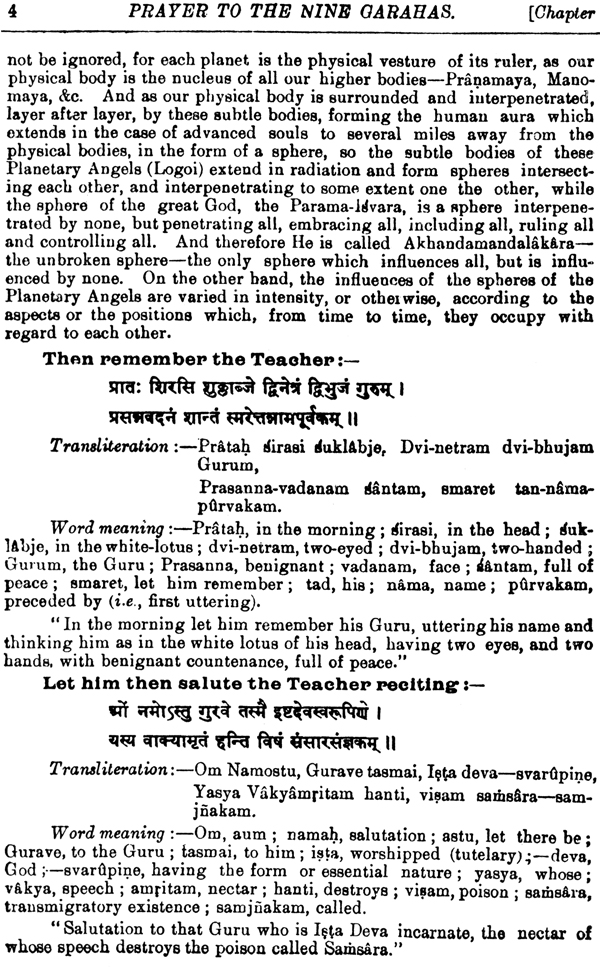
| Prayer to Guru | 4 | |
| Assertion of identity | ib. | |
| Resignation to God's will | ib. | |
| Saluation to Earth | 6 | |
| | ||
| 1. | The Guru | 7 |
| 2. | The hymn of the Guru | 8 |
| Bathing | ||
| 1. | Attending to nature | 12 |
| 2. | The Achamana | 13 |
| 3. | Rinsing the teeth | 14 |
| 4. | Morning bath | 15 |
| 5. | Seven kinds of baths | 17 |
| 6. | Sankalpa mantra | ib. |
| 7. | Invocation of seven streams | ib. |
| 8. | Ganga stotra | 18 |
| 9. | Address to clay for rubbing the body | 21 |
| Tarpana | ||
| Invocation of the Tirthas | 22 | |
| 1 & 2. | Deva Tarpana | 23 |
| 3 & 4. | Risi Tarpana | 24 |
| 5. | The seven Pitarah Tarpana | 25 |
| 6. | Yama Tarpana | ib. |
| 7. | Ancestor Tarpana | 26 |
| 8. | Tarpana to the denizens of hell | ib. |
| 9. | To all kinsmen | ib. |
| 10 & 11. | Brief Tarpana, &c. | 27 |
| 12 & 13. | Salutation to Fathers and Visnu | ib. |
| 14. | Bhisma Tarpana | 28 |
| | ||
| Gayatri | 29 | |
| | ||
| Sandhya | 32 | |
| The Sandhya of the Rig-Vedins. | ||
| 1. | Gayatri | 42 |
| 2. | Viniyoga | ib. |
| 3. | Pranayama | 43 |
| 4. | Morning Achamana | 44 |
| 5. | Marjanam | 46 |
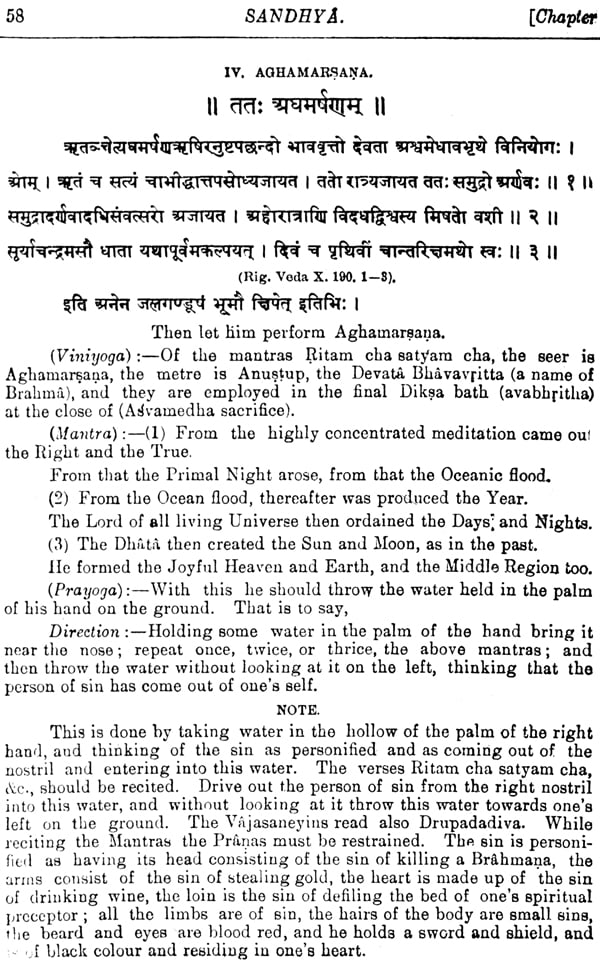
| 6. | Aghamarsana | 58 |
| 7. | Suryargha | 59 |
| 8. | Suryopasthanam | ib. |
| 9. | Meditation on gayatri | 61 |
| 10. | Risyadi-Nyasa | ib. |
| 11. | Avahana | 62 |
| 12. | Japa | ib. |
| 13. | Visarjanam | 63 |
| 14. | Suryargha | ib. |
| 15. | Namaskara | 63 |
| 16. | Atmaraksa | 64 |
| 17. | Dik-namaskara | 65 |
| 18. | Salutation to Surya | 66 |
| 19. | General Pranama | 67 |
| 20. | Midday Sandhya | ib. |
| 21. | Evening | 72 |
| The Sandhya of the Sama-Vedins. | ||
| 1. | Ordinary achamana | 77 |
| 2. | Marjana or sprinkling of water | 78 |
| 2.(a) | Pranayam | 79 |
| 3. | Special achamana | 81 |
| 4. | Second marjana | ib. |
| 5. | Aghamarsana or expulsion of sin | ib. |
| 6. | Address to the Sun | 82 |
| 7. | Silent repetition of the Gayatri | 83 |
| (a) Invocation | ib. | |
| (b) Risi Nyasa | 85 | |
| (c) Anga Nyasa | ib. | |
| (d) Dhyana of Gayatri | ib. | |
| (e) Japa | 86 | |
| (f) Farewell to Gayatri | 87 | |
| 8. | Prayer for protection | ib. |
| 9. | Prayer to Rudra | 88 |
| 10. | Water offering to Devas | ib. |
| 11. | Arghya to the sun | 89 |
| 12. | Salutation to the Sun | ib. |
| 13. | The Brahma-sacrifice or the study of the Vedas | ib. |
| The Sandhya of the Yajur-Vedins. | ||
| 1. | Meditation on Visnu | 91 |
| 2. | Achamana | 92 |
| 3. | Tying the tuft | bi. |
| 4. | Invoking blessing on the various openings of the body | 93 |
| 5. | Prayer for Purification | ib. |
| 6. | Address to the seat | 94 |
| 7. | Sankalpa of Sandhya | ib. |
| 8. | Kara Nyasa | 95 |
| 9. | Anga Nyasa | ib. |
| 10. | Dhyana of the goddess Gayatri | 96 |
| 11. | Pranayama | 98 |
| 12. | Special achamana | 99 |
| 13. | Marjana or sprinkling of water | 100 |
| 14. | Avabhritah | 101 |
| 15. | Aghamarsana or expulsion of sin | 102 |
| 16. | Upasparsah | ib. |
| 17. | Arghya to the Sun | 103 |
| 18. | Praise of the Sun | ib. |
| 19. | Invocation of Gayatri | 106 |
| 20. | Praise of Gayatri | ib. |
| 21. | Meditation on Gayatri | 107 |
| 22. | Japa | ib. |
| 23. | Finishing of Japa or Nivedana | 109 |
| 24. | Bow to the Sun | ib. |
| 25. | Farewell to Gayatri | 110 |
| 26. | Farewell to Devas | ib. |
| 27. | Salutations to Devas and Sages | 111 |
| | ||
| The Tantriki Sandhya | 111 | |
| | ||
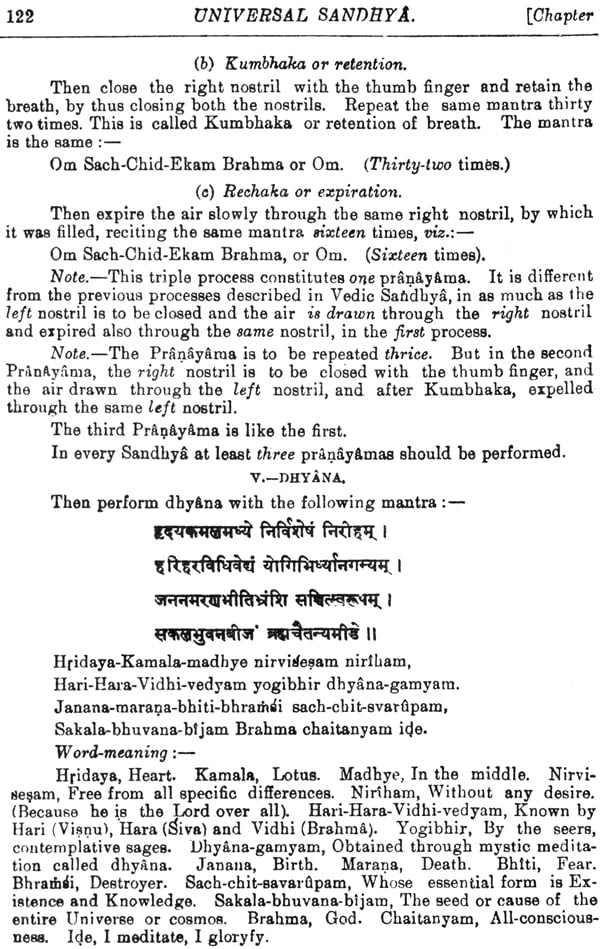
| The Sandhya for all men | 119 | |
| Puja of Narayana. | ||
| 1. | Snana of Visnu with Purusa Hymn | 128 |
| 2. | Offering to Tulsi | 134 |
| 3. | Peace Chant | 135 |
| 4. | Consecration of water or Samanya Arghya | 137 |
| 5. | Asana Suddhi | ib. |
| 6. | Puspa Suddhi | 140 |
| 7. | Driving away the Elementals | ib. |
| 8. | Bhuta Suddhi | ib. |
| 9. | Pranayama | 142 |
| | ||
| (a) Kara Nyasa | 142 | |
| (b) Anga Nyasa | ib. | |
| (c) Dhyana of Ganesa | 143 | |
| (d) Upachara Offering | ib. | |
| (e) Japa | 144 | |
| (f) Pranama to Ganesa | 145 | |
| | ||
| (a) Nyasa, &c. | 145 | |
| (b) Dhyana of Surya | ib. | |
| (c) Japa | ib. | |
| | ||
| Dhyana of Devi | 146 | |
| Mantra | ib. | |
| Dhyana | ib. | |
| | ||
| Dhyana of Siva | ib. | |
| | ||
| To all Devas | 147 | |
| | ||
| Kara Nyasa, &c. | 148 | |
| Guru Pranama | ib. | |
| Dhyana of Narayana | bi. | |
| Second Dhyana | ib. | |
| Special Arghya | 149 | |
| Upachara Offering | ib. | |
| Japa | 150 | |
| Nivedana | ib. | |
| Pranama | ib. | |
| Siva Puja. | ||
| 1. | Common Arghya | 151 |
| 2. | Kara Nyasa | ib. |
| 3. | Guru Pranama | 152 |
| 4. | Dhyana of Siva | ib. |
| 5. | Mental Puja | ib. |
| 6. | Special Arghya | ib. |
| 7. | Upachara Offering | ib. |
| 8. | Puja of eight forms | ib. |
| 9. | Japa | 153 |
| 10. | Pranama | ib. |
| 11. | Nivedana | ib. |
| 12. | Puja of clay Lingam | ib. |
| Midday duties. | ||
| I. | Homa: | 155 |
| (a) Erection of the Fire Altar | ib. | |
| (b) Sanctiacation of fire | 156 | |
| (c) Address | ib. | |
| (d) Homa | ib. | |
| II. | The Five Great Sacrifices | 157 |
| (1) Deva Yajna | ib. | |
| (2) Bhuta | 158 | |
| (3) Pitri | 160 | |
| (4) Brahma | ib. | |
| (5) Manuaya | ib. | |
| (6) Go-grasa-dana | 161 | |
| III. | Food. | |
| Vegetarian and meat | 162 | |
| What meat may be taken | ib. | |
| Method of eating | 163 | |
| Gandusa mantra | ib. | |
| Mantras of eating | 164 | |
| Oblations to Inner Pranas | ib. | |
| Praise of food | 165 | |
| | ||
| Some Vedik Mantras explained | 166 | |