Development Studies- Bibilotheca Himalayica

Development Studies- Bibilotheca Himalayica

  • $39.00
    Unit price per 
Tax included. Shipping calculated at checkout.


Book Specification

Item Code: UAT718
Author: Donald A. Messerschmidt
Publisher: EMR Publishing House, Nepal
Language: English
Edition: 1995
Pages: 172
Cover: PAPERBACK
Other Details 10.00 X 6.50 inch
Weight 380 gm

Book Description

Foreword
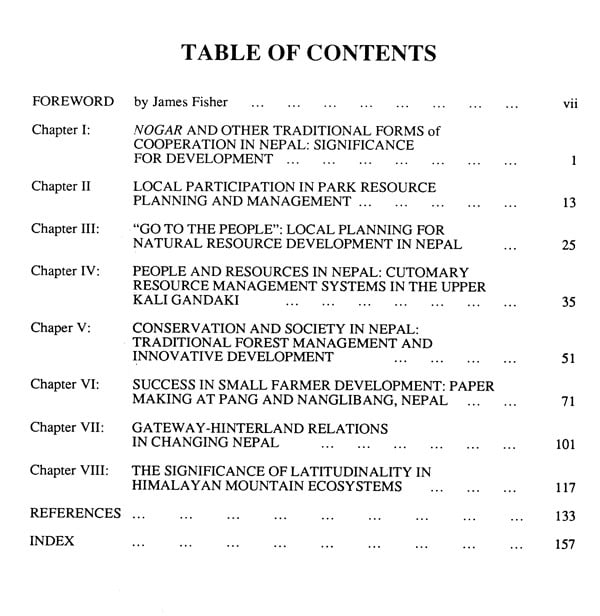
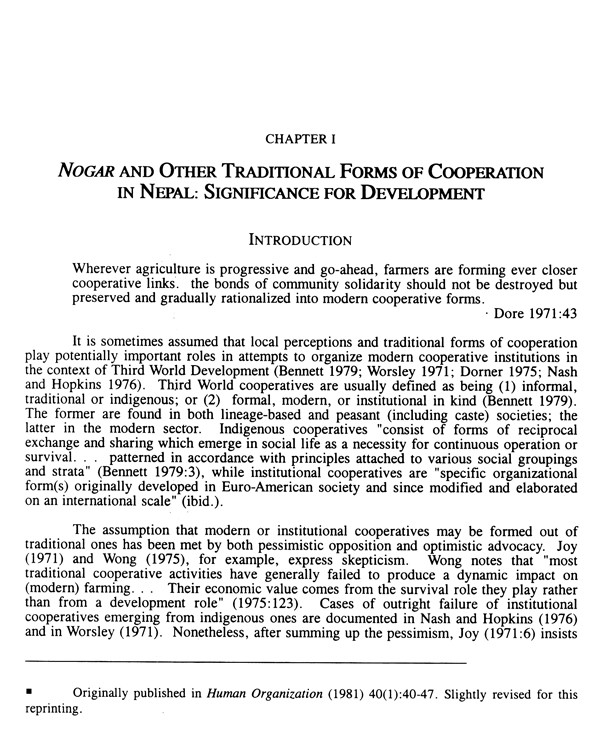
Don Messerschmidt first went to Nepal as a Peace Corps volunteer in 1963. Since that time he has made major contributions to the anthropology of Nepal and. particularly, to the application of anthropology to development. This book presents, in a single collection, seven papers which have had an important impact on the practice of "development" in Nepal On page 26, Messerschmidt mentions King Mahendra's investment in what he called in the Constitution of Nepal 1962, the national gentus and tradition of the Nepalese people" He goes on to say that "The question for Nepal, and for much of the Third World, is now to involve the genius and tradition of the people in development" These represents a recurring theme of the book, and of Messerschmidt's work in applied anthropology: indigenous capacities can be used and must be used The theme first emerged as a major concern in the paper entitled "Nogar and Other Traditional Forms of Cooperation in Nepal: Significance of Development", which appeared in 1981 and is reprinted here as Chapter 1. Messerschmidt developed it in a series of papers on local participation in resource management (Chapters II, III, IV and V in this book). In contrast to the common assumption of development experts in Nepal that local people had neither the knowledge or the organizational capacity to manage resources properly, these papers presented strong evidence that people had, in some places, already been doing a pretty good job of resource management For Messerschmidt the point was to understand why they were able to do it in some cases (and not in others) and then to apply this information in development planning and project implementation.

Much of what he was arguing in the early and mid 1980s has influenced contemporary Government policy and practice, most notably in the community forestry program. Now, when it has become almost conventional to assert the value of indigenous and traditional practices, it is easy to forget how distant this idea was from development practice only a few short years ago. Don Messerschmidt, along with some of the colleagues he mentions in this book, has had a major role in changing the language of development in Nepal. (It would be fair to say that the practice has not always kept up with the language).

In preparing an edited collection of papers it is always difficult to strike a balance between, on the one hand, rewriting and updating the papers to reflect recent changes and, on the other, maintaining the integrity of the original papers so that intellectual developments can be seen in historical context. This book seems to have achieved that difficult balance. Rewriting has been limited, but recent changes have been identified. While the papers represent a useful historical retrospective, the ideas remain fresh and relevant.

**Contents and Sample Pages**


We Also Recommend