

Rasakalika of Rudrabhatta
Book Specification
| Item Code: | IDH332 |
| Author: | Kalpakam Sankaranarayanan |
| Publisher: | The Adyar Library and Research Centre |
| Language: | (Critically Edited with an English Translation and Exposition) |
| Edition: | 1988 |
| ISBN: | 8185141010 |
| Pages: | 270 |
| Cover: | Hardcover |
| Other Details | 8.5" X 5.5" |
| Weight | 680 gm |
Book Description
Foreword
I have great pleasure in writing a Foreword to this critical edition of Rudrabhatta's Rasakalika, together with an English translation and studies, prepared by Dr. Kalpakam Ramaswami (now Mrs. Kalpakam Sankaranarayanan) under my direction and approved by the Madras University for the Degree of Doctor of Philosophy in 1972. I have a special attachment to it, since it was the first Ph. D. thesis prepared under my guidance.
Rudrabhatta's Rasakalika occupies an important place in Indian aesthetic studies, though it has not yet received due recognition from scholars. The present critical edition is also its editio princeps. The Rasakalika was used as a source book by vidyanatha for his Prataparudriya (quoting 44 passages from the Rasakalika). Mallinatha has quoted passages from it as authority in many places. Vasudeva quotes 6 verses from it in his commentary on Rajasekhara's Karpurmanjari. In the Rasaratna-kara of Salva, a sixteenth century Kannada work on Rasa, Rudrabhatta's Rasakalika is mentioned as a source book.
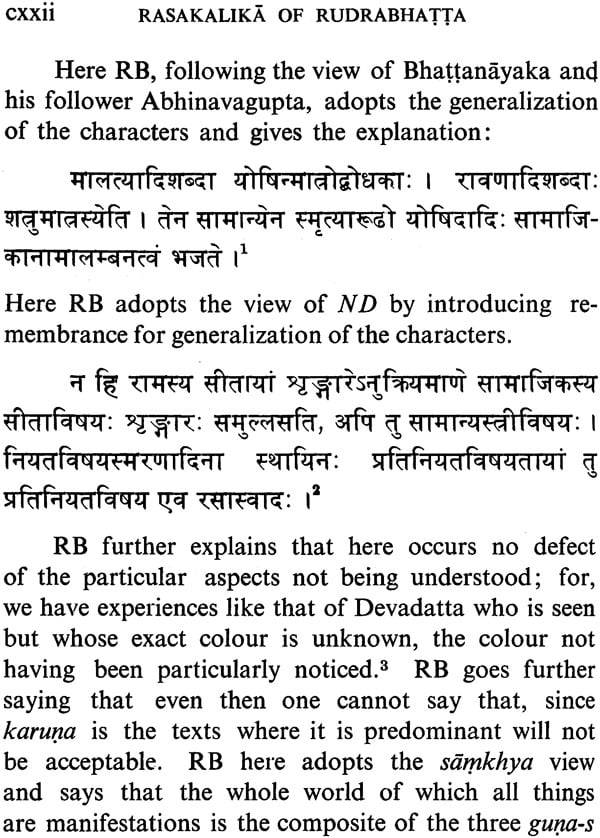
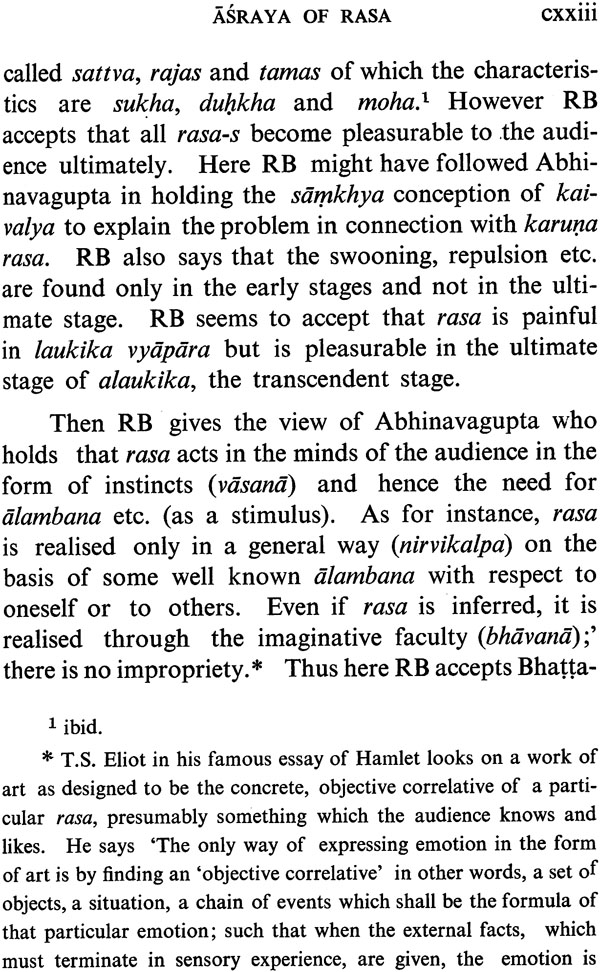
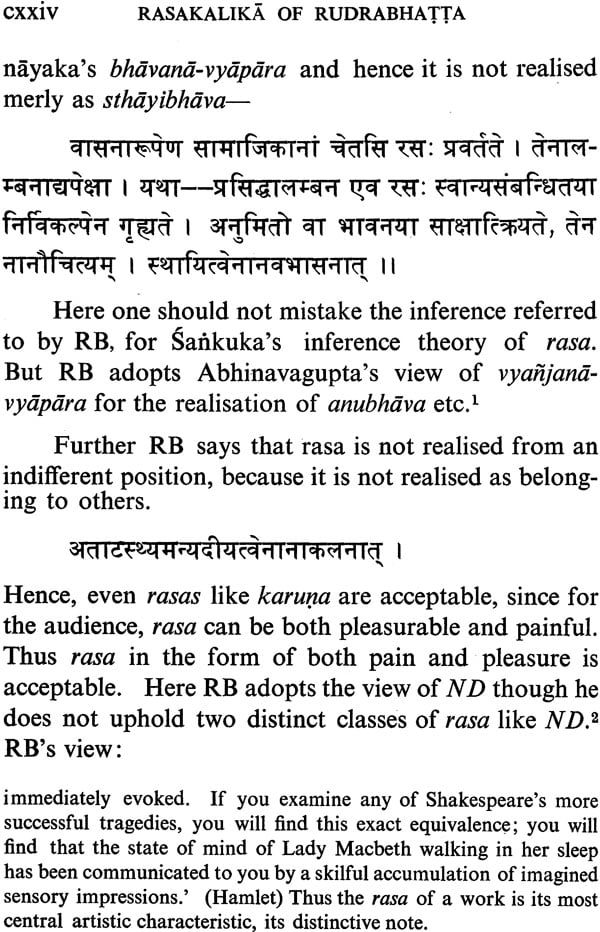
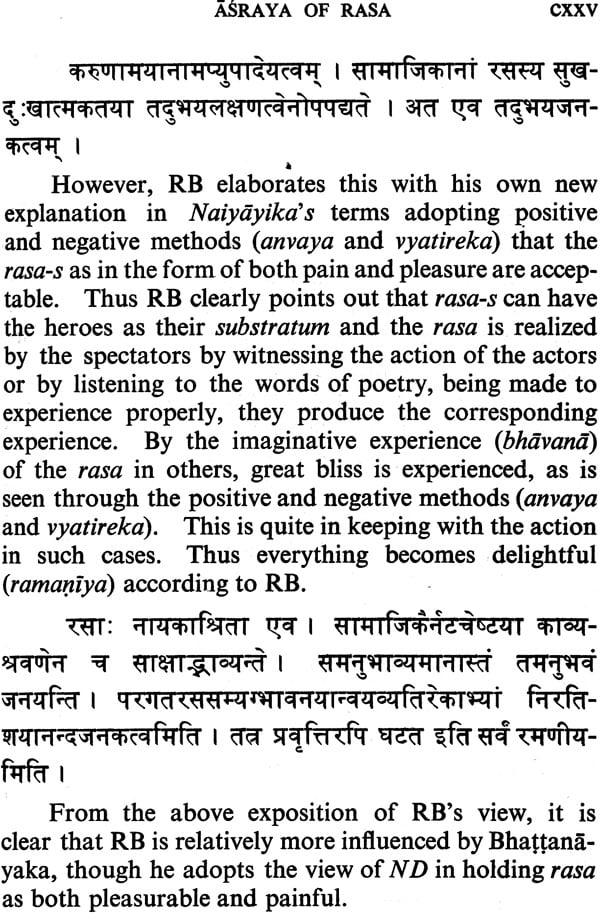
Rudrabhatta gives an excellent exposition of the theory of Rasa and the various problems connected with it, mainly following Dhananjaya's Dasarupaka and its commentary by Dhanika, Bhoja's Sarasvati-kanthabharana and Rudratalankara. Among his original contributions is the fourfold classification of Uddipanavibhava-the qualities of the hero or the heroine, the graceful actions like hela, kilikincita etc. their decorations and accidental factors. He describes in detail the types of heros and heroines, the srrigaranayika-s, vyabhicari-bhava-s, sancari-bhava-s the twelve stages in the development of love, etc. The problem of how tragic scenes give aesthetic pleasure is also discussed.
The critical edition is based on the four available manuscripts, and the external testimonia. Dr. Kalpakam has fixed the date of the work as the beginning of the 13th century A.D., proved that Vidyanatha and Mallinatha are influenced by the Rasakalika, and that the text we have is complete. A faithful English translation has been added. The sources of most of the illustrative verses have been traced. It is hoped that this critical edition of an important text will be welcomed by students of Indian aesthetics and literary criticism.
The Vasanta Press deserve warm appreciation for the excellent printing.
| Foreword By K. Kunjunni Raja | vii | |
| Preface | ix | |
| Abbreviations | xv | |
| Critical Study | xvii | |
| I | Introduction | xvii |
| II | Author and his date | xx |
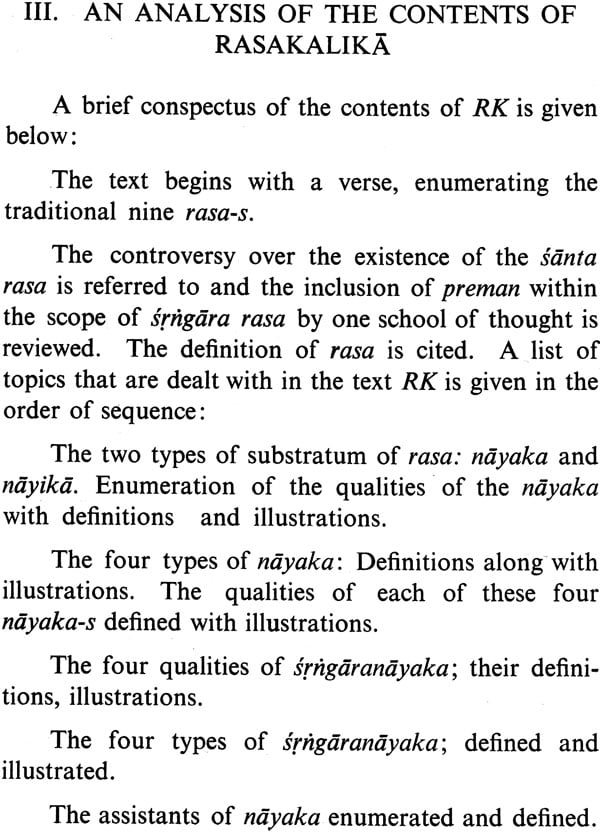
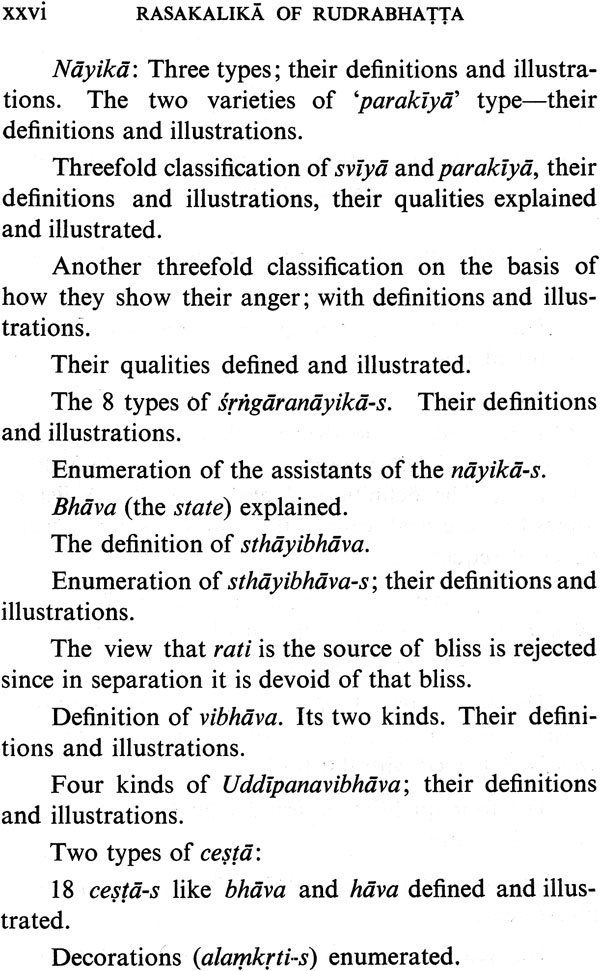
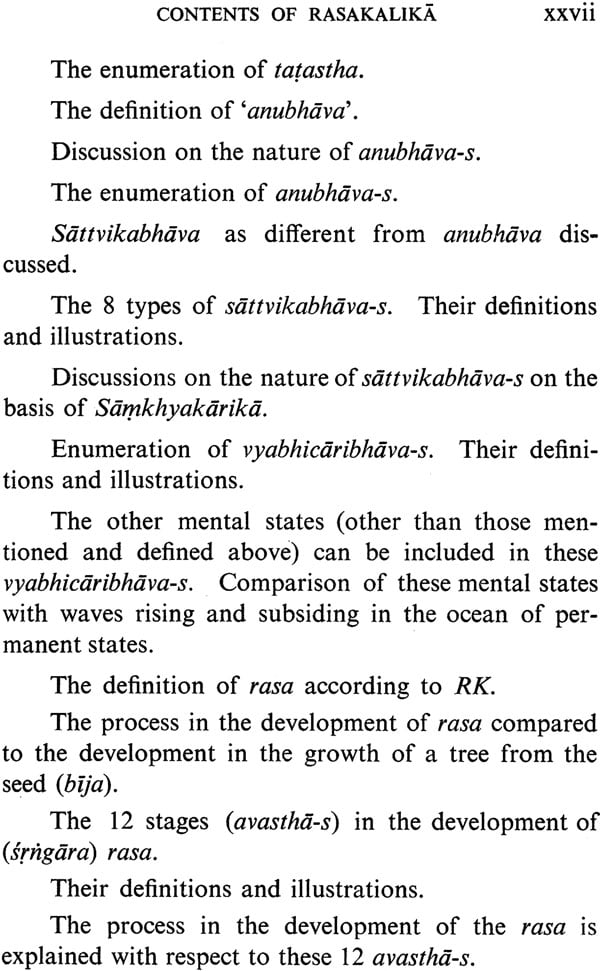
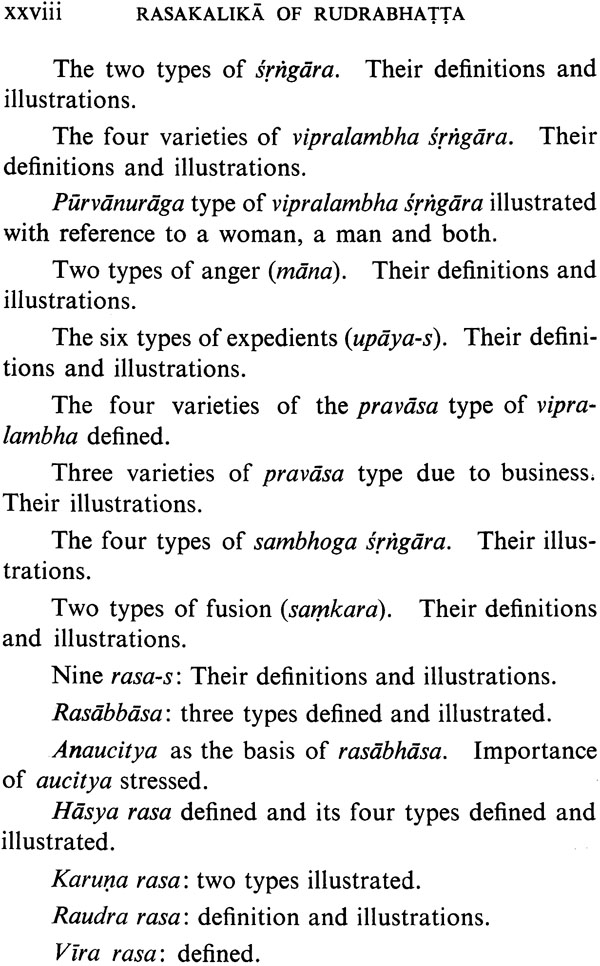
| III | An analysis of the contents | xxv |
| IV | Rasakalika and the early writers | xxx |
| V | Rasakalika and Dasarupaka | xli |
| A. Concordance of DR and RK | xlii | |
| B. Parallel Passages | liii | |
| VI | Rasakalika and later writers | lx |
| VII | Quotations of Rasakalika by Mallinatha | lxxii |
| VIII | Influence of Rasakalika on Prataparudriya | lxxvii |
| IX | Conception of Rasa in Rasakalika | xcix |
| A. The Number of Rasa-s | cix | |
| B. Asraya of Rasa | cxi | |
| C. Santa Rasa | cxxvi | |
| X | An Estimate of the contribution of Rasakalika | cxxxiii |
| Critical Apparatus | cxliii | |
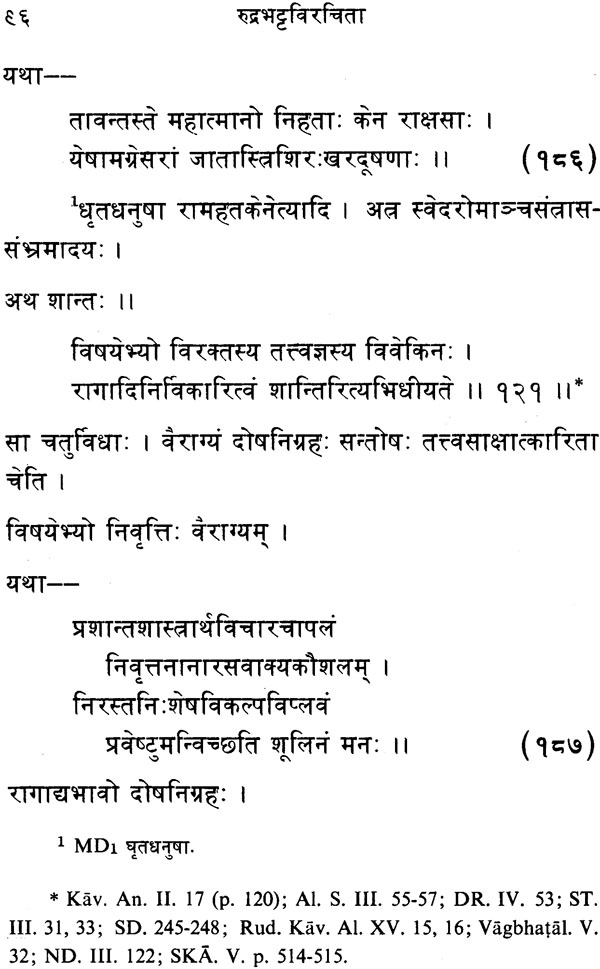
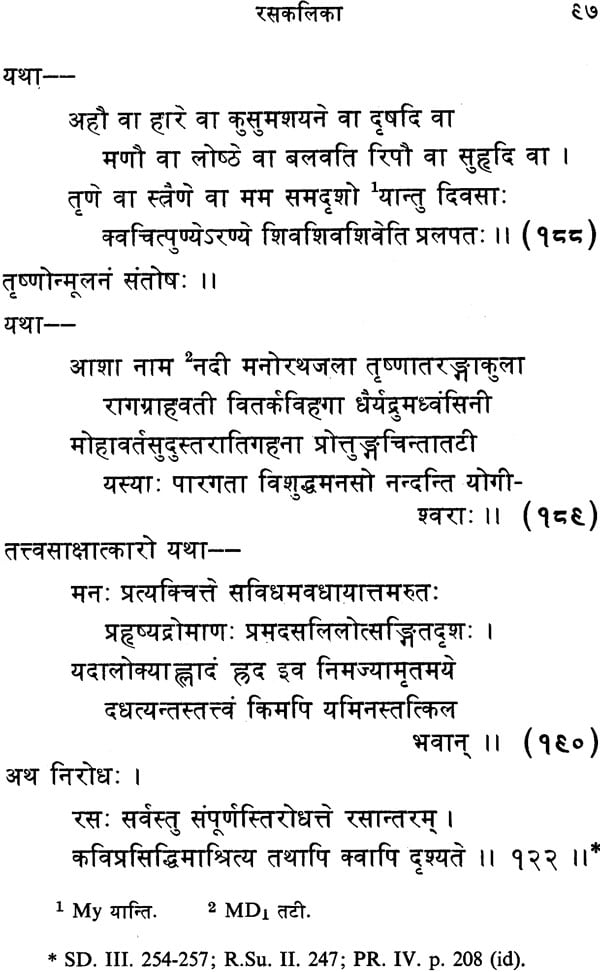
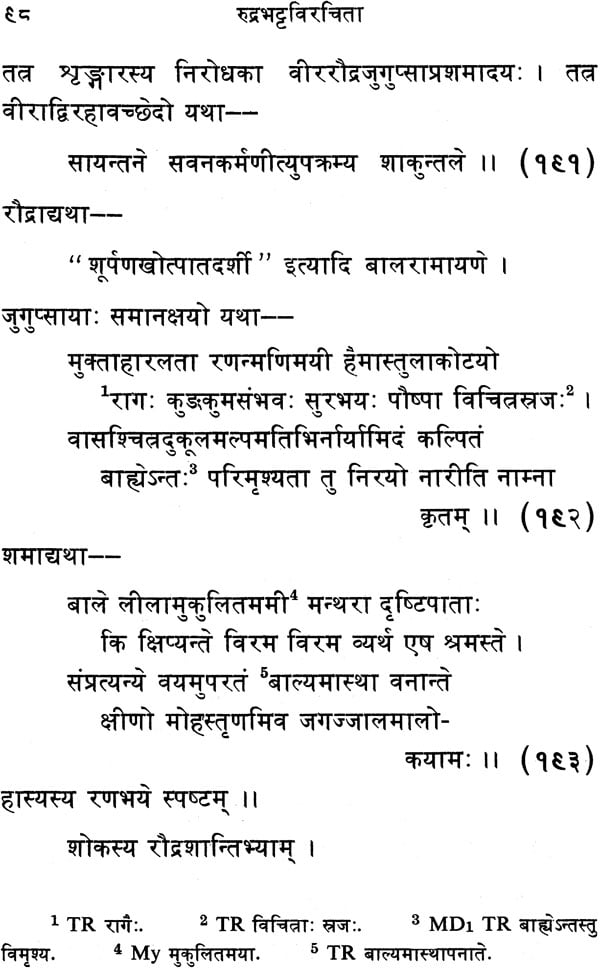
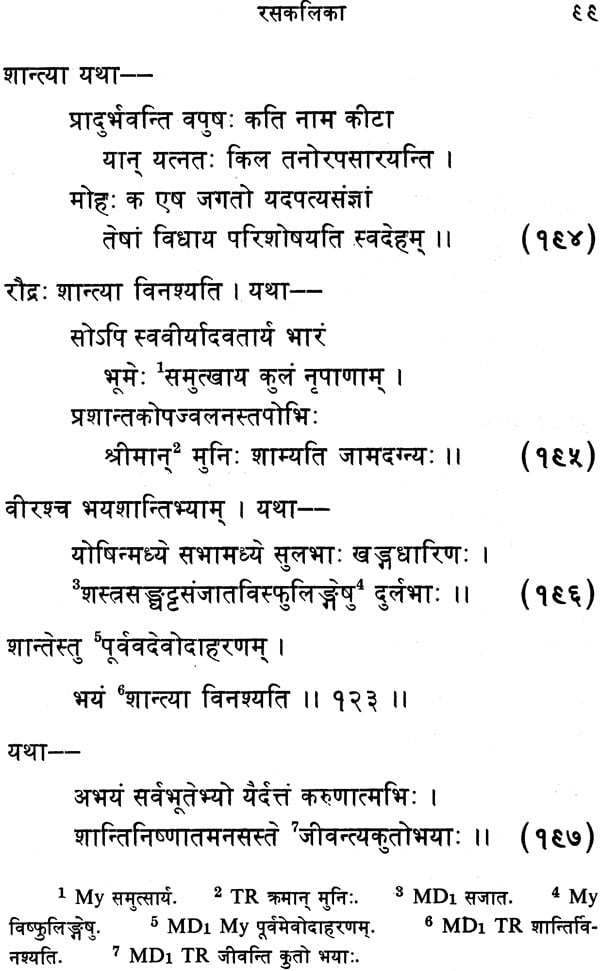
| Critical Edition | 1-102 | |
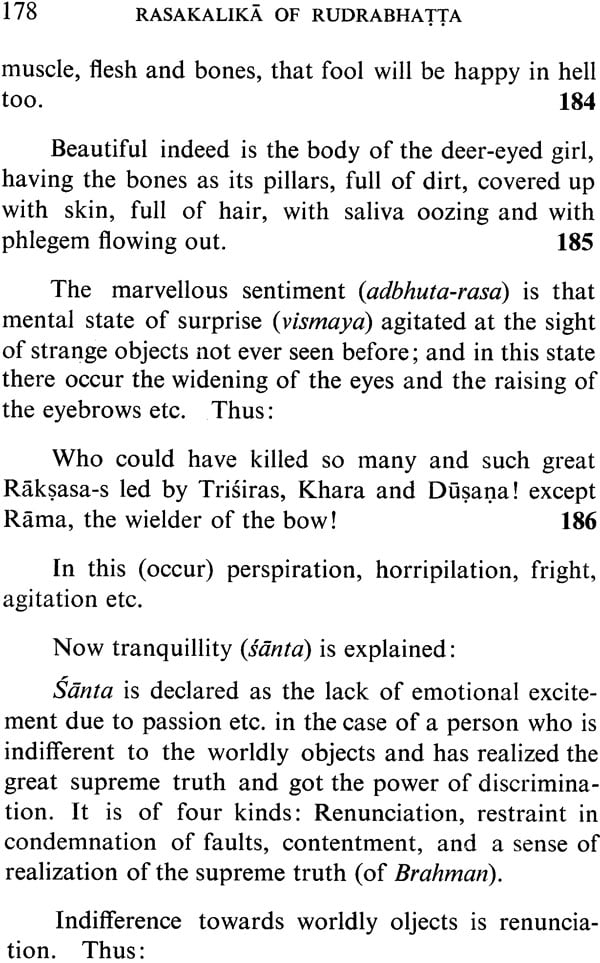
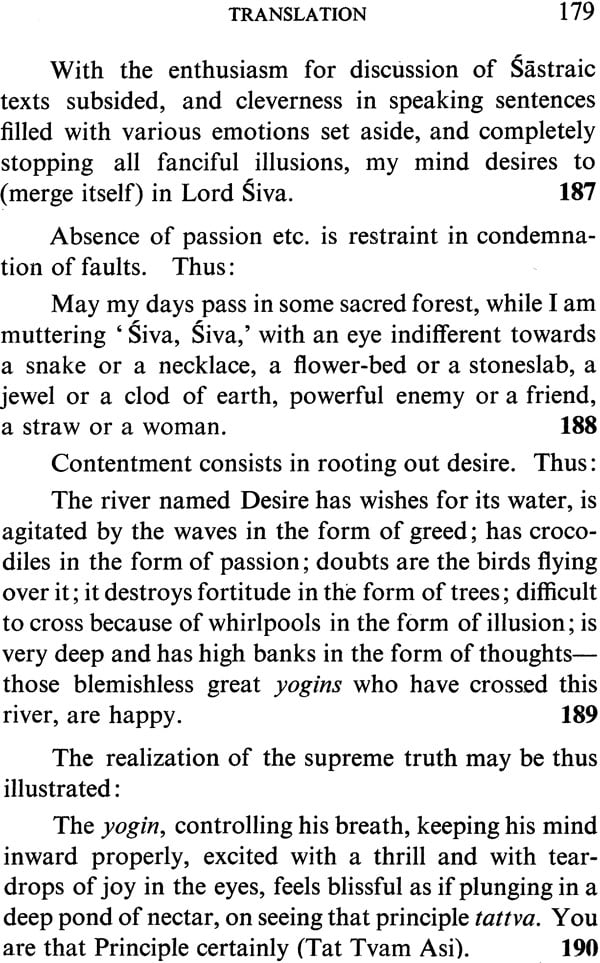
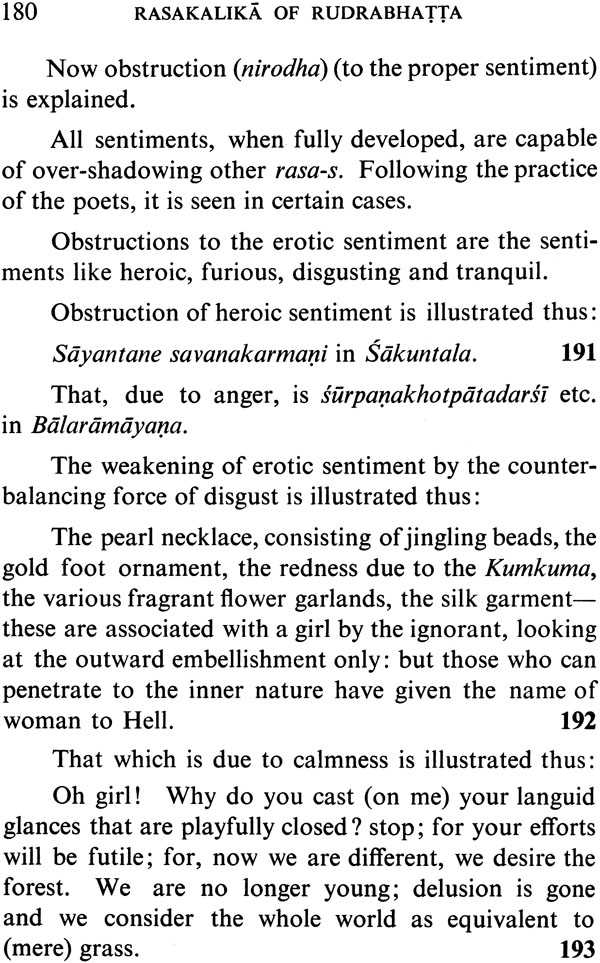
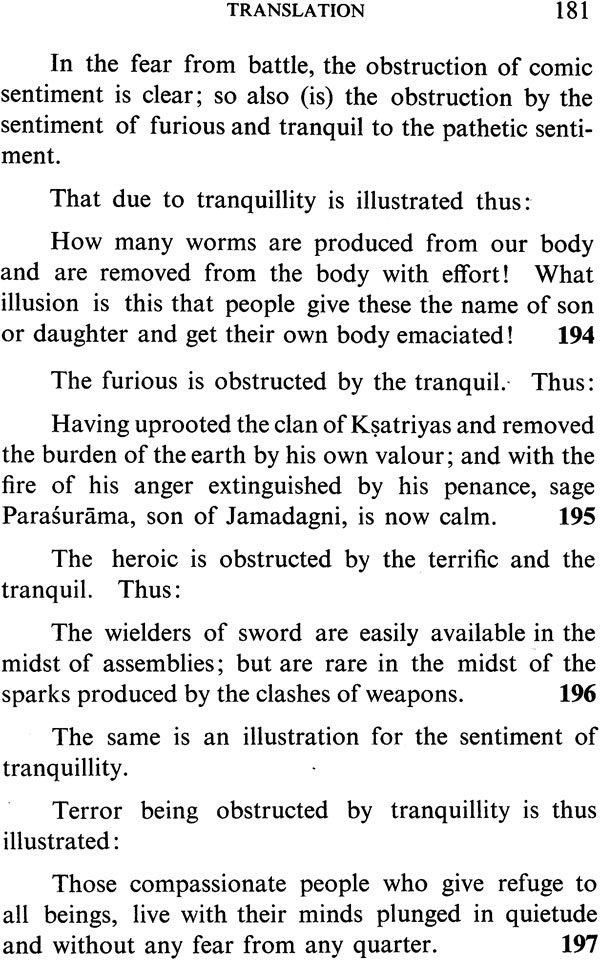
| Translation | 103-185 | |
| Bibliography | 187-193 | |
| Index of Technical Terms | 195-198 | |
| Index of Illustrative Verses | 199-206 | |
| Errata | 207 |