

Sri Satya Narayana Vrata Katha
Book Specification
| Item Code: | NBZ832 |
| Author: | Hemant Bhatt |
| Publisher: | Motilal Banarsidass Publishing House, Delhi |
| Language: | SANSKRIT TEXT WITH ENGLISH TRANSLATION |
| Edition: | 2020 |
| ISBN: | 9788194454793 |
| Pages: | 224 |
| Cover: | PAPERBACK |
| Other Details | 8.25 X 5.50 inches |
| Weight | 260 gm |
Book Description
This Scripture Sri Satyanārāyaṇa Vrata Kathā is very famous and devotional in nature. All Hindu families perform this vrata pājā (ritual performance) at least once in their life-time. Many non-Hindu families also observe this vrata pūjā.
The Satyanārāyana Vrata Kathā is known to the general public in the form of a dialogue between Saunakādi rșis and Sri Sūta Purāņa. In olden days of Vedic times it was customary that rșis met and engaged themselves in the form of penance and austerity and tried to solve the problems of general public by exchanging views with each other. Even today we do the same in the form of seminar, meeting, group discussion, workshop, etc.
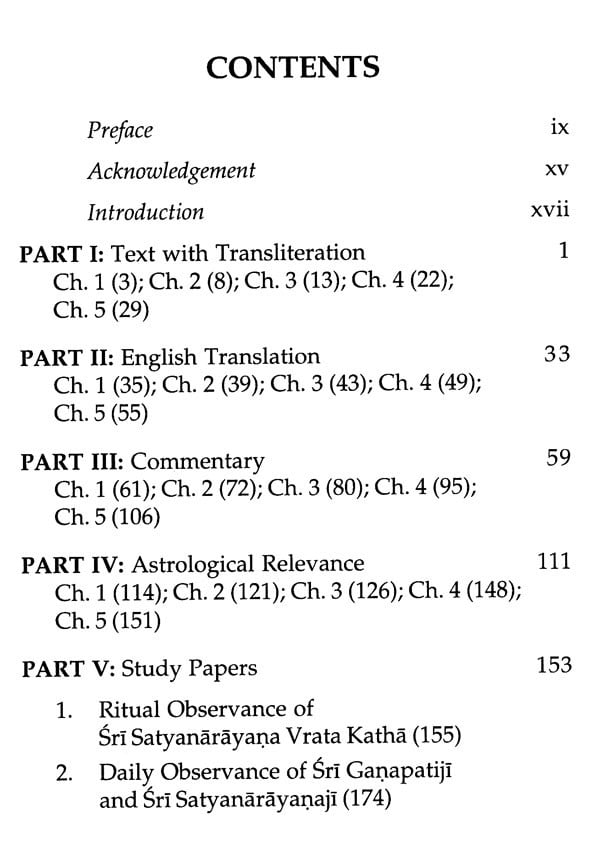
In the first chapter, basic rules and regulations to observe this vrata are explained along with benefits. From chapter two to five, practical performances are detailed establishing the magnanimity of the vrata and its story. In Chapter 5, the rebirth and reward of vrata performances are narrated setting forth the karma siddhānta, i.e., theory of karma. One of the meanings of our story title 'satya' may be ‘karma', i.e., conducts or actions-reactions. This karma siddhānta is full of subtle truth but it would suffice to say that when we do good will never go waste and will fructify at opportune time.
This Scripture Sri Satyanārāyaṇa Vrata Kathā is so useful to our daily life that it takes care of everything including warding off our grief, control of our intelligence, and provide us worldly comfortshappiness.
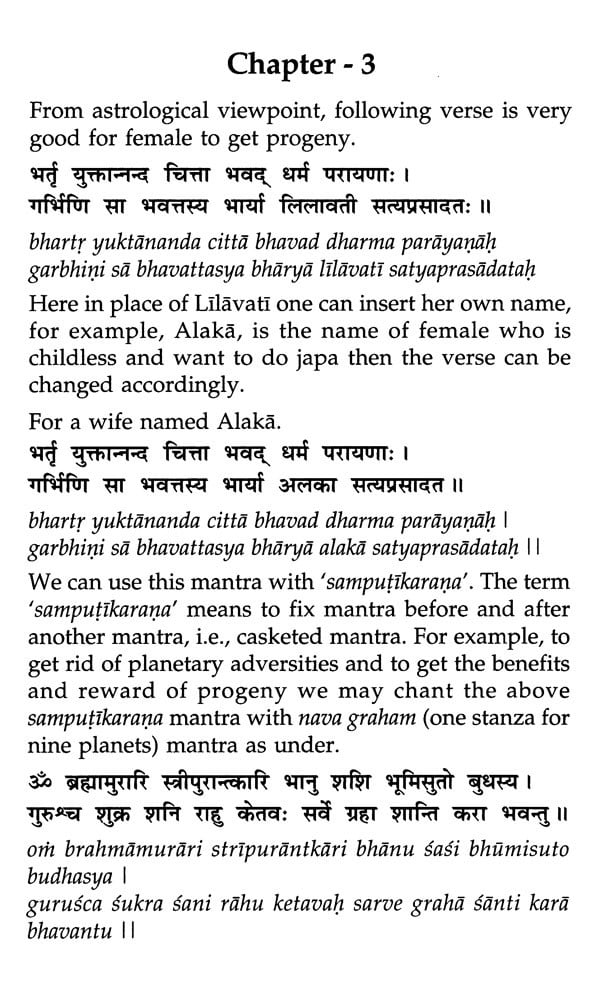
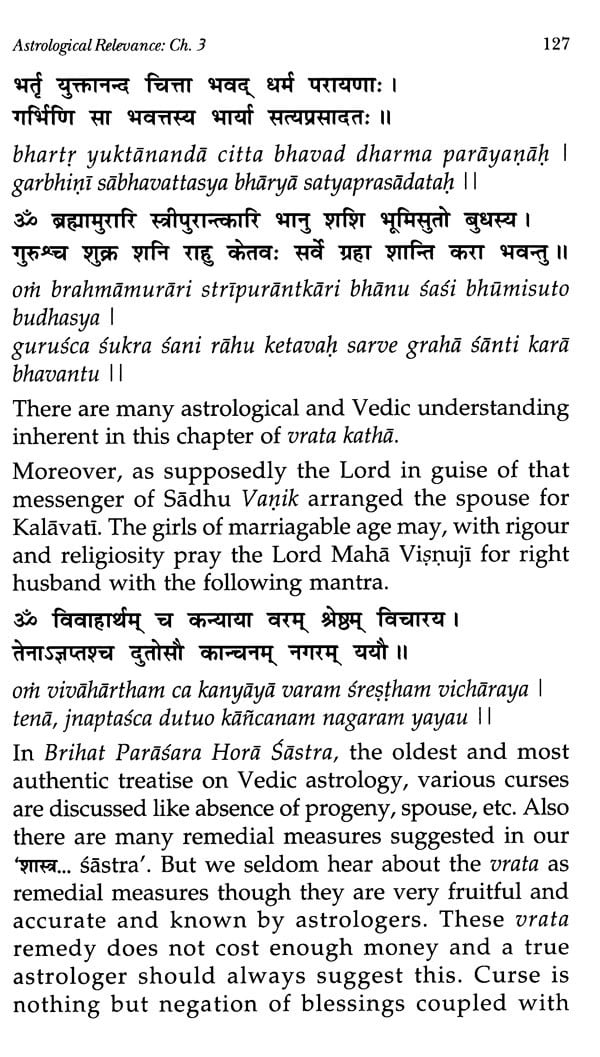
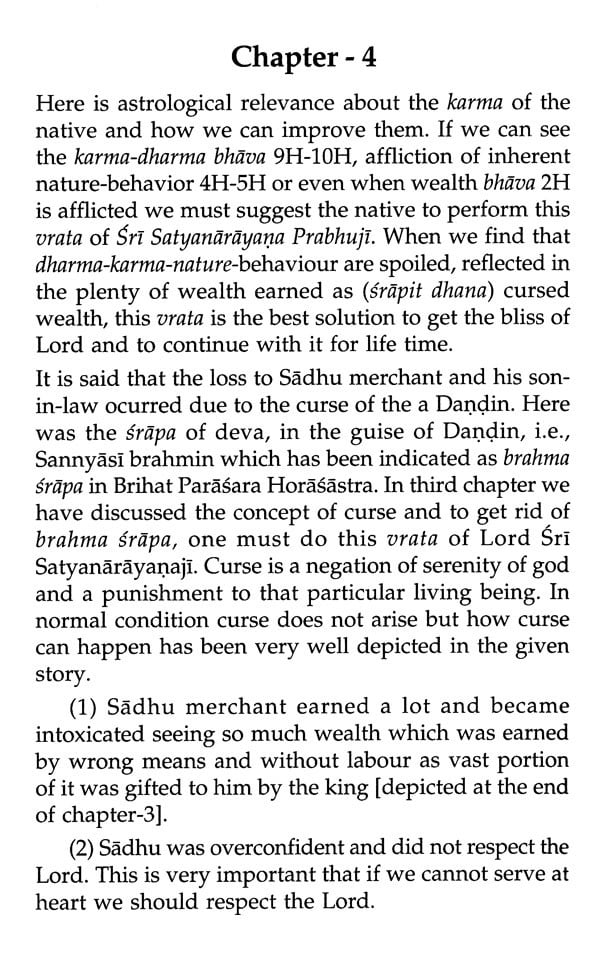
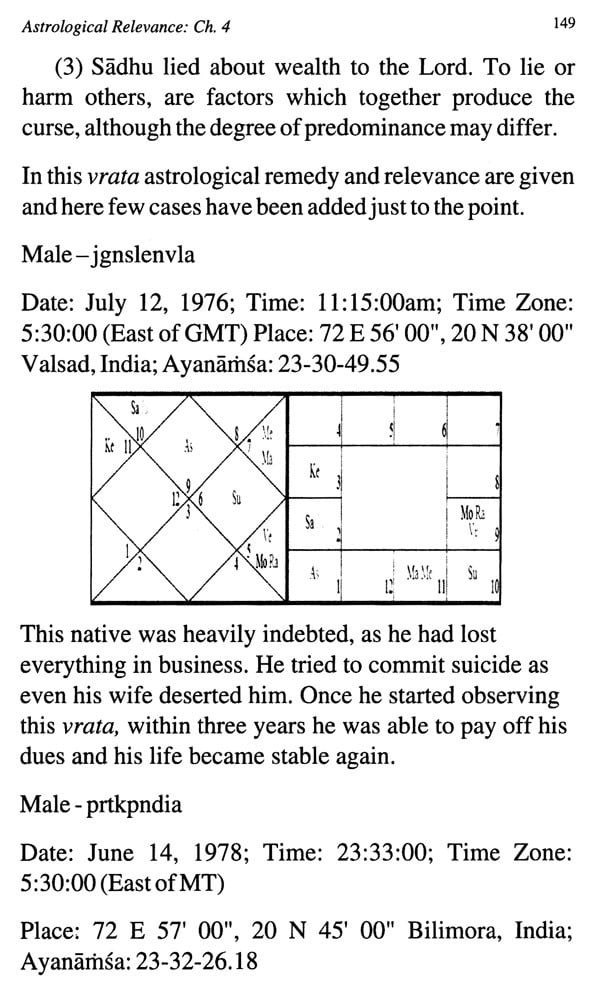
The most important part of this vrata is its astrological significance as one of the best and powerful remedies against various curses like pity-Srāpa, Brahma śrāpa, deva śrāpa, etc.
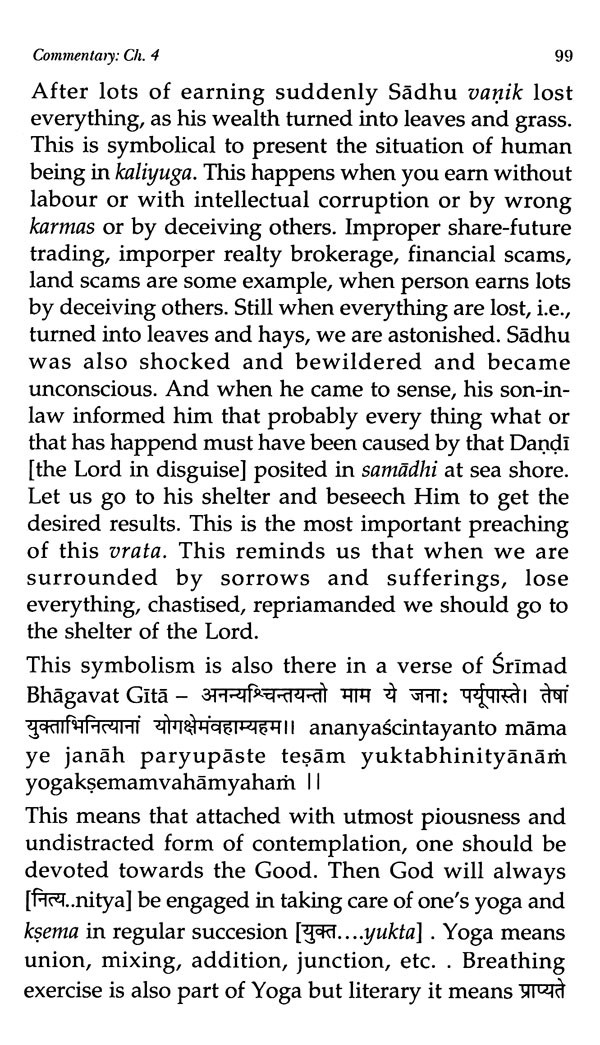
In our Kalpaśāstra we find vrata (penance, right religious course of conduct) as the apex form of devotion in domestic life as it contains in it everything required to get the material gratification and ultimate bliss of God. For common person Kalpaśāstra is the śāstra of pujā-pāțha but another meaning of Kalpaśāstra is Kālaganana, which is an art of procedure to do ritual performance and attain the ultimate bliss of both God and vrata. In our purāṇas, for almost every day, there is a vrata and Satyanārāyaṇa Vrata is one among those. Vrata is a (right) religious course of conduct as prescribed in that vrata story. By effecting vratas our sages have given us a marvelous way to achieve physical health by restraining our actions, and mental health by controlling our senses. In purāņas, we find many vrata kathās and the main compilation of such stories are in Bhavisya Purāna. However, the Satyanārāyaṇa Vrata Kathā exists in Skanda Purāņa, Revā Khanda. According to our Hindu mythology, there are, 4 vedas 18 main purāņas, and 108 upanişadas. Four vedas are Rgveda, Yajurveda, Sāmveda and Atharvaveda and fifth status is given sometimes to Rāmāyaṇa, Mahābhārata or Ayurveda. Eighteen purāņas are Brahmānda, Matsya, Kurma, Varāha, Padma, Nārada, Linga, Bhāgawata, Siva, Vişnu, Agni, Garuda, Vāyu, Skanda, Vāmana, Brahmavaivarta,
Śrī Satyanārāyaṇa Vrata Kathā Mārkandeya, and Bhavișya. There are 108 upanişadas but actually there is always one upanişada in every branch of veda and as per our vedic tradition we have 1134 branches of vedas although most of them are extinct.
This Lord Śrī Satyanārāyaṇa Vrata Kathā is very famous and devotional in nature. All Hindu family perform this vrata pūjā (ritual performance) at least once in their life-time. Many non-Hindu family also observe this vrata pājā.
This Satyanārāyaṇa Vrata Kathā is known to the general public in the form of dialogue between Šaunakādi rșis and Śrī Sūta Purāņa. In olden days of vedic times it was customary that șşis met and engaged themselves in the form of penance and austerity and tried to solve the problem of general public by exchanging views with each other. Even today we do the same in the form of seminar, meeting, group discussion, workshop, etc.,
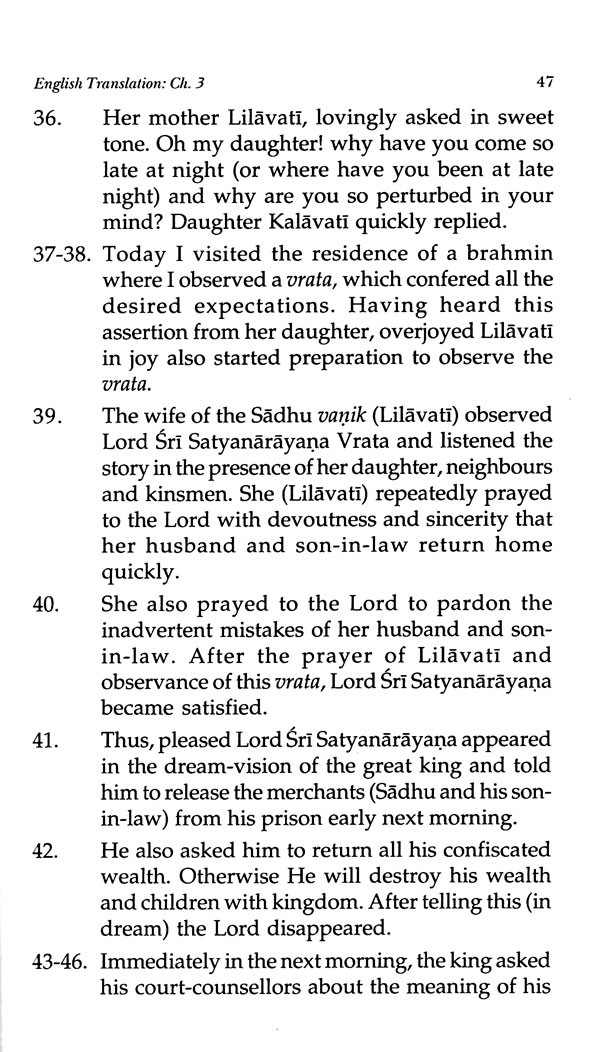
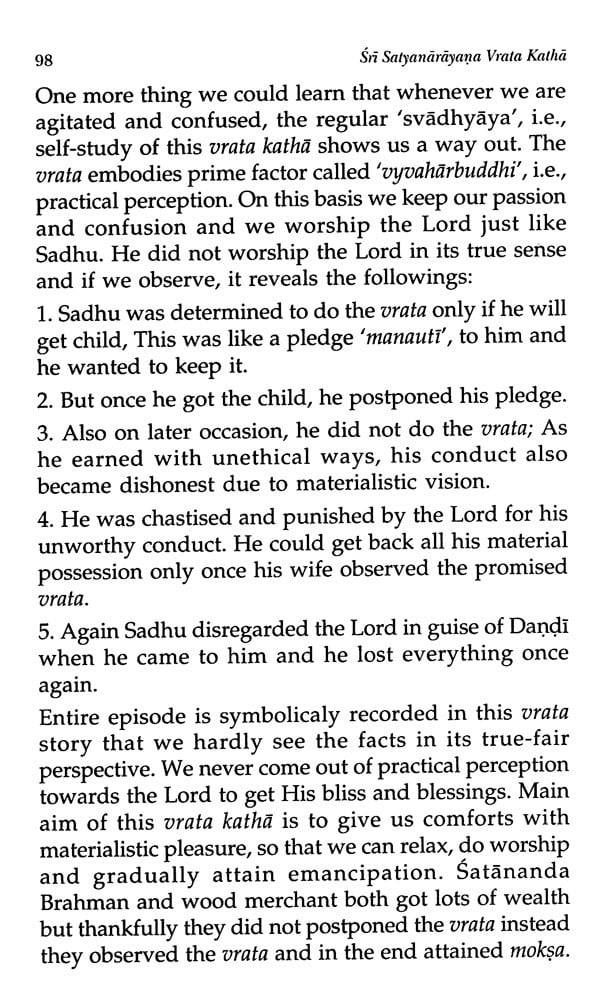
In the first chapter, basic rules and regulations to observe this vrata is explained along with benefits. From chapter two to five, practical performances are detailed establishing the magnanimity of the vrata and its story. In Chapter 5, the rebirth and reward of vrata performances are narrated setting forth the karma siddhānta, i.e., theory of karma. One of the meanings of our story title 'satya' may be 'karma', i.e., conducts or actions-reactions. This karma siddhānta is full of subtle truth but it is suffice to say that what we do good will never go waste and will fructify at opportune time. That is why the story of rebirth of Brahman, woodmerchant and others are told in Chapter 5.
**Contents and Sample Pages**